

One of my favorite parts of this job is the conversations I get to have with new people every day. Most are predictable; some are not.
Last week, while attending the Farm City Luncheon hosted by the Farm Bureau, I was abruptly reminded that this article’s deadline was quickly approaching. Someone mentioned they had seen the luncheon advertised in Farm and Dairy, which gave me the perfect opportunity to jump in with, “Oh my gosh, I have a deadline next week! Thank you for reminding me.”
The reality is that after the tree sale season and hand-sorting and selling around 4,000 trees, my brain tends to go on autopilot for a bit. Unfortunately, deadlines and responsibilities don’t wait for it to catch up. That brief exchange turned into a conversation about what I do, which, ironically, is one of the hardest questions I get. How do you explain that one week you’re helping bag 10,000 fish, the next you’re two miles deep in the woods, then wrangling 150 kids while teaching them about birds, and somewhere in between sorting and selling tree seedlings?
That explanation usually leads people to question what intrigues them the most. Often, it’s just two words: “10,000 fish?!?” But this time, the focus shifted to trees and with that came the age-old question I get asked above all:
“How do I keep deer away from my trees?”
In a county where the deer population can be perceived as threatening to overtake the human population, it’s a fair question. The honest answer? I’m not sure.
Of course, I don’t usually say that outright, but it really is an open-ended question. How much time do you have? How important are these trees to you? How much money are you willing to invest? (A loaded question, I know.) The answers to those can help guide you to the best solution.
Low-maintenance options, including sprays and repellents, can be effective, but they’re also short-term solutions. They need to be reapplied regularly and periodically rotated so deer don’t get used to them. There is also the idea of “scaring” the deer with sudden noises, lights, or motion-activated sprinklers. These can work well, at least for a while, but deer are adaptable and often grow accustomed to these methods quickly.
The case for tree tubes
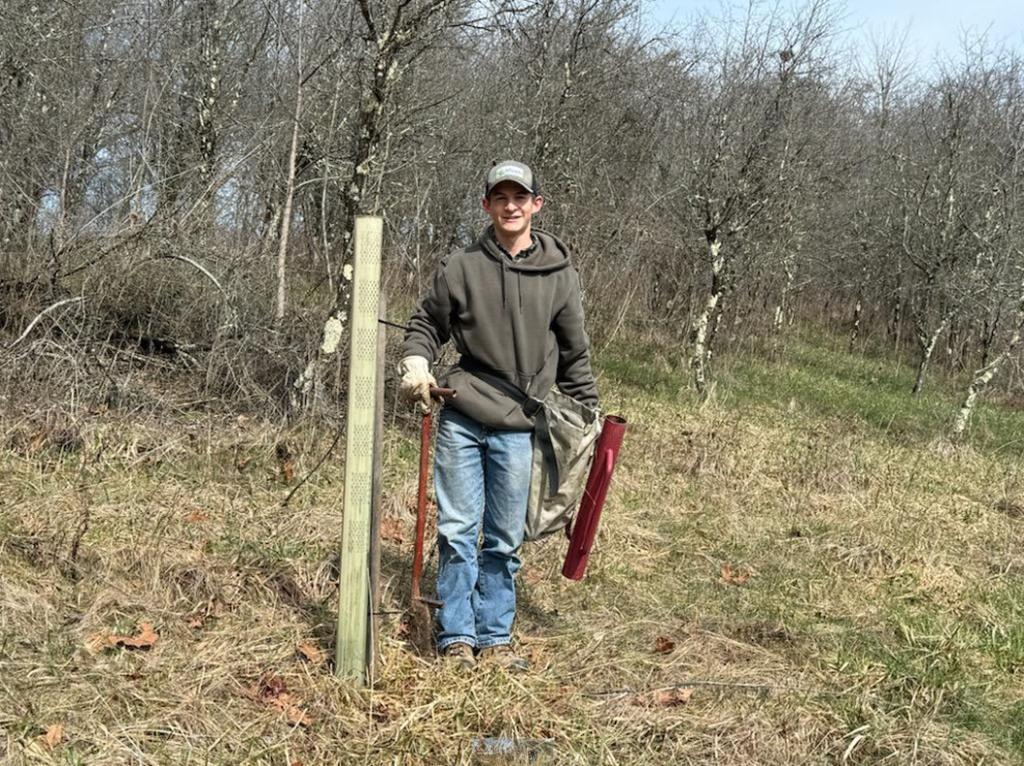
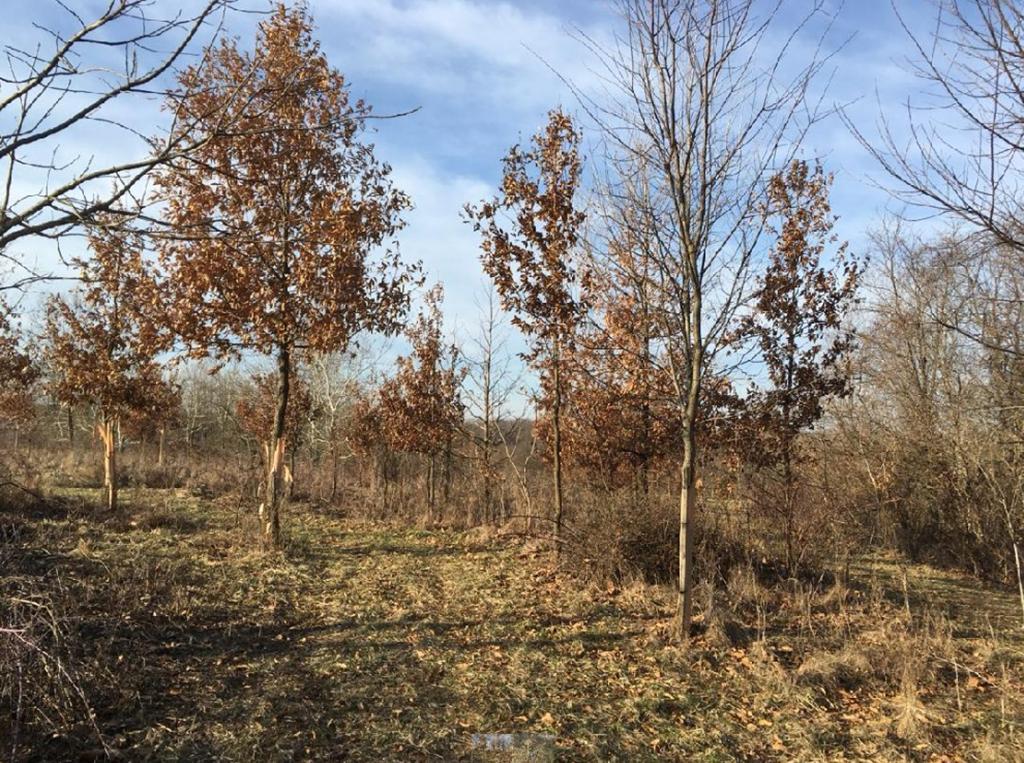
What I’ve found to be one of the most successful solutions, supported by landowners like Rob and Pat Davis, recipients of Ohio Tree Farm of the Year in 2024 and Regional Tree Farm of the Year in 2025, is the use of tree shelters.
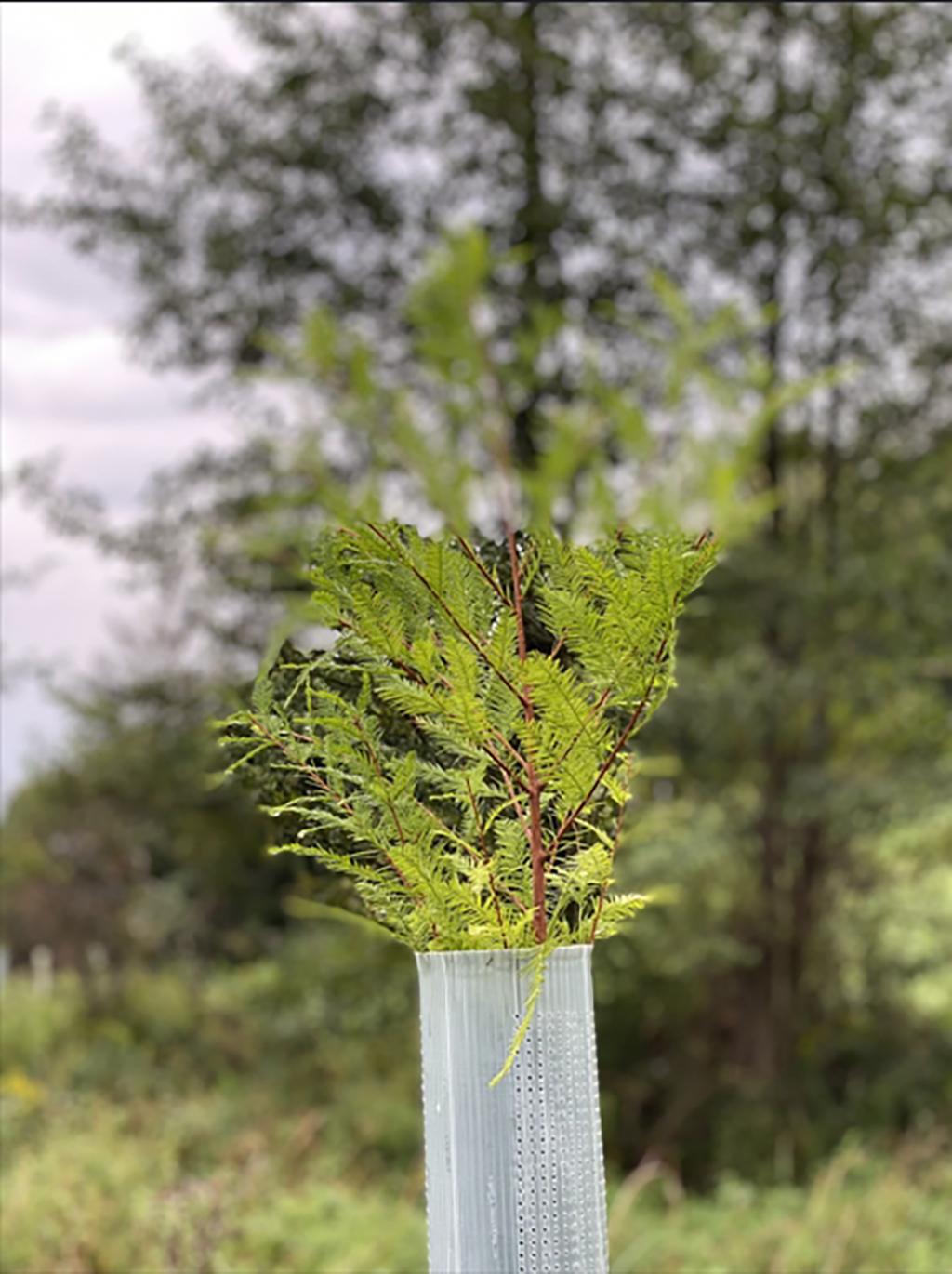
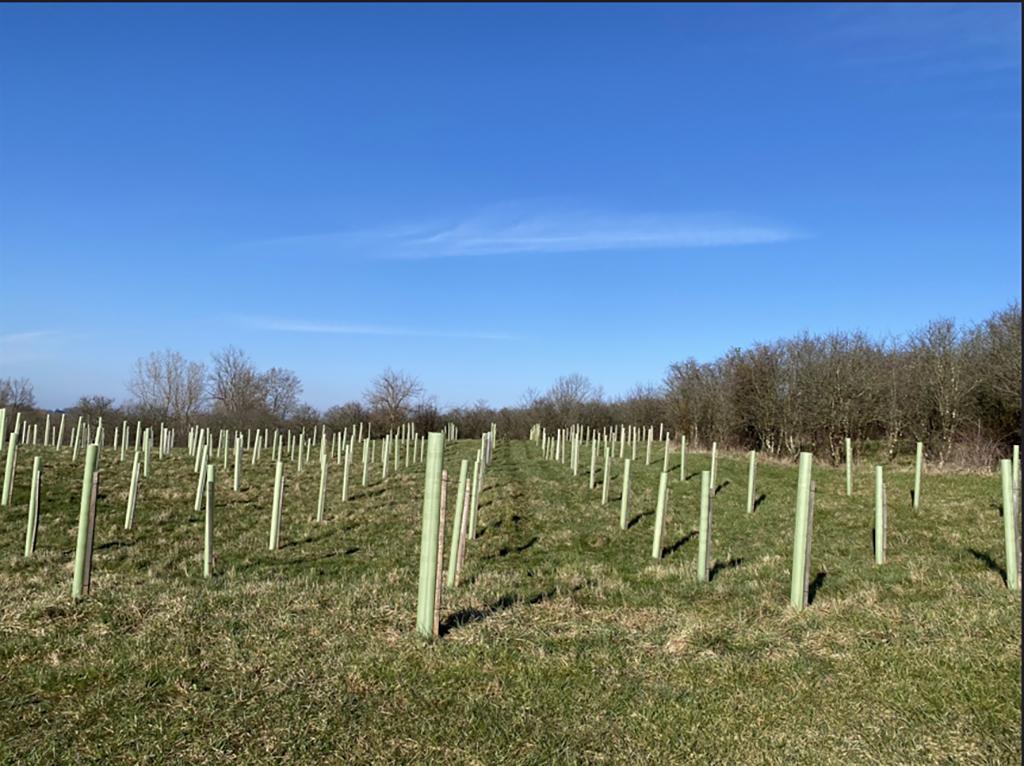
Tree shelters, or tree tubes, are lightweight plastic tubes with varying levels of UV protection.
They fully enclose young seedlings, allowing them to establish while protecting them from deer browse. They also create a mini greenhouse effect that can stimulate faster growth.
Tree planting tips
While researching this article, I decided to go straight to the source and ask Rob Davis what he’s learned through trial and error and after planting more than 150,000 trees, I’d say his experience speaks for itself.
His recommendations are straightforward:
• Use at least 5-foot tubes to effectively prevent deer browsing.
• White oak stakes tend to last the longest.
• Install the stake on the north side to reduce shading and allow maximum sunlight exposure.
• Seal the base of the tube with soil to keep mice and other critters out.
• Use zip ties that can be reopened for easier maintenance.
• Vented tubes perform best in our climate.
• Plan for ongoing maintenance, including replacing damaged stakes.
One additional piece of advice, learned the hard way, is to always be cautious when checking growth inside the tubes. Wasps have a habit of making themselves at home in them.
Rob also shared that they planted 500 white oak seedlings in the spring of 2024. Despite the historic drought conditions, we encountered in 2024 and 2025, they only lost 20 trees. He credits the tubes’ greenhouse effect for helping retain moisture. While growth was slower than usual, the trees survived, and that’s what matters.
Tree tubes can significantly boost survival rates, often increasing success from around 50% in unprotected trees to as high as 85 to 100% with shelters. With all these benefits, you might be wondering — why doesn’t everyone use them? The answer comes down to cost and maintenance.
Tree tubes aren’t cheap, typically ranging from $3 to $6 each, and that adds up quickly. They also require time for installation and upkeep, which not everyone can commit to. There are environmental considerations as well, as plastic materials can break down over time and leave remnants in the field.
Ultimately, the decision is up to the landowner. For many, the investment is worth the reward and in Rob and Pat’s case, it clearly has been. Most soil and water conservation districts offer tree tubes, and they’re also widely available online.
At the end of the day, it’s about protecting your investment in your forest’s future.