



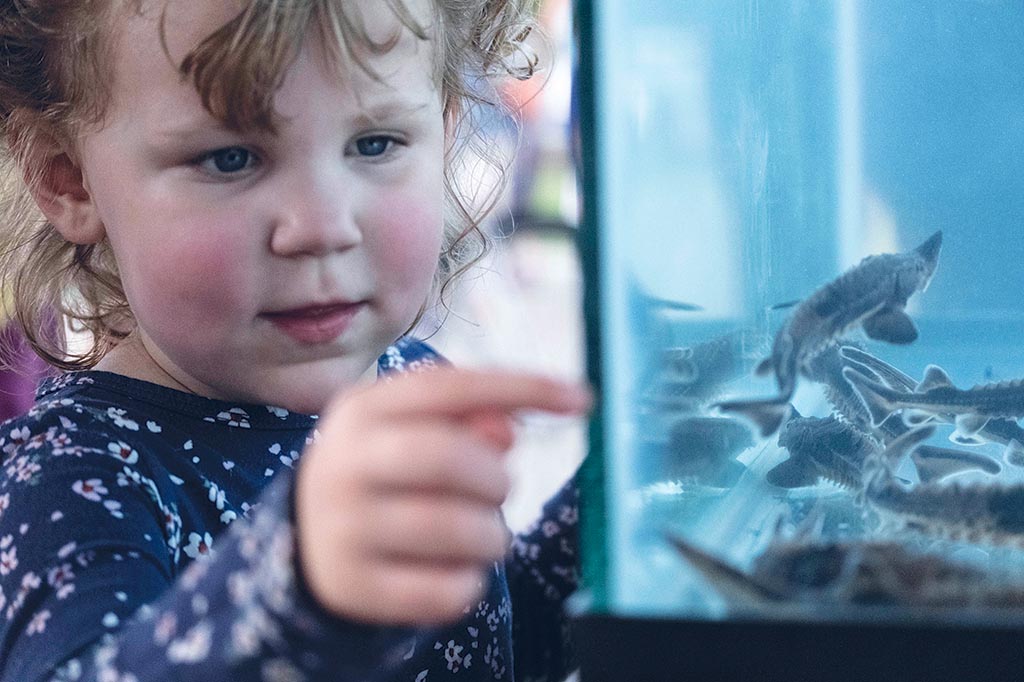
CLEVELAND — The Cuyahoga River Sturgeon Fest opened Oct. 4 at Rivergate Park, celebrating the long-awaited return of a prehistoric, endangered fish to Northeast Ohio waters.
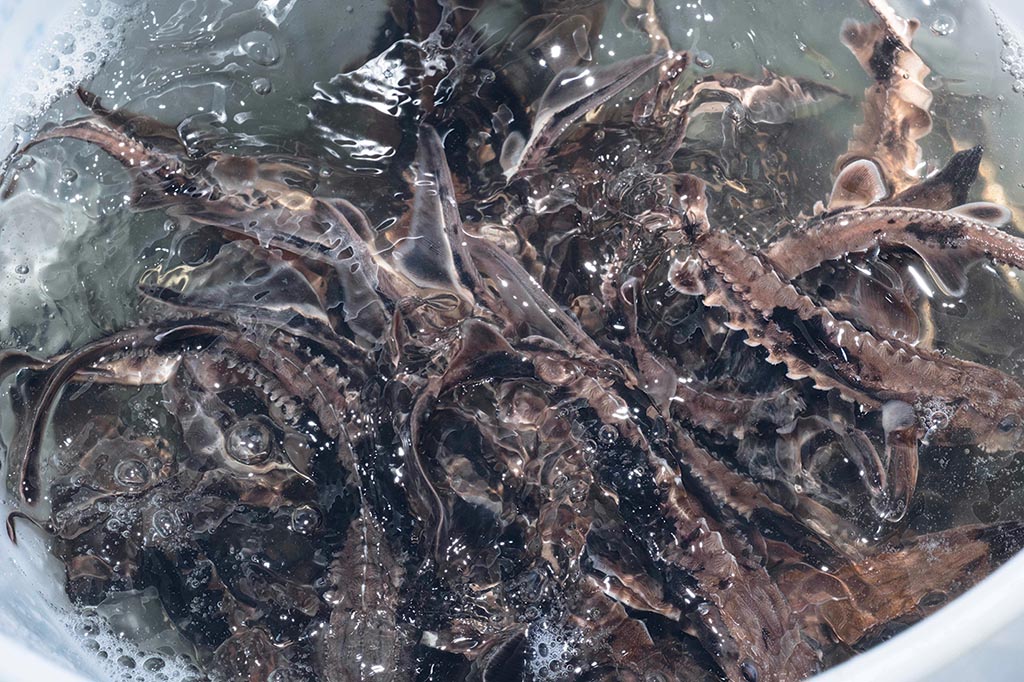
Covered in hard, bony plates with sandpapery skin and sporting snouts and fleshy whiskers to help them forage, sturgeon are long-lived, growing up to 6 feet long and topping out at 100 pounds.
Once native to the river before nearly vanishing due to pollution, overfishing and habitat loss, the only other giants seen here in recent years are the imposing freighters navigating the turns of the narrow waterway, slipping by the piers on their way to Lake Erie. But at the Sturgeon Fest, the spotlight was on a different kind of heavyweight, one dating back to the time of the dinosaurs.
“Each one of you can say that you were part of the first time lake sturgeon were publicly reintroduced into the Cuyahoga River,” Jennifer Grieser, Director of Natural Resources for Cleveland Metroparks, told an audience of Clevelanders, conservationists and community leaders in attendance.
Hosted by Metroparks with support from the Ohio Division of Wildlife, visitors enjoyed educational booths, live animal displays, hands-on activities and food and drinks to mark the environmental milestone.
John Navarro of the Ohio Department of Natural Resources reminded the crowd of how far the river had come since the days when the Cuyahoga was infamous for catching fire.
“The biggest thing (it led to) was the Clean Water Act, and that’s exactly why we’re here, because we’re not dumping our sewage into rivers anymore,” he said. “I really appreciate wastewater treatment plants. That might sound silly, but they’re unsung heroes because that’s why this thing is so clean.”
A total of 2,000 fish would be stocked in the river, with 750 released that afternoon at the park. He thanked the U.S. Fish and Wildlife Service, Ohio’s Castalia State Fish Hatchery, which transported the fish from Wisconsin, and the Northeast Ohio Regional Sewer District for their roles in restoring the river.
Of nine beneficial use impairments previously imposed on the river since 1985 — restrictions on how the public can use it — five have now been removed. Habitat restoration projects, including the Brecksville Dam removal and the Green Bulkhead at Irishtown Bend, where Rivergate Park overlooks the construction of a new 25-acre park, are underway to ensure sturgeon and other species can thrive, said Joy Malinak, executive director of the Ohio Lake Erie Commission.
“Long time coming”
Kyle Dreyfuss-Wells, CEO of the Northeast Ohio Regional Sewer District (NEORSD), reminded attendees that the sturgeon’s return is not just a wildlife success story but a water quality improvement one.
“When you see a sturgeon, think of clean water infrastructure, because none of it would be possible without solid, functioning sewer and storm water infrastructure, and that’s done with continued investment in pipes, streams, plants, pump stations and people,” she said.
The district’s commitment to clean water extends to protecting Lake Erie and the recreational spaces around it. Since 1972, NEORSD has been reducing combined sewer overflows (CSOs) across the region, from 9 billion gallons a year in the 1970s to 4.5 billion in 2010. Now the district is exploring options to prevent sewage overflows into Lake Erie at Cleveland’s popular Edgewater Beach. Overwhelmed by heavy rains, the combined sewer outfall built over a century ago known as the 069 tunnel sends overflow into the lake, forcing the beach and nearby waters to close during the crowded summer months until bacteria levels drop to safe limits. At a preliminary cost of $20 million, a presentation on the proposed tunnel project to redirect stormwater and sewage surges, prevent flooding and eventually eliminate the 069 outfall altogether was called a “long time coming” by the board of directors at their August meeting.
“What we’re seeing now is to actually eliminate that CSO from Edgewater Beach is an important part of the district’s work,” Dreyfuss-Wells said.
River revival
The sturgeon reintroduction is part of a broader, long-term restoration effort; every year going forward will see 1,500 fish stocked annually for the next 25 years, according to Eric Weimer, a fisheries biologist with the Ohio Division of Wildlife.
“It’ll take that long just to get enough mature lake sturgeon in the system that they might be able to start supporting themselves with natural reproduction,” Weimer told Farm and Dairy.
Improving the river has benefits beyond the sturgeon.
“When species, kind of these capstone species like lake sturgeon, when the environment is suitable to allowing them to have good, healthy populations, we know that that environment also benefits a wide variety of other native species as well.” Weimer said, noting walleye, smallmouth bass and various suckers benefit from habitat restoration projects like dam removal.
For the sturgeon to thrive, Weimer emphasized food and clean, oxygenated water.
“The juveniles will grow until they reach a certain size, whether that’s six to eight inches or whatever it is, and then at least many of those sturgeon, those juveniles, will leave the rivers and go out to Lake Erie. They will spend their lives eating invertebrates and small fish, including like round gobies which are an invasive species,” he said. “Lake Erie has recovered to the point where it can support these fish.”
Each fish released was tagged with a PIT tag, or Passive Integrated Transponders, similar to microchips for pets, allowing researchers to track where they were stocked, where they were raised and monitor their growth and movement in the lake.
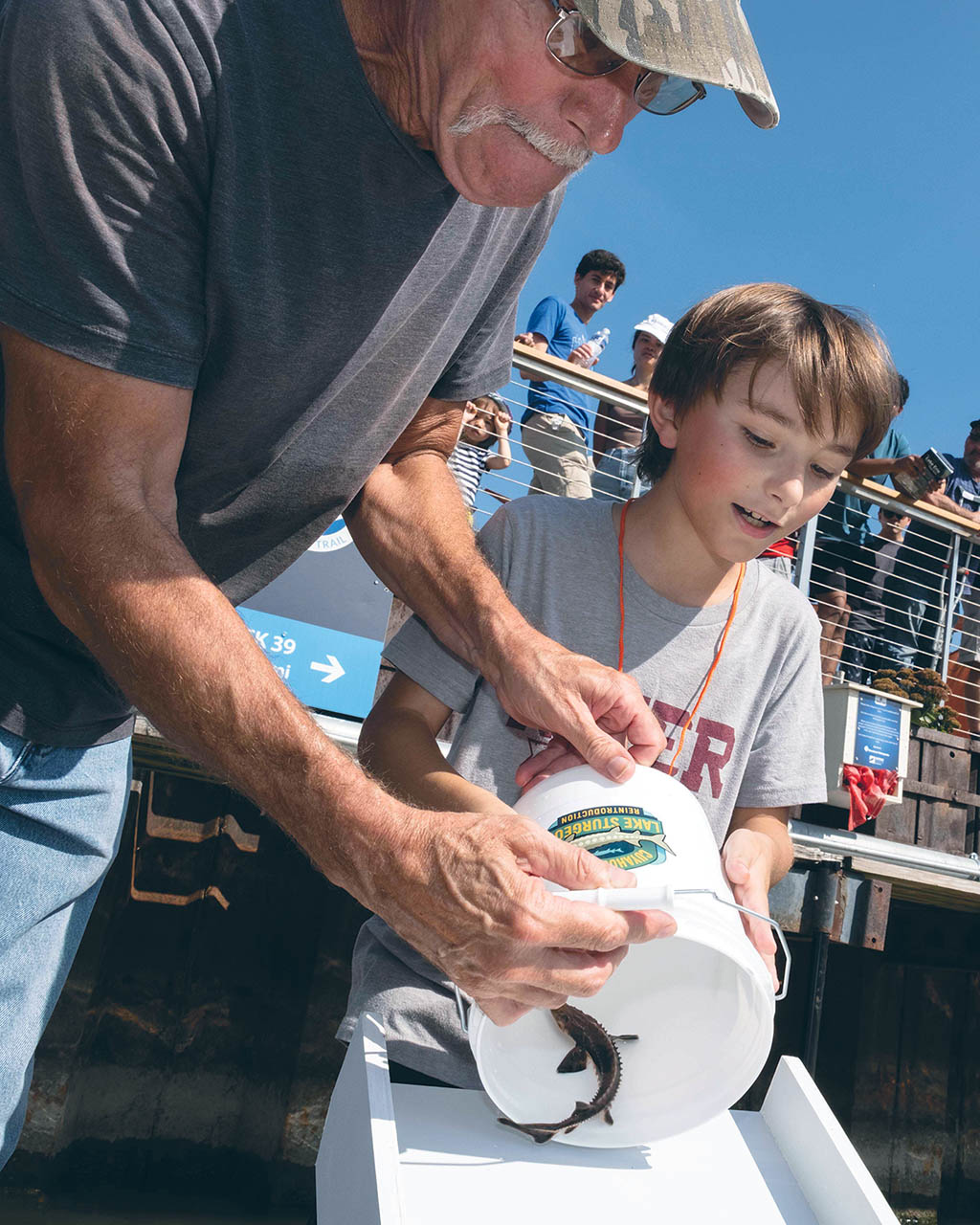
At Sturgeon Fest, after remarks, attendees moved to the riverbank to witness the first public release of the young sturgeon. Families lined the dock, holding buckets as the fish were carefully lowered into the water. Visitors snapped photos and marveled as the fish swam away.
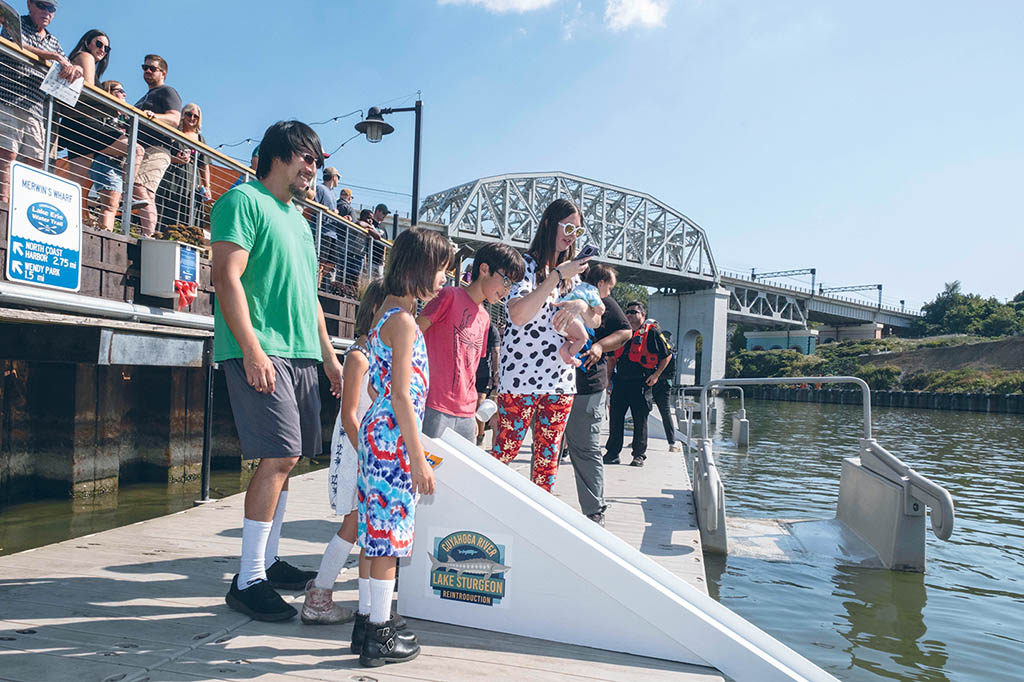
“It was fun,” Em Jones said, describing the moment she helped release one of the sturgeon. “I mean, we waited in line forever, but sturgeon are one of my favorite fish.”
She explained that her fascination with sturgeon stems from their unique, prehistoric appearance.
“I just think they’re neat. They’re like dinosaur fish. They’re so big. Especially the Beluga sturgeon out in Russia. Those things are huge.”
Jones, who lives near the Cuyahoga Valley National Park, said she was inspired by seeing so many people gathered to celebrate the river’s recovery.
“Seeing the amount of people was really cool,” she said. “Everyone seems excited about getting these fish back in their lakes and stuff. That was pretty cool.”