


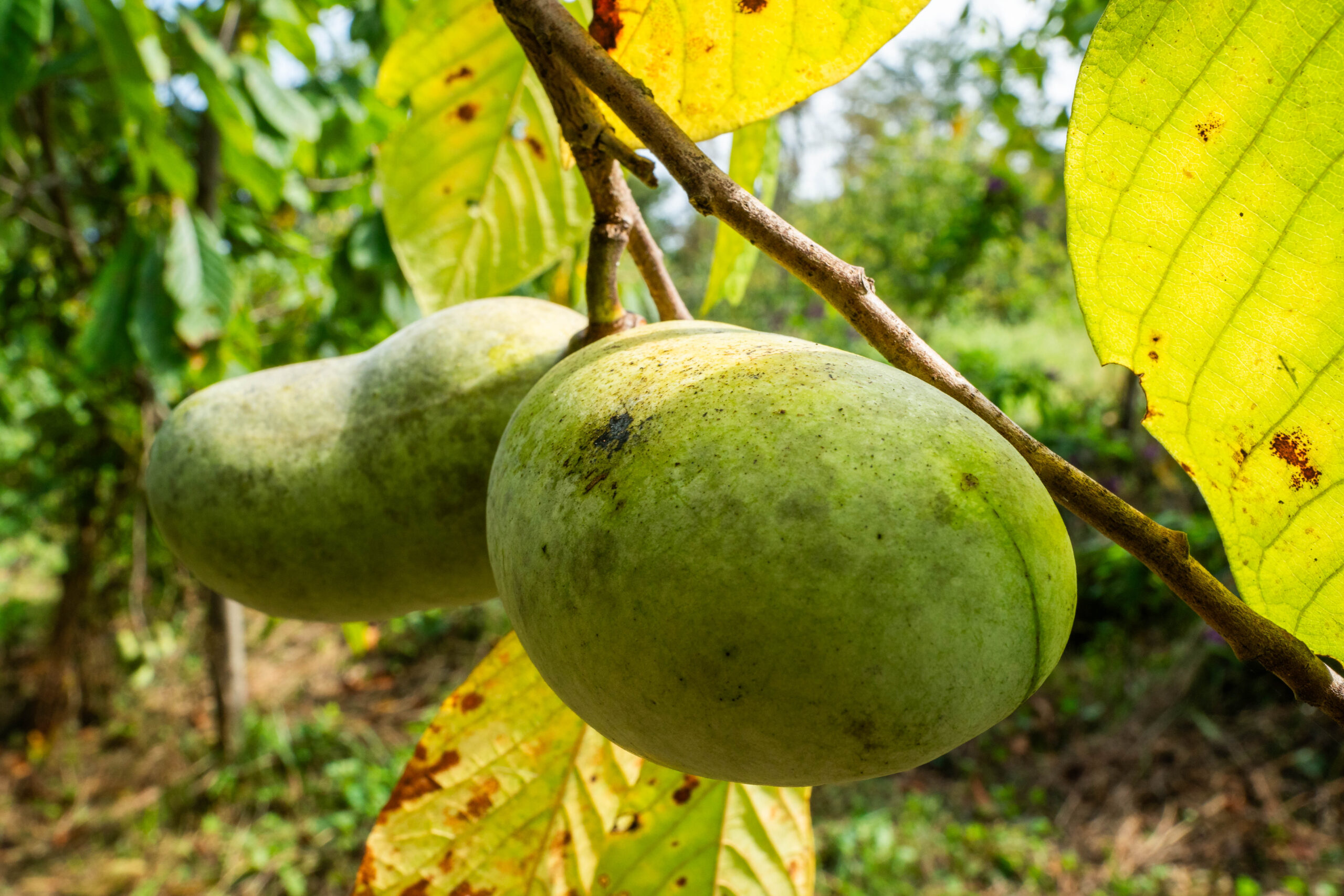
ALBANY, Ohio — Pawpaws have been growing in the woods of North America for millions of years, but until recently, the region’s largest native fruit was mostly left to rot on the ground — ripe pawpaws only last 3 to 5 days.
That’s part of the reason why Chris Chmiel started his pawpaw farm, Integration Acres, in Albany, Ohio, in 1996. He was inspired after attending college in southeast Ohio, where pawpaws grow commonly, and later living in Mexico.
It was in Mexico that he was introduced to the soursop fruit, which is in the same family as pawpaws.
“They make juices and popsicles. They make all kinds of stuff with this fruit down there,” he said. “I thought, ‘Why wasn’t anybody doing anything with pawpaws?’”
At Integration Acres, Chmiel focuses on developing and selling value-added pawpaw products. But he didn’t stop there. In 1999, Chmiel launched the first pawpaw festival in the country in Albany, Ohio — spreading awareness of this native fruit.
Now, pawpaw festivals are held all across the region, including Ohio, Pennsylvania and West Virginia, during the fruit’s peak harvest period in mid-September. But just as these native fruit trees are getting their due, they are facing a new threat: invasive beetles that are killing trees.
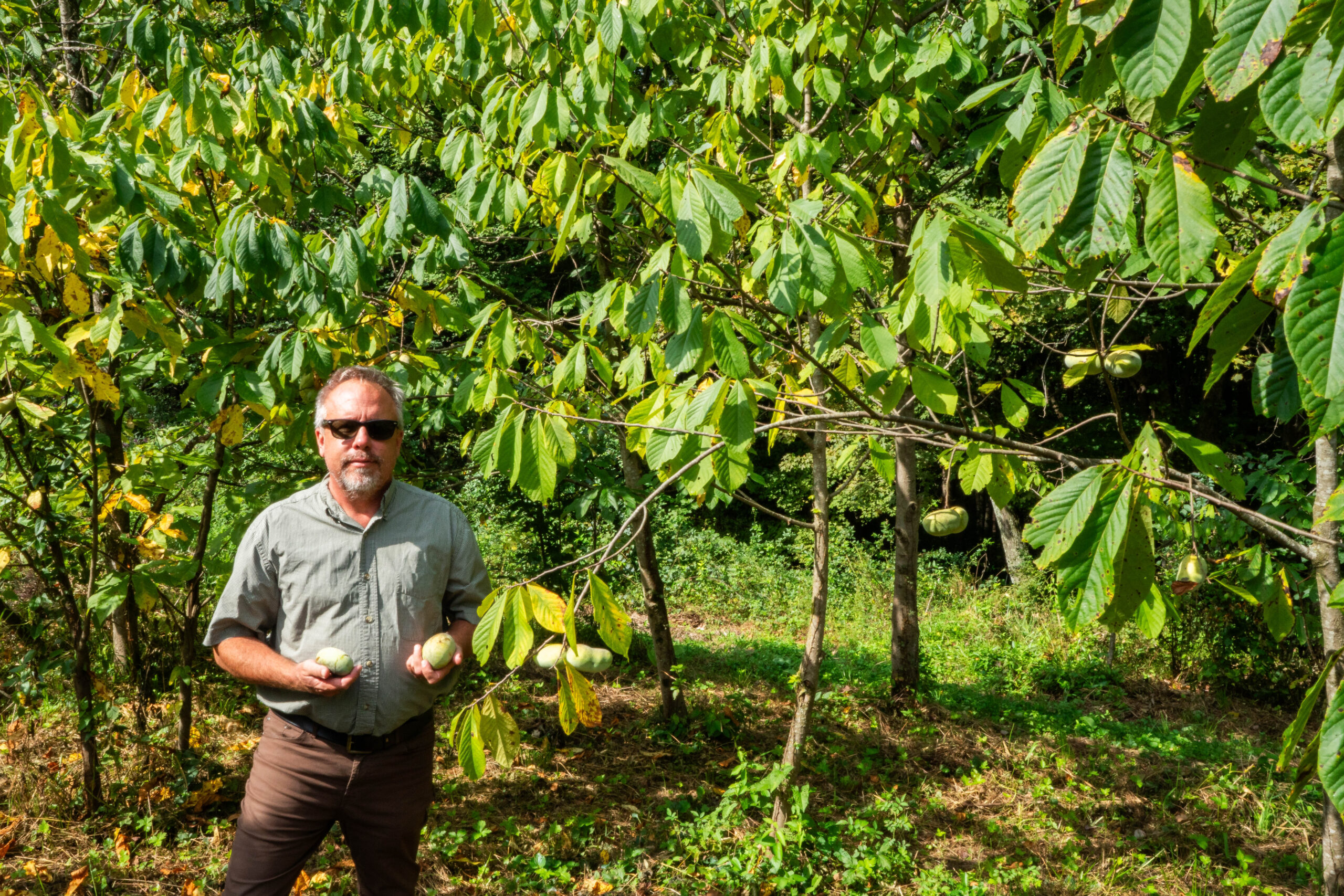
A Native American fruit
Pawpaw is the largest edible fruit native to the United States and North America. It grows underneath a tall forest canopy from eastern Kansas to western Connecticut. Pawpaws grow as far south as Louisiana and the Florida panhandle, according to Ohio State University Extension.
While it has only recently gained widespread popularity, Native Americans cultivated pawpaw for centuries. Pawpaws are one of the few wild fruits native to North America, but their expansion across the eastern United States is a result of Indigenous populations.
“Society in general has this idea that plants are either cultivated or wild, but in fact, most of our forests have historically been managed by people,” said Bronwen Powell, associate professor of geography at Penn State University.
“Pawpaw is such a clear marker of that past presence of Indigenous people in the landscape in a part of this country where Indian removal has meant that many of those communities are not currently here anymore.”
According to Powell, Haudenosaunee and Lenape tribes — who used to call Pennsylvania home before European colonization — now live in upstate New York and Oklahoma. The Haudenosaunee and Lenape tribes, in addition to others, were responsible for the spread of pawpaw.
“All these pawpaw farms revitalizing pawpaw, it is cool to see everybody excited about pawpaw. It’s such a good fruit,” she said. ‘I just hope that it’s also an opportunity for us to spend some time educating ourselves about that part of our history that many of us don’t get taught.”
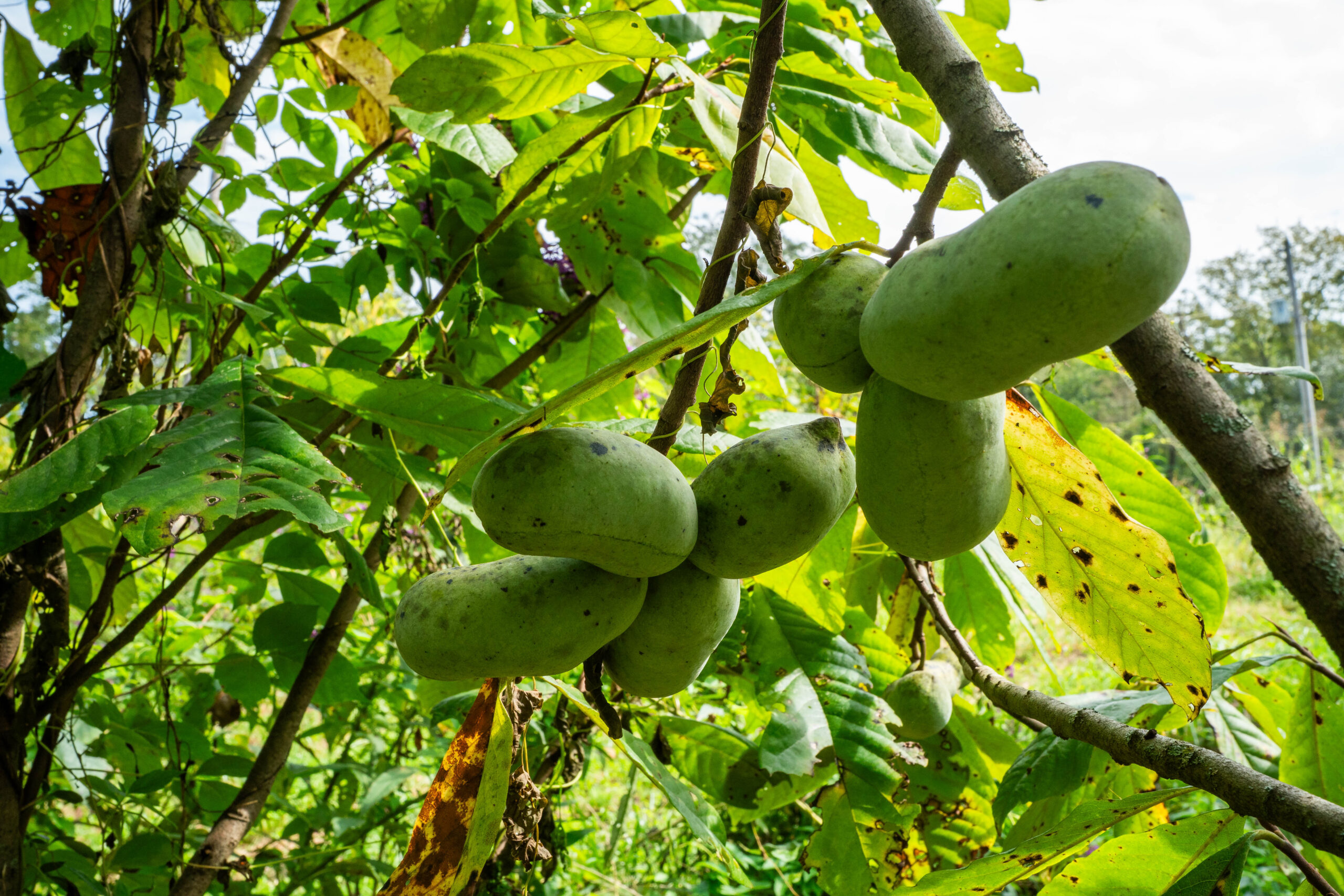
Integration Acres
Growing up, Chmiel would visit his grandparents’ farm in Indiana that consisted of a vineyard, orchard and garden: “I just liked being out in the country,” he said.
Chmiel went on to study holistic transition to sustainability at Ohio University in Athens, Ohio, and his interest in pawpaw would blossom after learning about the soursop fruit in Mexico.
After graduating from OU in 1992, Chmiel put down roots in the area, buying a property in nearby Albany with hundreds of pawpaw trees. In the next few years, he added more trees to his property.
He also partnered with landowners to use their unwanted pawpaws. Today, he gets pawpaws from up to 50 people.
“Some of my farming neighbor friends, they eat one or two a year: ‘That’s all I need,’ (they’ll say). ‘You want any more? You can have them,” Chmiel said about getting pawpaws.
In 1996, Chmiel opened Integration Acres with a large focus on value-added products, as ripe pawpaws spoil quickly. His first product was frozen pulp. Today, he sells pawpaw salsa, hot sauce, maple vinaigrette, spiceberry jam, fudge and liquid soap base.
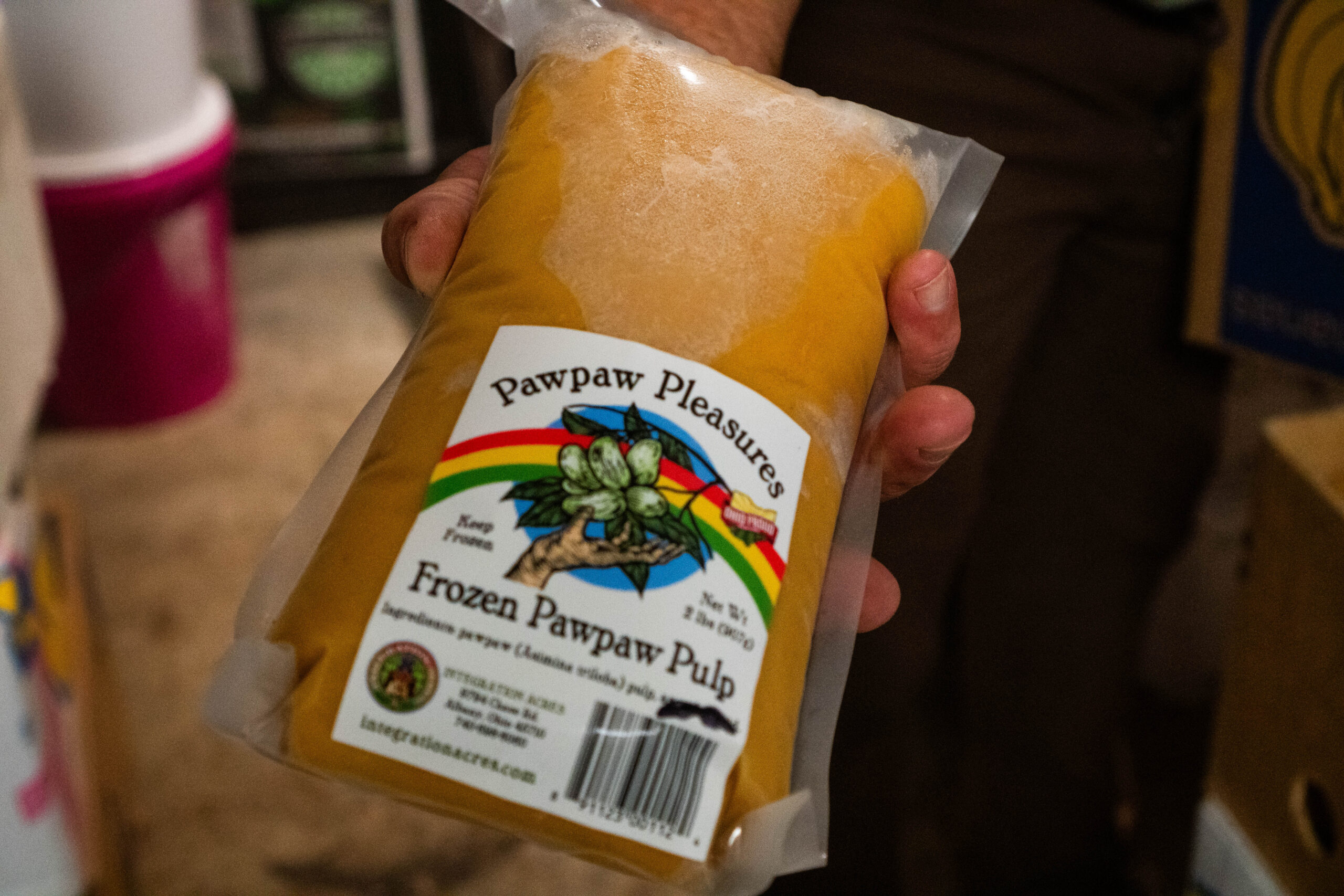
But still, marketing his products was a challenge. That’s why he kicked off the first-ever pawpaw festival in the state and the country in 1999 in Albany — something he says is important to establish agri-culture.
“It was helping educate and then build the market,” Chmiel said. Much of the remnants of the first pawpaw festival still exist today, including the pawpaw competitions like pawpaw cookoff, best pawpaw and the pawpaw eating competition.
This festival kickstarted others across the region, including in nearby Pennsylvania and West Virginia.
Now coming up on its 28th year, the Ohio Pawpaw Festival will run from Sept. 18-20 and will feature the pawpaw competitions in addition to music and food and drink vendors. It will also take place in Nelsonville for the first time.
While Chmiel looks forward to this year’s festivities, it is not all smooth sailing on the farm. He and many other pawpaw farmers are losing trees at record rates.
Ambrosia beetle invasion
In the last six years, Chmiel has lost almost 70% of his orchard to the invasive ambrosia beetle — a small insect that attacks living and healthy woody trees, causing death, according to the University of Kentucky.
The beetles burrow into sapwood, laying their eggs and depositing fungus that spreads throughout the tree. When the larvae hatch, they eat this fungus, which prevents the tree from taking up water, ultimately killing it from dehydration.
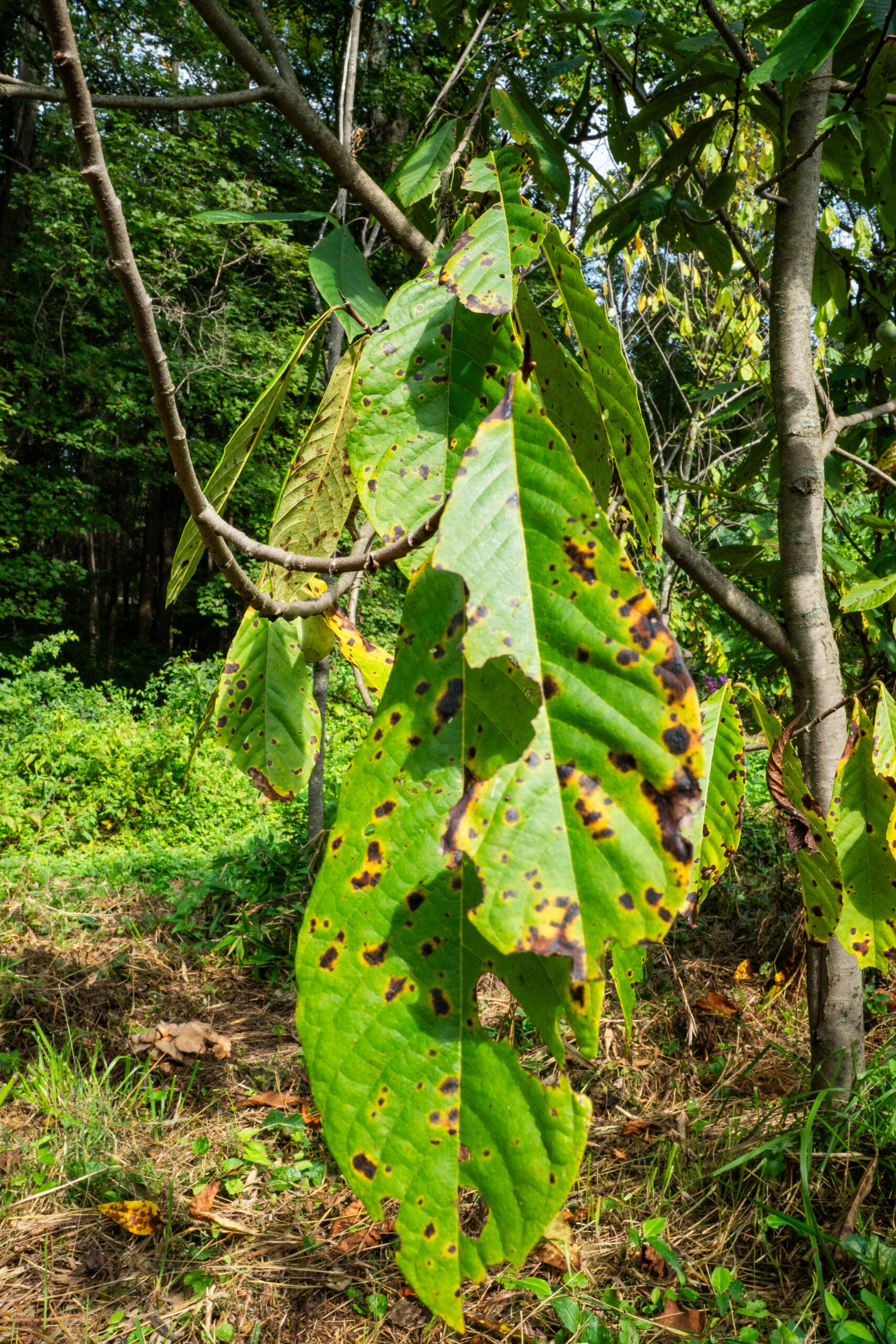
of the ambrosia beetle. (Liz Partsch photo)
So far, the only way to get rid of the beetles is to cut down the affected tree and burn it. Producers can use ambrosia beetle traps, but it won’t stop the pest permanently. To combat this, Chmiel has resorted to planting new trees more frequently.
He believes, however, that in recent years the beetles have been particularly bad due to extreme rain. He notes soil may also be a factor — clay soils vs sandy soils may result in a higher presence of ambrosia beetles.
Chmiel has taken to amending the soil, ensuring he has well-drained, sandy soil for his trees. Ohio State University is aware of the problem too and is currently studying the ambrosia beetle to determine best management strategies.
“The first piece is understanding the biology, the natural history of the pest you’re dealing with. At what levels does it become an actual, what we might call an economic pest?” said Logan Minter, statewide field specialist and associate professor of specialty crops at Ohio State Extension.
According to Minter, because pawpaws aren’t grown on a wide scale yet, getting a company to invest in developing a chemical insecticide is unfeasible. He hopes to have a solution soon.
“It’s not something like corn that we’ve been growing constantly at a commercial scale for a very long time, or apples. We have a really good picture (for those crops) as to what’s going on, or at least a better picture,” Minter said. “So there’s still some more of (pawpaw) to be learned.”
Festival info
Ohio’s Pawpaw Festival will take place from Sept. 18-20 at Snow Fork Event Center, 5685 Happy Hollow Road, Nelsonville, Ohio. For more information, visit https://ohiopawpawfest.com/.
West Virginia University’s Pawpaw Festival will occur on Sept. 19 from noon to 5 p.m. at WVU’s Core Arboretum, Monongahela Blvd, Morgantown, West Virginia. For more information, visit https://arboretum.wvu.edu/wv-pawpaw-festival
Tree Pittsburgh will host a Pawpaw Festival on Sept. 26 from 2-7 p.m. at its headquarters, 32 62nd St. in Pittsburgh. For more information, visit https://www.treepittsburgh.org/events/pawpaw-fest-2026/.
For more information on Integration Acres, visit https://integrationacres.com/.
(Liz Partsch can be reached at epartsch@farmanddairy.com or 330-337-3419.)




