





Fair chase is an important moral commodity that hunters should strive to live by. Unfortunately, the competitive desire to harvest trophy-class big game and the increasing advancements in technology have tempted some to stretch these self-restricting controls.
In 2021, Arizona took a stand. By unanimous decision, their Game and Fish Commission voted to ban trail cameras for hunting, but allow them for research, general wildlife viewing and to protect property. They recognized that their state’s limited water resources can concentrate animals and that remote monitoring would give the pursuer an unnatural edge.
Kurt Davis, chairman of Arizona’s Game and Fish Commission, explained that it was determined the cameras violate the Fair Chase Doctrine, which “pays respect to the traditions of hunting and angling by emphasizing the development of an individual’s skills rather than reliance on practices or technologies that overwhelm the quarry’s ability to elude detection or take.”
Trail cameras
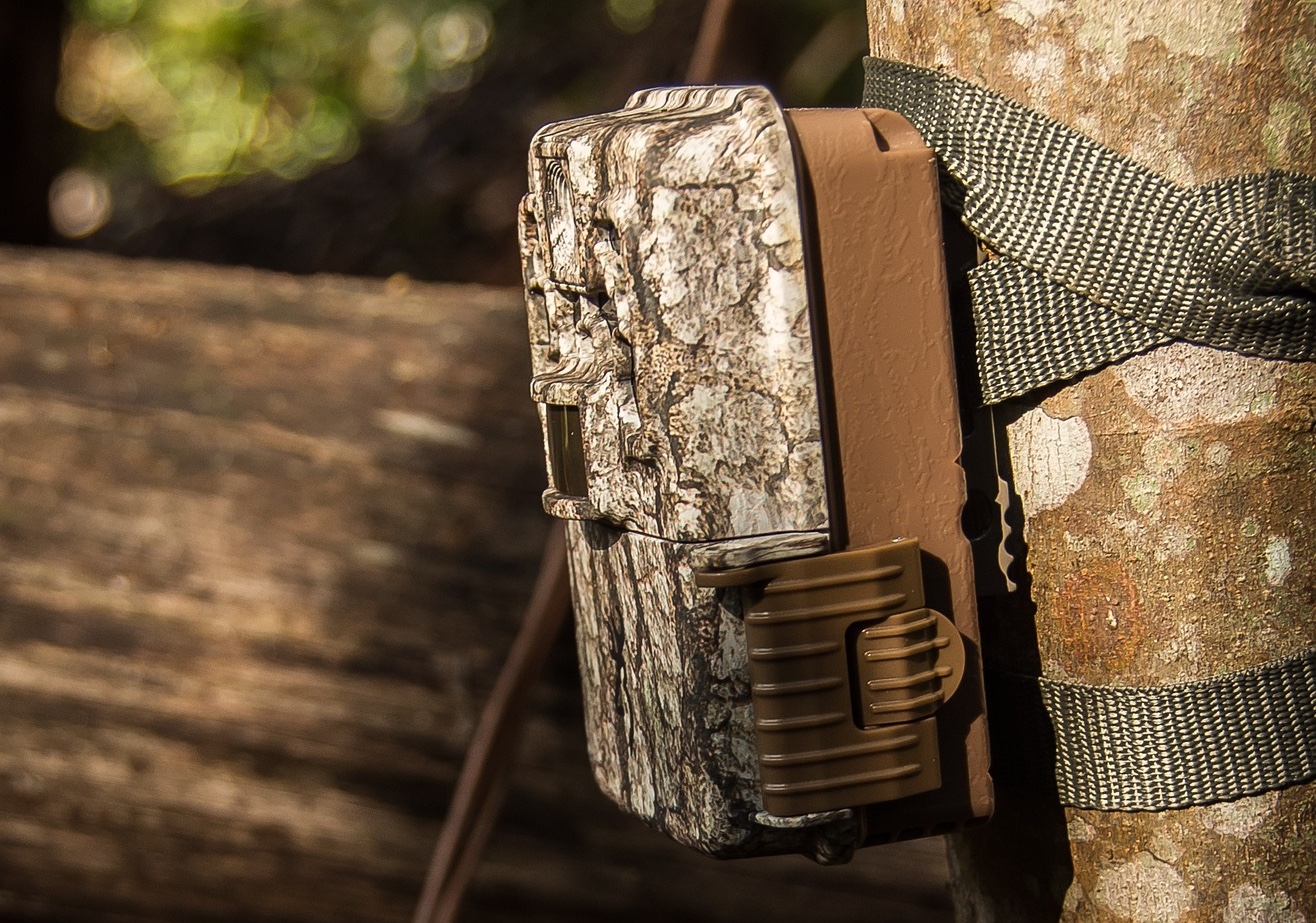
For those not familiar with trail cameras, here’s a brief explanation. They’re stationary cameras positioned in an area that a person wants to monitor game movement. While first available in film, they quickly progressed to digital technology for both image and video — the most current adaptations allowing live wireless remote viewing.
Landowners have adapted the technology in efforts to catch trespassers and as rural security around outbuildings. They’re relatively inexpensive, easy to use and readily available. Their most common uses include wildlife monitoring, research, wildlife management, personal photography, farm protection, hunting, garden viewing and bird watching.
Since Arizona made the decision to outlaw game cameras, Nevada, Alaska, Colorado, Idaho, Kansas, Montana, New Mexico and Utah have added trail camera restrictions during hunting seasons. Delaware and Kansas have banned their use on any public lands, citing issues of hunters “staking claim” to an area, even though such an action is invalid. New Hampshire uses a different approach, allowing hunters to use game cameras as long as no animal is taken on the same day that it was monitored.
Jim’s take
Before you sit down and begin typing out hate mail, let me first answer this question: “What do I think of game cameras?” I don’t have a problem with their ethical use in Ohio. Most of the hunters I’ve come across use them to monitor wildlife activity in the hopes of getting a little insight as to where they should set up ambush sites and tree stands. They also enjoy “treasure hunting” for those deer that might wander through an area or for wildlife that may otherwise go unseen. For many, viewing those pictures is like unwrapping Christmas gifts.
While it’s true that technology has changed, we can’t always deny its popularity and usefulness. I also don’t believe that the Ohio Department of Natural Resources is contemplating any law changes regarding stationary cameras.
Now the hard part, do I think they can be abused? Obviously, a lot of states believe it can be a problem, and I agree with some of their concerns. Many western states have far different hunting conditions when compared to the more deer-heavy Midwest. Watering holes can be at a premium, and outfitters lure more hunters when they can show trophy-class “potential” to paying clients. There’s also the issue of very restrictive hunting zones and the possibility to jump approved hunting areas to follow a record trophy.
Unfair advantage
Live feeds are something different, and this is where a growing number of states are finding issues. I’m familiar with a person who was developing an internet business of being an expert whitetail hunter. He seems to always get an exceptional buck, year after year. If you’ve done much deer hunting at all, you know that such feats are the result of hard work and more than a little luck — but sometimes, it’s something else.
In this case, the individual received permission to hunt on some highly restrictive property. A promise was made that, if successful, his podcast would include clips of the hunt. Upon arriving, several wireless remote cameras were placed, which gave a live feed to both the hunter’s cellphone and his laptop.
He didn’t enter the woodlots again until he’d analyzed a few days of digital footage to help decide where to place several stands. After that, his mornings consisted of sitting in his truck and monitoring his cameras.
If a buck began moving toward a particular area, he would head to that stand. It was less hunter’s luck and more James Bond spy-craft. In the end, he pulled his stands out early because he decided the quality of the deer he’d spotted on his cameras wasn’t up to what his viewers expected.
While this situation may be unique, the ideas behind it are becoming more common. I’m always trying to remind myself that it’s not the equipment that’s the problem, it’s the people using it. Most of the thousands of good hunters I know have learned when to tap the brakes, remembering the very roots of why they hunt. A few have allowed themselves to become a little too obsessed with downing the biggest and the best.
Fair chase
While I’ll agree that’s a great goal, it’s all right not to succeed every year. It comes down to fair chase.
So, what’s so important about fair chase? Alaska’s hunter education course stresses that fair chase ensures that hunters have no unfair advantage over wild game by “balancing the skill and equipment of the hunter” with the abilities of the animal to evade pursuit.
The Pope and Young Club, founded in 1961, is the nation’s leading bowhunting conservation organization. It has a reputation as a standard-bearer for the principles of ethical sportsmanship and the concept of fair chase. In their rules, besides obvious no-no’s such as spotlighting, poisons, shooting from motorized vehicles or boats, hunting fenced enclosures and using powered vehicles to intercept or divide animals, they include this description: “By the use of electronic devices for attracting, locating or pursuing game or guiding the hunter to such game.”
Any of these advantages will effectively edge a trophy out of the club’s records lists. The use of a device or method does not have to be illegal to violate Pope and Young’s standards.
The Boone and Crockett Club is another conservation organization that promotes hunting and maintains records of trophy big game animals. Established in 1887, its members helped to pass the first laws dedicated to wildlife conservation — and helped establish methods to pay for it. These include the Lacey Act, Migratory Bird Treaty Act, Wildlife Restoration Act/Pittman-Robertson Act and the Federal Duck Stamp Act. How important is fair chase to Boone and Crocket? It named its membership magazine “Fair Chase.”
Self-restraint
While the habitat base differs between states, the idea of fair chase should always be the hunter’s covenant. Just because something isn’t illegal doesn’t mean that it’s the morally high ground. The most important aspects of life are often found within the notion of individual self-restraint. Skill development outweighs the idea of store-purchased expertism.
While states have established regulations to assist in maintaining fair chase standards, it often comes down to individual choices. The philosophy must extend beyond the hunt and into an attitude of respect for wildlife, other hunters, wildlife enthusiasts and the environment. Hunters making these choices must consider that when standing in front of a mirror, those around you may be caught in their reflection.
Hunting has one major enemy: ego. As a wildlife officer, it’s the common denominator I found to in serious violations. When you stir technology into that simmering pot, it sometimes boils over. Actions are justified with comments like these: “I only get out a few days.” “I paid a lot of money for this trip (license or equipment).” “I’ve been hunting that buck for years and youth season opens next week.” “Just trying to keep happy clients.” “I feed them; I should be able to kill them.”
I’m certain that other wardens could add many more familiar excuses to the list.
Unfortunately, that’s why new regulations are formulated, and anti-hunting groups gain support.
Is technology in the hunting field a bad thing? Of course not. Improvements that help ensure the clean harvest of an animal are always welcome. Better optics, bullet construction, general equipment allowances all play a positive role. So, what is this invisible ethical tight-rope upon which we must balance?
Daniel Pedrotti Jr., a member of Boon and Crockett’s Hunter Ethics Sub-Committee, had this to say:
“So, where’s the line? Each of us has to make our own determination and live with it, but there are some guidelines worth considering. When a particular technology allows a hunter to disregard a typical or normal hunting skill (think extreme long-range shooting equipment), you are getting warm. If a technology decreases the game animal’s opportunity to elude or escape detection (think trail cams with live feeds), you are over the line. If the use…of a technology changes the natural circumstance of the hunt (think genetic manipulation), you probably aren’t even hunting anymore.”
While the hunter’s goal is to harvest an animal, we must keep in mind that manufacturers are looking to harvest the hunter’s wallet. Some of their creations are excellent and useful while others may well tread on a hunt’s — and the hunter’s — integrity.
“Enter our old friends, ego and technology. When ego requires one to get the trophy at all cost, the sanctity of the hunt is forfeited. When one is willing to forego the effort, manipulate the odds or change the circumstance, the end product is a fake,” Pedrotti adds.
It’s rare that anyone witnesses the moment the arrow’s loosed or primer struck. Few will know how we conducted ourselves or if we took shortcuts, but as the Greek Sophocles cautioned, “Rather fail with honor than succeed by fraud.”
“Ethical behavior is doing the right thing when no one else is watching — even when doing the wrong thing is legal.”
— Aldo Leopold






Well said a tip of the orange hat