





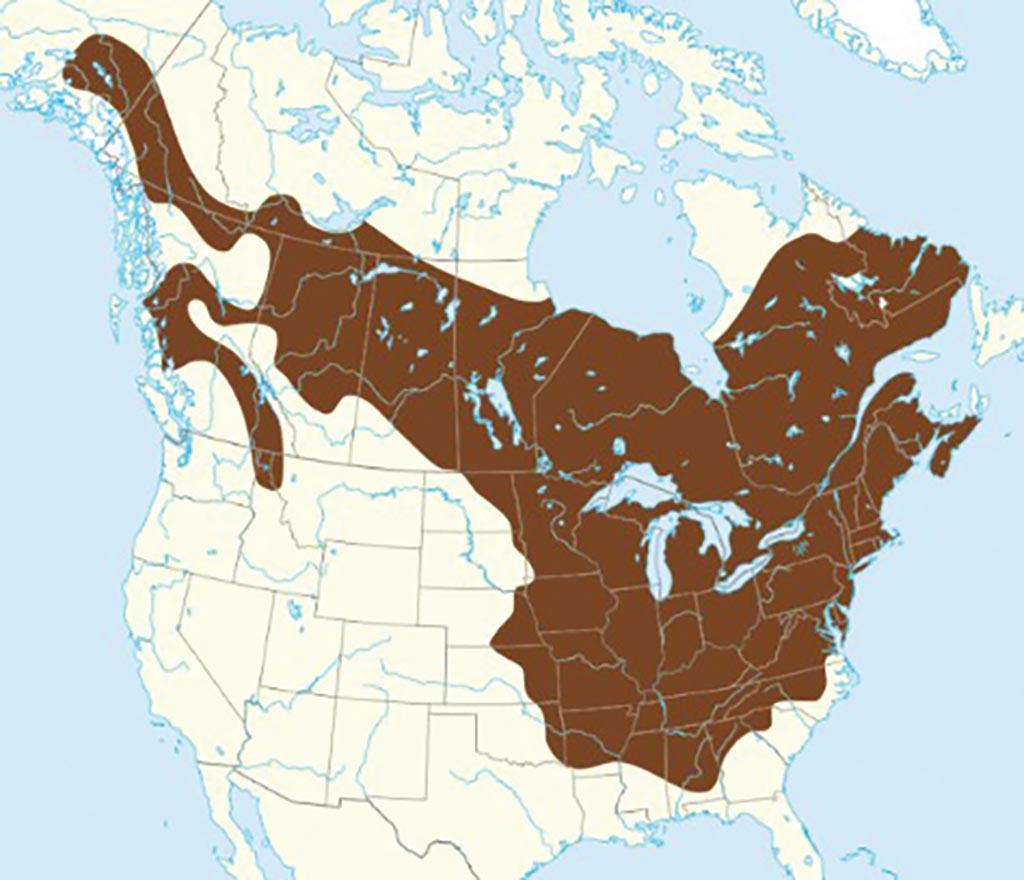
Seems like the only time we see anyone write about Punxsutawney Phil is on Feb. 2. That’s when we make him the scapegoat or the hero for any upcoming weather trends. Of course, he has no more control over the weather than we do – but it’s nice to have someone to complain about besides family.
What’s in a name. Speaking of family, Phil and his kind hail from the Sciuridae clan; even more specifically, he is Marmota monax. This family tree description helps to keep the more scientific community satisfied with their identification, but it’s a good thing that such names are applied to the critters. If not, you might get a little confused as to what you’re looking at if you had to rely on their more commonly used names – and they’ve got a few.
Let’s see, there’s groundhog, chuck, woodchuck, ground pig, whistle-pig, whistler, thickwood badger, Canada marmot, weenusk, red monk and land beaver. If you meet a French Canadian visiting the U.S., they’ll tell you it’s a siffleux, and the name with the oldest origin is likely monax (Móonack), which was used by the Algonquian tribes to describe the animal. Translated, it means “digger” – a skill that this marmot has definitely mastered. While we’re naming names, the youngsters of the group are called chucklings.
Benefits?
The digging that the groundhog does can make it a very beneficial animal – yes, that’s a CAN BE. Its burrowing tendencies are certainly not welcome around pastures, narrow fencelines or near valuable crops. Then there is that tendency they display for rooting under buildings and under porches. When they start causing trouble in the wrong places, quite a few other names can be added to the aforementioned list. We’ll get back to that in a minute.
As for the beneficial part of their digging, you might just be surprised at some of the hidden benefits of this largest member of the squirrel family. Their natural tilling of complex burrows mixes topsoil with subsoil, helping to improve nutrient distribution. It also lessens soil compaction, improves drainage by allowing water to more effectively reach deeper levels and naturally aerates the soil.
Those engineered holes in the ground, along with the tunneling connections to other surface escapes, make a grand network for denning wildlife. An abandoned burrow system (often abandoned due to local predators knocking off its residents) can become home for a variety of creatures. Rabbits, fox, skunks and opossums are quick to make use of the sites as dens. Even snakes will find a nice retreat deep inside those tunnels, often finding mice as a bonus dining opportunity. Those same snakes may discover it to be so inviting that they spend the harsh winters hibernating deep beneath the snow.
Fun facts
There are some other interesting things about Chuck and his kin. As mentioned, they’re related to squirrels, chipmunks and prairie dogs, and they’re also the biggest. A good-sized woodchuck can tip the scale at a whopping 15 pounds, though they’re most likely to weigh between five and 12. Another cool fact is that those big front teeth never stop growing, but that’s actually true of all rodents. It’s all that gnawing and chewing that keeps them worn down to a proper fit. If they happen to be misaligned due to a birth defect or injury, that abnormal growth can be a terminal issue.
Whistler also has excellent eyesight, noticing movement quickly. When he does, he’ll often stand erect for a better view to see what’s up. If he determines a possible threat is nearby, he’s likely to live up to his name and give a shrill whistle to warn others in the area, then scampers down his hole.

Population control
Let’s get back to the name-calling. Anyone who owns horses or livestock, makes their living farming soybeans and those who live in urban (even suburban) areas who are trying to maintain solid foundations under their buildings, are far less generous to the whistle-pig’s presence. They’re also not the best critters to have digging around pond banks. It may begin with dropping a descriptive adjective onto the chosen name, but after that, things usually get serious.
As someone who has placed a lot of vacancy signs on woodchuck burrows, I’ve never been one to encourage timidness in their removal when they turn up in the wrong places. With that said, if I see their activity on wildlife areas or inside woodlots, I’m likely to “live and let live.” In those spaces, the burrowing benefits outweigh most perceived damage. Coyotes and owls naturally keep that population in somewhat of a check.
During my high school days, I worked on a neighboring farm, which sat about two miles away as the crow flies. I’d walk that every day during the summer months, my rifle slung over my shoulder. I clipped a lot of alfalfa munchers during those walks, and my boss was ecstatic. One day, when we’d finished bailing for the day, he called me over for a talk. He handed me a $10 bill and said, “This is for your bullets.” Then he told me there was a neighbor who had asked if I’d be willing to trim their groundhog population.
I knew that farm well. I’d asked to hunt rabbits and pheasants there and was told that they didn’t allow it. I hiked over and laid my rifle down in the yard, then walked up to the house. The woman I’d asked about hunting answered and told me about all the problems along their bean fields and their pasture. I asked her to sign the back of my hunting license — a habit I had when getting permission — and began walking away. Then she asked, “Are you the young man who asked about hunting rabbits with your beagles?” I told her that I was, and she quickly added, “Then you’re welcome to hunt this year. Thank you.” That’s when I found out that sometimes the groundhog can be a key to a lot of locked gates.
While there has been plenty written about varmint hunting and appropriate rifles and calibers, not a lot of dedicated books have been published on the subject – but there are a couple classics that have a great historical context for varminters. “Woodchucks and Woodchuck Rifles” was written by Charles Singer (CS) Landis in 1951. Landis wrote with a keen sense of wildlife observation and enjoyed experimenting with popular firearms of the time. The other was written by Paul Estey, “The Woodchuck Hunter,” way back in 1936. Both have been reprinted over the years, but if you’re a bit of a bibliophile like me and want original copies for your outdoor reading collection, they can be found – as long as you’re willing to pay for them. The reprints are definitely cheaper.
Good eating
So, once G-Hog is deceased, what do you do with them? Admittedly, plenty of them are just disposed of due to shot damage or the fact that a lot of people don’t look at them as the next evening meal. They were actually quite popular as part of the routine menus for both native Americans and newcomers to this country, and many still put them on the table.
One old Depression-era guy always wanted me to drop him off a few every summer. His wife cooked them in a pressure cooker and served the seasoned meat over noodles. I ate with him a few times, and I honestly didn’t know I wasn’t eating beef until his wife mentioned it. Kind of gives a new meaning to Chuck roast. Another fellow I knew made back quivers with their tanned hides, turning that grizzled fur to the inside, which quieted the arrows from rattling. He’d paint the outside with traditional American Indian symbols and use them for reenactments and for hunting.
If you ever attend a wild game dinner, don’t be surprised if you see woodchuck on one of the tables. While I’ll admit I’ve never cooked one, I couldn’t help but check for Chuck recipes. Guess what? I found 20. Just to name a few, there’s groundhog soup with barley, groundhog kebabs with peppers and onions, groundhog curry with coconut milk, groundhog and bean cassoulet, and groundhog ragout over polenta. Check them out at kindkitchenrecipes.com/groundhog-recipes.
The bottom line is that within natural ecosystems, woodchucks are beneficial to wildlife, contributing to soil health, habitat provision and food web stability. Their role as ecosystem engineers, though less obvious, can be compared to that of the beaver — but their impact can be mixed in human-managed landscapes where action may be required to prevent damage.
“My enemies are worms, cool days and, most of all, woodchucks.”
— Henry David Thoreau





A pressure cooker is a great idea. It’s likely a lot faster than my crockpot method.
So, that high-priced bourbon, Whistle Pig, is named after a varmint. I’ll be darned.