




Over the past few years in this column, the vast number of laborious chores done by the pioneers across the Ohio Country have been described at length. Whether it was cutting down trees, hewing logs, skinning game, making soap, tanning leather, cooking over a kitchen fire, rendering lard, planting gardens, making lye or whatever, settlers really worked up one heck of a sweat.
It is difficult in today’s highly sanitized society for us to even begin to imagine the level of stench that constantly emanated from 19th century people’s clothing. The fact that communities were able to survive this at all was because of one simple fact, that being everyone smelled the same. Nobody stood out. Everyone smelled really bad most of the time. People today simply have a different understanding of odor than did those living in the early 1800s.
Still, however, people did wash their clothing and bedding on a regular schedule. But what were the techniques for that?
In the earliest days, clothes were washed in the nearest creek or river, with stains being beaten out on rocks. Clothing was also boiled in iron kettles — usually the same vessel that the family cooked its food in. Garments were repeatedly lifted in and out with a forked stick to make sure all surfaces were exposed to the boiling water.
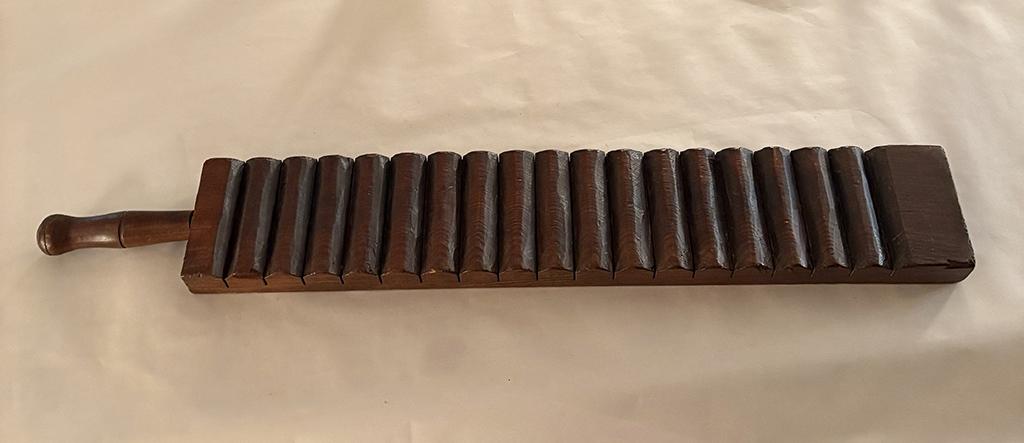
The first real improvement in the laundry process was the introduction of the scrub stick or scrub board.
Scrub sticks were narrow, heavy wooden boards, one side of which was cut into a coarsely corrugated surface over which items of clothing could be rubbed to help remove stains.
Scrub boards are believed to have originated in Scandinavia, and their use spread to other countries during the early 19th century. The American version of the scrub board saw the addition of a turned wooden handle at one end.
The scrub board led eventually to the creation of the washboard.
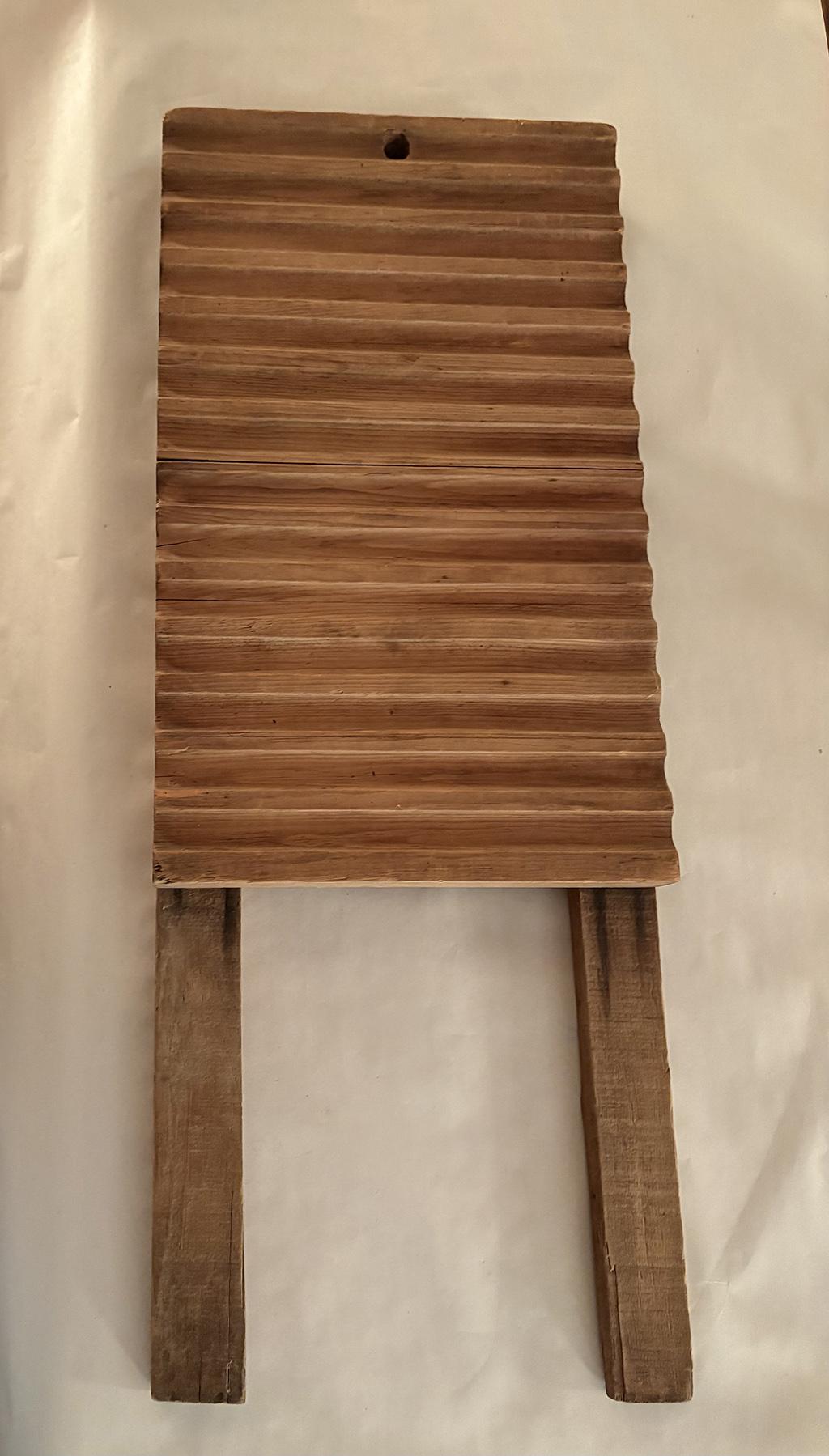
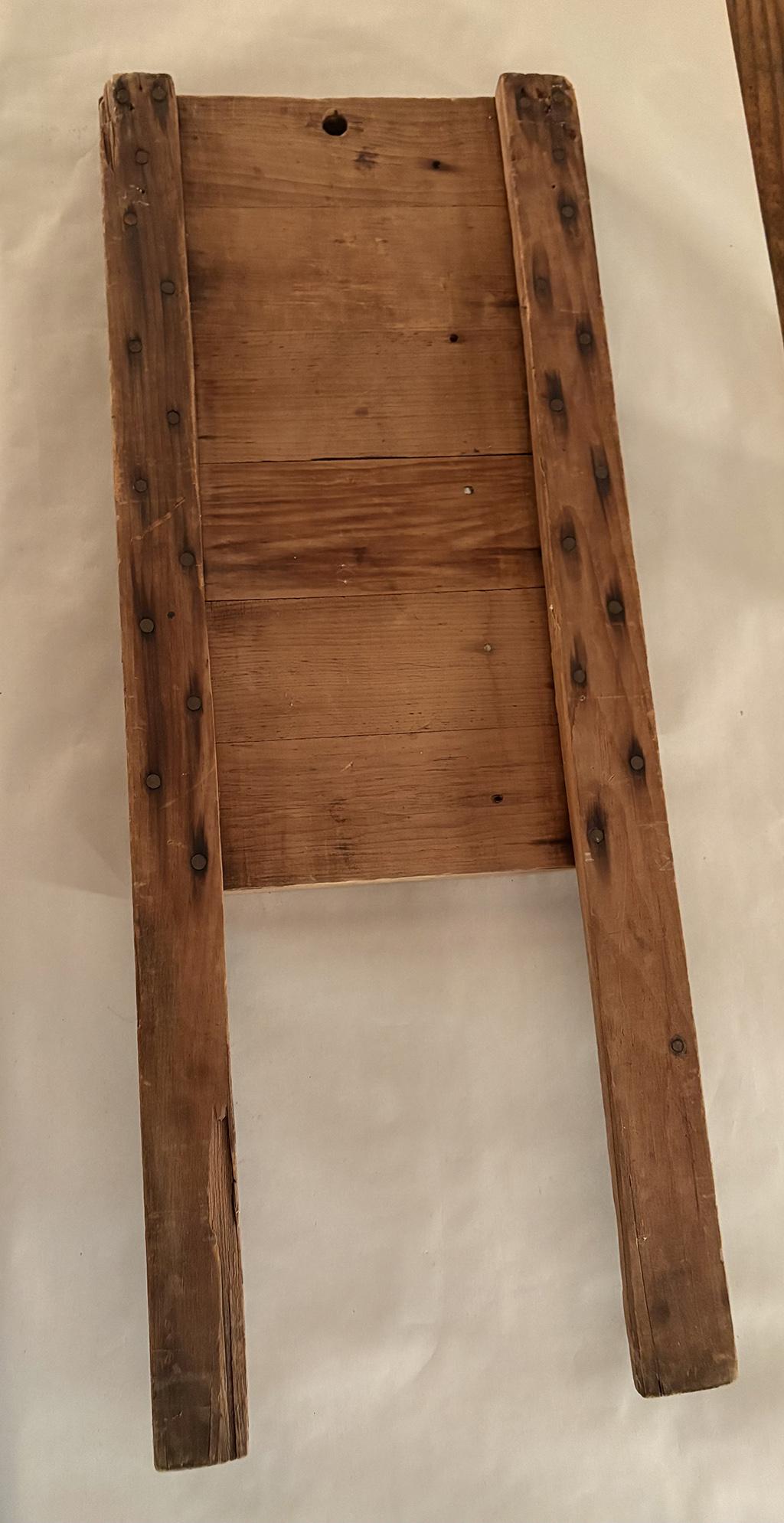
It is unknown when the washboard was invented, but in northern England there was a tradition of using “washing bats,” which were boards with ribbed surfaces. Before the 19th century, washerwomen in Italy also employed grooved boards.
In England and France, tilted boards called “washing stocks” were set on legs, but these did not have a grooved surface.
In the early 1800s, washboards were not standard household equipment in America, but many families crafted homemade versions of what would eventually become them.
On Feb. 9, 1833, Stephen Rust of Manilus, New York, patented “a new idea”: a “washboard” with a piece of “fluted tin, sheet iron, copper or zink.” It was the first patent for a washboard filed in America. Nine years later, a wooden washboard coated in rubber was patented by Marcellus Sands of Franklin, New York.
Then, in 1845, a business directory in Chicago listed a manufacturer of “the improved zinc wash boards.”
Glass washboards arrived on the scene before 1877 when Herman Liebmann of Chicago offered an “improvement in wash boards” with his idea of perforating a “glass, porcelain or terra cotta” scrubbing surface.
While all of these improvements may have mightily impressed city folk, in the hundreds of still secluded country settlements across the Ohio Country, pioneers had their own inventive ideas of what a washboard should be and how laundry ought to be done.
Their homespun inventions will be the grist for the next column. Stay tuned.