





During my years as a program naturalist, I led people of all ages on nature hikes. One of the joys of living in northeastern Ohio is experiencing the changing seasons. Although any season of the year brought many discoveries along the trail, spring was always my favorite.
There were so many things to identify and discuss; I had to discipline myself or else a one-hour hike would easily turn into two!
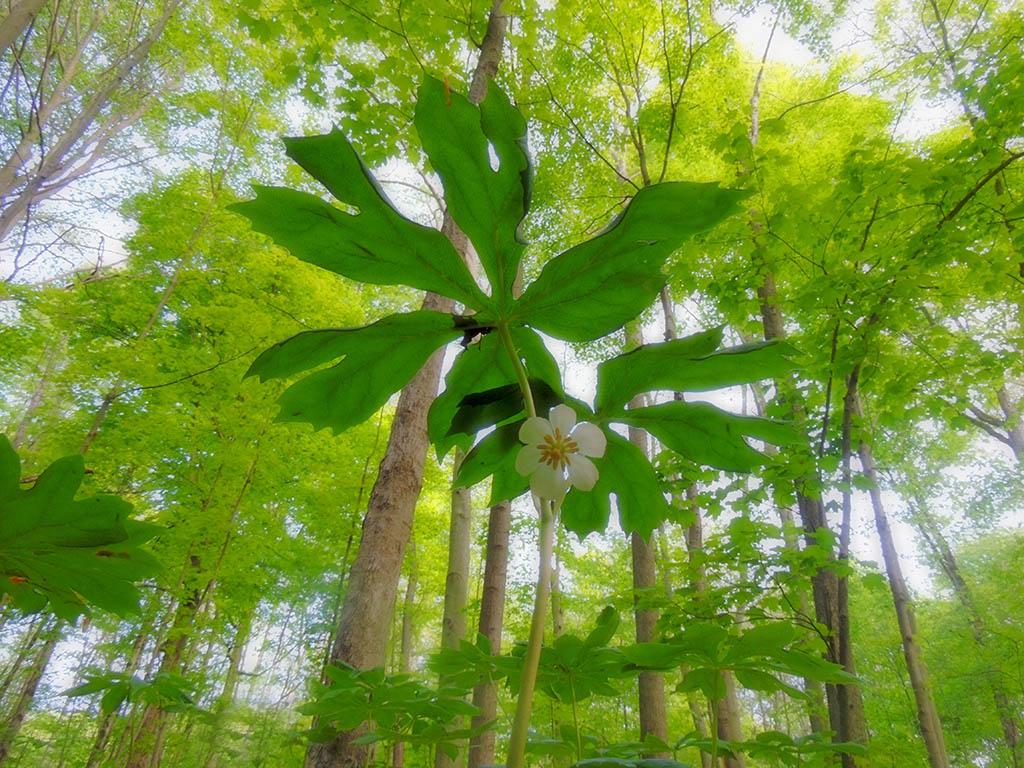
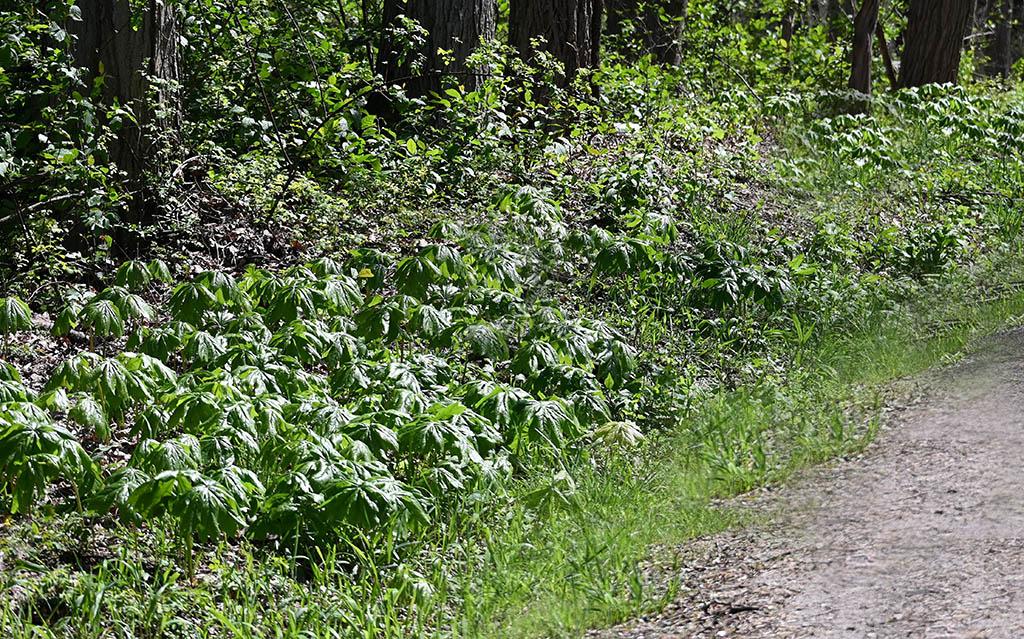
One of my favorite things to do with the kiddos while in the spring woods was to have everyone get down on their hands and knees and peer beneath the broad, spreading leaves of the mayapple.
“If you were a toad or a little mouse,” I would ask, “Wouldn’t you love to sit beneath this plant while it was raining, staying nice and dry while hearing the raindrops pattering on the roof above you?”
Their contagious giggles confirmed that they loved this analogy of comparing the leaves to an umbrella. That, combined with touching the rubbery leaves and waxy, white flowers, certainly left an impression on them that they would not soon forget. At least I’d like to think so.
At the end of the hike, I would ask, “So, whose favorite wildflower is the mayapple?” and all hands would shoot up into the air.
Unique spring wildflower
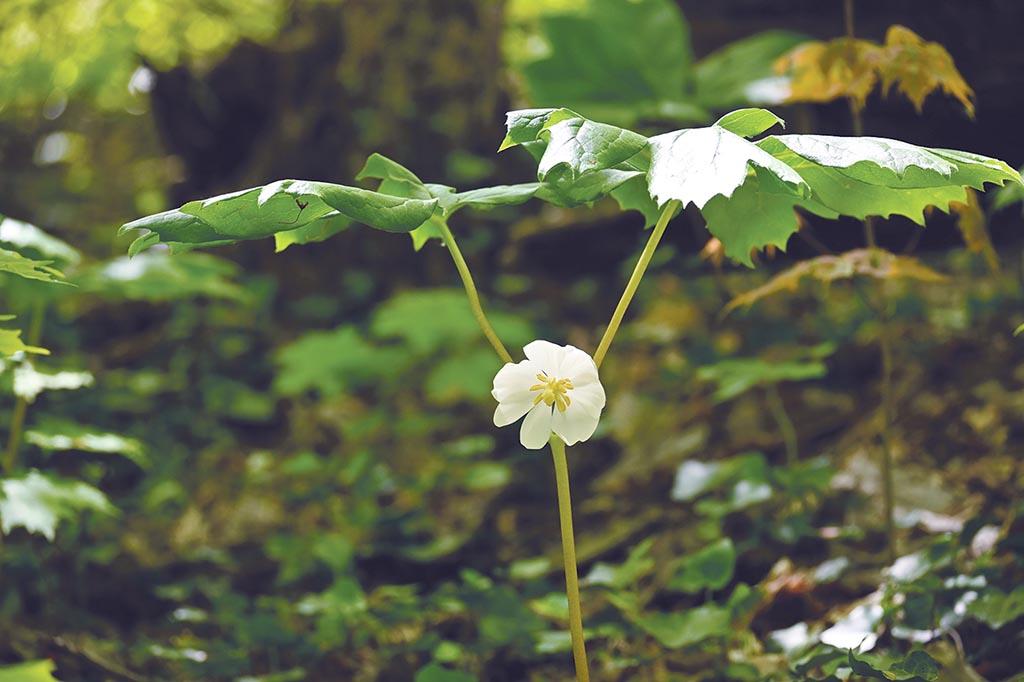
The mayapple (Podophyllum peltatum) is unique among spring wildflowers. Unlike other plants with showy, colorful blossoms that are hard to miss, mayapples appear green overall, and unless you look carefully, you may miss the single blossom that hangs beneath the large, spreading leaves altogether. Also referred to as wild mandrake, ground lemon or umbrella plant, mayapples are herbaceous and perennial, occurring across much of the eastern United States.
Although often thought of as “woodland” wildflowers, mayapples are hardy plants, growing in both moist and dry conditions in habitats including open forest, wood edges, fields and even along roadsides. It is rare to see just one, as the plants typically grow in colonies, spreading by rhizomes, which are derived from a single root.
Mayapples typically break ground in April, taking advantage of the warm rays of the sun hitting the soil, unhindered by leaf cover. Stems shoot up to nearly 16 inches in height and support a broad, deeply lobed, umbrella-like leaf spanning over a foot across. Immature plants produce only a single leaf, but mature specimens have a stem that splits into two, supporting a leaf on each branch. It is right in the “Y” where these two stems split that everything happens.
Flower formation
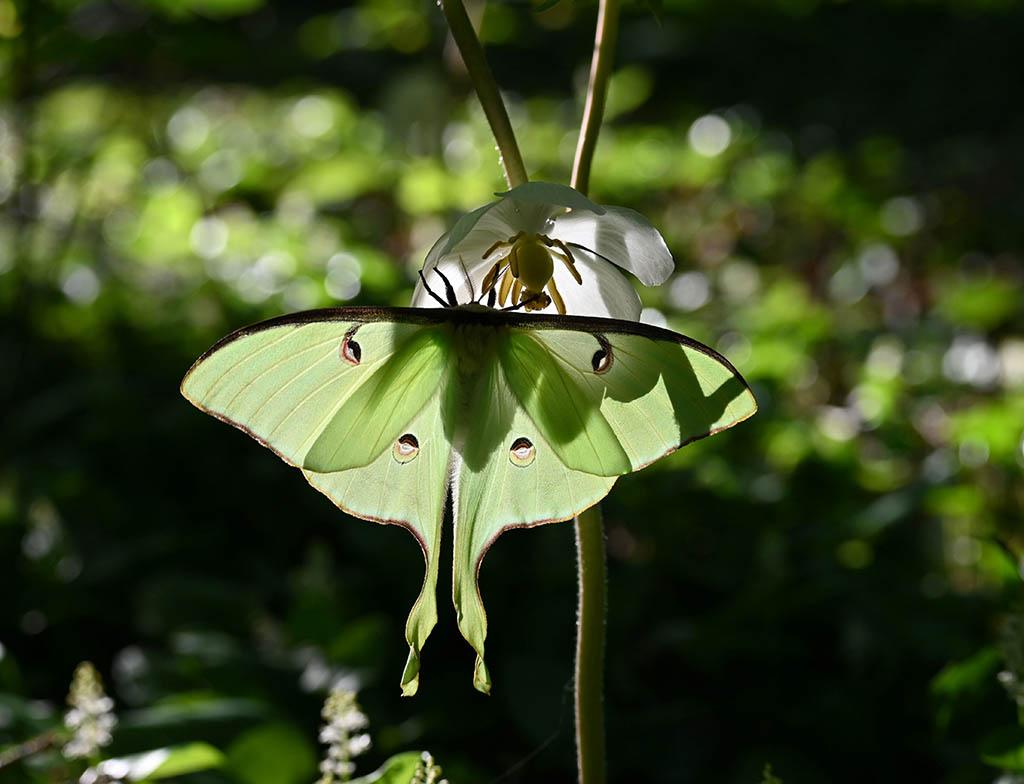
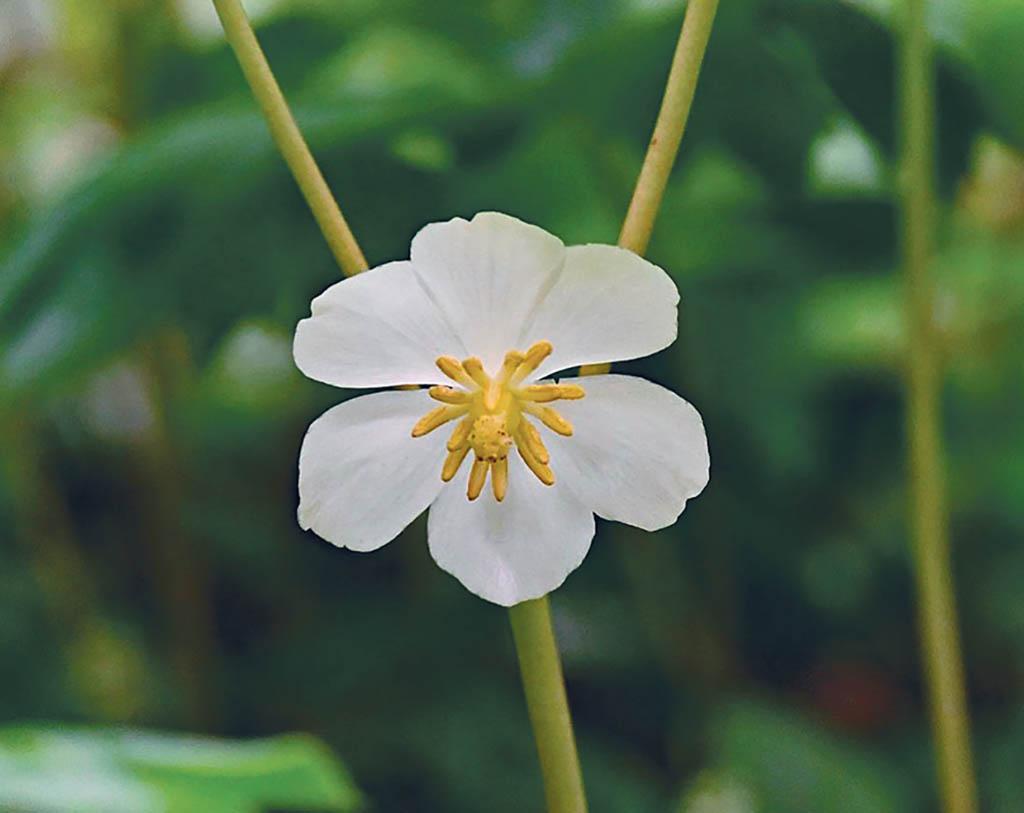
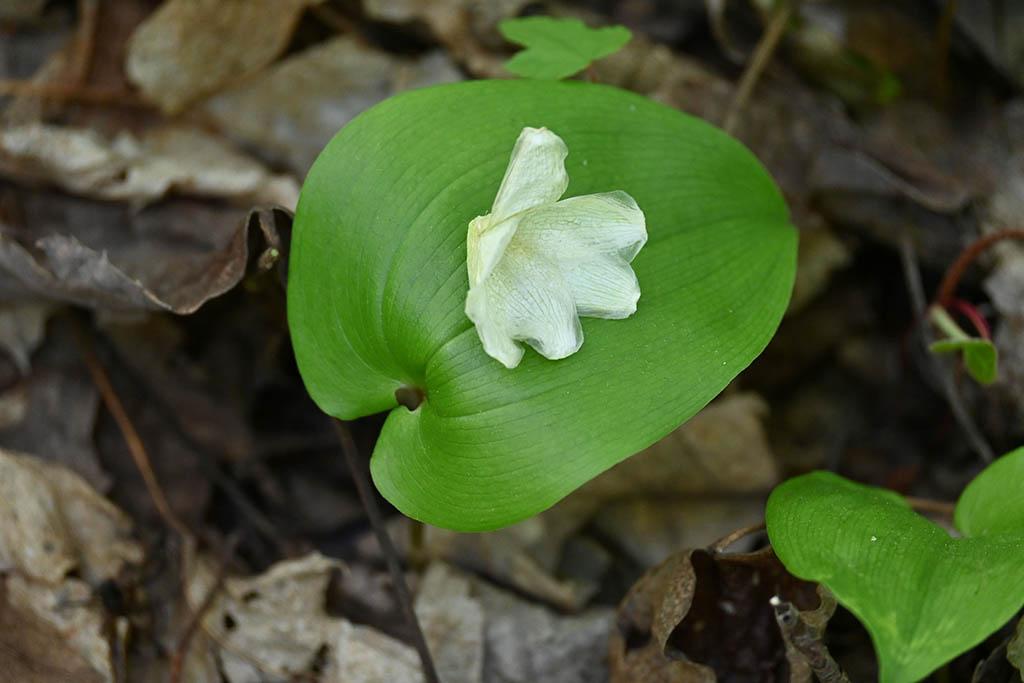
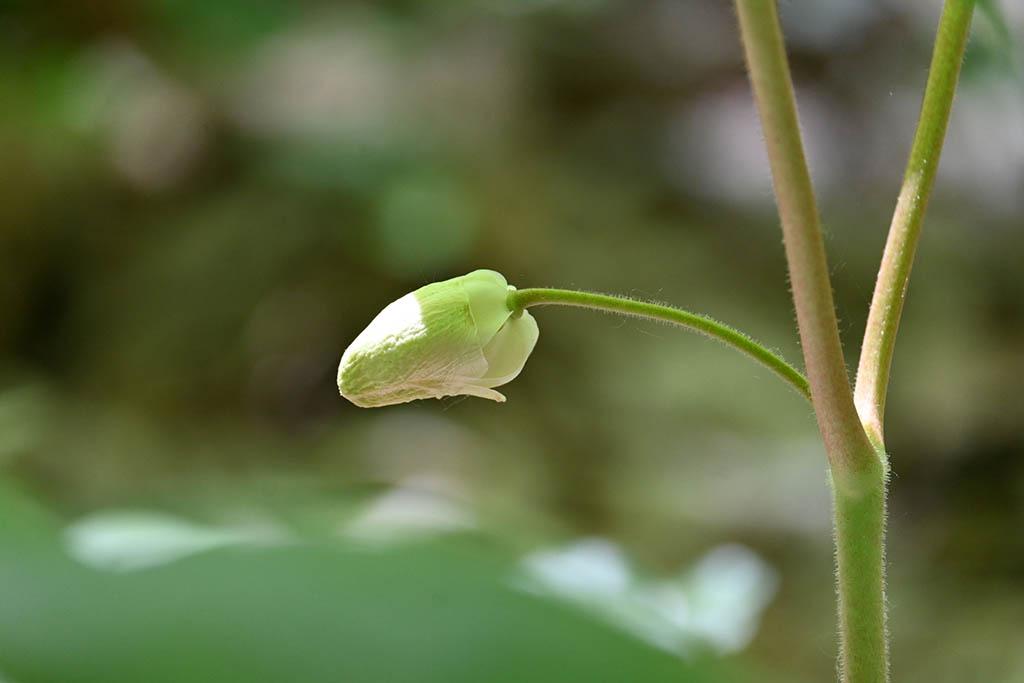
Supported by a long stem is a large bud, which develops as spring progresses. In May, the sepals (bud covers) loosen and drop to the ground as a single large flower opens. Mayapple flowers are breathtaking. Their white, waxy blossoms span 2 inches across with six to nine petals and 12 to 18 stamens with yellow, pollen-bearing anthers. The nodding flowers are fragrant, and although they don’t produce nectar, their copious amounts of pollen attract many species of bees, flies, butterflies and moths, which are crucial to their pollination.
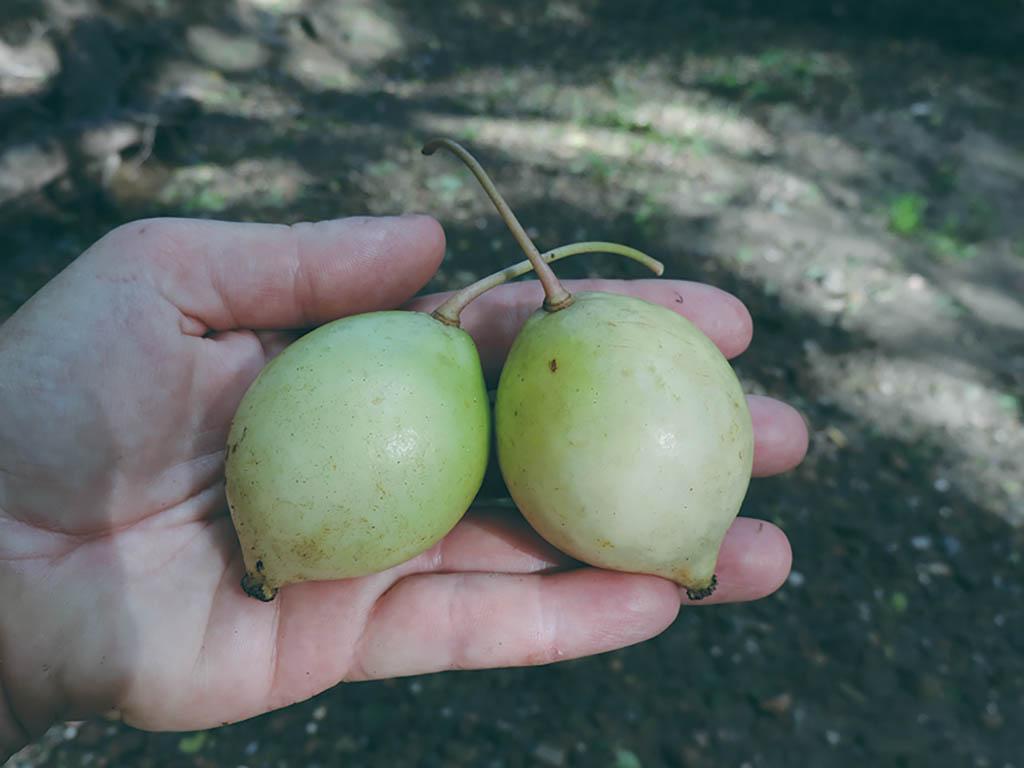
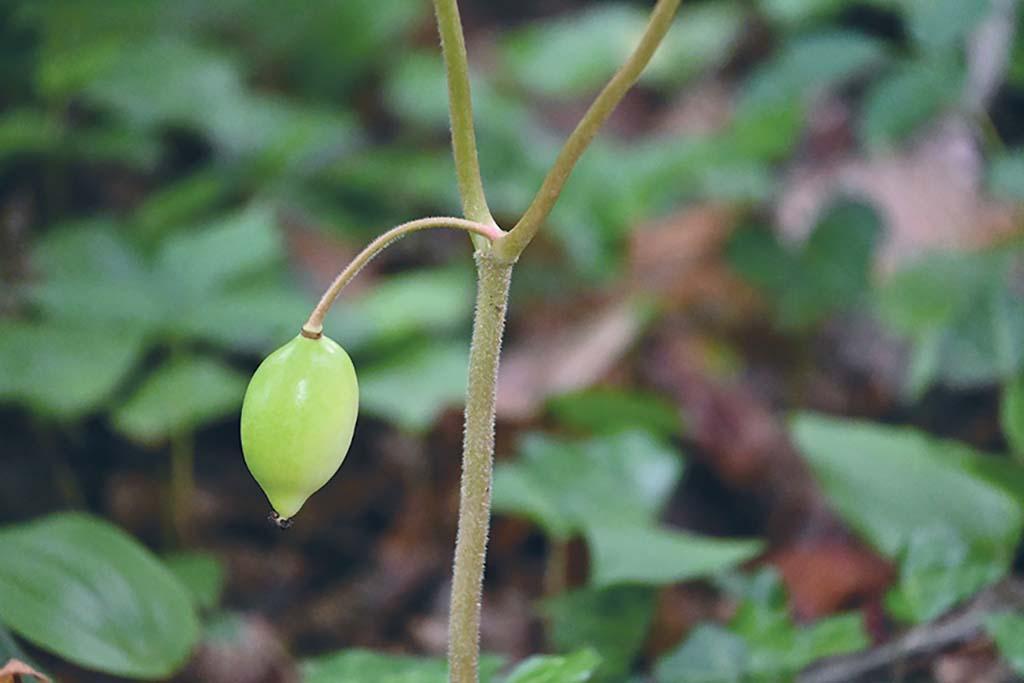
As spring progresses into summer, the fruit of the flower develops. The “apple,” for which the plant is named, is lemon-shaped, weighing the stem down as it ripens. It is important to note that the mayapple plant in its entirety is extremely poisonous, containing the highly toxic compound podophyllotoxin. This keeps the plant protected from being consumed by deer and other wildlife.
As summer progresses, the fleshy fruit turns bright yellow as it ripens. At this time, it loses most of its toxicity and can be consumed, albeit in moderation and without the seeds, which remain poisonous. I always treat myself to just one mayapple every year and I have even known some to make tasty jelly from the fruit.
Alas, many species of wildlife, such as deer and other mammals, adore the fruit and have a propensity for seeking it out and devouring it as soon as it is ripe, making it hard to find. As the weight of the “apple” pulls the dying leaves earthward, it emits a fruity aroma that attracts its main seed disperser, the box turtle.
Box turtles adore the taste of mayapples and as the seeds pass through their bodies, being spread as they travel, they have a 40% higher rate of germination than they would if they just ended up on the ground beneath the plant!
What’s in a name?
So, just how did the mayapple get its name? The plant emerges from the soil in April. Aprilapple? It produces an extravagant flower in May. And by late June has produced its mature yellow fruit. Juneapple?
One must assume that the striking blossom hidden beneath the umbrella-like leaves at the height of spring is what merits its moniker.
Author Minnie Curtis Wait wrote about the beloved mayapple in 1901 in her poem:
“Mandrakes”
Down in the shady woodland
Where fern fronds are uncurled,
A host of green umbrellas
Are swiftly now unfurled.
Do they shelter fairy people
From sudden pelting showers
Or are the leaves but sunshades
To shield the waxen flowers?






I love mayapples and your article. (And all your articles).
A most excellent read, Tami! Especially here in the nexus of the Summit and Portage counties’ deep woods. First came the ramp–now the beloved mayapples. Of course, yonder skunk cabbage had both beat for ringing in Spring.
Carry on! Great article.
Thanks for this wonderful article! Mayapple is such a charming species. Your photo of the Luna Moth on the mayapple flower is stunning!!! That’s one I’d print and hang on the wall. Do you have a larger version available?