



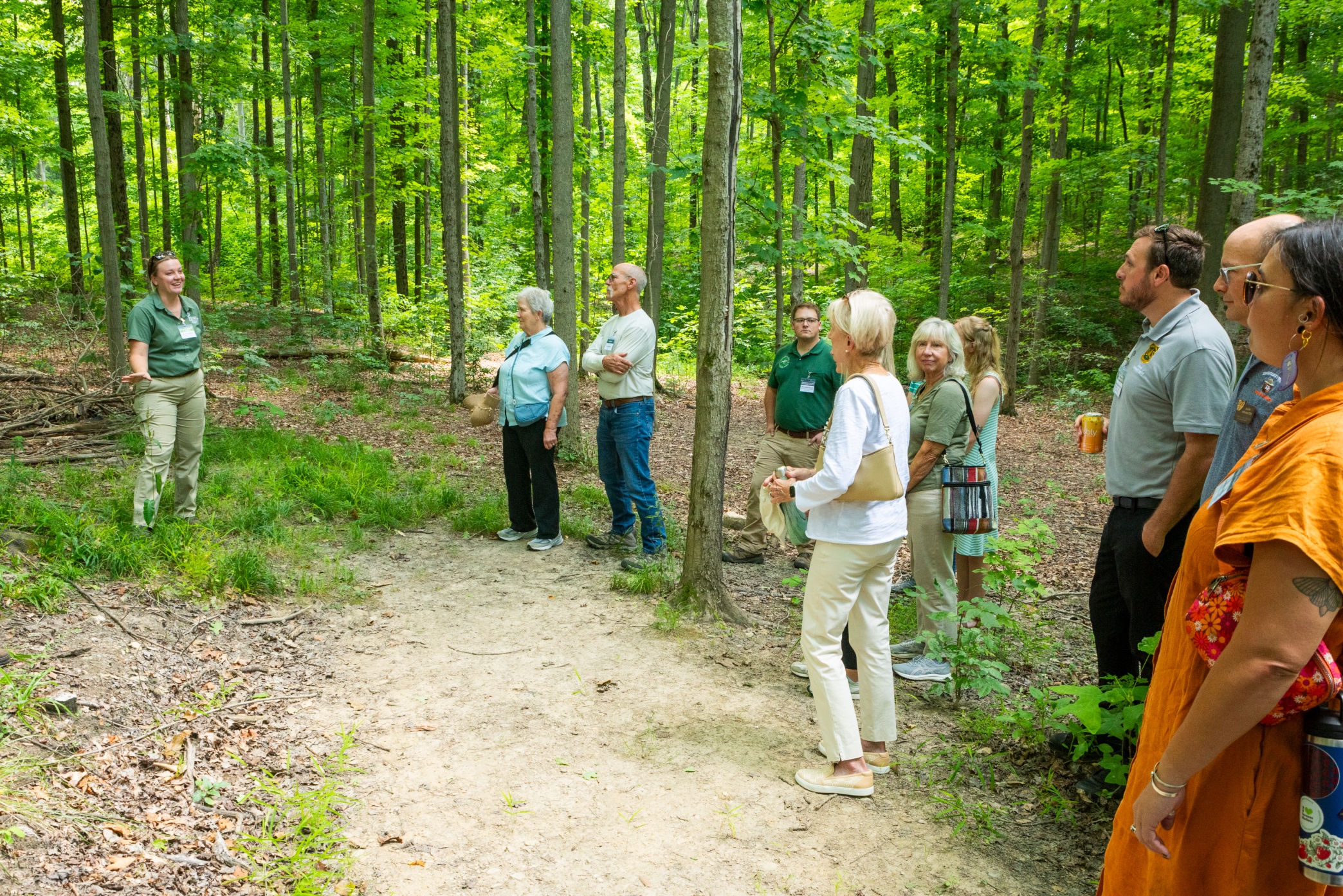
KIRTLAND, Ohio — On the outskirts of Greater Cleveland, a vast wilderness of rolling green hills, old-growth forests and grassland meadows stretch out from the edge of the suburban shelf of northeast Ohio. This is Holden Arboretum, a nature-lover’s paradise of 3,500 acres that unfurl slowly as pockmarked streets give way to narrow, winding lanes and looping trails alongside shaded ravines. Over the years, Chris Lakus has taken many walks here with her best pal Chip, a Labrador retriever.
Lakus is a longtime volunteer and, these days, a Holden ambassador who helps greet visitors and answer questions at events. She’s always known this place was special, for more than just the beautiful view.
“You get out of the car and just breathe the air and look around, and immediately your mood is going to go up a few notches,” she said. Soon enough, with Chip tugging her along, whatever had been bringing her down always eased off. “By the time I was done walking the dog, either I had solved the problem or the problem didn’t matter anymore.”
She’s not the only one walking a little lighter. Holden Forests & Gardens, which includes the arboretum and Cleveland Botanical Garden, reported attendance of more than 350,000 visitors last year, whether they came for a simple stroll or to take advantage of guided tours, workshops and community programs.
Behind the scenes, the organization is busy conducting research, leading demonstration projects and offering hands-on education aimed at the private landowners who own most of Ohio’s woods, helping them give their trees the best care possible. At the heart of that effort is the Working Woods Learning Forest, comprising about 70 acres all tucked within the arboretum that serve as an outdoor classroom and living laboratory for woodland management. There, staff and partners discover what it actually takes to thin crowded stands, encourage new tree growth, control invasive species and keep a forest healthy over time.
For this, the Working Woods Learning Forest at Holden Arboretum has been named the 2026 Tree Farm of the Year by the Ohio Forestry Association. The preserve, located at 9550 Sperry Road in Kirtland, Ohio, will host a celebration tour from 9 a.m. to 4 p.m. Sept. 12. The event will give visitors a chance to explore the learning forest, talk with conservation professionals and see for themselves how timber stand improvement, wildlife habitat work and other forest management practices play out on the ground. Registration is free, available online.
To Lakus, the honor underscores what matters most at the Working Woods: the research, which she believes will help chart a path forward for the future of all forests.
“As I’m sure you’ve read somewhere, ‘Faith is planting a tree that you darn well know you’ll never sit underneath.’ But we’re doing it for the future generations,” she said. “We’re doing this not for today, not for tomorrow, but for our children and our children’s children to enjoy.”
Commitment
For Adam Beichler, chair of the Ohio Tree Farm Committee, the Working Woods stood out quickly from the other nominees.
“I think one of the major things is, they have accomplished so much in terms of management on so many different fronts in a very short period of time.”
The Working Woods Learning Forest has been part of Holden since about 2018. In 2024, a $1.8 million USDA Forest Service grant helped the arboretum expand programming around the site to help more people learn from the woods.
Today, the opportunity that the learning forest affords the public and landowners, Beichler said, is the chance to see a wide range of management approaches they can adopt, all showcased in one place. On the day of the tour, from morning to afternoon, the woods will be buzzing with guided walking tours and educational talks, interactive displays and hands-on kids’ activities. Stations will explore core topics in practical woodland care: how to become a certified tree farmer, build a long-term management plan, improve timber stands, protect streams and spot invasive plants before they take over. Other stops will highlight edge feathering to boost wildlife habitat, how timber harvests are carried out and how ongoing research compliments a working forest.
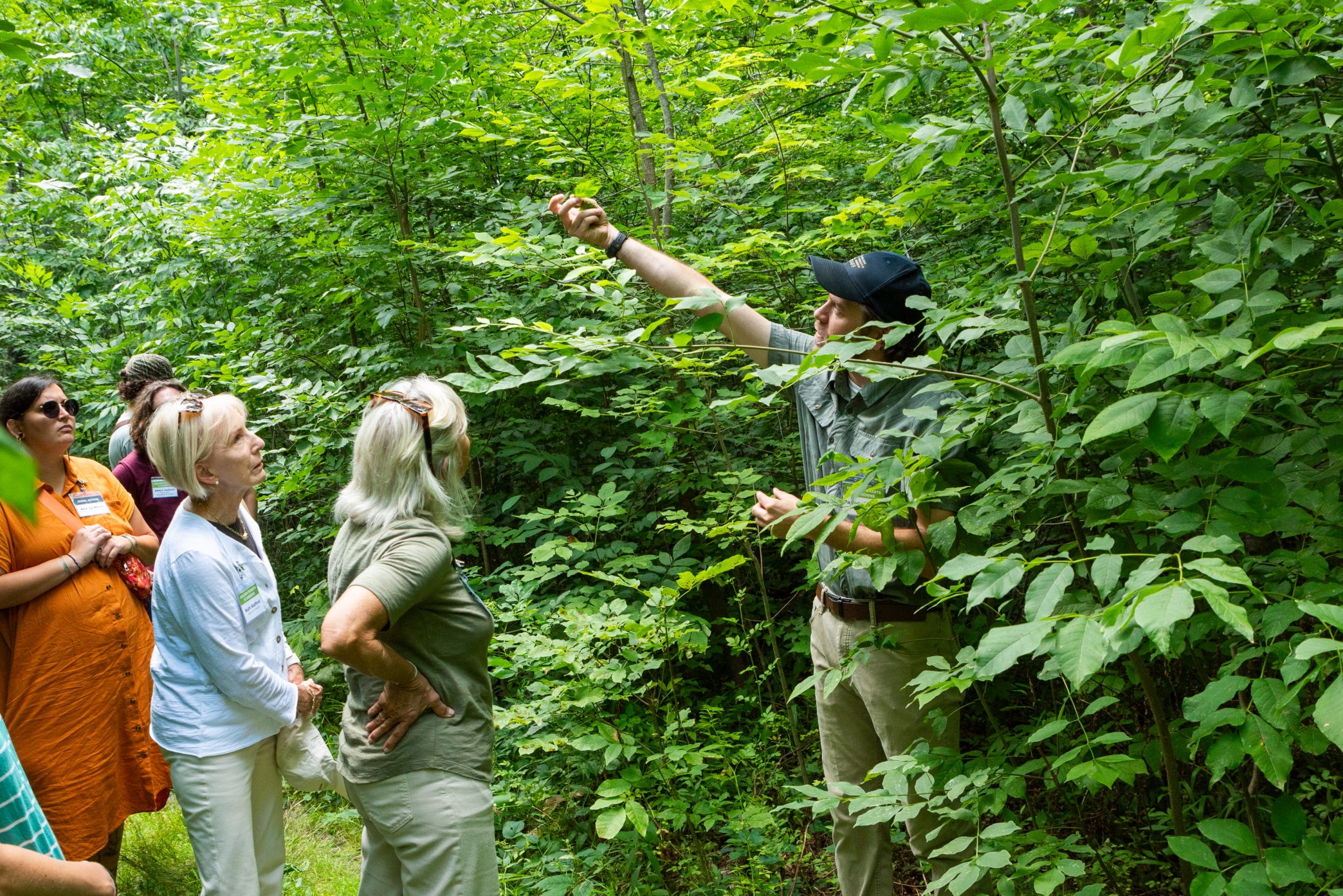
In Beichler’s mind, the Working Woods is further distinguished by how seriously the team takes invasive species. It’s a stubborn problem for almost anyone who owns woods, and it’s easy to feel overwhelmed by the task of reigning them in.
“Generally, invasive species are one of the biggest issues that most forest landowners face,” he said.
Beichler noted that Holden commits dedicated staff each year to hold the line against them in the arboretum, investing countless hours and experimenting with methods that aren’t widely used by most landowners. Fortunately for them, those approaches will be on display during the tour.
“The team that Holden has put together to implement management on the Working Woods is just absolutely outstanding. Every individual is extremely knowledgeable, well spoken and passionate about the work that’s going on there. It’s super impressive,” Beichler said.
“This gorgeous place”
On any given day, Working Woods Hub Manager Rebecah Troutman might be out in the field clawing back invasives or conducting trail maintenance, helping to lead a workshop on mushroom inoculation or lining up consulting foresters to visit private properties.
“My day-to-day, I mean, it’s different every day, which I love. I wear a lot of different hats depending on the day,” she said.
What holds it all together, she said, is the mission: the Working Woods show landowners not just what to do but why it matters. Holden’s research team tracks what happens when they change how an area is managed — thinning trees here, tackling invasives there or leaving patches alone as controls. Troutman said staff find great merit in bringing research, conservation, forestry and education together under the canopy of the arboretum.
“As land managers, we kind of know which things are important and why we do certain management techniques, and we can see why they work. But actually having the data behind it, I think, is helpful for a lot of people,” she said.
One of her favorite trails at the Working Woods passes through three different treatment areas. The first one was left to run wild; these are woods with a weak constitution and no active management. The next patch underwent some thinning and invasive control; in the third treatment area, the trees were thinned but the invasives were left behind. Visitors can see how quickly those stubborn plants are able to take root and conquer the world when more light reaches the forest floor but nothing is done to keep them in check.
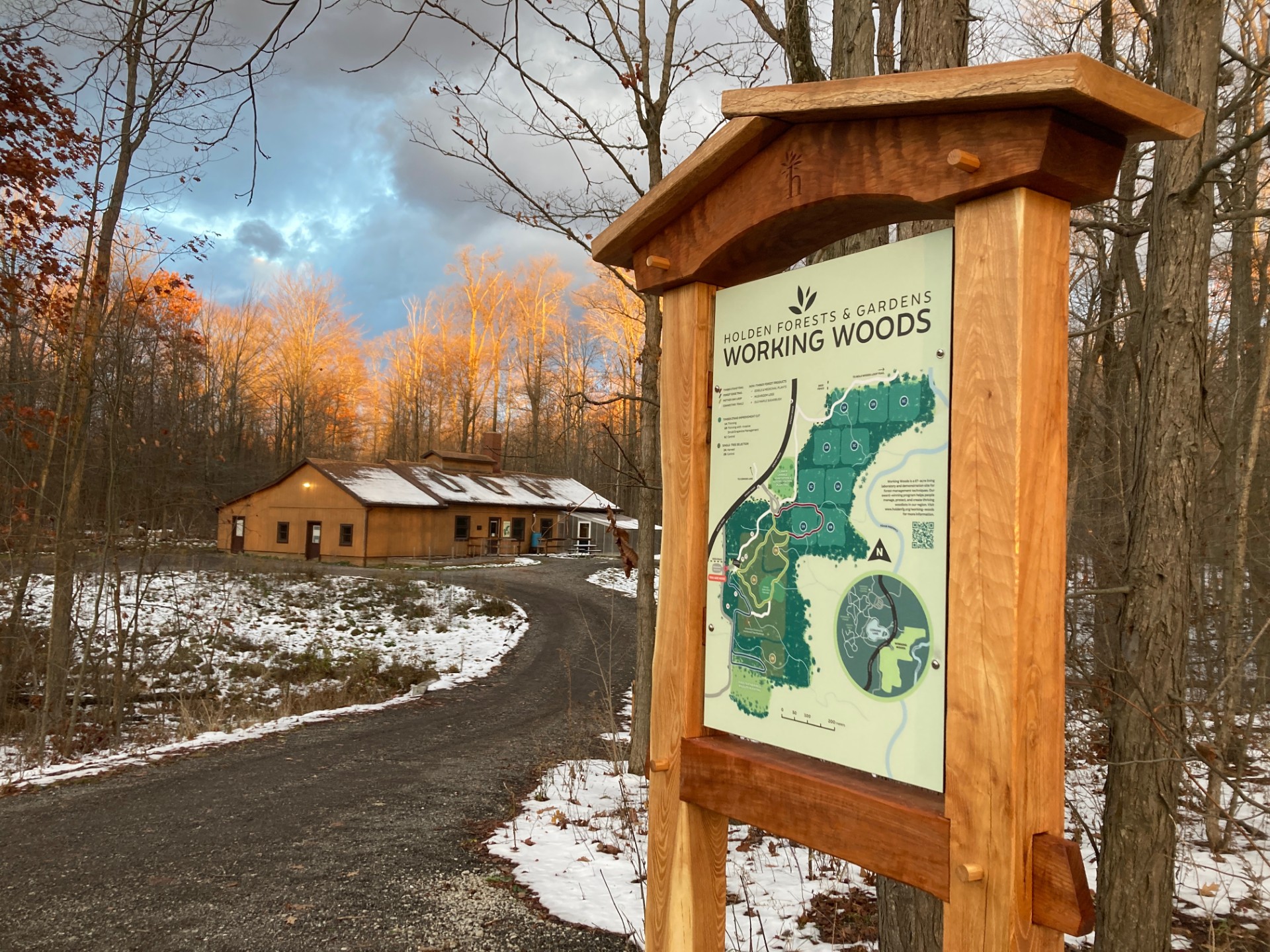
“It’s really interesting to take people through that loop and kind of see the light bulb moment of, ‘Oh yeah, I can visually see why you do this management,’” she said.
For landowners, Holden’s data offers something else too: hope that they can one day gain the upper hand. In one Working Woods research plot, Troutman and her team tracked exactly how much time it took to tackle invasive plants. In the first year, it added up to about 40 hours of labor to clear a couple of acres. By the second year, that time was cut roughly in half, and by about the fourth year it was down to a quick walk-through to catch any new sprouts early.
Sharing those numbers with landowners, she said, makes it clear that while the work is grueling at first, it really does get easier over time.
As the tour day approaches, Troutman said she’s eager to see who comes by and what they take away from a day in the woods. To Lakus, the Holden ambassador, the draw is simpler: watching people light up the same way she does.
“I find people who come out to the arboretum, they’re happy people. You really don’t find a grump there. You find people who are thrilled to be there and out in the sunshine and in this gorgeous, gorgeous place,” she said.




