


SALEM, Ohio — Farmers are looking at a scoreboard of farm business indicators as they decide what to plant, how to market crops and what can improve their bottom line in the new year. Beef markets, soil moisture, export market viability and crop prices are all top topics of conversation.
Even before planting season, several numbers on the scoreboard have already shifted in 2026. The U.S. Department of Agriculture’s Crop Production Summary for 2025 shocked traders in January with a high estimate of corn inventories. Corn futures dropped after estimates were set at 17 billion bushels, up 14% from 2024. Then, on January 20, China reached its 12-million-ton soybean purchase target of U.S. soy, bringing total Chinese purchase contracts to just 18.2 million tonnes for 2025. That figure still represents a deficit from 2024 export capacity of 26.8 million tonnes, making 2025 soybean sales to China the weakest since 2018. Soybeans account for 35% of Ohio’s agricultural export value.
While an additional 25 million metric tons may be on the horizon for 2026, farm leaders in Ohio are not holding their breath.
New legislation on feedstock use for manufacturing is on the pipeline to build additional domestic demand. It’s not a new mission, but Brandon Kern, deputy executive director of the Ohio Soybean Council, says it’s time to bring everyone on board.
“We’re going to be pushing policymakers in Ohio to be thinking outside the box and strategically about how Ohio can be a leader in developing things like advanced biomanufacturing,” he said.
The soybean checkoff has long funded the Arable Research Lab to develop consumer products using agricultural feedstocks. “We’ve been focused on new uses for a long time,” Kern noted.
But to increase use of Ohio-grown soybeans, the OSC will push for legislation that enhances manufacturing capacity using agricultural feedstocks.
Kern points to states such as Nebraska, which champions its Renewable Chemical Production Tax Credit Act. Iowa has supported state funding for biomanufacturing infrastructure and Illinois has released a Biomanufacturing-Alternative Protein Roadmap — a move Kern sees as an important first step. Ohio ranks seventh nationally in soybean bushels produced.
Too dry for a crop
Whether ground is ready for planting will depend on precipitation in the Maumee River Basin, a region that has experienced three years of consecutive drought. Aaron Wilson, the state climatologist at Ohio State University, says drought is a long-term condition for Ohio. “We haven’t seen an abundance of rain, especially in northwest Ohio, Indiana and Illinois, so drought persists there,” Wilson said. According to his climate office as of Jan. 13, almost 17% of the state is experiencing these conditions, counties along the Maumee River facing “exceptional drought.”
Improvements, however, have been observed in parts of southern Ohio, much of West Virginia and possibly southwest Pennsylvania.
“What we really need this winter is soil moisture recharge,” he said. If soil moisture is restored in January, February and March, he expects farmers to feel more confident getting into fields and planting this spring.
Long-term trends Wilson is tracking include warmer overnight low temperatures in the summer, but not daytime highs, a pattern observed last summer. Late-summer drying trends are also becoming more prevalent, with drier conditions in August and September.
The ups and downs in cattle, milk markets
Further down the feed supply chain, cattle markets face their own set of price dilemmas for certain producers.
Farm production expense data from the USDA last year cite costs for livestock, labor and interest continue to rise compared to 2024. Costs for feed, fuel, pesticides and fertilizer are declining.
Eric Van Fleet raises Hereford cattle in Noble County and sees the same trends in Ohio. A full-time agriculture educator and part-time farmer at Green Valley Farms, he says cattle costs for his freezer and custom beef business have remained high since this summer.
“The price of the cattle themselves has doubled. For instance, 500-weight feeder calves would have cost me $800-$1,100 a couple years ago. Now $1,800 is not unheard of,” he said.
While his feed costs are at or below their average, they do not offset feeder-calf costs. “It’s good for the cow-calf producer, but not ideal for the guy like me who’s buying feeder calves to try to resell them down the road. That’s been a challenge,” Van Fleet said.
Demand in his local beef market has not slowed. Customers are still paying a slightly higher price. Nationally, beef prices increased 9.2% last month compared to December 2024, according to the Consumer Price Index. The only change he expects this year is a transition to a new processor after his current one stopped doing inspected kills. That shift could result in new products and access to a new customer base about an hour north of his Sarahsville, Ohio, farm. “We anticipate a year of continued growth here at Dandy Beef Company,” he said.
In the dairy sector, Chris Weaver, a dairy farmer in Williams County, is preparing for 2026 with a strategy. “We’re gonna head into a pretty dark 12 to 18 months, because there’s just too much milk around.”
Preparation for the season, he explained, involves understanding his farm efficiencies and ensuring financial stability to weather low prices, while staying attentive to futures markets. “You can’t get the market right every single time, but if you can least lock in a little bit of a profit, you can kind of survive for a long time,” Weaver said.
Across the country, dairy producers have been offsetting falling milk prices through the beef-on-dairy market, supplementing income by breeding beef calves instead of replacement heifers.
City investments for farm country
When Ohio’s producers step off the farm, many venues for events and showmanship are set for a refresh. In 2026, the Ohio State Fair will complete its second year of renovations, opening the imAGine exhibit to replace the Land & Living building and the Taste of Ohio café.
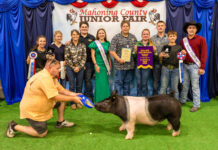
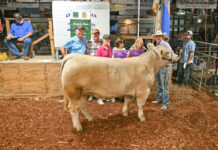
Also new at the State Fair is a revised schedule. Livestock competitions will take place over 15 days, instead of extending an additional week before the fair. All species will now participate in showmanship during the fair itself, allowing for greater involvement in county fairs as well.
Ohio State University’s Multispecies Animal Learning Complex will hold its grand opening ceremony at the end of January on Waterman Farms in Columbus. The facility includes a new livestock arena, animal holding pens, classroom spaces and an automated robotic milking barn for a herd of 60 Jersey cattle. The building is intended to connect animal agriculture to Ohio’s urban center.