


“Come on, baby!” I encouraged her. “Just a walk, or rather, ride in the park.” One push of the button and my 17-year-old car’s engine started up strong. While this was not an uncommon task, doing so in sub-zero weather was an uncommon ask.
Has it been days, weeks or perhaps even months that we’ve been hunkering down throughout this winter’s deep freeze? Yet, despite the plunge of our thermometers, the daily demands of getting to and fro continues and come hail or ice water, onward we must go — to work, to school, to life’s commitments. For most of us and for most of the year, we take for granted the reliability, convenience and freedom that our automobiles provide. Rarely do we think twice about getting where we need to go or the consequences of doing so.
In 1940, only 60% of Americans owned cars. Today, approximately 92% of Americans do, and the majority of households have more than one vehicle. Along with this increase came our movement from cities to suburbs, and more and more roads. Though convenient for travel, our enormous national network of roads, highways and bridges also contributes to major water pollution issues. Transportation infrastructure now accounts for up to 75% of all impervious surfaces in towns and cities.
The melting snow (including our recent snowmageddon!) and rainwater that was once able to soak into soil now hits the pavement, runs over roads, bridges, driveways and parking lots, then into storm drains and ditches that drain directly into our nearby streams and rivers. Along the way, this water picks up and carries pollutants from vehicles, road construction and maintenance activities. These contaminants include dirt and dust, rubber and metal deposits from tire wear, salt, dripping engine oil and antifreeze, sediment, cigarette butts, plastic bottles, plastic bags and loads and loads of litter.
How can we protect the quality of freshwater draining from the land and discharging into our nearby rivers and streams? Throughout 2026, Geauga Soil and Water Conservation District is reminding residents of simple measures to help steer clear of stormwater pollution and enjoy the benefits that come with being “On the Road to Clean Water!”
Shake the winter salt habit
Just like too much salt in your diet can be bad for your health, too much salt on our roads can be harmful to our waterways. Though critical to our safety, road salt (sodium and chloride) is the most commonly-used deicer, and unfortunately, loads of it gets carried by melting ice and snow into local lakes, streams and groundwater.
To put it in perspective, chloride from just one teaspoon of road salt can permanently pollute 5 gallons of water, making our waterways saltier over time. And though we think of it as a winter problem, aquatic life seems to be more sensitive to salt in warmer weather.
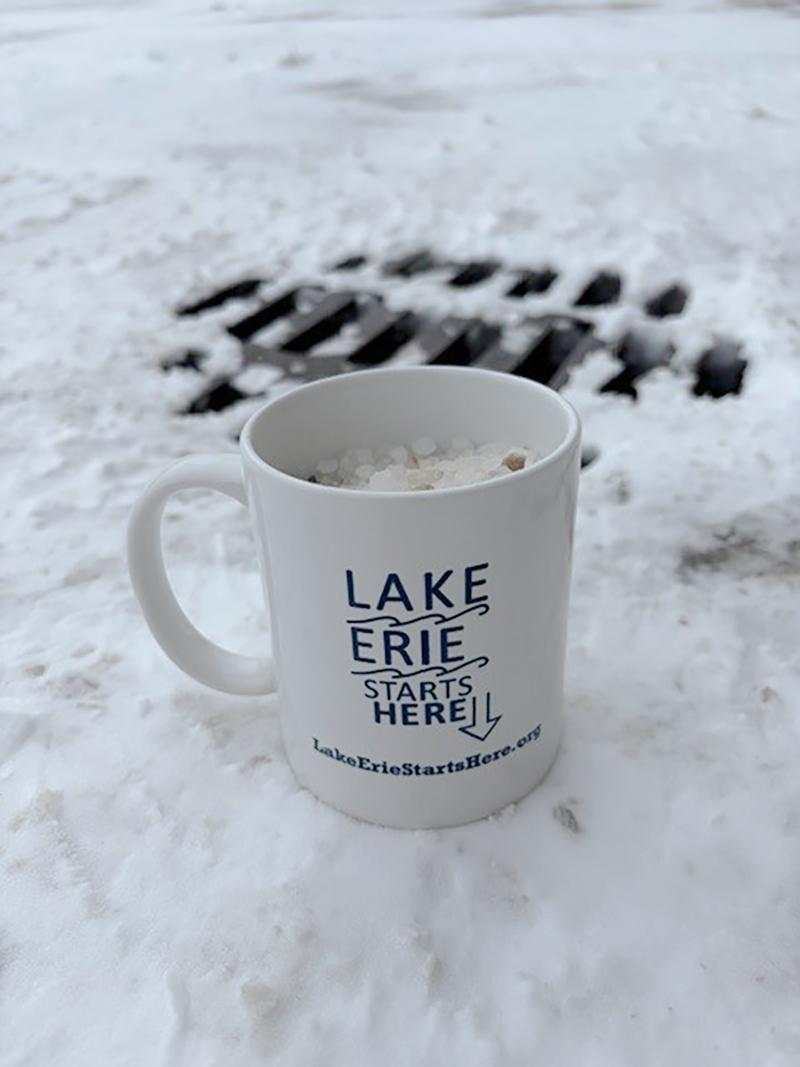
Simple changes to our salting tactics can greatly improve the health of our watersheds without jeopardizing our safety. Shovel and clear snow from your driveway and sidewalks before it turns to ice. If salting, remember to spread sparingly with about 3 inches between grains. Sodium chloride only works above 15 F, and a 12-ounce coffee mug full of salt is enough to de-ice 10 sidewalk squares or two parking spaces. Also, be sure to sweep up and reuse the excess once the salt has done its job to save money and reduce runoff.
Fix that leak
Your car contains fluids that allow it to function properly, but when these fluids leak, much bigger problems can occur — to your wallet and our water. Fixing a small leak now may prevent big car repairs down the road.
Once a leak is discovered, identify the fluid and get the leak fixed as soon as possible. If you are not sure what is leaking, cardboard can be placed under your parked car’s warm engine to catch and help identify the dripping fluid. If unaddressed, these fluids can be extremely toxic and create dangerous puddles that threaten kids and pets.
Years ago, I painfully witnessed firsthand the toxicity of vehicle fluids through the slow death of my golden retriever — even after immediate medical attention and treatment. Unaware of the toxicity, my neighbor had dumped used antifreeze into the snow earlier that day. Both of our dogs were attracted to its sweet smell and taste, and both dogs tragically died. Fixing vehicle leaks at the start prevents bigger problems, potential hazards and toxic pollution down the road.
Clean ride, clean water
Any vehicle that calls the snowbelt home spends its entire winter being “a-salt-ed” and more often than not carries battle wounds from our roadway’s salt and brine. To recover the luster and prevent corrosion, washing our cars strategically around the freeze and thaws becomes an unwelcome winter pastime.
For the rest of the year, our car washing options are plentiful, and it’s not when, but rather, where you wash your wheels that matters most! Using a commercial carwash is a great option for water quality because the water used gets safely treated through sanitary sewers.
If you wash your car at home in the driveway, all of the soap — along with the dirt, grime, grease and oil — rinses off the car, flows into a nearby ditch or storm drain and then directly into our rivers and lakes. Avoid pavement unless it drains to a vegetated area and not into a storm drain.
Washing it on your lawn or a gravel drive is better because it allows water to be absorbed and filtered through the soil. Also, be sure to use biodegradable, phosphate-free and water-based cleaners, along with a hose nozzle adaptor to limit water usage.
No matter the season or where life takes us, we can determine how our miles and miles of roadways affect the health of our waterways. From winter salting to vehicle maintenance, now is the time to “brake” the old habits and navigate through new methods that keep us on the road to clean water!