





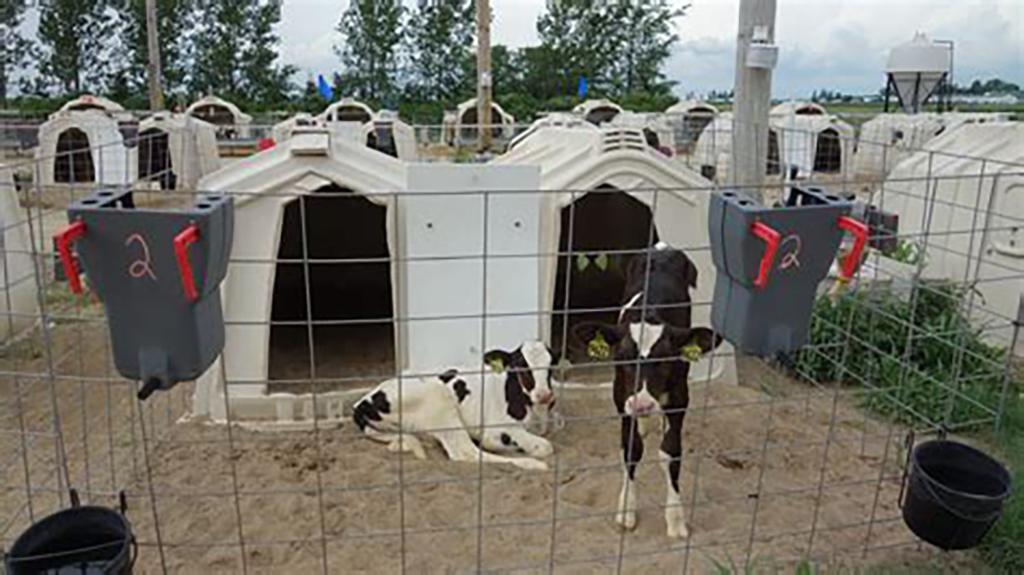
Last year, we wrote a piece titled “Better together: A case for social housing of preweaned calves,” highlighting research showing calves raised in pairs or small groups often eat more starter, gain more weight, and transition more smoothly at weaning.
In that article, we also addressed a common misconception: That calf health outcomes depend primarily on housing type. Historically, calves were housed individually to help limit disease spread, but health outcomes depend more on management than housing alone. So how do you know if your system is ready for social housing, and how can you begin making that transition?
Are you ready for social housing?
Before transitioning to social housing, evaluate whether the existing calf program is performing well. Social housing tends to amplify management — both strengths and weaknesses. If calf health challenges are already present, those issues should be addressed first. Benchmarks such as mortality below 3%, pneumonia treatment rates below 10% and scours below 15% suggest the system has a strong foundation for implementing social housing.
Addressing common concerns
Health outcomes depend more on management than housing type. Strong colostrum protocols consistent sanitation and regular health monitoring are essential in any calf system. Effective cleaning and disinfection begin with removing organic material such as manure or feed residue. Surfaces should be washed with detergent and disinfected following recommended contact times. Feeding equipment such as bottles or nipples should be cleaned after each use, and calf pens or hutches cleaned and allowed a one-week rest period between groups to help break disease cycles.
Monitoring calf behavior and using a health scoring system, such as the University of California Davis BRD scoring system can help detect illness early. Sick calves should be moved promptly to a designated hospital pen with no contact with healthy animals.
Cross-sucking is another common concern when calves are housed together. Calves have a strong motivation to suckle, and management practices that allow them to express this behavior can help reduce it. Feeding adequate milk (about 15 to 20% of body weight, roughly 8 to 10 quarts per day) through a slow-flow teat and providing opportunities for non-nutritive sucking, such as a dry teat, can help satisfy this motivation.
Designing the groups
Once basic management foundations are in place, the next step is deciding how calves will be grouped. Research shows that small, stable groups work best, typically up to six calves per group. Larger groups (more than eight calves) can make illness harder to detect and may increase disease risk.
Many farms begin social housing by pairing calves within the first one to two weeks of life. Starting with pairs allows producers to gain experience while keeping management simple. As confidence grows, some farms gradually transition to small groups.
When forming groups, calves should be close in age, ideally within about one week of each other, though differences of up to two weeks are usually manageable. Using an all-in/all-out approach — where calves enter and leave the group together — helps reduce disease transmission and allows stable social relationships to develop. Grouping strategies will also depend on calving flow. Farms with higher calf numbers may form groups more frequently, while smaller farms may rely on pairs.
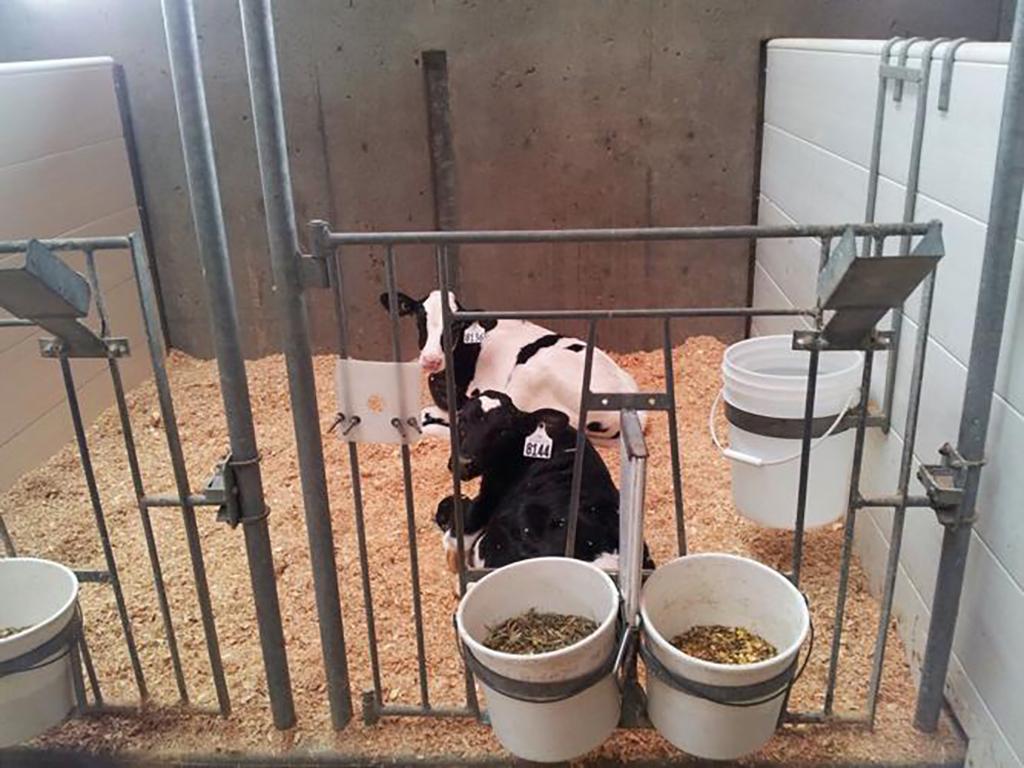
Group housing can be implemented in different ways depending on facilities. Some farms use super hutches, while others simply fence two hutches together to create pairs. Regardless of the setup, space, bedding and air quality are critical considerations. Calves should have enough room to lie down comfortably together and move freely within the pen (about 30 square feet per calf). Providing well-bedded resting areas and good ventilation with fresh air exchange helps reduce respiratory disease risk.
If you’re considering a change
Transitioning from individual to social housing does not have to happen all at once. Many farms begin by pairing a small number of calves and observing how the system works within their routine. Starting small allows producers to gain experience with grouping strategies and monitoring calf performance. Tracking indicators such as starter intake, average daily gain and health treatments can help evaluate how calves respond to the new system.
Every dairy is different, and the best system will depend on each farm’s facilities, labor and management style. For producers interested in exploring social housing, a practical approach is simple:nStart small. Measure what happens. Adjust as needed. Much of the practical guidance summarized here draws from the University of Wisconsin–Madison Extension guide “Two Heads Are Better Than One” that can be accessed here: https://animalwelfare.cals.wisc.edu/calf_pairing/
(Teresa Carlson is a PhD student in animal Ssiences and Grazyne Tresoldi, DVM PhD, is an assistant Professor of Animal Welfare at Ohio State University College of Food, Agricultural, and Environmental Sciences)




