




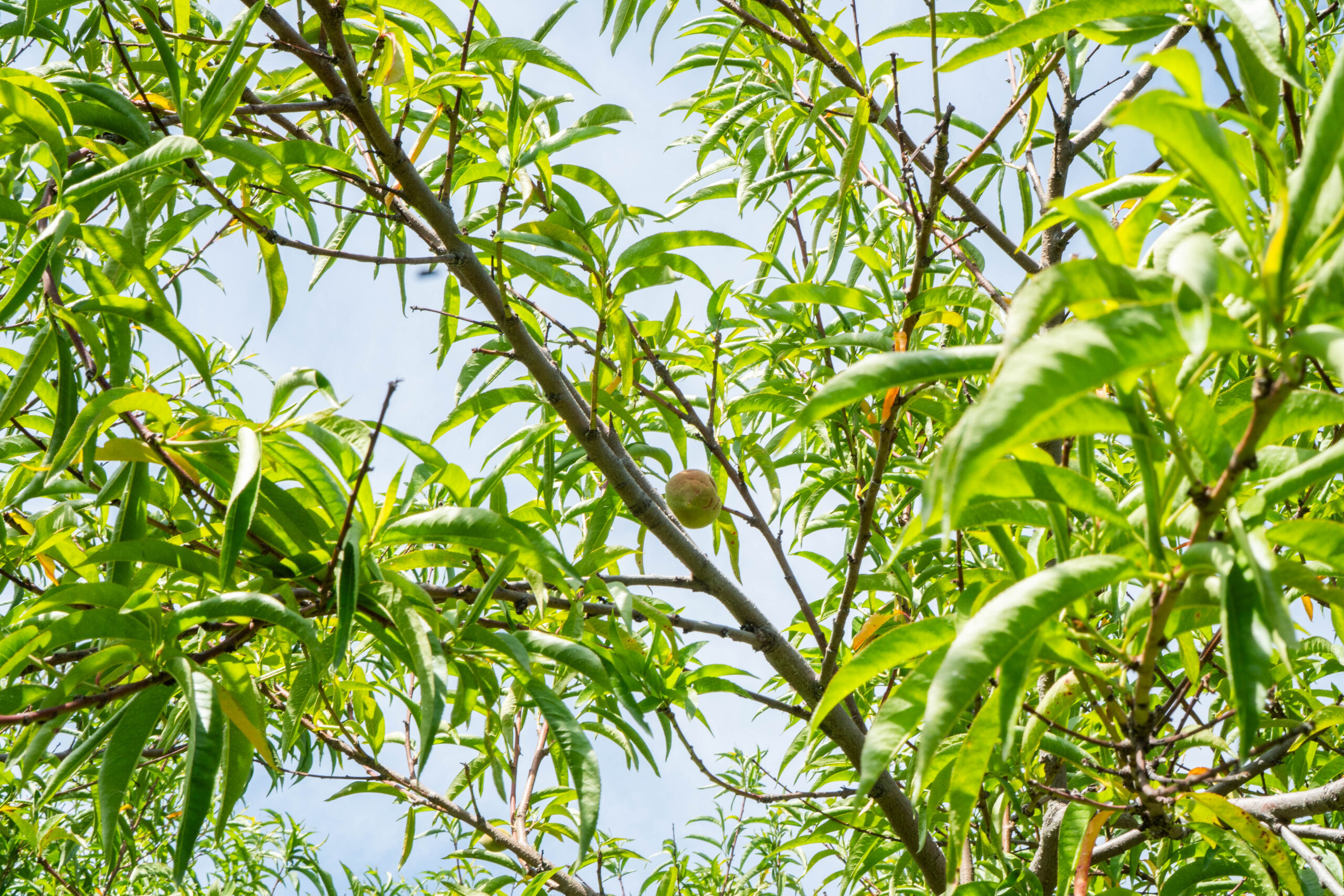
SALEM, Ohio — The peach, plum and apples at Huffman Fruit Farm in Salem, Ohio, are full of vibrant green leaves. But in between these branches, fruit is few and far between, a rare sight for the beginning of June.
That’s because subsequent hard freezes throughout spring killed many fruit blossoms on the trees.
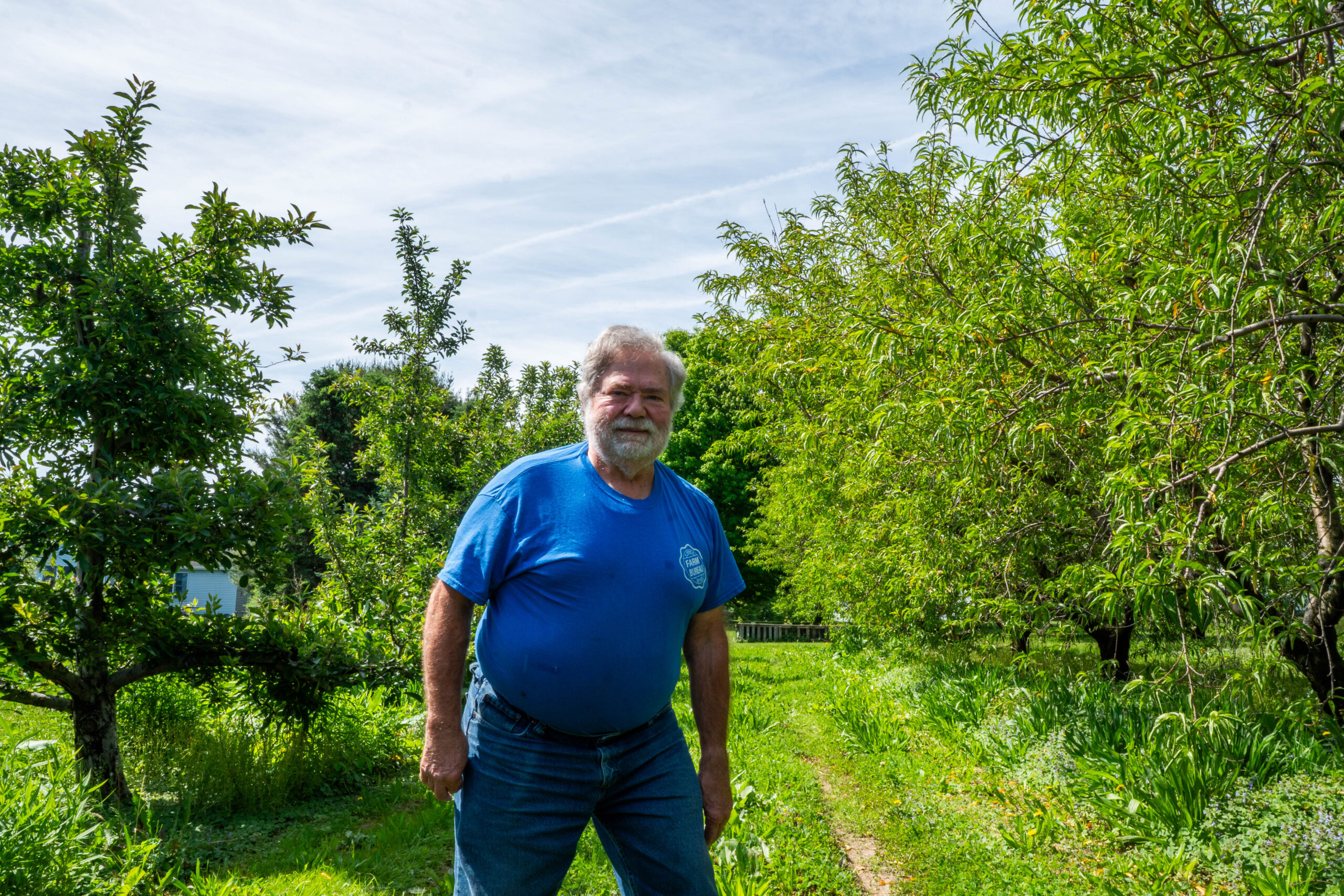
While frost threats occur every year, “some years are just more like threats, not severe,” said John Huffman, who runs Huffman Fruit Farm, growing 54 acres of peaches, plums, apples, strawberries, blackberries and blueberries.
But this year, Huffman will only get half the usual crop of peaches, plums, apples and strawberries or even less.
“I usually get 9 bushels of apples from this tree; I’ll be lucky if I get one,” he said, pointing to a red delicious apple tree.
Huffman isn’t the only producer hit hard this year. Orchards across Pennsylvania and eastern Ohio saw record-breaking crop losses.
What happened?
Huffman flips through a calendar where he marked days of freezing temperatures. Like most orchard producers, paying attention to cold weather events is a must during spring blooming time.
“Spring’s a lot of time for worry,” Huffman said.
While frost threats are normal, Huffman says what isn’t normal is how early his trees bloomed, blossoming in March this year instead of April. In early spring, Huffman had a strong, plentiful flowers on his plum, peach and apple trees.
On March 18, temperatures dropped to 11 degrees Fahrenheit, according to The Weather Channel.
Most peach and apple trees cannot stand temperatures below 25 to 20 F, according to Penn State Extension. The next morning, Huffman’s plum trees were wiped out, and his peach and apple crop was cut in half.
But the hard freezes didn’t stop there, occurring on and off throughout April and early May. According to Huffman, an earlier blooming season leaves fruit trees more vulnerable, with a longer time to endure freezing temperatures.
While Mother Nature can’t be controlled, producers have a few options to protect against the cold.
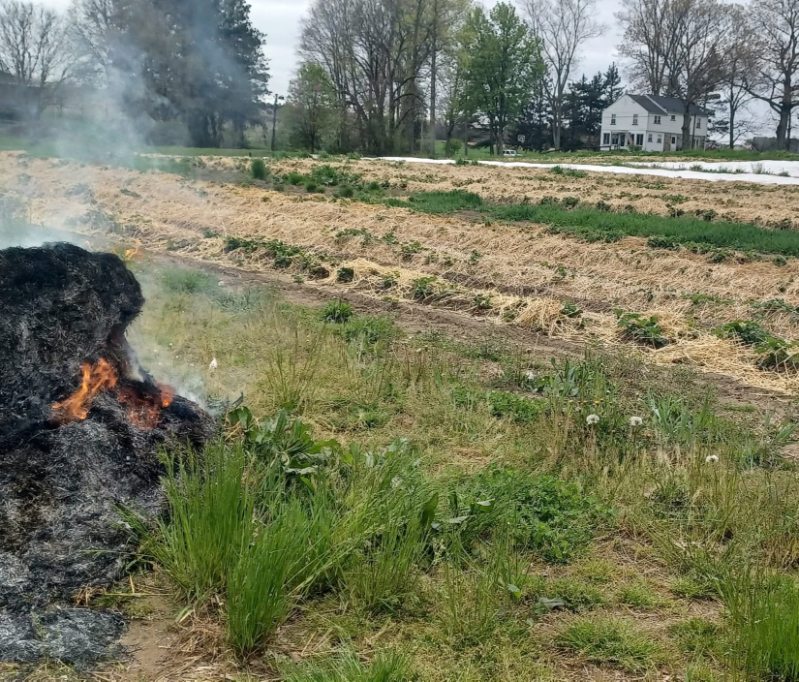
Huffman burned a couple of bales of “junk hay” near the orchard to warm his trees during frost temperatures.
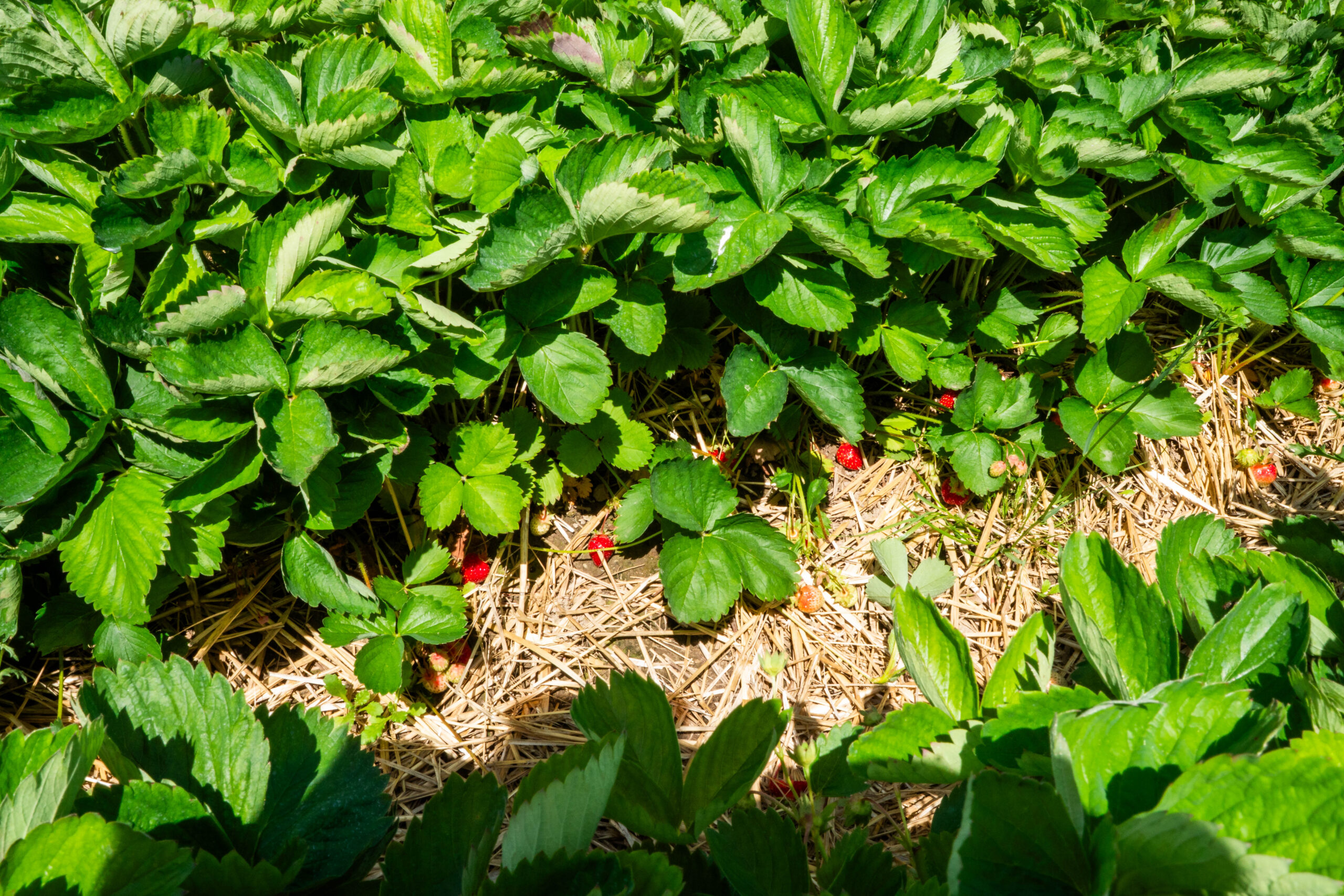
For his strawberries, he laid down floating row cover, a lightweight fabric that lies above the plant. The cover traps air between the strawberries and the ground, keeping the blooms a degree warmer. Huffman says it’s worth the cost when battling temperatures between 27-28 F, but notes it can also be an expensive purchase.
Yet, even so, the cold still hit his strawberries, particularly the first blooms, which are the biggest berries, Huffman said.
The farm will have some strawberries, apples, peaches and blackberries on sale, but not nearly what it usually has, except for a full crop of blueberries.
Soergel Orchards
Like many growers, Adam Voll and his crew at Soergel Orchards in Wexford, Pennsylvania, in Allegheny County, were watching the temperatures closely this spring to protect their fruit trees.
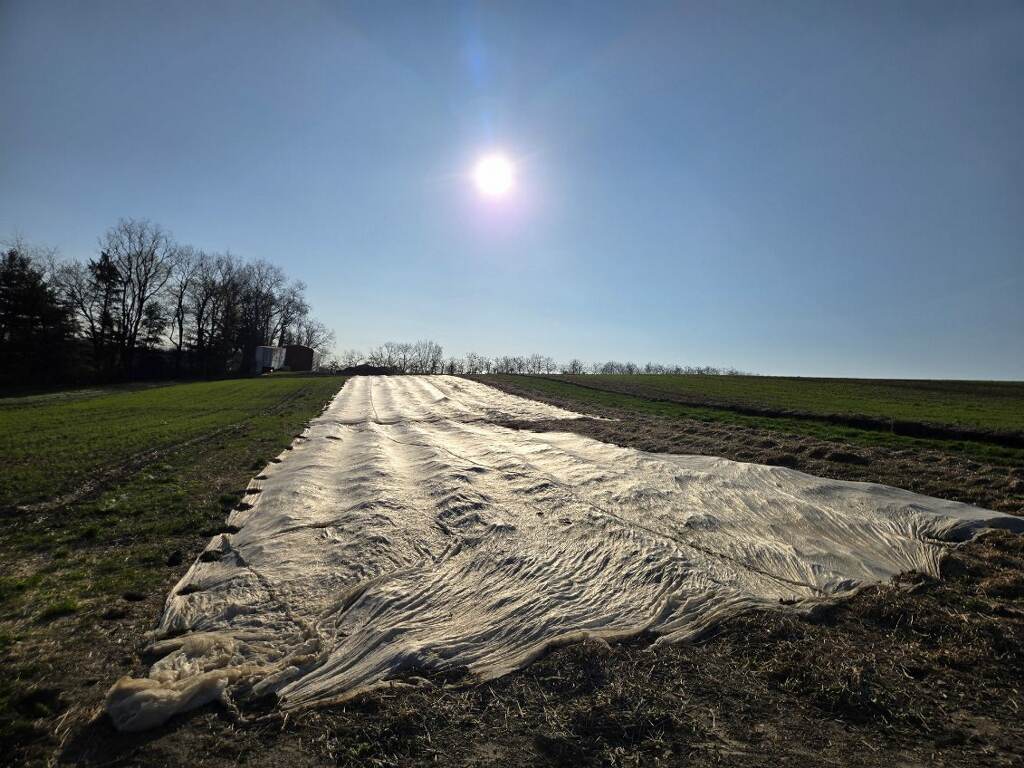
Voll, farm manager and sixth-generation farmer at Soergel, says it’s usually coldest the last few hours before dawn, but some nights, his crew was out there by midnight on tractors with fans. Temperatures on higher ground tend to be warmer, and using a fan to blow this warmer air down can bring up the temperature in the orchard, Voll said.
“(We were) driving in circles, hoping we’re actually doing something,” Voll said. “I don’t know how much we helped, but I wasn’t going to sleep either way, so I might as well been driving around feeling like I was doing something.”
For row crops like strawberries, Voll covered his with straw and a cotton cloth.
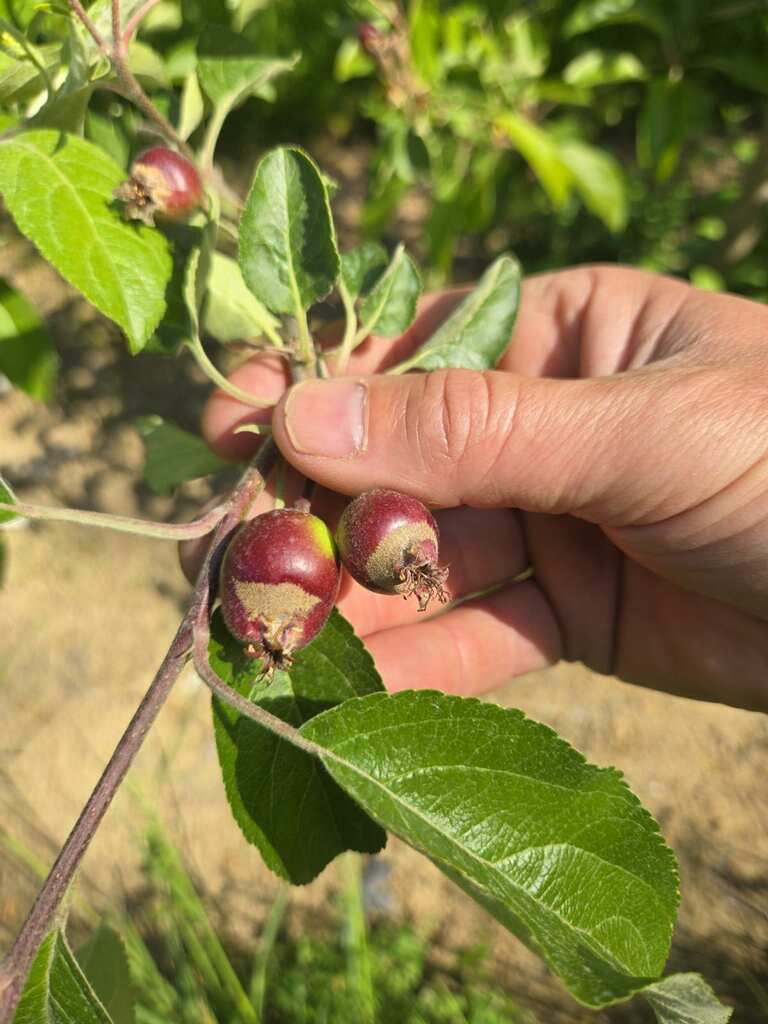
But despite these efforts, the cold still penetrated through; Voll says his cherry and peach crop are almost nonexistent, while his apple crop was cut down by half.
Voll’s strawberry crop is also light, leading Soergel Orchards to cancel its annual Strawberry Festival this year. The orchard has been hosting the festival as long as Voll can remember, and while they’ve had to cancel the festival in the past due to drought, they’ve never had to cancel because of a freeze.
Norman’s Orchard
For Jeff Norman, who owns Norman’s Orchard in Tarentum, Pennsylvania, in Allegheny County, there wasn’t much he could do about the freeze. The semi-dwarf trees on his 55 acres are spread out, about 15 to 18 feet apart. Because of these wide spaces, he says fans and fires aren’t practical.
”I grew up here in the orchard, my dad ran the orchard until I took over, and about 20 or so years ago, he had a hard freeze that took out pretty much everything,” he said. “But that’s the only time that I can recall that, so this is sort of a catastrophic event.”
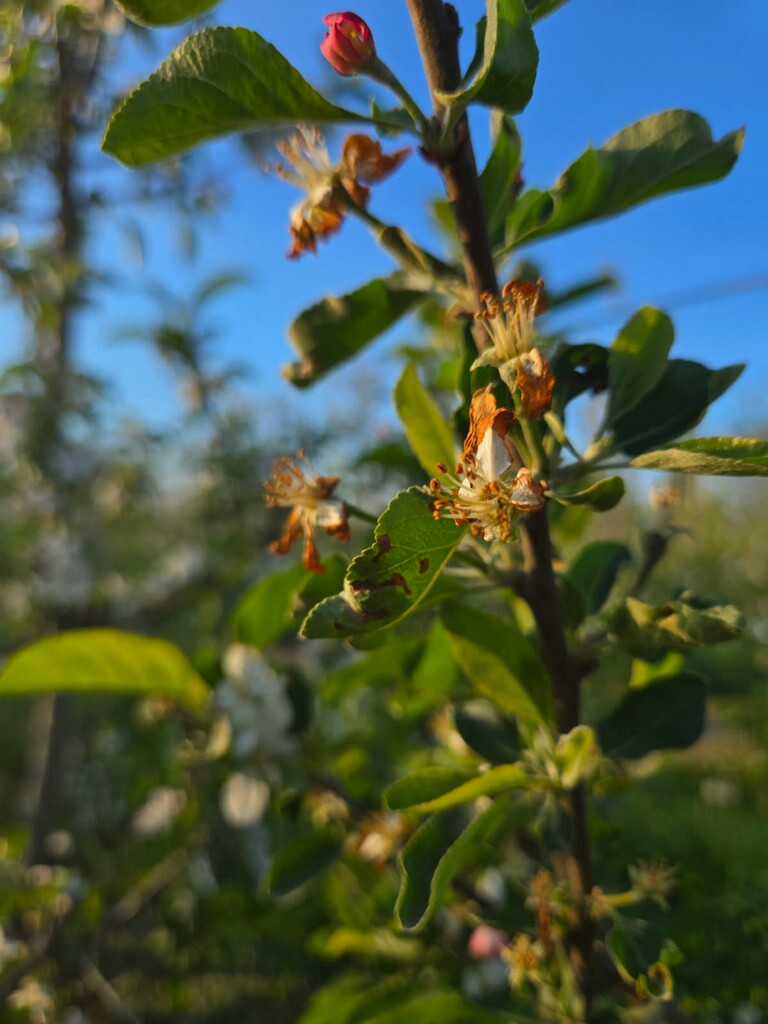
Norman’s Orchard grows cherries, apples, pears, blueberries and grapes, but the farm will be closed this year except for blueberries at the end of June and some grapes in August; the rest of his crop was completely wiped out by cold temperatures.
“I got kind of despondent for about a week once I realized it was at such a hard freeze,” said Norman, adding “I just have to count this year as a total loss.”
While Norman’s Orchard will be closed most of the year, this doesn’t mean maintenance work stops. He will continue taking care of the trees and orchard throughout the year.
And when next spring comes around, he anticipates a plentiful crop: “The trees will start to bear heavy next year, because there’s nothing on (them) this year.”
The losses
Producers most impacted by the hard freezes in spring were fruit growers: apples, grapes, peaches, pears, plums, cherries and apricots, according to a Pennsylvania Farm Bureau survey following the April 21 freeze.
Other commodities impacted were Christmas trees, alfalfa hay, barely and rye.
Out of the survey, there were 250 respondents, 221 of whom reported damage. According to the results, 87% had a loss of at least 25% of their crop and 67% reported a loss of at least 75%.
On May 26, U.S. Department of Agriculture Secretary Brooke Rollins signed a disaster declaration for 17 counties in Pennsylvania after pressure from state officials.
Growers in Adams, Columbia, Cumberland, Dauphin, Franklin, Lackawanna, Lancaster, Luzerne, Lycoming, Monroe, Montour, Northumberland, Perry, Susquehanna, Wayne, Wyoming and York counties have until Jan. 26, 2027, to apply for emergency loans.
No western Pennsylvania counties received disaster relief assistance, despite significant crop losses in the region.
What now?
Most producers are already looking to next season. Voll says he is looking into buying better fans to protect fruit trees.
“Before, it was the cost of that equipment kind of outweighed the risk, but now the risk is greater of losing a crop,” he said.
Meanwhile, Huffman reminds consumers that there will be less fruit available, meaning they should expect higher prices to get what’s in limited supply locally or out-of-state fruit.
“(Consumers) should try to be a little more educated about things. Year by year, it seems (they) get further and further removed from the farm and an understanding of producing fruits, vegetables and grains,” Huffman said.
(Liz Partsch can be reached at epartsch@farmanddairy.com or 330-337-3419.)





Good read, Liz. Troubling and sad–but that’s Mother Nature. Hope and prayers to our growers: don’t give up!