




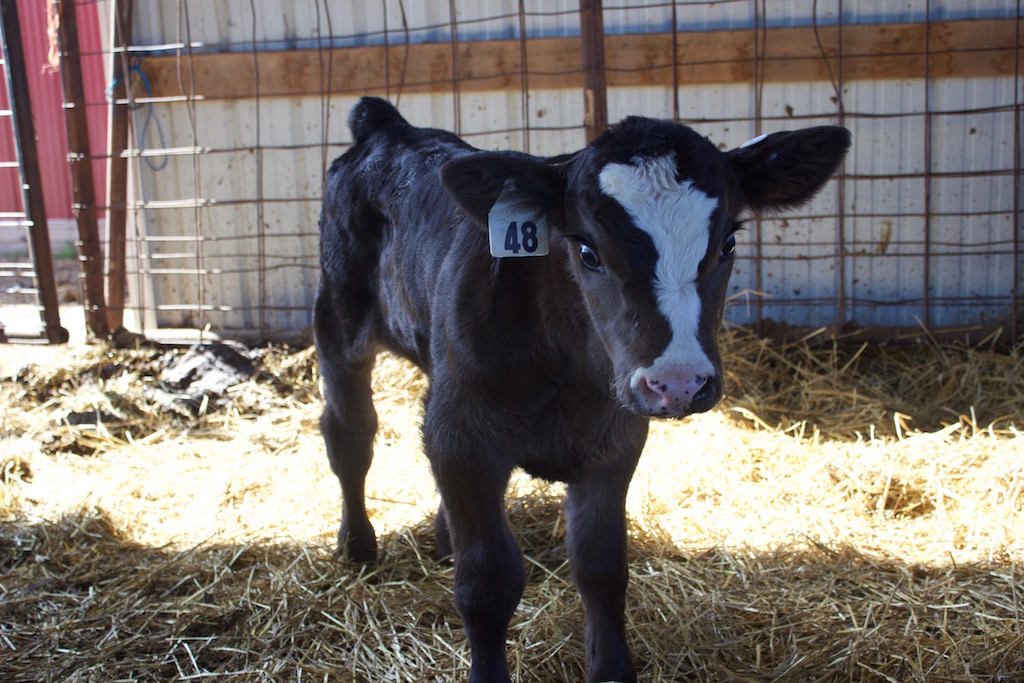
Dairy-beef cross calves continue to hold a premium over Holstein bull calves and a large premium over Holstein heifers of the same age. This premium is about $1,000 over surplus Holstein heifers and $500 over Holstein bull calves.
Unfortunately, there are still many more questions than answers about how dairy-beef cross calves may differ from Holstein bull calves and how to adjust management for these differences.
Choosing genetics
The calf industry has changed over the last few years as the veal industry has moved from white veal, which was milk-fed throughout, to rose veal, which is grain-fed but slaughtered at less than 750 pounds. Veal production in North America accounts for only 3% of bovine meat production.
From 2016 to 2021, the sale of domestic beef semen to dairy herds has increased 260%. Dairy beef cross calves only accounted for 7% of total calves at sale barns in 2016, but now account for over 60% of calves.
While bull semen selection is critical to determining offspring quality, the beef semen used for dairy-beef crosses is often selected for conception rate and calving ease rather than growth potential and desirable carcass traits. The goals of dairy producers have led to heterospermic semen, a mix of multiple bulls to increase conception, but it reduces farmers’ ability to determine the carcass traits each bull brings to their offspring.
Angus bulls have a gestation length similar to that of Holsteins; however, on average, Simmentals increase gestation length by 2 days, Limousins by 4 days and Wagyu by 7 days. The dairy beef cross industry is not unique to North America. Ireland has added early-life health, feed efficiency and carcass yield to its selection indices for dairy-beef cross sires. Feedlots and processors in North America are encouraging greater selection for performance and carcass quality to produce calves even better suited to the beef market instead of the Holstein beef market.
Managing shipping stress.
One of the greatest stresses that affects dairy-beef calves in the United States is early-life shipping. In one U.S. study, 49% of sale-barn calves had health abnormalities before shipping; transportation added the stresses of fasting, dehydration, fatigue and the commingling of pathogens.
Many countries have very different shipping laws for young calves. In the U.S., calves can be transported for up to 28 consecutive hours without any mandates for milk or water. In Canada, calves under 8 days of age may be transported for up to 12 hours on a direct-to-destination route. Australian transportation rules only allow for calves under 5 days of age to be transported for 6 hours, while calves from 5 to 30 days of age must be offered water after 18 hours of transport. The European Union mandates that calves be at least 14 days old before being transported from their farm of birth and requires them to rest and have access to water after 9 hours of transport, and to be unloaded for feeding after 19 hours. In Germany, transportation requirements are even stricter: calves must be at least 28 days old before being transported.
Feeding
Calves fed milk before transport and during rest stops have lower disease and mortality rates. Many dairy-beef cross calves have improved health status post-transport compared to Holstein calves due to their greater body fat reserves. Historically, cow-raised beef calves would have higher serum IgG concentrations attributed to their ability to nurse their dam ad libitum; there may also be a genetic difference in absorption.
One study in which Holstein bull calves and dairy beef cross calves were both fed low-quality colostrum found that the dairy beef cross calves had higher serum IgG concentrations. While these calves still need ample high-quality colostrum, the improved health status of dairy-beef cross calves may also be due to better colostrum absorption.
A lot is still unknown about the long-term effects of milk feeding programs for dairy beef cross calves. Similar to their Holstein counterparts, the more milk they are fed, the more they will grow during the milk feeding period, and the lower the incidence of disease. Many milk replacers on the market have similar fat and protein levels. However, one study found improved fecal scores when the calves were fed a more natural ratio of fat to protein and an amino acid profile similar to whole milk. Calves fed an enriched milk replacer diet had increased muscle fiber size at 8 weeks of age. Calves fed a milk replacer that includes lactose have increased fat deposition at 8 months of age.
Dairy beef cross calves can command a premium at auction due to their greater survivability and improved efficiency, with many reaching harvest weights in 13 months.