



COLUMBUS — Families, farmers and state fair officials packed into the new Ohio Agricultural Center July 27, stepping out of the summer heat and into a building designed to honor where Ohio agriculture has been and to show young people where it might take them.
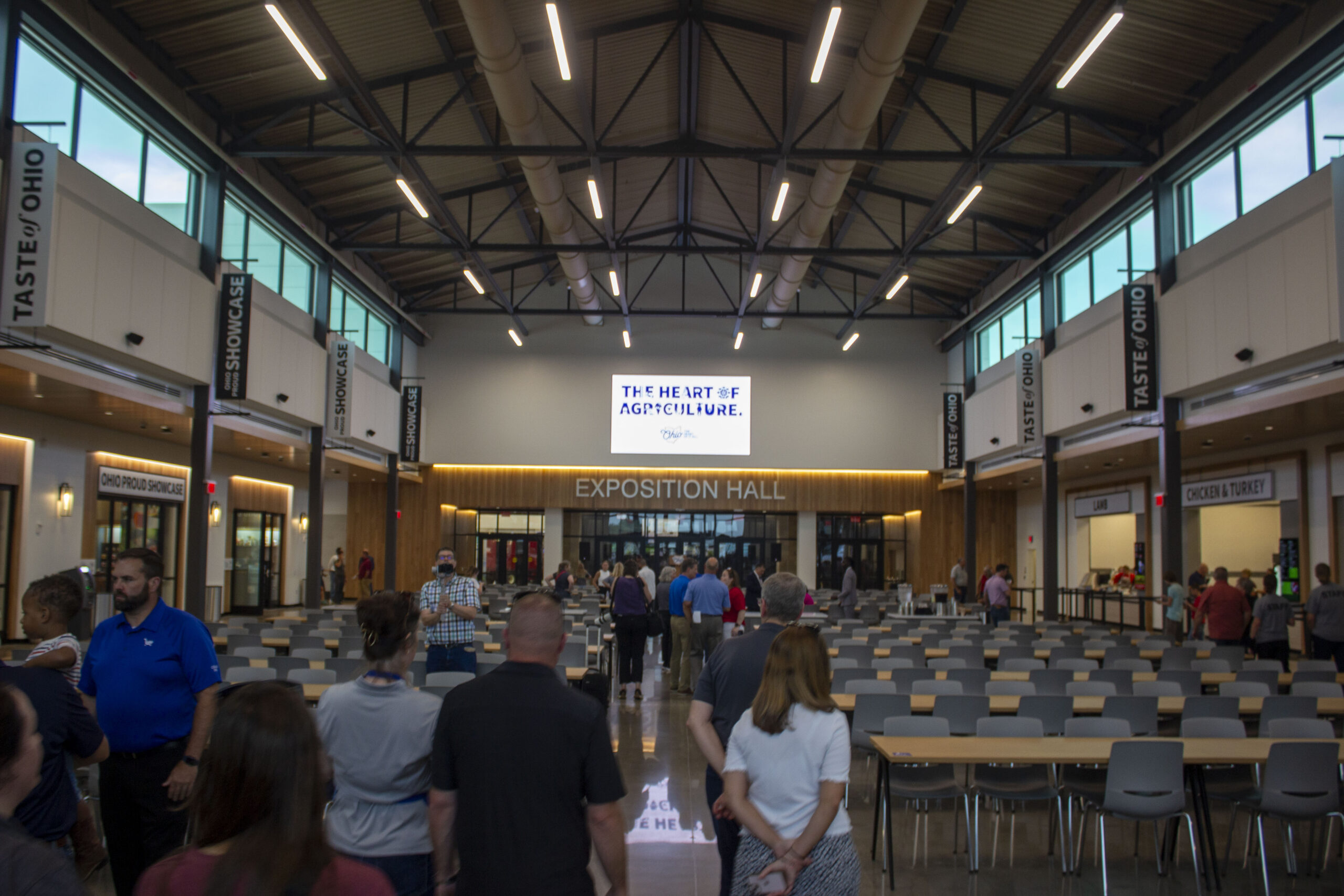
The 177,000‑square‑foot complex at the Ohio Expo Center is part exhibit hall, part classroom and part year‑round gathering place, with roughly 100,000 square feet of exhibit space, a dozen meeting rooms and a 420-seat dining hall. Interactive displays, a large commercial kitchen run by Ohio’s commodity groups and fair-time career-focused exhibits are aimed squarely at visitors who may be seeing modern agriculture up close for the first time.
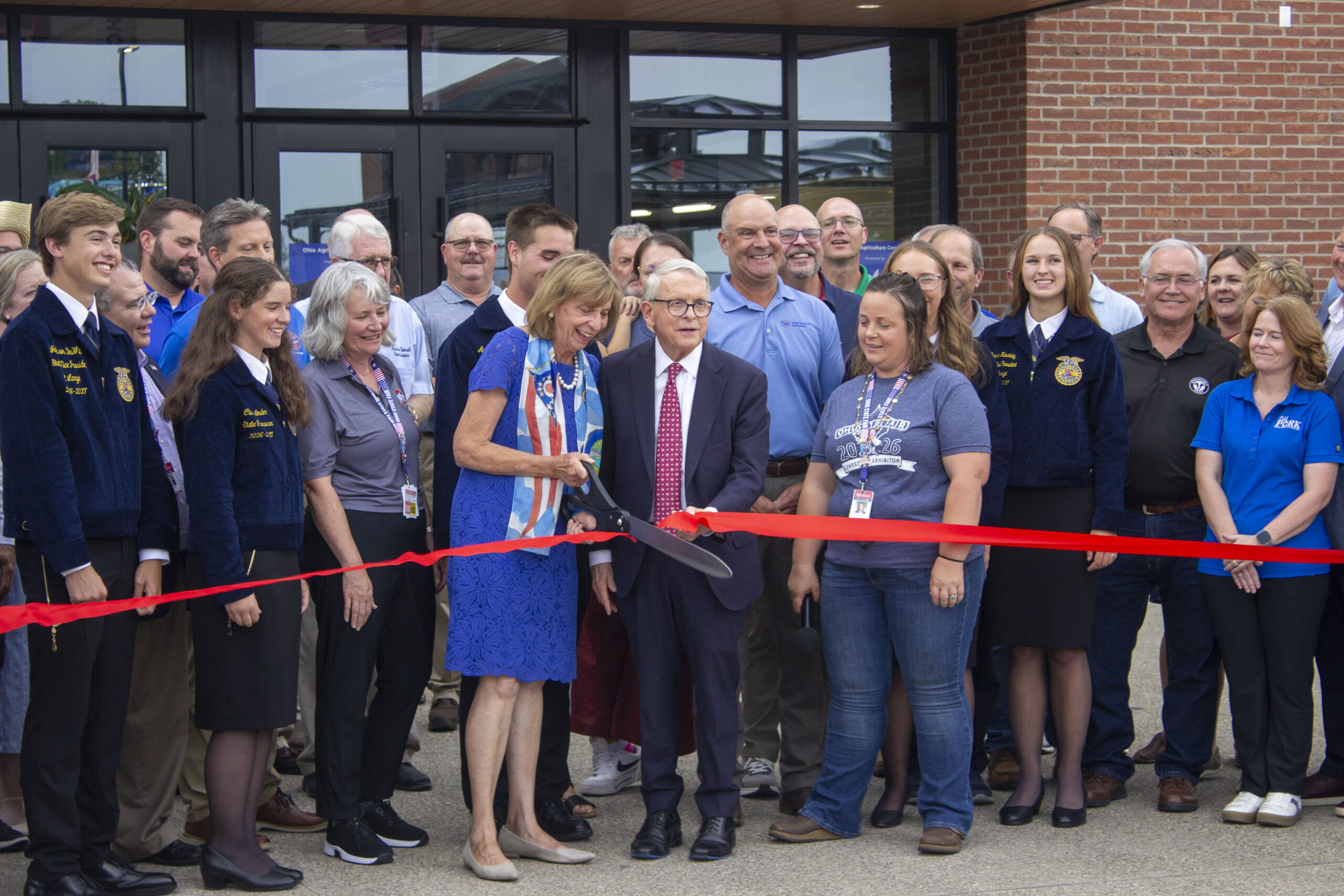
Gov. Mike DeWine helped cut the ceremonial ribbon.
“When we dreamed about this building, when we envisioned the building, we wanted to have a building that was appropriate for Ohio’s great agricultural industry and all the people who are in that industry,” DeWine said. “And I think when you go in, I hope that you will feel that it is appropriate.”
The Agricultural Center is a centerpiece of the long-range Expo 2050 vision DeWine launched in 2019. It is part of roughly $460 million in fairgrounds renovations funded by the Ohio General Assembly that include two new buildings, a new main gate and a new town square with a misting area, performance amphitheater and seating and play areas. There have also been upgrades to several historic structures and infrastructure, along with the installation of a permanent Children’s Carousel, a hand-carved, Ohio‑themed ride featuring fair animals, native wildlife and storybook chariots now anchoring the fairgrounds’ historic district.
“Fairs are about really what’s best, and we always thought the Ohio State Fair should really show what is best in the state of Ohio,” he said.
Above all, DeWine stressed the building’s role in opening doors for the next generation.
“One of the things that we want people to see, particularly our young people when they come here, is all the different jobs and careers that are available in Ohio,” he said. “One thing that we know we want for young people is, we want to expose them to all the different careers that are out there, because we know there’s some careers out there they’re going to love and they’re going to have a passion for, and it just may be agriculture.”
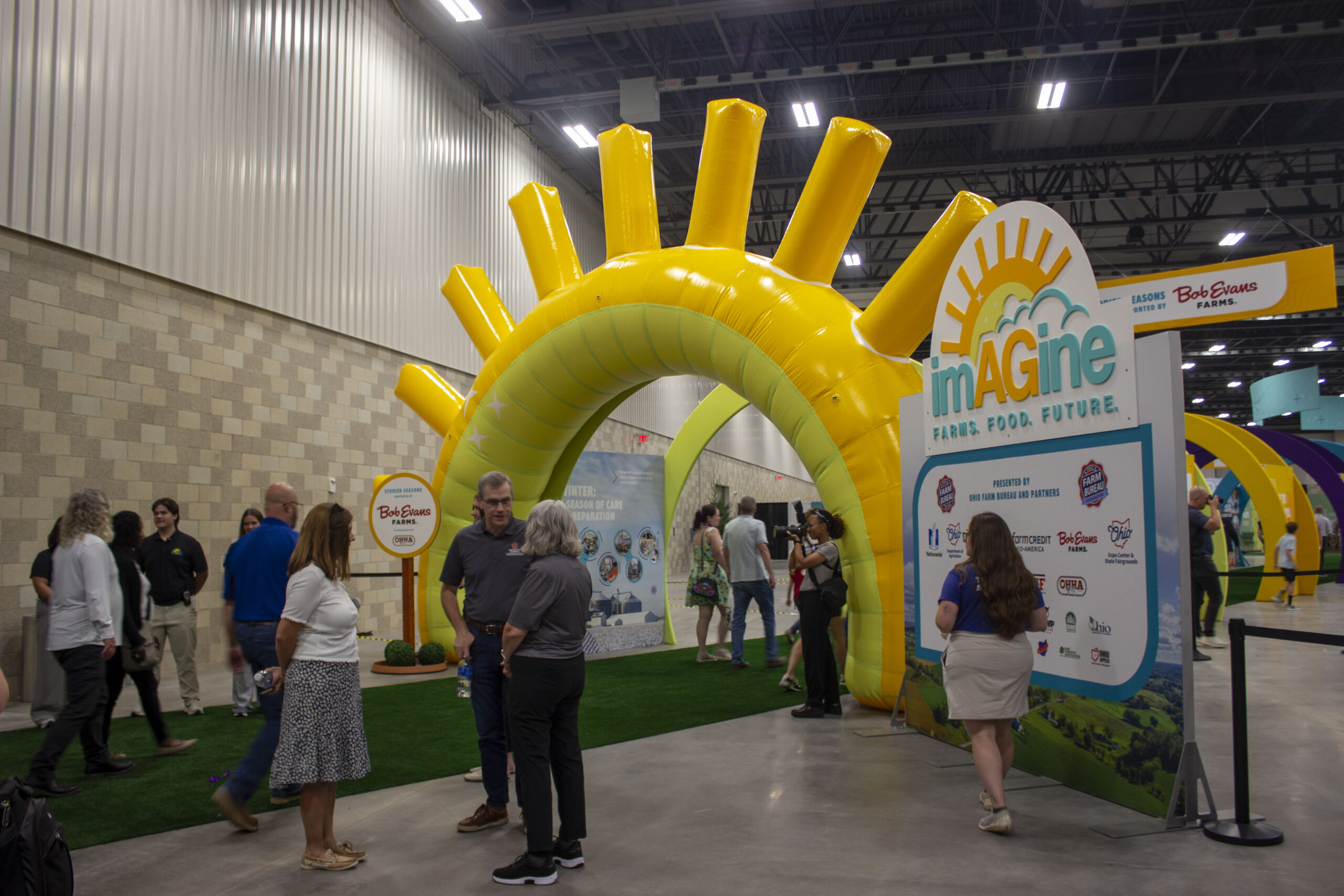
When the Ohio State Fair opens July 29, that mission will unfold across the grounds with free live music, livestock shows, the world-famous butter cow, a petting zoo, interactive education, the Natural Resources Park and other family-friendly staples. Inside the new Ohio Agricultural Center, fairgoers will find hands-on activities at the imAGine agriculture exhibit while elsewhere on the grounds, the new Ohio Showcase Building will house the immersive “Shaping Ohio” experience, a 360-degree film exploring the state’s history that DeWine said is designed to make visitors proud of Ohio and the people who’ve gone before.
Celebrating Ohio Agriculture
After DeWine, fair and industry leaders filled in what the new center and the broader Expo 2050 plan will mean for Ohio agriculture.
Adam Heffron, general manager of the Ohio Expo Center and State Fair, called the new building “a place built to celebrate Ohio agriculture, past, present, the future and the people who make it strong.”
Director of Agriculture Brian Baldridge framed the project as a showcase for the state’s producers and partners.
“I love to say we love to feed Ohioans, we love to feed the nation, and we love to feed the world. And we are showcasing the best of the best at the highest level right here in this building, folks,” he said.
Cathann A. Kress, dean of Ohio State’s College of Food, Agricultural, and Environmental Sciences and an Expo commissioner, said the new center is one piece of a broader push to modernize Ohio’s agricultural infrastructure, noting recent investments in a multi-species animal learning complex, the Agriculture Center itself and a new diagnostic lab still to come.
“These are generational investments, and they are quite frankly transformative for our industry,” she said. “These facilities across our state will enhance the education of our future workforce. They add to our ability to engage consumers and the public. They strengthen and support our combined work with farmers and other constituencies, so they can make good decisions and stay profitable.”
Adam Sharp, executive vice president of the Ohio Farm Bureau Federation, called the moment “an emotional day” and said the Imagine Ag exhibit is ultimately for “the kids of all 88 counties of the state of Ohio.”
“This building and this exhibit back here specifically is our opportunity to tell the story of Ohio agriculture,” Sharp said. “We talk to the fairgoers and the public. That’s obvious, but we also talk to the policymakers and the media and so many others who come here to learn about agriculture and food, and then also the most important group, the next generation. So all the young people in the room, that’s what this is all about.”
FFA POV
As the crowd filtered out of the dining hall and into the exhibit space, Ohio FFA state officers said the building delivers on the promise state leaders laid out.
State FFA president Austin Manning told Farm and Dairy that what stood out most was the show of unity behind the project. He noted how agriculture leaders and public officials have been working toward this moment for years and how momentous it was that they were now standing in the same room to see it realized.
“It’s always inspiring to see how people in agriculture show up,” he said, adding that having the governor, legislators and state agriculture officials “coming together to achieve a common goal that’s been going on for a long time” underscored the scale of that effort.
State reporter Sydney Beiting viewed the new center as a statement about the role agriculture plays in Ohio’s future. She said the day’s speeches all circled the same idea: that food and farming remain central to the Buckeye state’s identity.
“A common message and a common theme is the future of Ohio’s agriculture industry,” she said. “It’s the industry that feeds us. It’s the industry that clothes us. It provides so much for us.” She said the building will also help visitors who don’t come from farm country understand that role when they visit the fair themselves.
Vice president at large Grace Kackley said the scope of the project shows how seriously the state is taking the next generation of agricultural professionals, whether they end up on farms, in labs, classrooms or boardrooms. She said the investment especially hits home because both of her parents were her ag teachers, and she has watched her peers find their paths through agricultural education as she discovered her own.
“Growing up, I’ve seen firsthand how agriculture impacts students and how the opportunities that it provides goes into careers, it goes into their futures,” she said. Looking around the new hall, she saw a foundation for students who will discover agriculture there in the years ahead.
“This building really is the foundation for the next generation of our agriculture,” she said.




