
Normally, we have this conversation about patience in haymaking in June, when wet weather delays hay harvest and ruins some or all of our crop after it is cut.
But this year, it seems appropriate as farmers across Ohio struggle to make second and third cuttings of hay. The extreme weather with heavy and untimely rains this summer all across Ohio has caused many forage producers to suffer severe stored forage losses and, in some cases, stand damage or loss to hayfields.
Recent unforecasted rains across much of Ohio in predominant hay-making counties have led to significant loss of quality and tonnage on both late second- and third-cutting alfalfa and mixed forage crops.
The normal window for making high-quality hay and properly caring for the plants in alfalfa stands is coming to a close in the next couple of weeks. Many producers are scrambling, checking the weather apps every hour and praying that they can get another cutting in to make up for the financial losses caused during July and August from lack of harvest or a damaged crop.
Although there are certainly no guarantees in the weather, the trend we have seen the last few years has been for warmer September and October weather, with the first killing frost coming later than “normal” in most areas. This has led many hay producers, especially in northern Ohio, to make harvests well past the traditional cutoff of Sept. 15 to 20, and that is certainly going to be an option exercised this year by many producers looking to recover from a lost or damaged crop in July or August.
Some producers will claim that a late harvest has no effect on hay fields long-term, but where we need to exercise the most caution is on alfalfa fields. Fertility becomes even more important to help the roots prepare for winter rather than focus on top growth. Compaction becomes much more of a concern as we harvest on wetter-than-normal soils, and of course, getting sufficient recovery time for the plant following harvest before that first frost is key.
While we may never truly know or realize the potential damage being done by a later-than-normal harvest (although plenty of research has shown detrimental effects), I encourage you, when possible, to only harvest part of a field late or at least leave a few passes of the haybine go. That way, we can evaluate that field in both the late-harvested and unharvested areas in early winter and late winter for stand viability, and then again in spring during first cutting where we can monitor yield.
Also, when deciding to harvest a field late into the season, select fields that are healthy, established stands rather than young fields in their first or second year of production. They can be more susceptible to root damage and injury and likely to be impacted more by cumulative stress loads, leading to lower production for the life of the stand.
The ideal situation, if we are not going to harvest all of our fields late, is to first go after the oldest meadows that we may already be considering rotating out of production next year. We can then perform stand counts in the early spring and assess growth early in the planting season to help decide if planting another crop may be more profitable at that time.
Another option to consider when making a late harvest is actually waiting for that first killing frost to stop growth altogether and then harvest. This will essentially stop the plant from utilizing its root reserves to promote top growth and allow stored nutrients to remain in the roots for use in late winter and early spring when they are needed the most to break dormancy and begin new growth. This can be a challenge to make dry hay in mid to late October or November, but may be worth the trade-off for a healthier stand in the spring. It can also leave the crown exposed and more susceptible to winter damage and heaving during the freeze-thaw process, but we can help alleviate this by setting the cutter bar a few inches higher than normal so some cover remains.
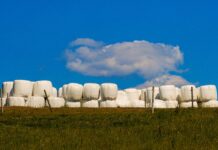
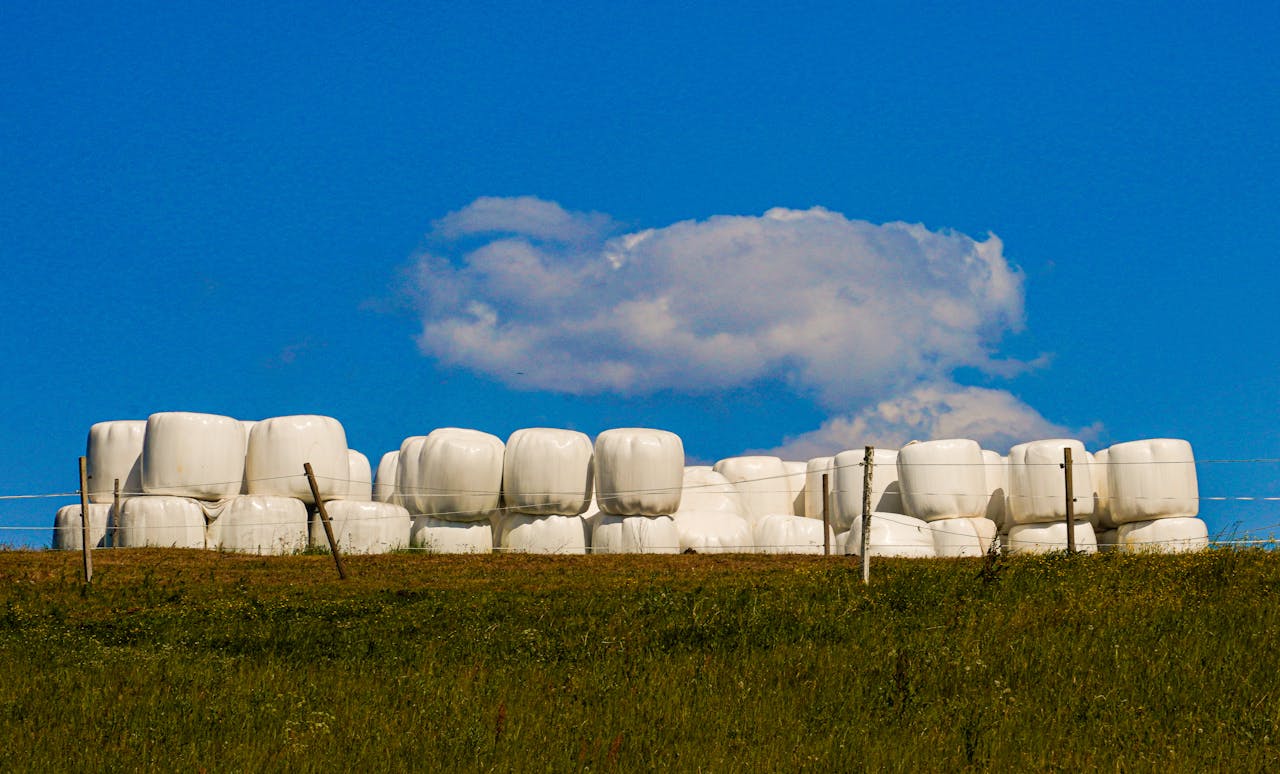
We can also consider making haylage or balage rather than pushing for dry hay this time of year. Since haylage is preserved at higher moisture contents, it is a lot easier to get it to a proper dry matter content for safe preservation. Proper dry matter content for chopping haylage can often be achieved within 48 hours or less as compared with three to five days for dry hay.
Proper dry matter content for silage ranges from 30 to 50% (50 to 70% moisture) depending on the structure used. Wrapped balage should be dried to 40 to 55% dry matter (45 to 60% moisture). Compare that to dry hay that should be baled at 80 to 85% dry matter (15 to 20% moisture), depending on the size of the bale package. The larger and denser the dry hay package, the drier it has to be to avoid spoilage.
While this limits those in small square production, large round and large square bales can both be wrapped to store balage, and custom wrapping services, or wrappers for rent, can be found in most areas.
Regardless of whether you are making hay for your own livestock or to sell to other livestock and horse customers, keep in mind all the factors that go into a decision to cut late into the season, and the long-term financial impacts that you may experience in pursuit of a short-term gain. We also need to keep safety at the forefront of our thoughts, especially when making dry hay late in the season.
While preservatives may allow us to bale at slightly higher moisture levels, we still need to monitor stored hay after baling at these levels. The following information from an article I authored with the late Dr. Marc Sulc and Jason Hartshuch, fellow OSU Extension forage team members, gives some good reminders on monitoring higher moisture levels in baled hay.
Watch wet bales carefully! If hay is baled at higher moisture contents that are pushing past the safe limits, keep a close watch on them for two to three weeks. Use a hay temperature probe and monitor the internal temperature of the hay during the first three weeks after baling.
Every year, someone’s barn burns down because of spontaneous combustion of wet hay. If hay is on the wetter side, keep it outside or in a well-ventilated area.
Don’t stack wet hay, because that prevents the heat and moisture left in the hay from escaping.
It is normal for hay to go through a “sweat” in the few days after baling. Internal temperatures of 110 degrees Fahrenheit in the first five days after baling are quite common in our region and are not a big concern.
Hay bale temperatures of 120 to 130 degrees Fahrenheit will likely result in mold growth and will make the protein in the hay less available to animals. While those temperatures are not high enough to cause hay fires, the concern is if the mold growth continues and pushes temperatures upward into the danger zone.
If the temperature in the hay continues to rise, reaching 160 to 170 degrees Fahrenheit, then there is cause for alarm. At those elevated temperatures, other chemical reactions begin to occur that elevate the temperature much higher, resulting in spontaneous combustion of the hay in a relatively short period of time.
Hay fires can be avoided by careful attention to the management practices outlined above, along with cooperation from the sun. Let’s hope for plenty of sunshine soon!