



As I’m writing this, corn silage harvest is wrapping up across Northeast Ohio, and soybean harvest is in full swing. Delayed planting this spring due to wet conditions has pushed harvest back by a week or two for some producers, causing concern about cover crop establishment. The risk of frost and, in some areas, limited soil moisture can lead to poor germination or stand loss. There is still time to plant a cover crop, but the number of viable options is smaller than it was even two weeks ago.
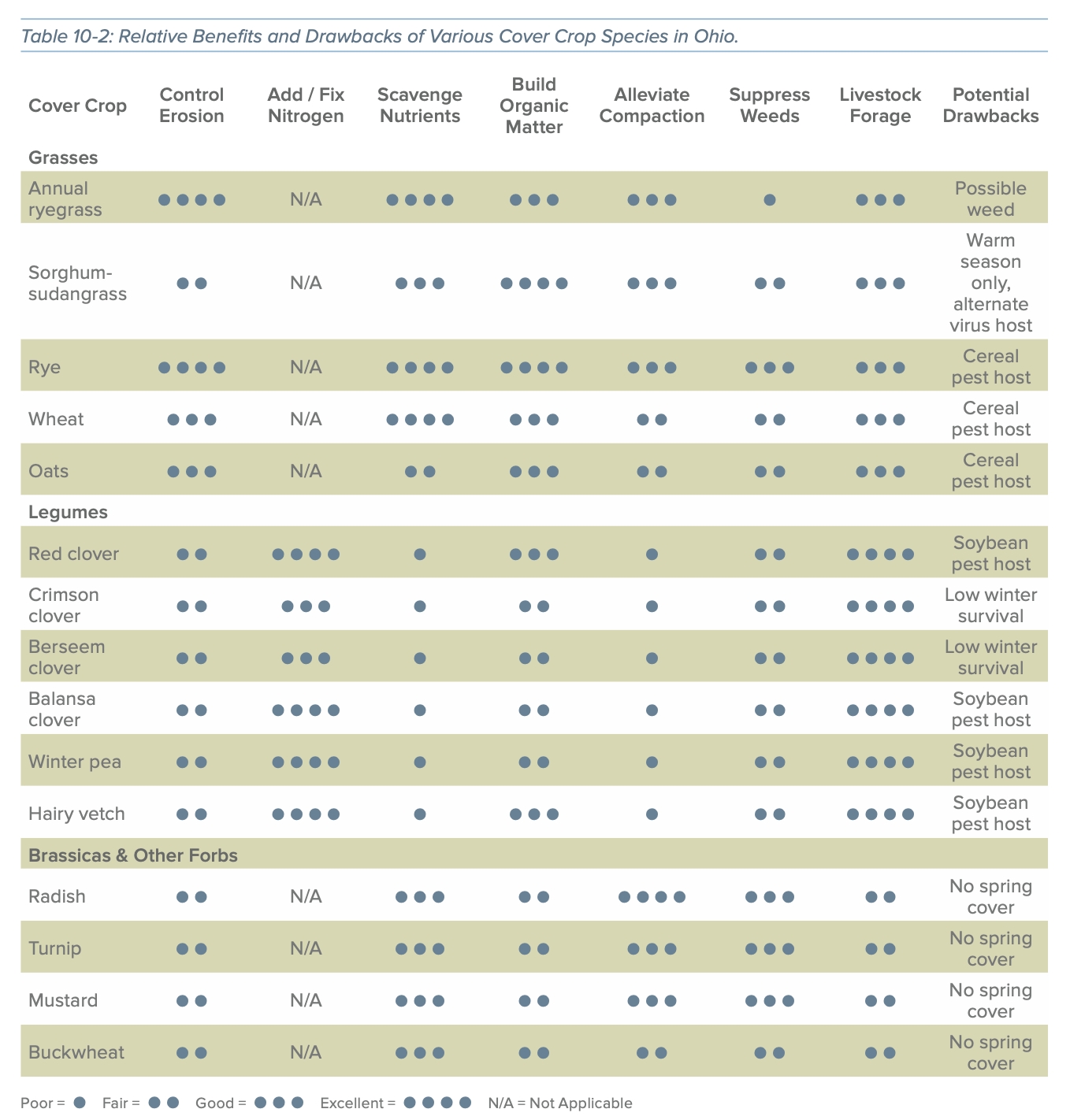
The Midwest Cover Crops Council is an excellent resource for researching the benefits of individual cover crop species. Their website is the first place I recommend farmers visit to use the Cover Crop Decision Tool: www.midwestcovercrops.org. This tool provides county-specific information on planting dates, seeding rates and the best species to meet your goals. Built using years of research from universities, NRCS and farmers, it is a highly reliable resource. Users can also find information on pest suppression and determine whether a cover crop species may serve as an alternative host for pests.
If you are considering a cover crop for spring forage production, winter triticale and winter wheat are good options for late-season planting. Both offer good feed value, overwinter well, and can establish reliably when planted later in the season. Compared to cereal rye, wheat and triticale provide a longer harvest window for producing higher-quality forage.
Here in Trumbull County, both crops can be planted through the end of October with good results under normal weather conditions. Seeding rates should be increased to 1.6 to 2 million seeds per acre when planting in mid to late October.
Winter cereal rye is considered the most reliable cover crop in Northeast Ohio and can be planted as late as mid-November when weather conditions are favorable. Seed will germinate at soil temperatures as low as 34 F, much lower than most other cover crop species. Recommended seeding rates range from 80 to 110 pounds per acre.
Cereal rye provides excellent erosion control, strong weed suppression and can produce quality forage when harvested before flowering. Once flowering begins, feed value declines rapidly, making timely spring harvest critical. Weather delays during this period can be costly.
Cereal rye is also an excellent option for producers who are not interested in forage production, especially those planning to no-till soybeans into the residue. Termination options should be considered before spring planting to avoid planting or tillage complications. Glyphosate, roller-crimping and tillage can all be effective termination methods. Cover crops should be terminated at least 10 to 14 days before planting.
Rapeseed has also been used successfully as a late-planted cover crop in Ohio and has the advantage of winter-killing under normal conditions. This eliminates the need for spring termination, but winter termination can increase the risk of erosion during the winter and early spring.
Rapeseed can be planted through the end of October and will germinate at soil temperatures as low as 42 F. Seeding rates generally range from 1 to 4 pounds per acre, with broadcast applications requiring the higher end of that range at 3 to 4 pounds per acre.
If you are struggling to identify the best cover crop options for your operation, reach out to your local extension office, consult the Ohio Agronomy Guide, or talk with neighboring farmers about their experiences.
To help avoid late planting challenges in 2027, consider the growing number of custom aerial applicators using drones to seed cover crops before harvest.
These earlier applications often require higher seeding rates, but they provide greater flexibility in species selection and establishment timing.