




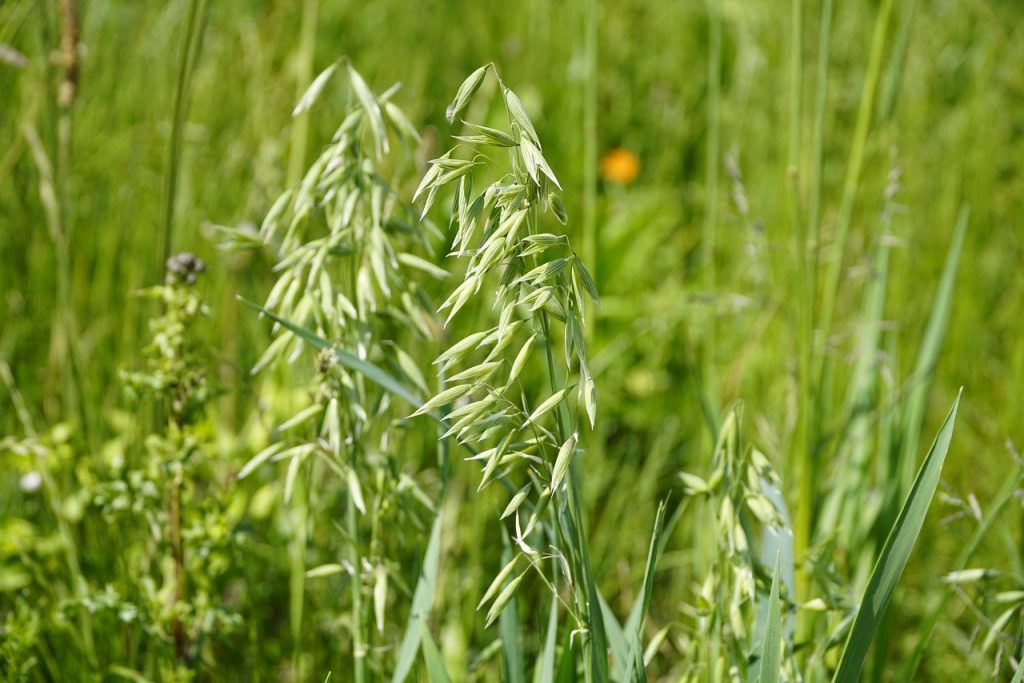
As most of us know, cover crops pose many benefits to soil health. Benefits include reducing erosion, nutrient loss and compaction, improving soil biodiversity, structure, moisture retention and more.
I like to think of cover crops as a winter coat for your fields, but cover crops are not optimized by a one size that fits all kind of program. Based on specific concerns for each individual field, such as low nutrients or compaction, we can find a cover crop to best suit your field’s needs. So, I’d like to discuss our options to find the perfect protector(s) for your soil.
Grasses
Grasses used as cover crops are overall a great option when battling erosion, nutrient loss and compaction, as they have deep, fibrous roots that expand vastly into the soil. In an Ohio State University presentation given by James J. Hoorman, Alan Sundermeier and Dr. K. Rafiq Islam, grasses are noted for their ability to put carbon into the soil and provide phosphorus to legumes.
The ability of grasses to gather or scavenge nitrogen in an unusable (organic) form and turn it into a usable (inorganic) form is also discussed. But the cool-season grasses commonly planted may end up using the nitrogen in the soil to grow, ultimately removing it from the soil. Therefore, grasses overall are great for putting carbon into the soil, fighting erosion and compaction, freeing phosphorus and potassium in the soil and combating weeds.
Some of the grasses most used as cover crops in Ohio are annual rye, oats, winter wheat and triticale. These grasses are planted because of their ability to germinate late in the season and be economically feasible.
Rye. The most common grass of all is annual rye. Annual ryegrass is an excellent compaction fighter with good weed suppression properties as well as good nitrogen scavenging qualities. Annual rye is allelopathic, which means it prevents the germination of plants around it. While this is great for weed suppression, it means rye is not good for seed mixes and can be hard to terminate. But with a low seeding rate at around 20lb/ac and a planting window open until Sept. 28, rye is a viable option.
Oats. Another allelopathic option is oats. Oats retain the same benefits as the other grasses while also naturally dying off in the winter; therefore, no mechanical termination is usually required. Oats, winter wheat and triticale seem to be very similar in the sense that they are highlighted for their profitability in the grazing and the mechanical forage harvest aspects.
Wheat and triticale. The planting date for oats is around mid-October, while both wheat and triticale have a planting window open until November first according to the Midwest Cover Crop Council’s cover crop fact sheets. The main difference between wheat and triticale being that triticale is a good option for cash crop interseeding, while wheat is not. Wheat and triticale are also great options for a cover crop seed mix, with one or the other being mixed with a legume.
Spelt. Another up-and-coming grass cover crop contender is spelt. Spelt is essentially a subspecies of wheat that is growing in popularity in the livestock feed industry due to higher energy and protein content. With similar planting guidelines and benefits to wheat, spelt is becoming an option that is proving to be more forgiving and more valuable as feed.
Legumes
As mentioned before, grasses are often included in mixes with legumes. While legumes are not as skilled at finding leftover nitrogen in the soil as grasses, legumes contain nitrogen-fixing bacteria in their root systems. These bacteria allow the plant to take nitrogen from the atmosphere and convert it to a usable form, then return it to the soil.
The main benefit that legumes hold over grasses is that they leave bioavailable nitrogen in the soil to be used by the next crop planted. Inoculation of legumes can be very important to nitrogen fixation, so pay attention to which inoculant will work for your crop of choice.
Also, legumes are often much higher in protein from a feeding perspective, making them more valuable. But grazing strictly legumes does pose a bloat risk to livestock. Like grasses, legumes also stabilize the soil and increase organic matter with vast root systems.
Finally, many legumes attract beneficial pollinating insects to the area once in bloom, which can boost pollination and reproduction of other surrounding species of plants.
Crimson clover, hairy vetch and winter/field peas are among the most common legume cover crops planted in Ohio. All three of these options have planting dates that end Sept. 28, as recommended by the Midwest Cover Crops Council and Ohio State University, which is a bit earlier than most grasses.
Clover. Crimson clover is resistant to drought conditions as well as low soil fertility and is rated excellent in terms of grazing and forage harvest. It is estimated that crimson clover can fix at least 70 pounds of nitrogen per acre and even more if left growing into May. Crimson clover is expected to survive winter, as it can handle temperatures as low as 10 F.
Vetch. Hairy vetch is also considered drought-resistant and does well in low-fertility soils. A wide range of pH and outside temperatures are also no issue for hairy vetch. Since hairy vetch is so resilient, it often survives the winter. Even though hairy vetch is used in many areas, you should be warned that establishment can be difficult.
Once hairy vetch is established, it can fix a minimum of 90 pounds of nitrogen per acre. Winter peas can also fix a minimum of 90lb. of nitrogen per acre and are highlighted for fixing nitrogen quickly and mixing very well with grains when planted. Winter kill is a possibility with winter peas depending on the variety planted or if the peas are planted early enough, avoiding mechanical termination.
Event
This is only the tip of the cover crop iceberg. There are many more options such as sunflowers and buckwheat that are proving to be beneficial. Also, I am no expert yet, just an enthusiast.
To hear from the real experts like decorated soil scientist Ray Archuleta and Henry Peller, consider attending our soil health field day on Nov. 10 at Trinity Friends Church, 33937 U.S. Route 30, Lisbon, Ohio.
This soil health field day is being put on by Carroll and Columbiana soil and water conservation districts, Ohio No-Till Council, as well as Ohio State University Extension. Tickets for this event are $20, which includes a free soil sample, lunch, a goodie bag and transportation to two different farms in Columbiana and Carroll counties.
For more information, visit Ohionotillcouncil.com or either the Carroll or Columbiana Soil and Water Conservation District offices.
(Madison Faulk is the Carroll Soil and Water Conservation District agronomic /natural resource technician. She can be reached at madison.faulk@carrollswcd.org or 330-704-9326.)