


Keeping the story of our local harvest going this holiday season
By Amy Van Blarcom-Lackey
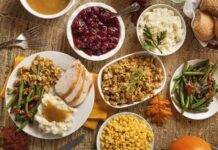
As the holiday season approaches, our homes will soon fill with the smells of roasting turkey, sweet potato pie, and fresh-baked bread. Around those tables, food does more than nourish us — it brings us together, connects generations and reminds us of where our food comes from.
I still remember the blessing before Thanksgiving dinner on our farm: “Thank you for this food, the hands that prepared it and the farmers who grew it.”
Those words stay with me because they tell the truth about every meal. For those of us in Pennsylvania, that truth is especially close to home. The apples in our pies, the potatoes on our tables and the sweet corn on our plates are often grown by farmers who are our neighbors, friends and family in our own communities.
Our farmers work from sunrise to sunset to produce some of the best dairy, meat, produce and specialty crops in the country. As we celebrate abundance this season, we also have a responsibility to make sure that hard work is respected — not wasted in a landfill.
More than one-third of all food produced in the United States goes uneaten. That is a staggering amount of lost value. When edible food is thrown away, we are wasting the labor, water, fuel, fertilizer and care that went into growing it. And when food breaks down in landfills, it creates methane — a problem we do not need when better options exist.
Food waste also affects family budgets. EPA estimates the average person loses about $728 each year to wasted food. For a family of four, that is nearly $3,000 a year. That is money that could stay in the household budget instead of being thrown away.
The good news is that we can do better.
Through EPA’s Feed It Onward initiative, we are working to help rewrite the story of our food system by encouraging people to look at food differently, finding new purposes for organic materials once they have served their first use and ensuring we feed families in need this holiday season.
Good food can be shared with food banks, pantries and community organizations that help families in need. Materials no longer fit for human consumption can sometimes be used as animal feed, supporting local livestock producers. Food scraps can become compost that enriches soil for future crops. And organic materials can be turned into energy through anaerobic digestion and other technologies.
This is not about starting from scratch. Many farms, businesses, and communities are already finding creative ways to reduce food waste and recover value from what might otherwise be discarded. EPA’s role is to shine a light on that work, connect people with practical examples, and help good ideas spread.
What can you do to join the movement? Plan meals carefully. Store leftovers properly. Donate surplus food when possible. Compost what remains.
You do not have to do everything; start with what makes sense for your home, your farm, or your business, and build from there. By looking at food differently, we can protect our environment, save money, and show gratitude for the farmers who feed us.
As we gather this holiday season, let’s honor the people who grow our food by reducing waste wherever we can. Let’s keep the story of our local harvest going — feeding people, not landfills. And remember to ask yourself — how can I take this food and Feed it Onward.
(Amy Van Blarcom-Lackey serves as the U.S. Environmental Protection Agency’s Mid-Atlantic Regional Administrator, overseeing Pennsylvania, Delaware, Maryland, Virginia, West Virginia, the District of Columbia, and 7 federally recognized tribes. A native from Bradford County, Pennsylvania, she is a third-generation farmer and lifelong conservationist. She brings a practical, community-focused perspective to environmental protection, with an emphasis on cooperative federalism, sound science, and common-sense solutions that support both public health and economic growth.)