




Special Pets, Special Memories
The doll carriage I played with as a child was made of real, woven wicker painted white, with a bonnet that swiveled to either head or foot.
Grandma has connections to Santa
Of the many memories I have of Christmas on the farm, I don't have a single memory of ever telling Santa what I wanted for Christmas.
Out of town is hard on a house, spouse
I don't know how or why and it hardly seems possible, yet I have undeniable proof that it is. My entire life just goes right ahead and falls apart if my husband leaves the state.
Things speed up in the new year
As we round out the year, I would like take a trip to the variety store to share two special retirements and information on two Ohio State University Extension courses to be offered in the new year.
Swans’ song is angelic winter music
Twice, in early December, when glowering clouds veiled the skies so thickly that nothing was visible, I heard their song.
‘Woman School’ really does exist
If there were a way I could grant a Christmas gift to each and every Farm and Dairy reader this holiday season, it would be a copy of Roger Welsch's book on relationships.
John Christy is my new hero
Last week, I had never heard of John Christy. This week, he's my hero. Christy is the director of the
Special Toys, Special Memories
I'm not sure now whether I got her for Christmas. She may have been a birthday gift. The sentiment is the same.
Dog’s life is worth saving
Some are born to greatness. Some rise to greatness. And some just want to get their dog out of the swimming pool.
Question, regret replaced by lively joy
Life is filled with questions, sometimes with answers, sometimes with just a tinge of regret for what might have been.
Get Farm and Dairy Delivered to Your Home
52 Issues as low as $39.95 or 104 Issues for only $84.95 Secure Online Ordering
About Farm and Dairy Newspaper
Company Links
- Advertising Rates
- Privacy Policy
- FAQ
- About Us
- Contact Us
- Place a Classified Ad
- Subscribe Online
- Comment Policy
Toll-Free 800-837-3419
Local 330-337-3419
Connect with us
4 Information Packed Sections!
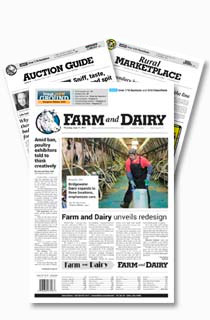
Farm and Dairy Cover Section
Farm and Agriculture News, Local Market Prices and Crop Reports, Columns and Commentary.
Weekly Auction Guide
Hundreds of Auction Advertisements for Ohio, Pennsylvania and West Virginia.
Antique Collector
Featuring Specialty Antique Auctions, Stores and Shows
Rural Marketplace
Hundreds of Classifieds, Autos & Real Estate Listings
the Farm and Dairy family


© 2026 Farm and Dairy is proudly produced in Salem, Ohio