




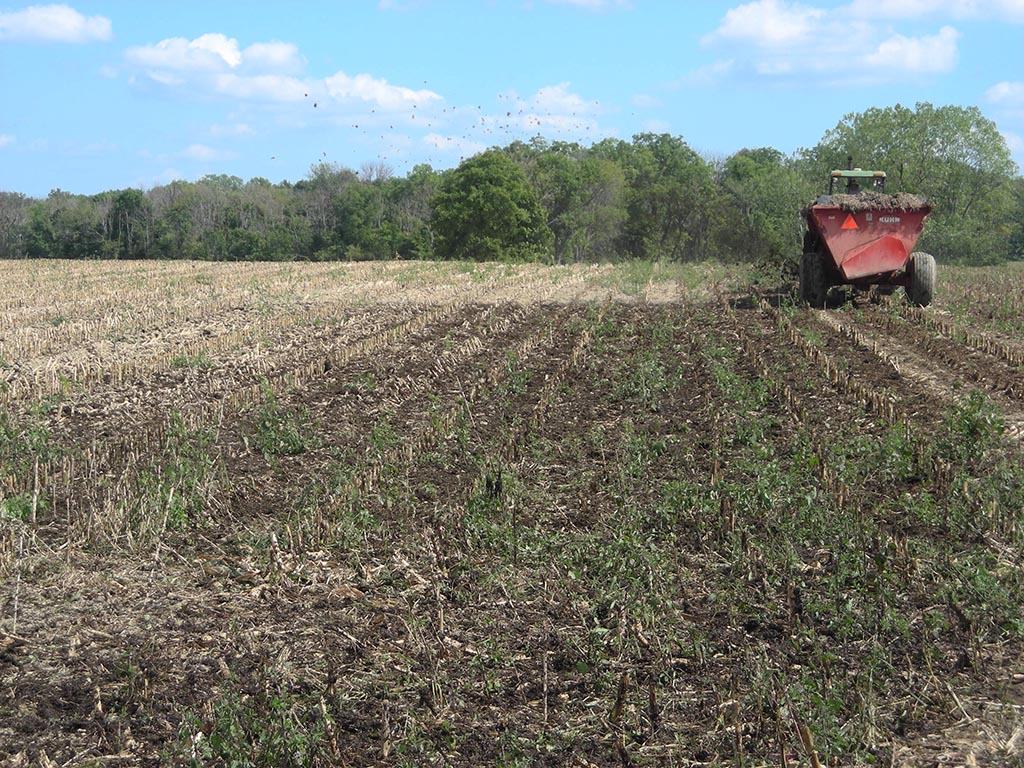
Agriculture is a critical industry in Ohio, and producers work hard every day to provide food, fuel and fiber. Alongside this work comes the responsibility of being good stewards of the land and water. Even when producers follow best management practices, there can still be unintended effects on the environment.
Dust from fieldwork, runoff from heavy rains or odor from livestock operations are realities of production agriculture. While steps can be taken to reduce these impacts, eliminating them completely is often difficult, especially in the case of odor, which is essentially impossible to remove entirely.
Recognizing these challenges, Ohio’s legislature has provided farmers with a legal tool called “affirmative defense.” This provision is designed to protect agricultural producers when they are following recognized conservation and management practices but still face claims of causing environmental harm.
Affirmative defense is a legal argument that, if found credible in a court of law, can negate criminal or civil liability. In simple terms, it does not stop someone from filing a lawsuit or complaint against you, but it can serve as your defense if a case goes to court. For agricultural producers, this means that if you can demonstrate you are managing your operation in accordance with an approved plan and meeting outlined standards, you may be shielded from liability.
To use affirmative defense, a producer must have more than just good intentions — they must have a documented management plan and proof they are following it. Two common examples include the following:
Nutrient management plan
A nutrient management plan is a plan that outlines how nutrients such as commercial fertilizer will be applied to fields to maximize crop use and minimize environmental impacts.
Comprehensive nutrient management plan
A comprehensive nutrient management plan is a more detailed plan that incorporates not just commercial fertilizer use, but also livestock waste handling, storage and land application, along with practices for soil conservation and water quality protection.
In addition to having a plan, the producer must be able to demonstrate the plan is being actively followed, all legal requirements related to nutrient or manure application are being met and the practices in the plan apply directly to the claim being made.
If these conditions are met, the court may find the affirmative defense argument credible, protecting the producer from liability.
Having a plan in place not only strengthens your position if a legal claim arises, but it also helps improve the overall efficiency and sustainability of your operation. Well-designed NMPs and CNMPs reduce waste, improve soil health and protect water resources. In many cases, they can also lead to cost savings by helping you make better use of nutrients you already have on the farm.
Developing these plans can seem like a large task, but you don’t have to do it alone. Your local soil and water conservation district, the Natural Resources Conservation Service and OSU Extension are here to help. These agencies can provide technical expertise, tools and in some cases, cost-share opportunities to assist in developing and implementing your plan. Whether you need a basic NMP or a comprehensive CNMP, working with SWCD and NRCS staff ensures that your plan meets state and federal standards and provides you with the documentation needed to use affirmative defense if necessary.
Affirmative defense is not a free pass — it requires careful planning, consistent implementation and proof that you are following your plan.
However, it can be an important safeguard for agricultural producers who are making every effort to operate responsibly and legally.
If you would like more information on affirmative defense, or if you would like assistance in developing your own nutrient management plan, contact your local soil and water conservation district office. Taking these proactive steps today can help protect your farm tomorrow.