


So, when we left off at the end of the last column, butter had been churned … and churned … and churned … and churned and was now ready for the next step. This was working … and working … and working (OK, you get the picture) the butter.
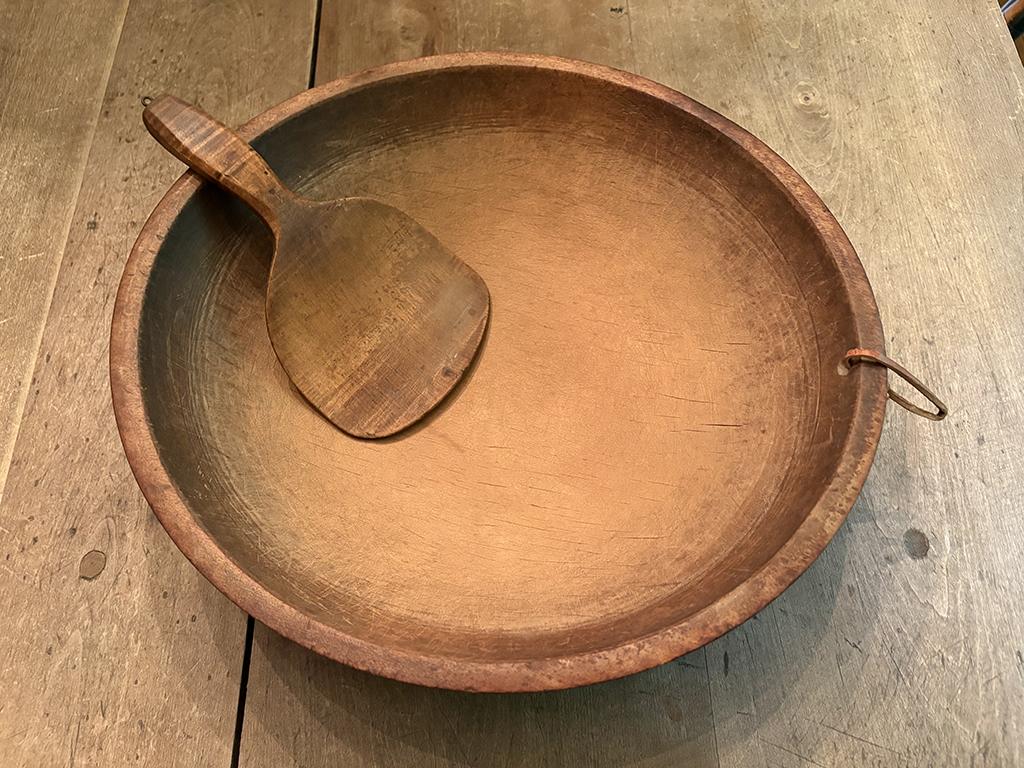
To start with, the buttermilk was poured off and set aside, and the butter that adhered to the dasher and sides of the churn was scraped off with a wooden or tin scoop and put into a wooden butter bowl.
Once the clumps of butter were in the butter bowl, a wooden paddle was used to press them into a single mass and begin to work the buttermilk out of it. The butter paddle was used to mash the butter down over and over, each time causing it to release more of the buttermilk.
Occasionally, cold, clear water would be run over the butter to wash off more of the buttermilk. The goal was to make the water running off the butter clear, signaling that all the cloudy buttermilk had been removed.
Scotch hands
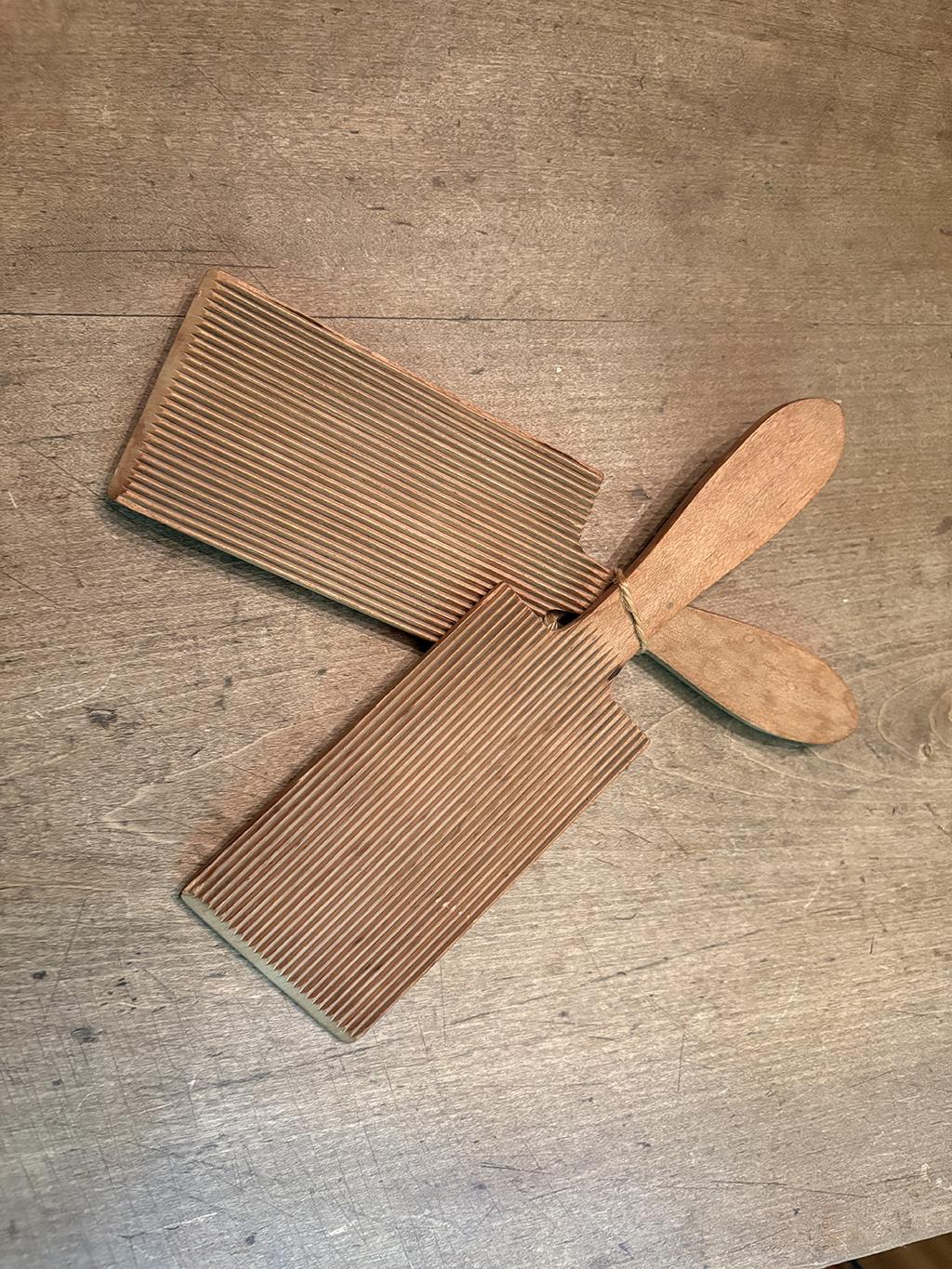
There were other techniques employed as well for removing buttermilk, with more and more gizmos coming onto the market as time passed. Another common way to remove the buttermilk from the butter in the Ohio country was by using “Scotch hands.”
Scotch hands were grooved wooden paddles, which were sold and used in pairs. To work these, a mass of butter was placed in between the paddles, with the grooves being in contact with the butter. The user then worked the butter around and around between the paddles (this undoubtedly took some practice), allowing the buttermilk to drain out through the grooves and into a bowl below.
Scotch hands must have proven popular as they are still able to be found in considerable numbers in antiques shops.
Working table
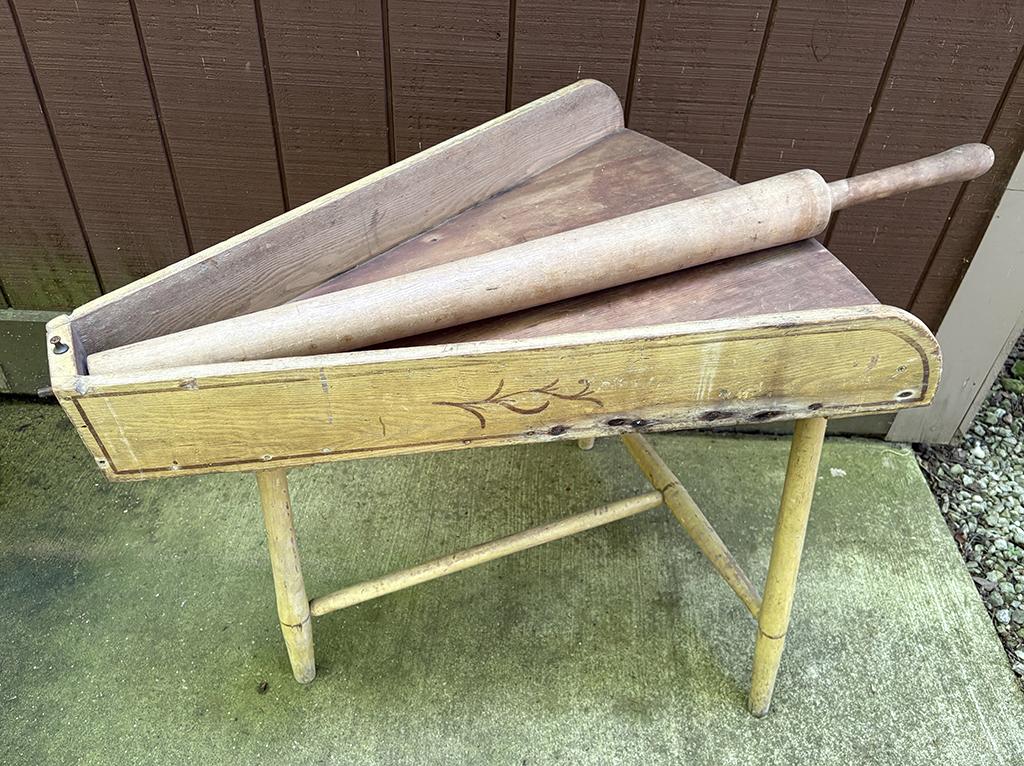
Also achieving a measure of popularity was the butter working table which was a three-legged V-shaped table, higher at the back than in the front. Onto this table was placed the globs of butter, and a huge rolling pin was rolled back and forth over them to work out the buttermilk, which drained off through a spout at the low end of the table and into a bucket.
As time passed, more and more patented buttermilk-removing gadgets appeared on the market. One which garnered wide acceptance was a mechanical tabletop device two or three feet in length. The butter was placed on a board to which was attached a large heavy ribbed roller which was cranked back and forth over it, with the buttermilk running off into grooves along the sides.
Color secret
When all the buttermilk had been worked out of the butter, its color was white — almost transparent. But, as we all know, butter is supposed to be yellow. Right?
Well, that color was achieved by adding a pinch of saffron.
Saffron is a spice harvested from the stamens of a crocus flower (crocus sativus). It contains the carotenoid pigment crocin, which imparts a golden yellow hue.
As of 2024, Iran produced 90% of the world’s saffron which, at $5,000 per kilogram (U.S.) makes it the world’s costliest spice by weight.
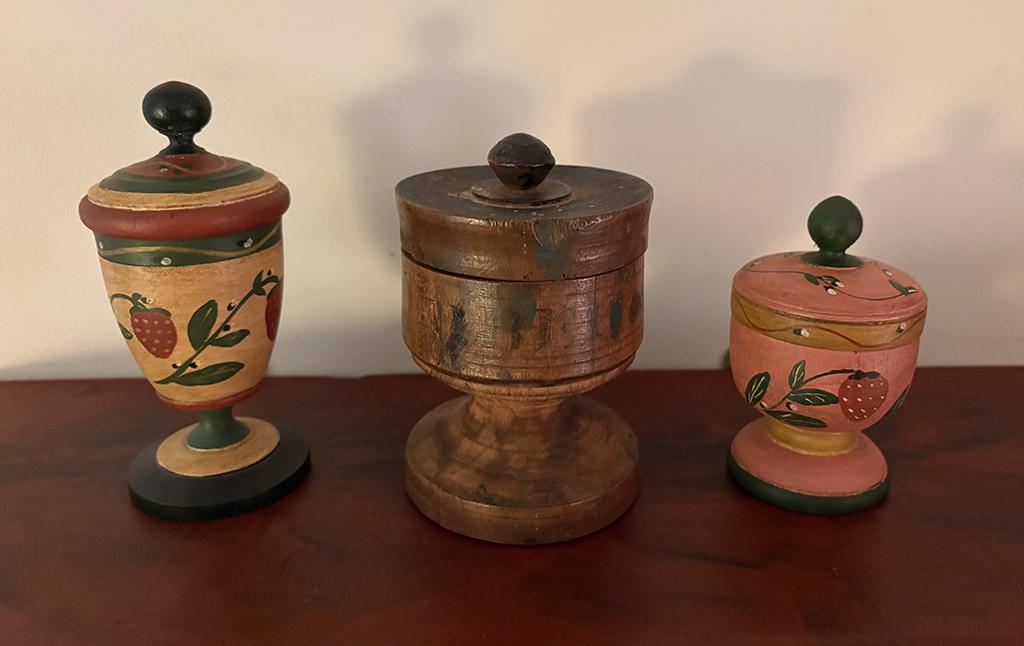
Even in pioneer times saffron was extremely expensive, and it was stored in small, decoratively turned wooden containers. Many of these saffron jars were colorfully painted with floral or geometric motifs and are today regarded as highly desirable American folk art.
After the color was added, the butter was packed into small stoneware crocks, embossed with the maker’s personal wooden butter stamp and taken to market to be sold.
End of that story.