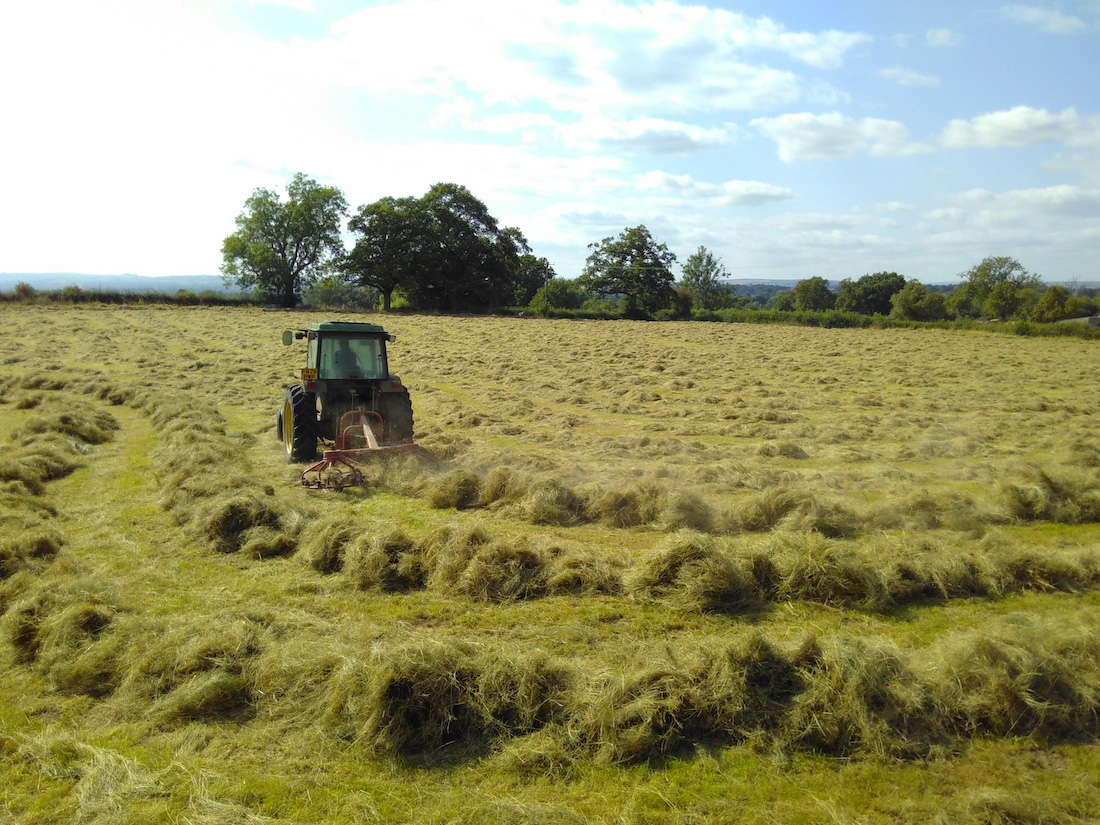
It’s the middle of June, and there is still a fair amount of first-cutting hay to be made in Ohio. From what I am hearing, in many cases, the hay that has been made has been low-yielding.
This is especially true for predominantly grass hay fields that have been long established.
Why is the grass hay crop short in 2026? There are a couple of things in play here, one of which we can’t control and a couple of factors that we can.
Of course, weather is a driving factor in hay fields and growth of perennial grasses. Warm days in April led to the grass growing earlier and faster than average.
Those warm April days were followed by cooler, wetter days in May, which then stunted growth. The result: Seed heads were produced early on shorter grass plants. We can’t control the weather, so we must deal with the hand we are dealt.
What we can control
Lime/Fertilizer
As far as the production factors we can control, fertility and reseeding long-term hay fields are options going forward.
If hay stands were thin, this is an ideal time for a soil test. Depending on soil test results, if pH is low, lime is a starting point. Given the high price of fertilizer, correcting the pH will improve the availability of key nutrients to the plants.
If pH is below 6.0, decreased yield and nutrient uptake can be expected. If phosphorus and potassium are deficient, then applications of MAP, DAP or potash should be considered.
However, as I drive around, there are many hay fields that have been long established, and the plants in those fields are past their prime.
For those fields, fertility adjustments will only go so far. Interseeding with a no-till drill is a hit-or-miss approach often depending on forage species, soil structure and timely rainfall.
Reseeding
Reseeding is often a better option to improve the quality and tonnage of a long-term hay field. There is still time to consider a late summer/fall reseeding of forage crops. The key to reseeding forages is creating a good, firm seedbed for seed-to-soil contact and to minimize rough ground conditions over the stand.
Reseeding does come at a cost as fertility deficits must be corrected. When you add in tillage and seed costs, establishing new hay fields becomes a significant investment.
Graze it
In some instances, there is a case to be made not to improve the forage stand. If reseeding is out of the question, and there isn’t room in the budget to manage fertility, should the field remain in hay production at all?
Can we fence it in and graze it? Does it make more economic sense just to buy the hay to replace what the field could produce? If hay yield is consistently low, the net return on baling it is probably at a loss by the time you figure machinery costs, labor (your time has value) and fuel.
The message that can be taken away: If hay yield was low, you still have options. Some may be more appropriate than others depending on forage needs, costs and weather.
For more information on improving hay yields, reach out to your local Ohio State University Extension office.