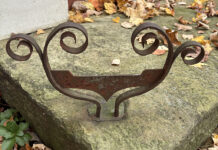




The topic of the last column concerned the leaving of dirt and mud at the threshold of the house through the use of boot scrapers. But even after the muck tracked from the surrounding woods and fields was jettisoned, another issue remained.
That challenge was how to remove heavy work boots which still would have had at least some residual mud on them, as well as likely being soaked. The answer to that was the boot jack which typically hung from a nail or rested in a place of prominence just inside the entrance of the house.
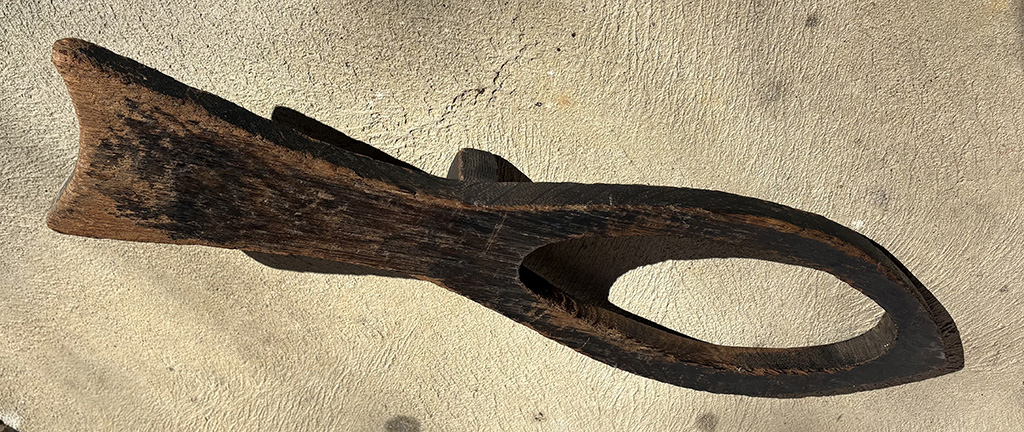
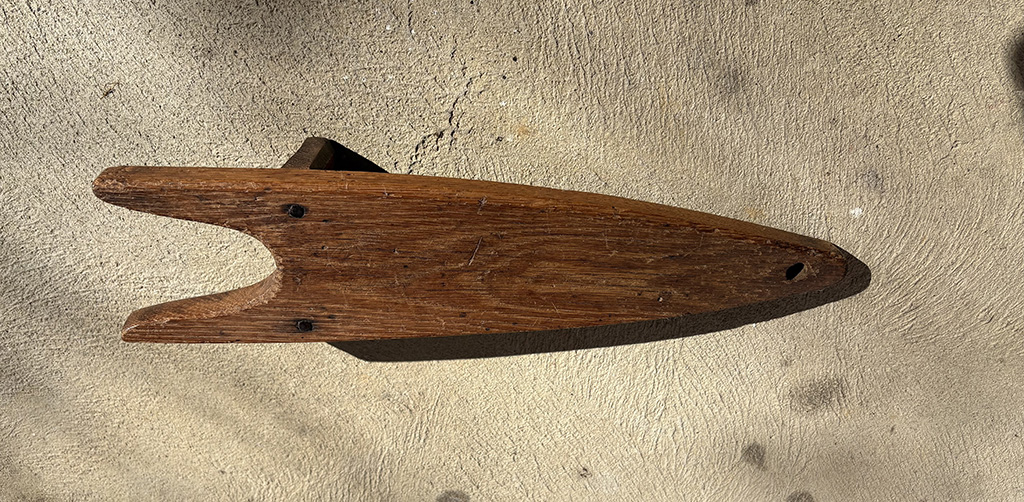
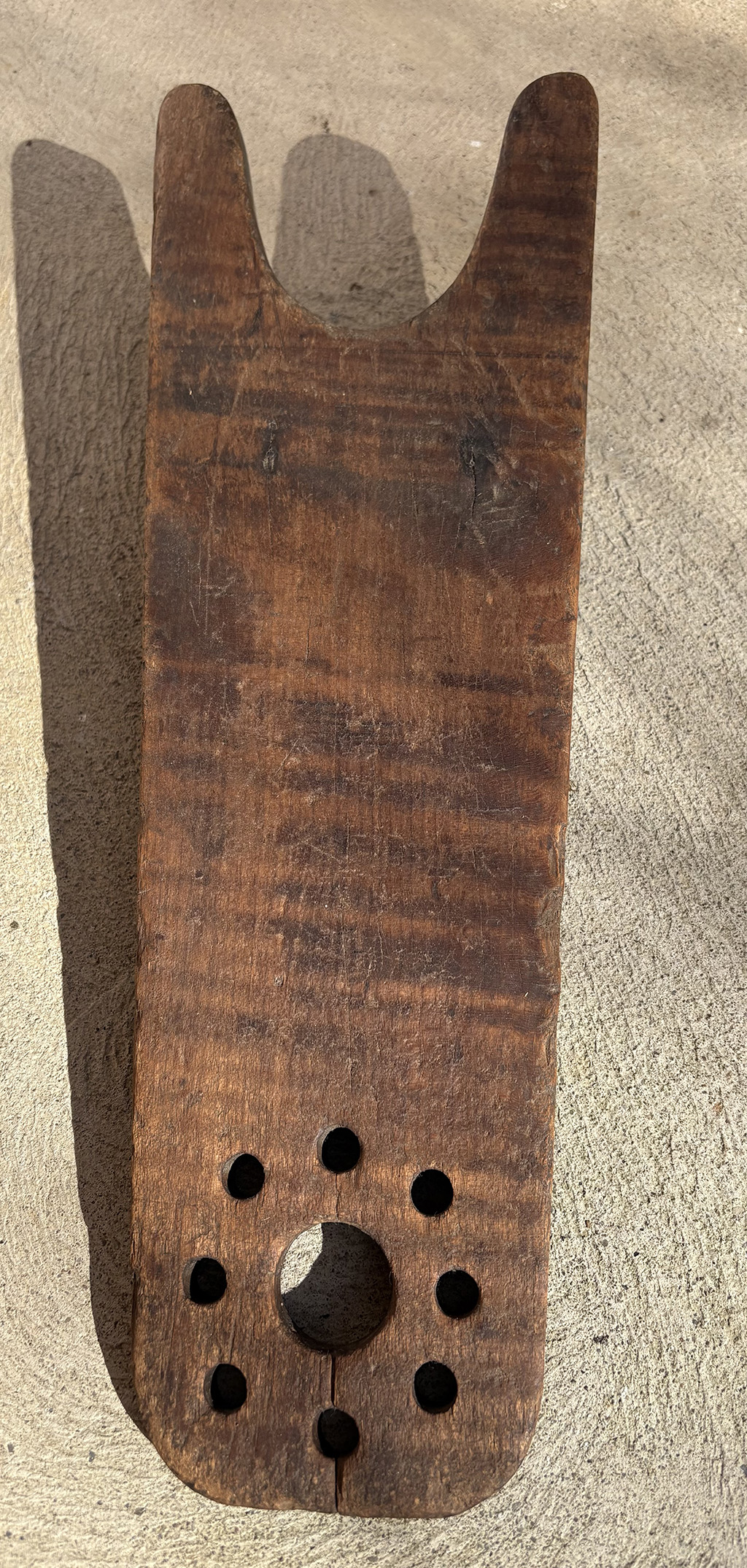
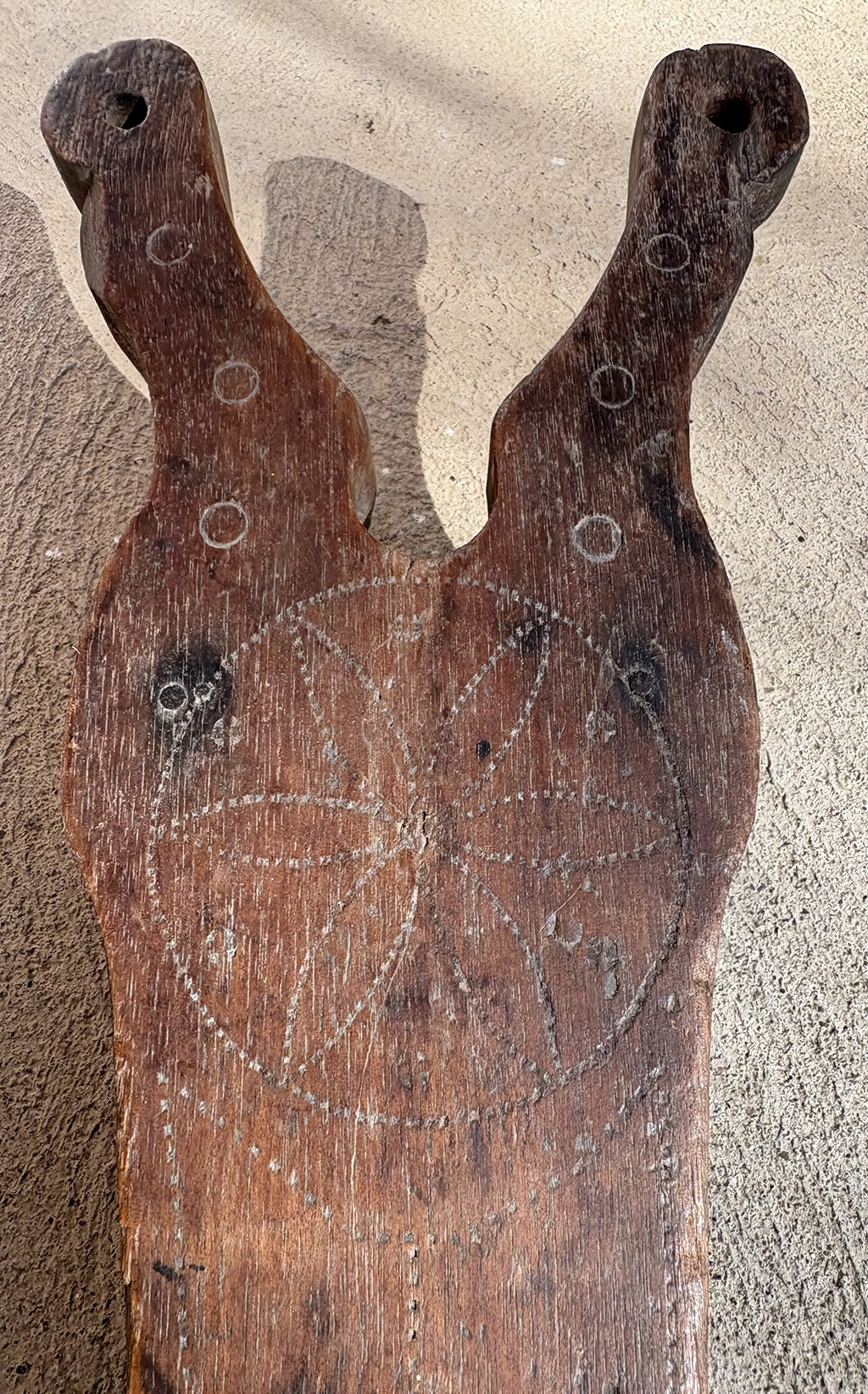
In its simplest form, the boot jack was a plank of wood with a U- or V-shaped cutout into which the heel of a boot could be inserted. The foot could then be withdrawn from the boot without the wearer bending over or getting one’s hands dirty.
The word “jack” was a term that likely came from England where, in the 18th century, Jack was a common name for the boy or servant that assisted the master of the house in pulling off his riding boots. Because the device under discussion fulfilled the same duty, it was usually referred to as a jack.
The earliest boot jacks were crafted from natural crotch pieces of trees where the branches would have formed a V-shaped notch ideal for capturing a boot heel.
With the advent of sawmills and the availability of lumber, pioneers were readily able to transform boards into boot jacks. And from that point on, the boot jack began its evolution into an object of folk art rather than being just a utilitarian household tool.
It wasn’t long until all kinds of decorations began to show up on boot jacks. In the beginning, they were painted with a variety of motifs including compass stars (sometimes viewed as hex signs), hearts, diamonds, various animals and other motifs.
Craftsmen began making boot jacks out of choice woods such as black walnut, curly maple, birdseye maple, cherry and a variety of other figured varieties. To these were added various designs done in piercing and elaborate incising into the surface.
By the mid-19th century, boot jacks were being turned out by iron foundries in a plethora of whimsical shapes. To reduce the weight of handling these iron jacks, the designs were filled with ornate, lace-like piercings which incorporated geometric designs, religious, patriotic and political motifs, and such folk designs as hearts, birds, scrolls, flags and eagles.
By the late 1800s, all kinds of clever cast iron boot jacks were flooding into the marketplace. Arguably the single most popular design was the so-called “Naughty Nellie” boot jack, which was a woman lying on her back. Her spread legs were angled to grasp the boot heel.
Other cast iron boot jacks included one shaped like a cricket with the antennae used as the heel catch, a walrus with its tusks serving the same function, and a devil whose horns were used to pull the heel.
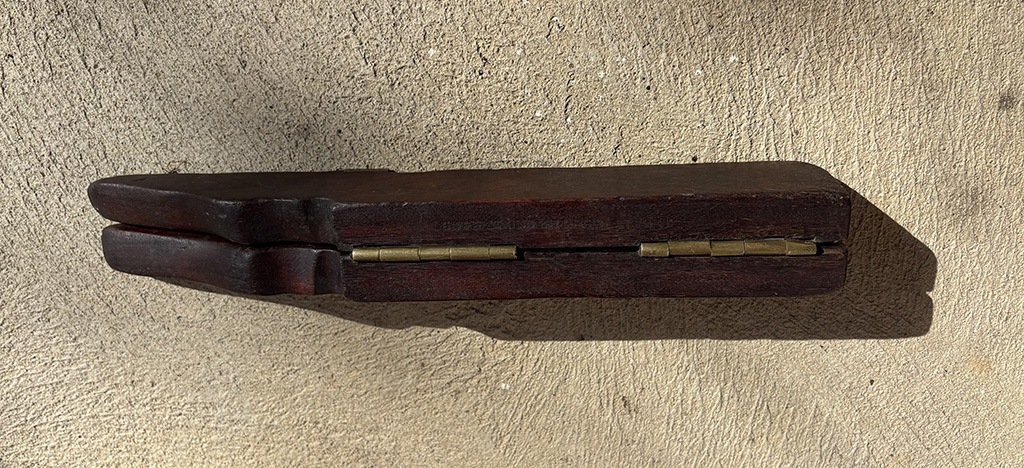
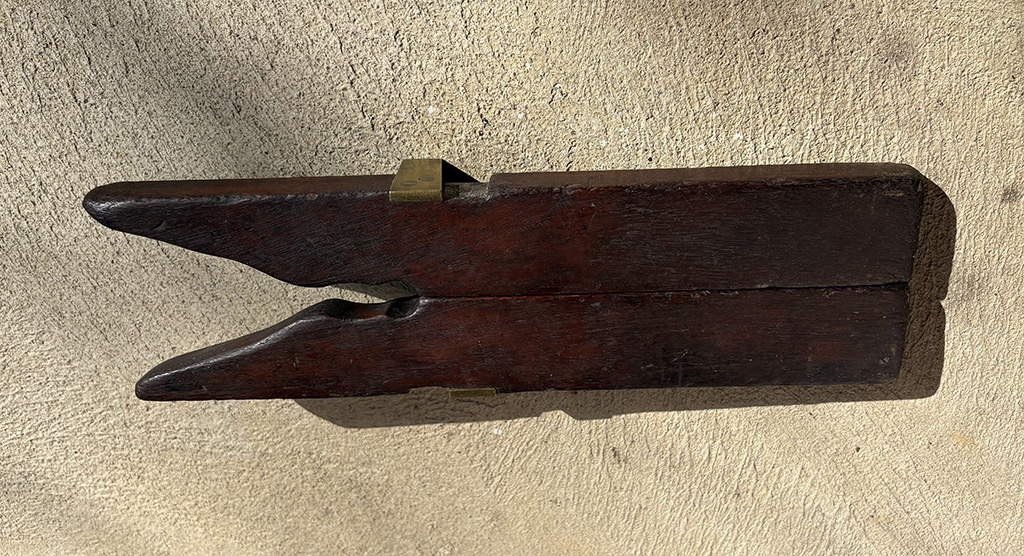
Other imaginative forms included “traveling” boot jacks which could be folded to fit into a valise. One of these was a cast iron pistol which was hinged to open in such a manner that the two halves of its barrel could catch the boot heel.
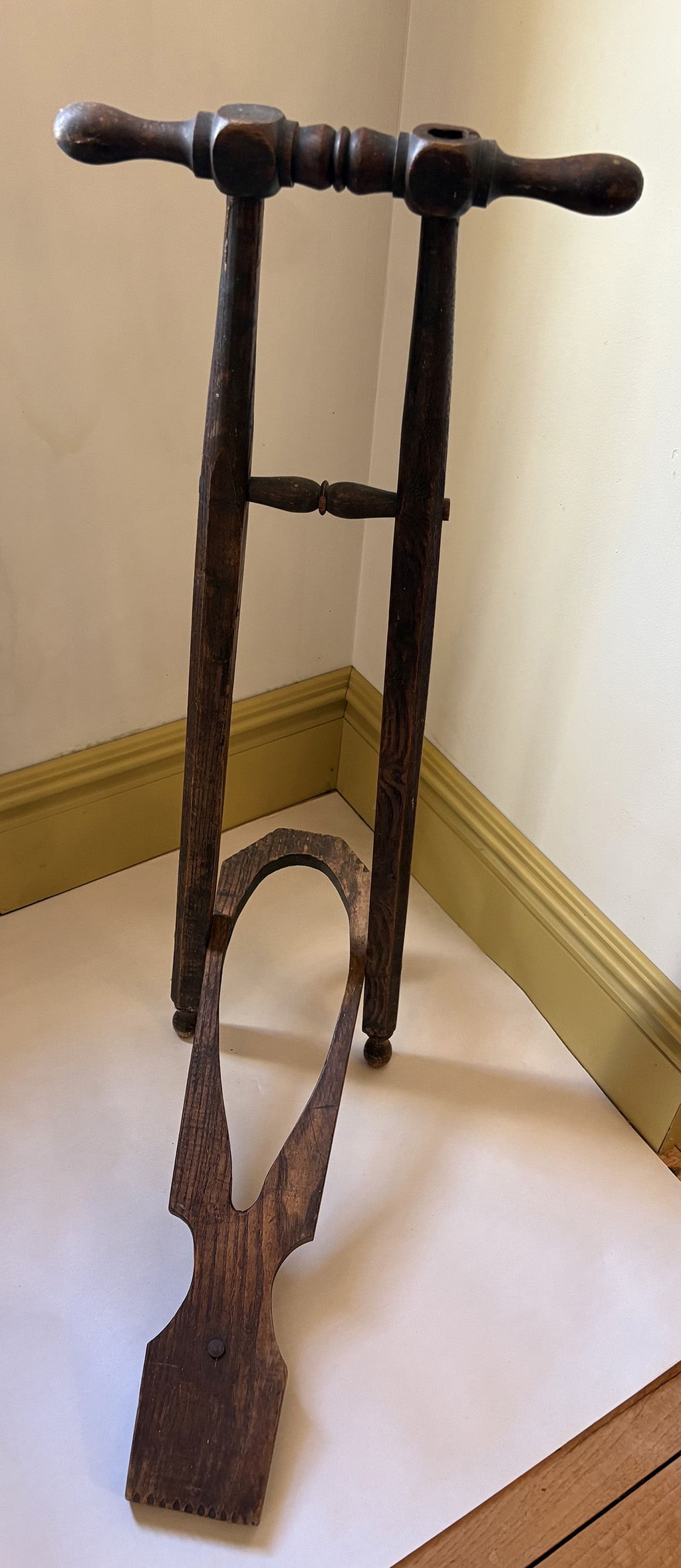
One unusual example of a wooden boot jack incorporated a raised horizontal bar about two-and-a-half feet high which the user could grasp while pulling off his boots. The elements of this device were usually well turned and made of a fine cabinet wood.
The popularity of boot jacks continued for decades until changing styles of footwear, along with paved streets and sidewalks, rendered them obsolete.
Today boot jacks remain a popular category for antiques collectors and the later cast iron examples can still be found in strong numbers. The earlier wooden examples are rarer and often show signs of significant wear.