


All right, so now that the pioneers had tallow candles aplenty — by the score, by the gross, by the boxful — the question became how to burn them efficiently without burning down the barnhouse? The answer was the candleholder.
Candleholders on the frontier of the Ohio country could be as plain or as fancy as the local craftsmen had the ability and tools to make them. They were a product of the tinsmith, the potter, the blacksmith, the wood turner, the pewterer, the brass founder and even the unskilled backwoodsman.
In its most basic application, the candleholder did not need to be more than a block of wood with a hole bored in it by an auger, or even a lump of raw clay with the candle stuck in the top of it. Both these homemade kinds of holders certainly existed, although they have long since vanished.
Tinsmiths
Of all the pioneer craftsmen who could make candleholders, it seems the tinsmith was the most prolific in the genre and attempted to garner the market to the greatest extent possible. The tinsmith seemed to possess a wealth of creative ideas in terms of how tin could be formed to secure candles.
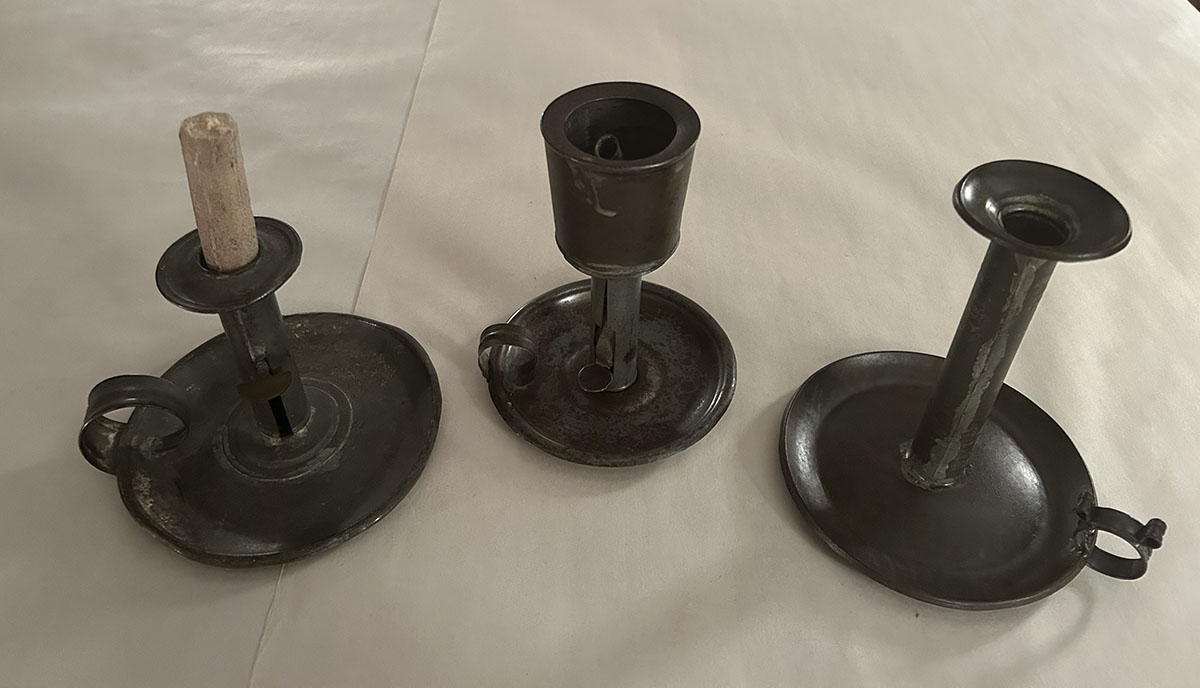
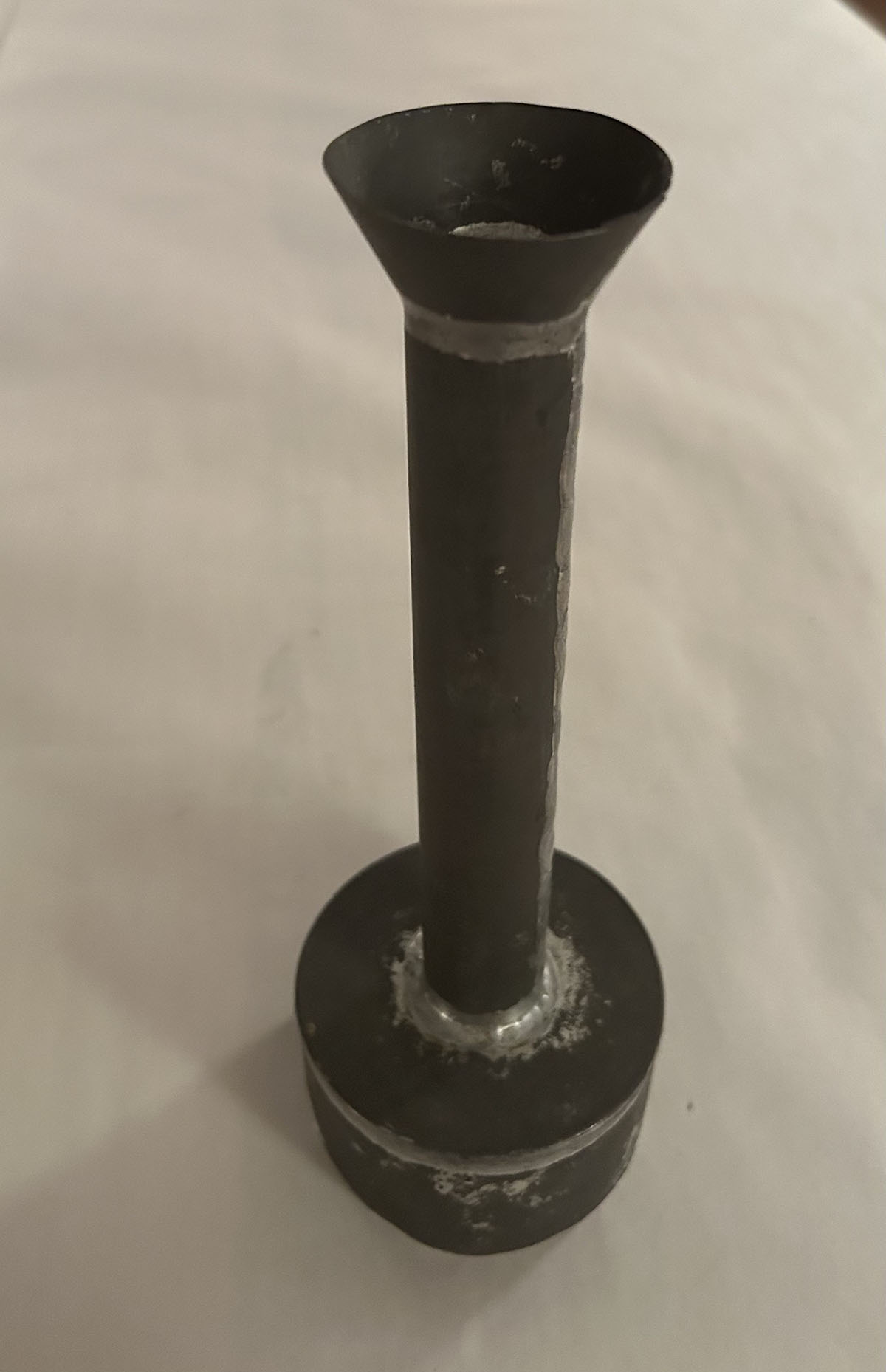
A design that seems to be almost universally found across the Ohio country was one that consisted of a round saucer base about 5 inches in diameter, having a simple finger loop soldered or riveted along the edge. To the saucer, a vertical cylinder was attached, usually 3 or 4 inches tall, which was capped by a small collar designed to channel the dripping tallow onto the saucer below. In many cases, the tin cylinder held an internal spring mechanism that incorporated a small, dished platform on which the candle rested. A slot on the side of the cylinder and a metal tab allowed the user to push the candle up higher in the holder as it burned down.
Some of these candleholders had conversion units that enabled a tin font to be inserted into the tube so that it could burn animal fat if candles were not available. Such candleholders were cheaply made and apparently marketed widely, likely by peddlers who seasonally plied the developing communities of the territory.
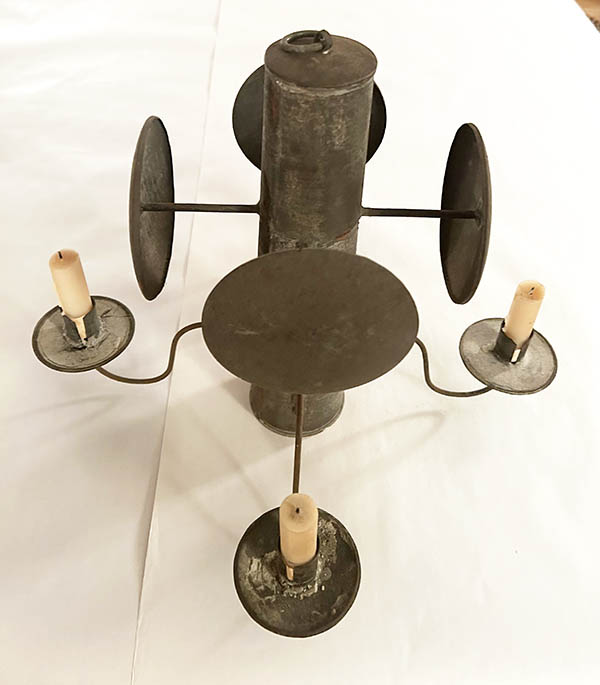
Another type of candleholder made by the tinsmith was the hanging chandelier. This incorporated any number of arms which extended from a central tin or turned wooden core. Each of these arms terminated in a candle cup for a single candle. Such chandeliers often became works of art for imaginative tinsmiths who often embellished them with tin cutouts in the form of leaves or geometric shapes. In some examples, polished tin reflectors were mounted on the arms behind the candles to help better disperse light in the room.
Tinsmiths also crafted lanterns and wall-hung candle sconces, which probably represented the apex of their artistry. Such sconces, which could have one or multiple candle sockets, often incorporated fancy crimped work, mirrors to reflect the light and applied or punched work that could range from simple leaves or wheat stalks to patriotic motifs. Cylindrical lanterns featured extensive punchwork decoration, which allowed light to escape while safely confining the flame. Some tin candleholders were designed to do double duty, such as fashioning the base to also serve as a biscuit cutter.
Wood turners
Wood turners, the likes of which crafted the various elements of spinning wheels, chairs, woodenwares for the kitchen and a plethora of other goods, also made their share of candleholders. They transitioned the basic block of wood with a hole bored in it into works of art with their foot-powered lathes and chisels. While some early wooden candle holders were fairly plain, over time they became increasingly elaborate, with their turning patterns reflecting the changing tastes in household furnishings. Many early wooden candleholders emulate the same style of turnings as the legs of fashionable Windsor chairs.
Potters
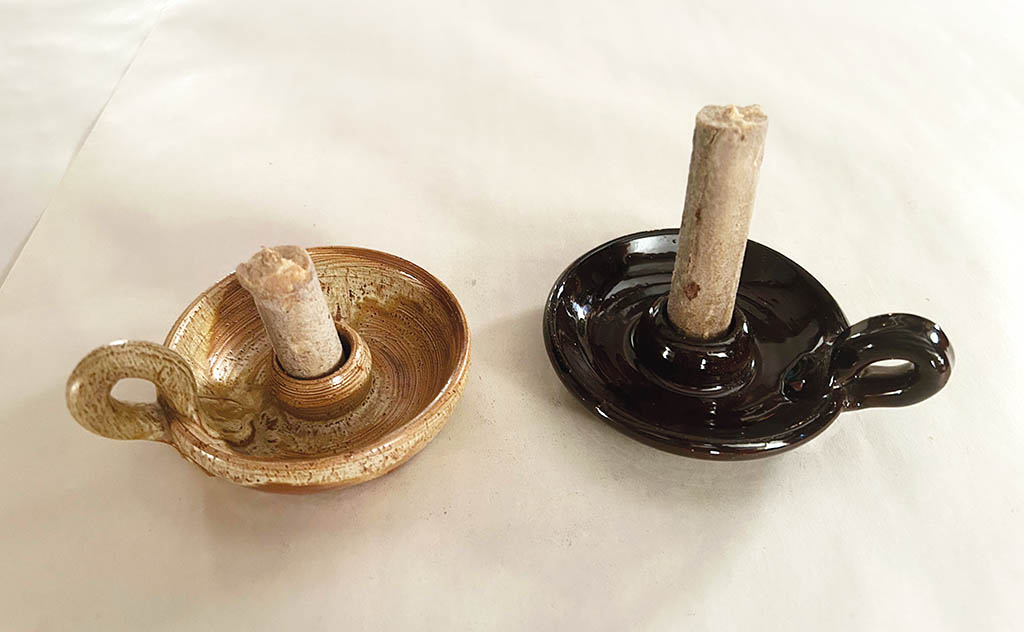
Potters were probably the second most prolific producers of candleholders. They were readily able to take lumps of clay and turn them into candleholders in a vast array of forms, ranging from very simple sockets mounted on a saucer to taller forms incorporating fancy turnings. The application of colorful glazes made them all the more enticing to housewives whose domiciles were otherwise unvaryingly drab. Unfortunately, because of their inherent fragility, few of these early pottery candleholders have survived.
Blacksmiths
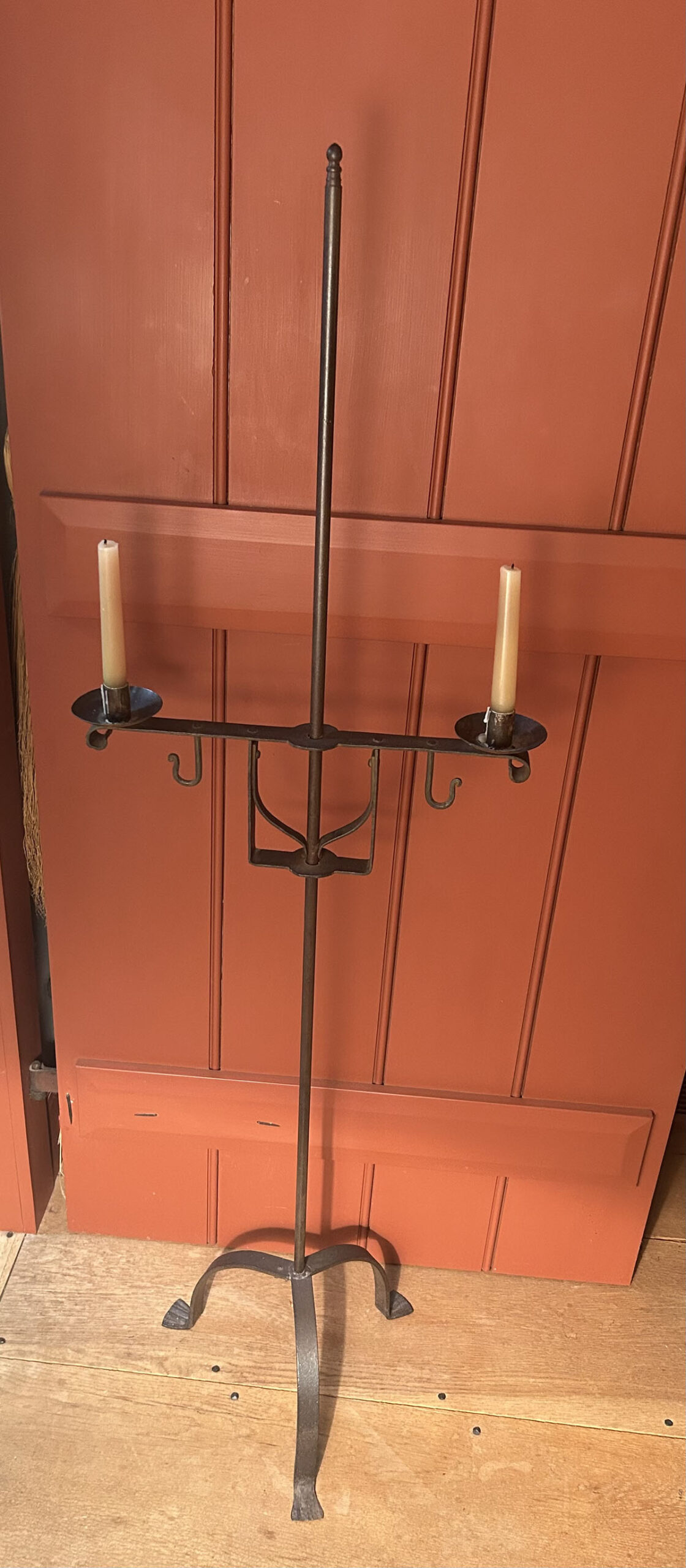
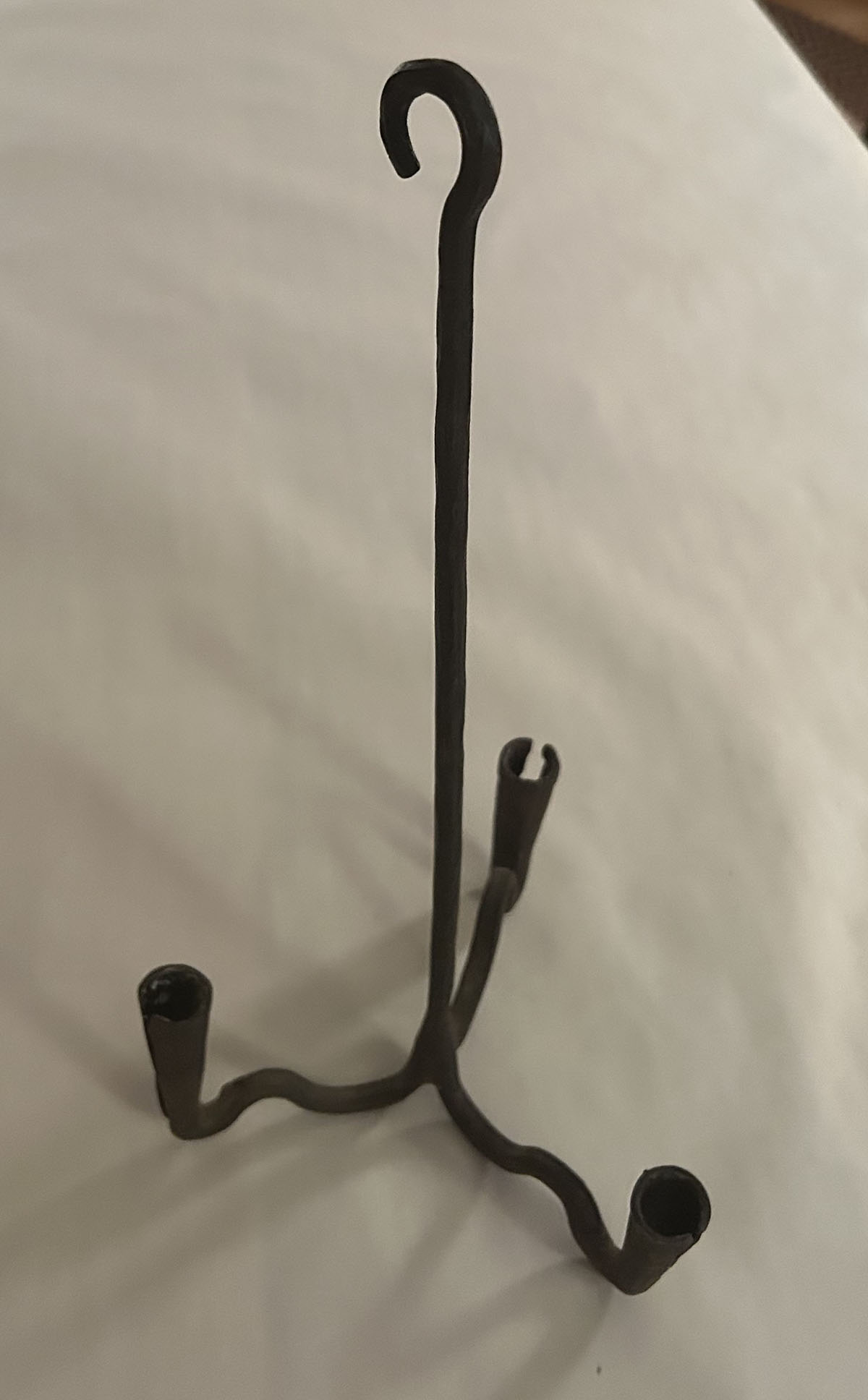
Most local blacksmiths were also very capable of producing candleholders, especially floor-standing and hanging models. The majority of these hanging devices had little to no ornamentation, often consisting of a heavy iron rod that was split into multiple upswept arms, each of which terminated in a simple wrapped holder devoid of any saucer. Occasionally, however, blacksmiths really let loose with their artistry, creating jaw-dropping chandeliers that were truly designed to impress.
Floor-standing candleholders usually consisted of a straight rod supported by three or four curved legs. The rod supported a cross piece that incorporated a simple spring mechanism to hold it in place, and which had a candleholder with a drip cup at each end.
Other craftsmen
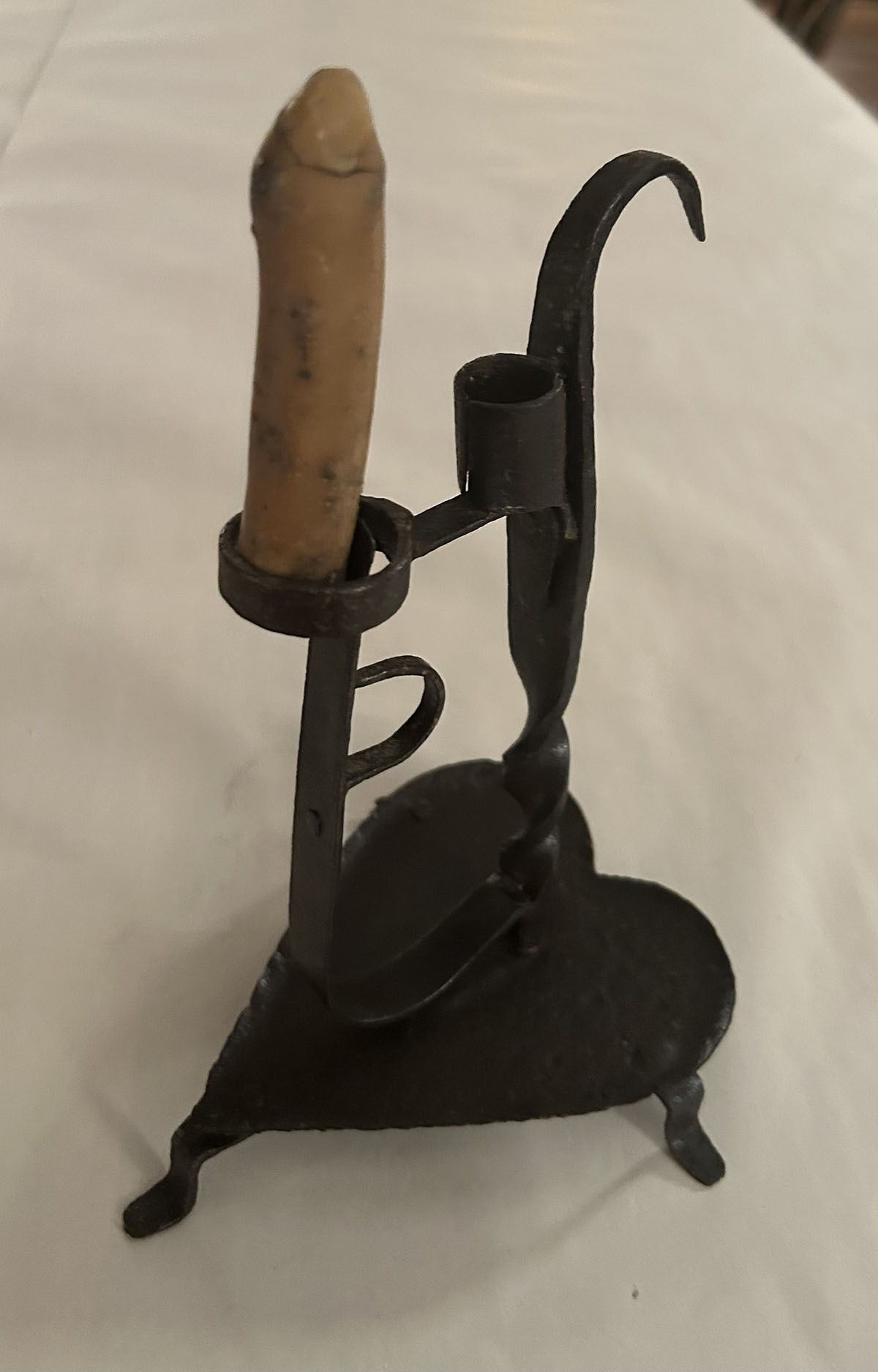
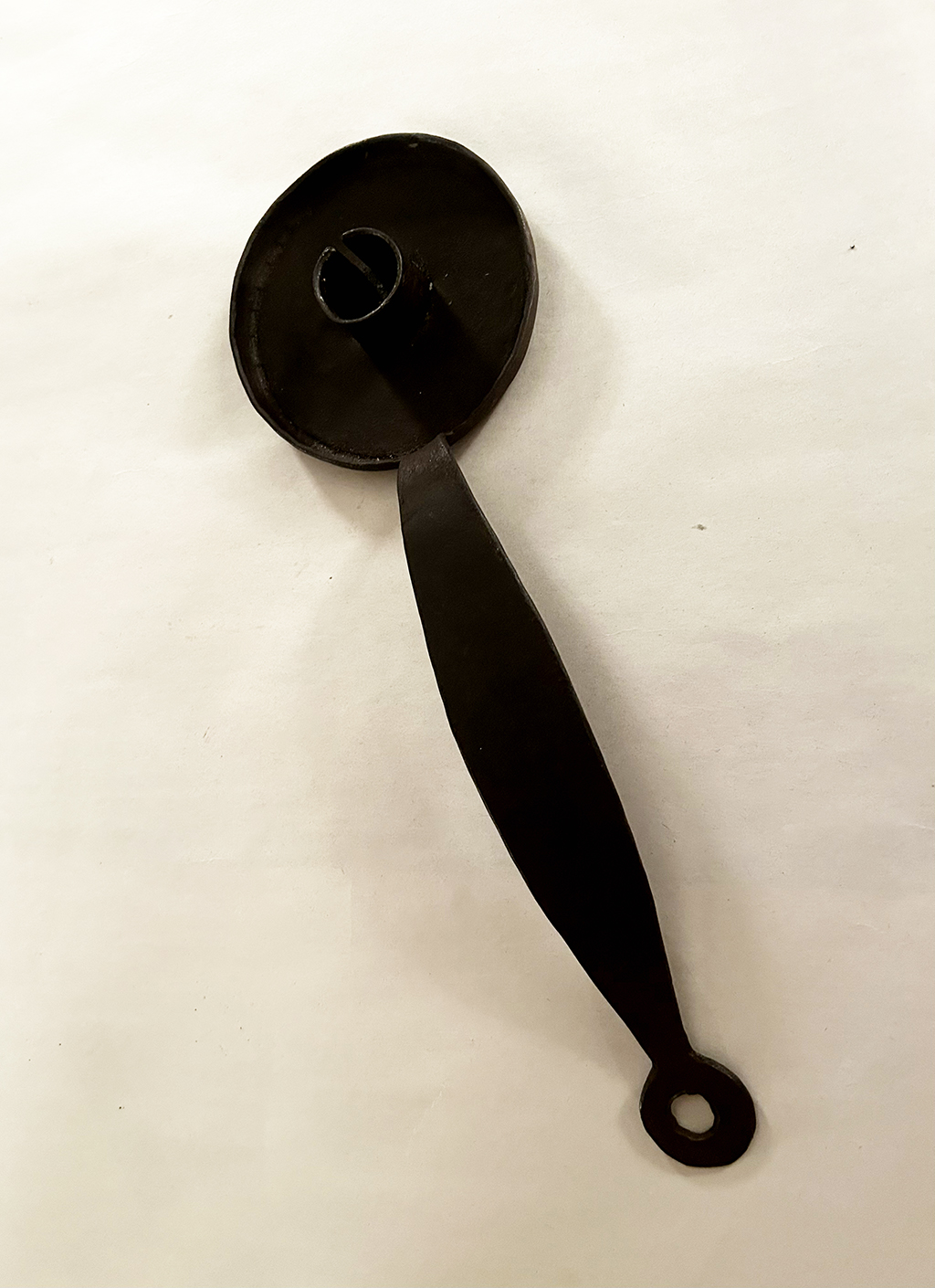
Blacksmiths, and their more highly skilled counterparts, the whitesmiths, also made tabletop candleholders in a vast variety of forms, sometimes having decorative elements such as file work, punchwork or hooks on which a candle snuffer could be hung. Candleholders made by whitesmiths often incorporated elements made of brass.
Most developing rural communities lacked the services of a pewterer or a brass founder since those craftsmen tended to find their strongest customer base in the cities where dwellers wanted goods in the latest styles. Residents of the pioneer settlements where such craftsmen chose to settle, however, were able to enjoy a vast array of candleholders that added a sense of elegance and refinement to their homes.