
Should you feed your bees in July? The simple answer is … it depends. Many factors will go into making the decision to start feeding sugar in July. Is your hive small, less than 10 frames? Is it a split that you recently bought or just acquired and want to build up rapidly before September? Are you putting on a second deep that only has a few frames of brood or doesn’t have any drawn comb? Are your hives in an area that may be in the summer dearth and are still weeks away from the fall goldenrod and aster flow? Do you have time and resources to feed your bees to help push them along and fatten them up? If you answered YES, then let’s look at feeding bees!
Lazy bees?
As always, there are as many opinions on the internet or in books about feeding as there are beekeepers. One of the main opinions I hear against feeding bees is that it would cause them to be lazy and become dependent on your handouts. I have heard more than once from beekeepers that they don’t raise or keep “welfare bees.” I look at this view as short-sighted.
Bees are livestock, and although they can travel and forage up to 2 miles searching for nectar and pollen, if it is in short supply, why not feed your bees? If you had some cows on pasture and the grass started to dry up and slow down because of the summer heat and overgrazing, would you supplement their pasture with some hay or grain? Sure, you will, but because most new beekeepers don’t look into the hive and see what resources are available or stockpiled, they assume the bees have enough stores to survive on or will be able to fly to another area to locate the nectar or pollen they need.
Depending on your location and what forage is available for the bees to gather, they may slow or shut the queen’s egg production down and start consuming the honey they already stored weeks earlier, until a new nectar flow begins. The bees will certainly not draw out or make new comb during this time. Your undrawn frames of foundation will sit there until the next nectar flow. There is no reason to use up energy in making new comb when there is not enough nectar coming in to sustain the work.
Help the bees help you
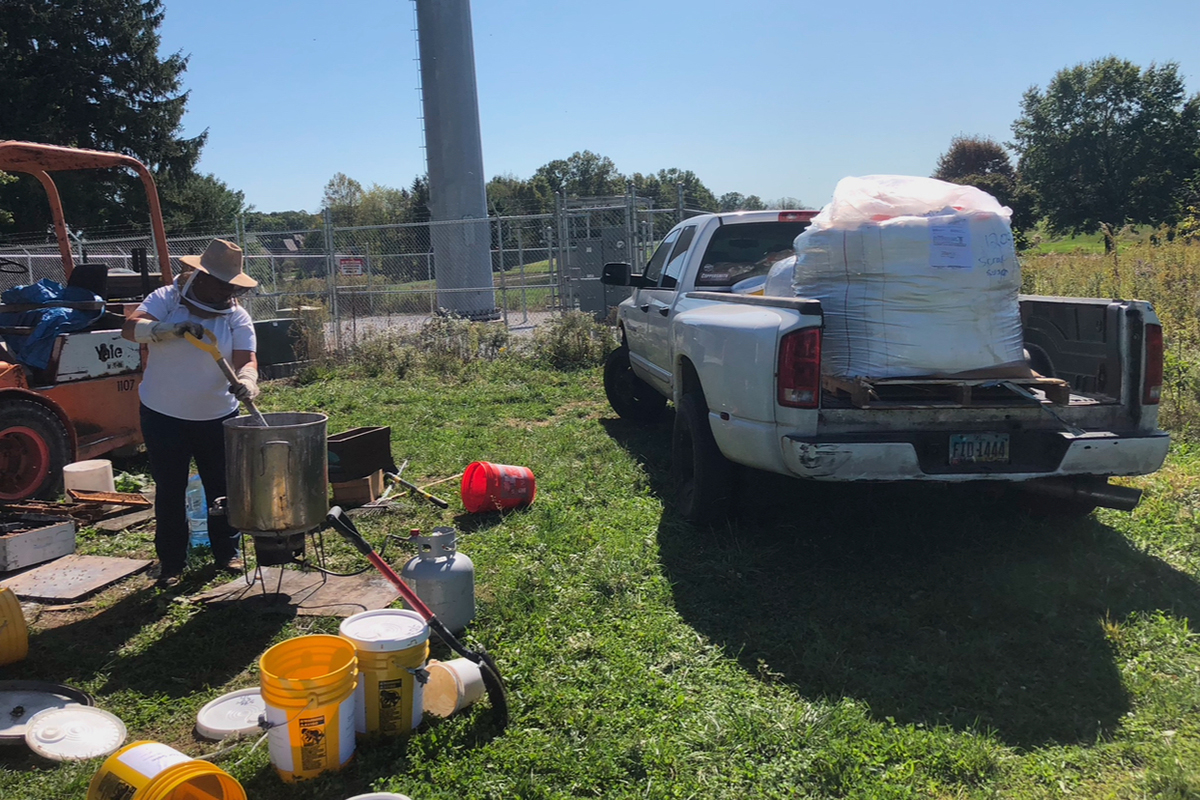
Feeding the bees a 1:1 sugar solution slowly over a one-to-two-week period will stimulate them to create wax and draw out your foundation for the next flow. If you are feeding your bees with a quart mason jar with holes in the lid, limit the number of holes so it takes one to two days for them to drink the entire jar. This slow, constant dribble effect mimics a continuous nectar flow. You can also use 1-gallon pails and just reduce the number of holes or dilute the syrup to a 2:1 ratio of more water to your solution. Adding a few drops of peppermint or spearmint essential oil will help the bees utilize the sugar more effectively. Do not use lemon grass oil while feeding; this can promote robbing in your hive from outsiders.
Economics of feeding
Today’s price at Rural King for a 10-pound bag of white sugar is $7.99. That’s almost .80 cents per pound, assuming you’re claiming farm tax exemption to avoid paying an additional 7% state sales tax. Do not use brown sugar, molasses or powdered sugar. I have used both cane and beet sugar and find no difference. They are both sucrose.
In the past few years, sugar, like everything else, has moved up 15% to 20% in price. You can still find some discount sales at Costco or Sam’s Club, but it inevitably happens when you don’t need it or want to stock it. The incentive to purchase and feed sugar diminishes as the price goes up. Unfortunately, it’s easier not to spend money on sugar and rely on the bees’ foraging abilities to get the hive through the summer dearth. Will they survive without supplemental feeding? Yes, but the difference in well-timed feeding will be huge and will pay off in production. Wholesale honey is over $3 per pound, and retail honey should be getting $8 to $10. You’re effectively trading 1 pound of honey for 10 pounds of sugar.
When your cattle pasture is brown, dried up and dusty, your cattle would come up to the fence or gate and get your attention by bellowing out their complaints. They will flash their big eyes and smile and convince you to throw extra hay or grain into the feeders. The extra feed won’t turn them into welfare cows, and neither will your bees by supplementing some feed when they need it.
Feeding honey
Feeding honey will not stimulate them to draw comb. If you put extra frames of honey from one hive to another, they will leave it capped and possibly start feeding the brood with it.
Avoid putting frames of open honey out in your apiary as it may stimulate a robbing frenzy, especially if it’s close to one of your hives. Once robbing starts in your hive, it’s almost impossible to stop it.
I have read that putting a water sprinkler on your hive and draping a wet towel over the entrance will stop it, but if the robbers have learned they were successful, they will keep up the attacks. If there is a way to move the hive temporarily out of that yard, that’s one way to stop it, or you will inevitably lose that hive.
Be aware of an abnormal number of bees circling around you and looking into the hive when the lid is off. These are foragers that are maybe looking to rob your hive. Do not leave your hive open for lengths of time, and shut it up quickly if you notice a lot of bees hovering up on the frames. Put the hive back together quickly and plug up some of the entrance with grass, leaving a 2-3 inch entrance. This will minimize robbing and help the bees defend against any robbers. Next week, I’ll give more details on how I feed and the type of feeders available. I will show you how to mix up a sugar solution fast that involves no heating of the sugar. I HAVE NOT SEEN OR READ ABOUT THIS TECHNIQUE IN ANY JOURNAL OR PUBLICATION, AND THIS TIP ALONE IS WORTH THE YEARLY SUBSCRIPTION TO THE FARM AND DAIRY!