

When you have more than one hive, if you’re like me, you won’t remember when you were last in the hive or what was going on in that hive during your last inspection.
Did you find the queen? Did you see eggs and brood? Is there enough honey or too much honey? Did you see varroa mites or small hive beetles? Did you treat your hive? Swarm cells or virgin queens? Were the bees aggressive in that hive? The point is that there will probably be items that you want to monitor and check up on for your next inspection.
I have seen some beekeepers bring a notebook into the bee yard and write down in journal form what they need to address or the findings they have in the yard. I have also seen index cards taped inside the outer cover and the information written down on the card. If this works for you, that’s great, but I don’t have the time or patience to record my findings on paper while in the bee yard trying to manage other priorities.
Alternate recording system
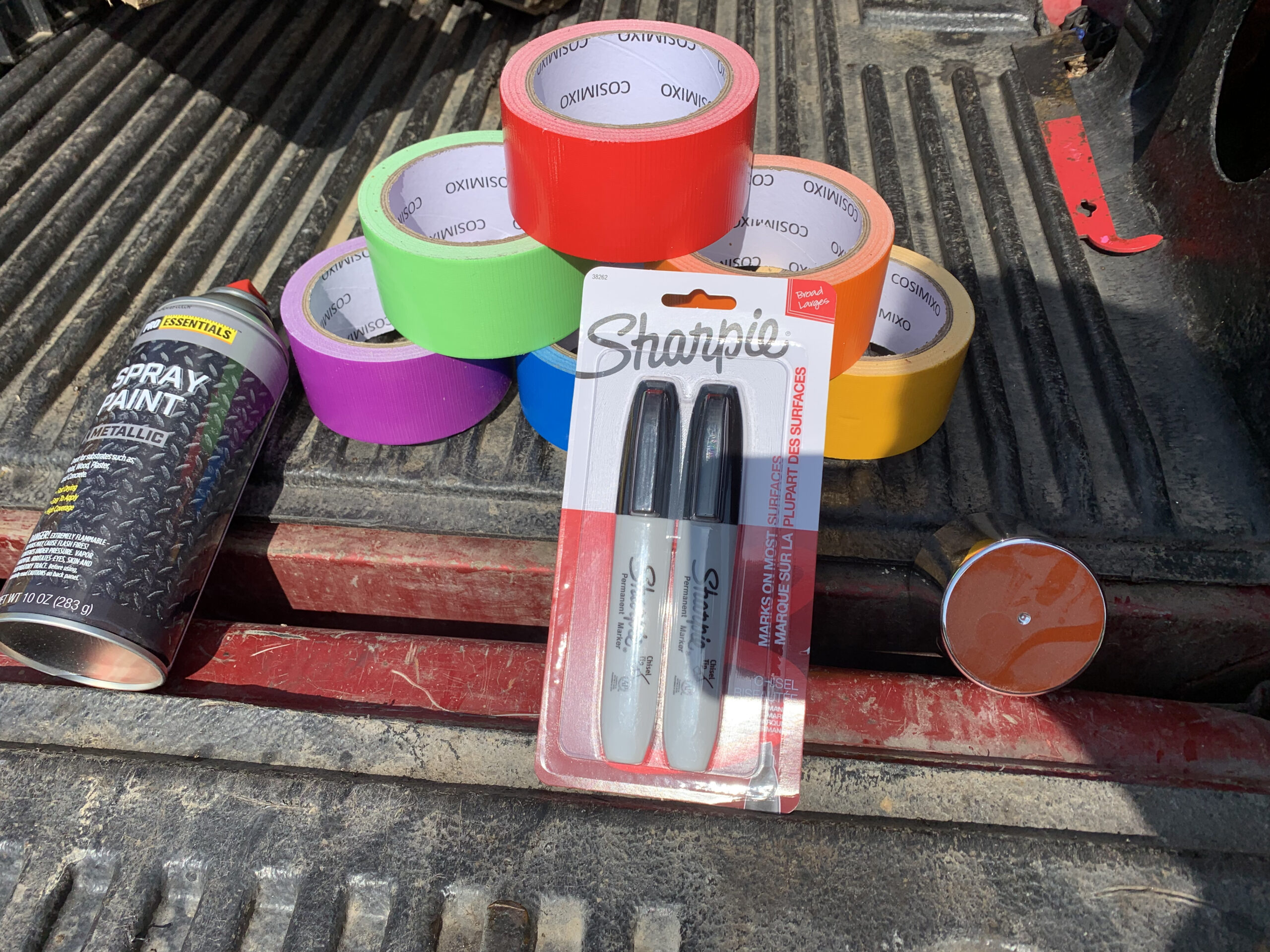
My system evolved through the years and consisted of a black permanent Sharpie marker and different color spray paints based on the availability or what was on sale. The Sharpie pen I like — the broad chisel point, not the thinner fine point — can be purchased at Dollar General for $3 for a two-pack. Unless your hives are in a remote location in the outback, I’m sure you probably will pass two or more Dollar Generals on your way.
First, I always carry a queen marking Posca pen with me and will always look for the queen during inspections, because when I eventually sell her or need to take brood or resources from the hive, the queen will be easier to locate. If the queen is marked pink, I will write on the outer lid QMP and the date I was in the hive, 7/6. If there is a virgin in there or I didn’t find a laying queen, then I will write again the date, always the date, and note it as VQ 7/6. A notation of QNF 4FEB means that there are four frames of eggs and brood in there, but the queen was not found and is unmarked at this point. So, next time I inspect the hive, I will look for her again and hopefully find her to mark.
This is the basic record keeping I use to make myself more efficient and to prioritize what I am trying to accomplish that day or week in the bee yard.
It’s great to see the history of the hive when you have it written on the lid, but it becomes too lengthy, and you will soon want to spray over or cover the unimportant entries. Do not use white paint or grey primer to spray over your Sharpie writings, as they will bleed through and you will still see the markings. I have found metallic spray paint, either silver or gold, to work great spraying over and deleting your Sharpie writing.
I will write on my hive cover the date the queen was split out, and if I requeened with a cell or a caged queen. The challenge was when coming back into the bee yard, I had to look over every hive to find which hive needed a queen cell or what hive needed a caged queen to be released. This was done more easily when I just spray painted another color on top of the hive, directing me faster to which hive needed attention and for the purpose. This method soon required multiple spray cans of multiple colors, and having to look at each can to determine which color to spray. It worked fine and still has a place in my apiary for either flagging a hive for further inspection or signaling it needs additional feed or issues to be addressed.
Colored tape system
We often used Gorilla tape to seal up corrugated nuc boxes or to plug the holes on top of the corrugated boxes where a top feeder was used. Gorilla or the T-Rex heavy tape can be used to secure wooden lids during transport and, believe me, will last and stay sticky throughout the season. Red tape was also available and often used to mark nucs in the yard that were ready for sale or new splits that needed attention. The big game changer this year was when my little dove, who likes to shop, found the six-pack of multicolored duct tape on Amazon for $16.75 for six rolls … that’s $0.06 a foot! This may eliminate or reduce the multicolored spray system we use. What’s nice about this is that after you put a 3-4 inch piece down, you can still write on it.
I like spray paint, don’t get me wrong, but the bees hate the aroma of the spray as well as the Sharpie pen, and they will let you know it.
There are as many reasons as colors to use the tape for, just don’t leave it in a bucket to get rained on. I have used the orange color to signify I did a split with a caged queen inside the hive and to come back four to five days later with a blue piece of tape next to it, with the date signifying the release of the queen. When I come back a week later, and hopefully find the virgin still kicking, it may take a purple tape showing that I saw her, or if she is laying, a green tape, and hopefully the QMP 7/21 2FEB. This will tell me that I have a laying queen marked pink that has two frames of eggs and brood!