



In 1891, famed artist and Harper’s Weekly illustrator Winslow Homer painted a picture in his Wild Spaces series titled “A Huntsman and Dogs.” In his wildest dreams, Homer probably never thought this piece of art, depicting a pioneer coming home with a deer hide slung over his shoulder, would become implanted in the American psyche the way it has. But generations later, this is how Americans of all ages think of the early pioneers, endlessly lugging home to their cabins readily available deer meat for their families to feast on.
In making this piece, Homer, who is widely regarded as the greatest American painter of the 19th century, created something of a fallacy that seems destined to live on forever in the story of pioneer America. Ask any grade-schooler what the pioneers hunted and ate, and the answer is invariably deer. (Wrong — buzzer, please.)
It wasn’t deer
The fact of the matter is that settlers very rarely had the luxury of venison on the table. You see, when the pioneers moved into the wilderness of the Ohio country and began clearing land, first for their cabins and later for entire settlements, most of the deer left and went elsewhere. And why not? They had a vast, unbroken forest that stretched all the way to the Mississippi River to roam in. They didn’t need to hang around developing civilization and get shot at. Ditto for lots of other wildlife as well.
Because of this, the pioneers were not what you would characterize as a well-fed lot. Most families existed right at the edge of starvation on subsistence rations from their meager gardens and plots of corn, all planted in between the huge stumps of the trees they had felled to let in some sunlight.
The deer that remained in an area undergoing the transition from woods to settlement became nuisances to the pioneers, often plundering their corn fields and gardens. In order to put a stop to such pillaging, settlers organized massive circle hunts in which hunters formed a huge ring around a given geographic area, then moved forward together to drive the varmints into a confined area where they could be slaughtered en masse.
While this sounded like a good idea and provided the settlers with venison for a short time — since deer were often the primary victims of such hunts — in the long run, it was a strategy that completely backfired. Because these hunts wiped out entire herds of deer, breeding pairs became extinct and there were no offspring to feed the pioneer families into the future. The settlers were hungrier than ever. Successfully hunting deer became an increasingly uncommon occurrence. And if a family was lucky enough to get a deer now and then, they didn’t keep the meat for themselves, but shared it with their neighbors who were existing equally in starvation mode.
So what did pioneers eat?
And so the question becomes, what exactly did the pioneers eat? What was a food source that was readily available to them, something they could count on? The answer is for the birds … or, rather, just birds. Because most pioneers were somewhat proficient hunters and were armed with their super accurate “Kentucky rifles” (an odd name since they actually originated in southeastern Pennsylvania), they had the ability to shoot birds.
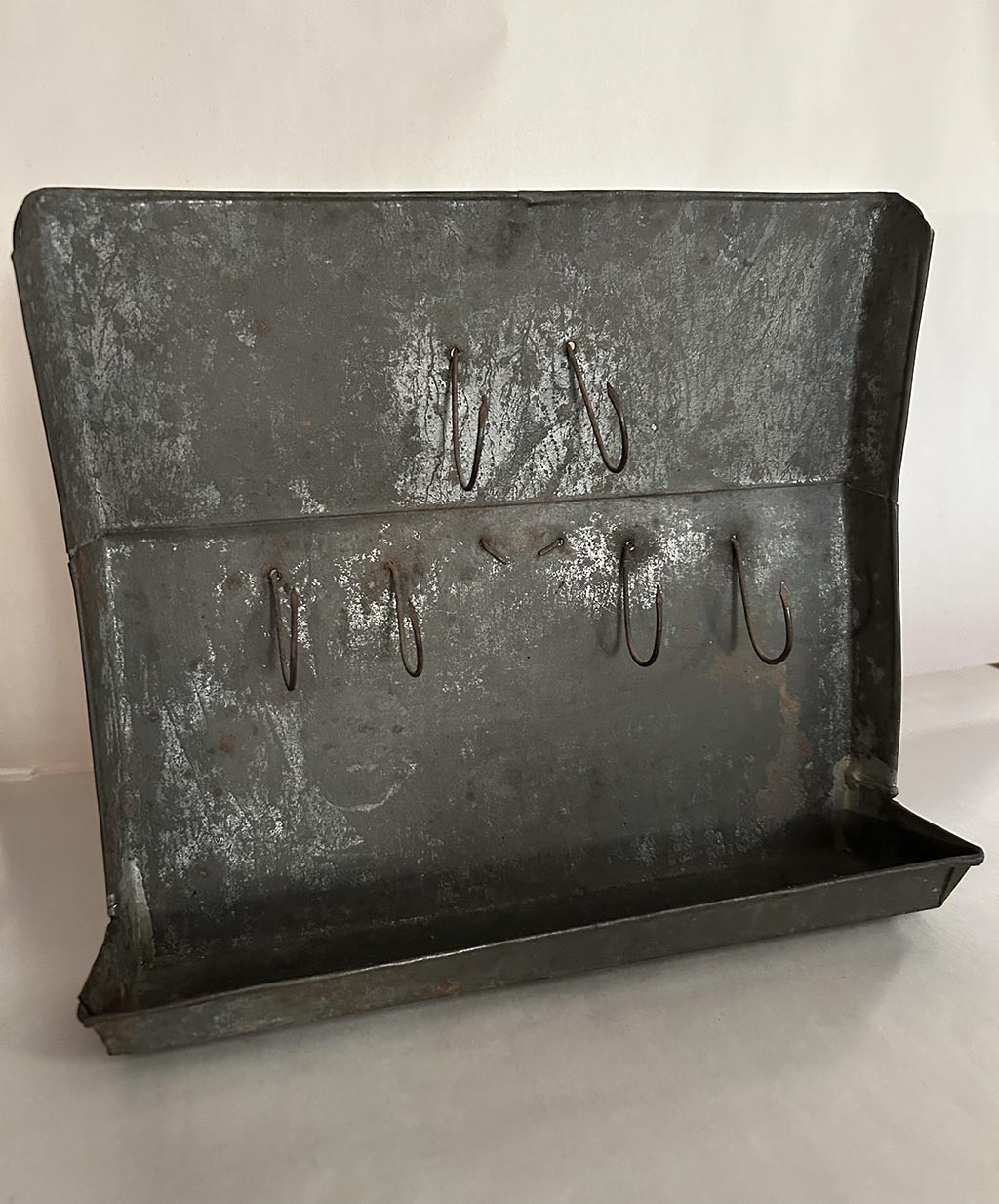
Birds were cooked on a device commonly crafted by the local tinsmith called — wait for it — a bird roaster. These roasters had a back that stood about 10 inches high and were about 12 inches wide. Across the back were several wire hooks on which the birds could be impaled. The base of the roaster was a trough about an inch deep and three inches across, and was as wide as the back of the roaster.
To use the bird roaster, the cook placed the birds on the hooks, and the roaster was pushed toward the fire using a loop-type handle attached to the backside. The birds were cooked by the heat reflecting off the tin back. The drippings were captured in the trough at the base and used to make gravy.
Another fairly readily available food source was fish. Lakes and streams of that period abounded with fish of many types, and the pioneers relied on them as a dependable source of high-quality food.
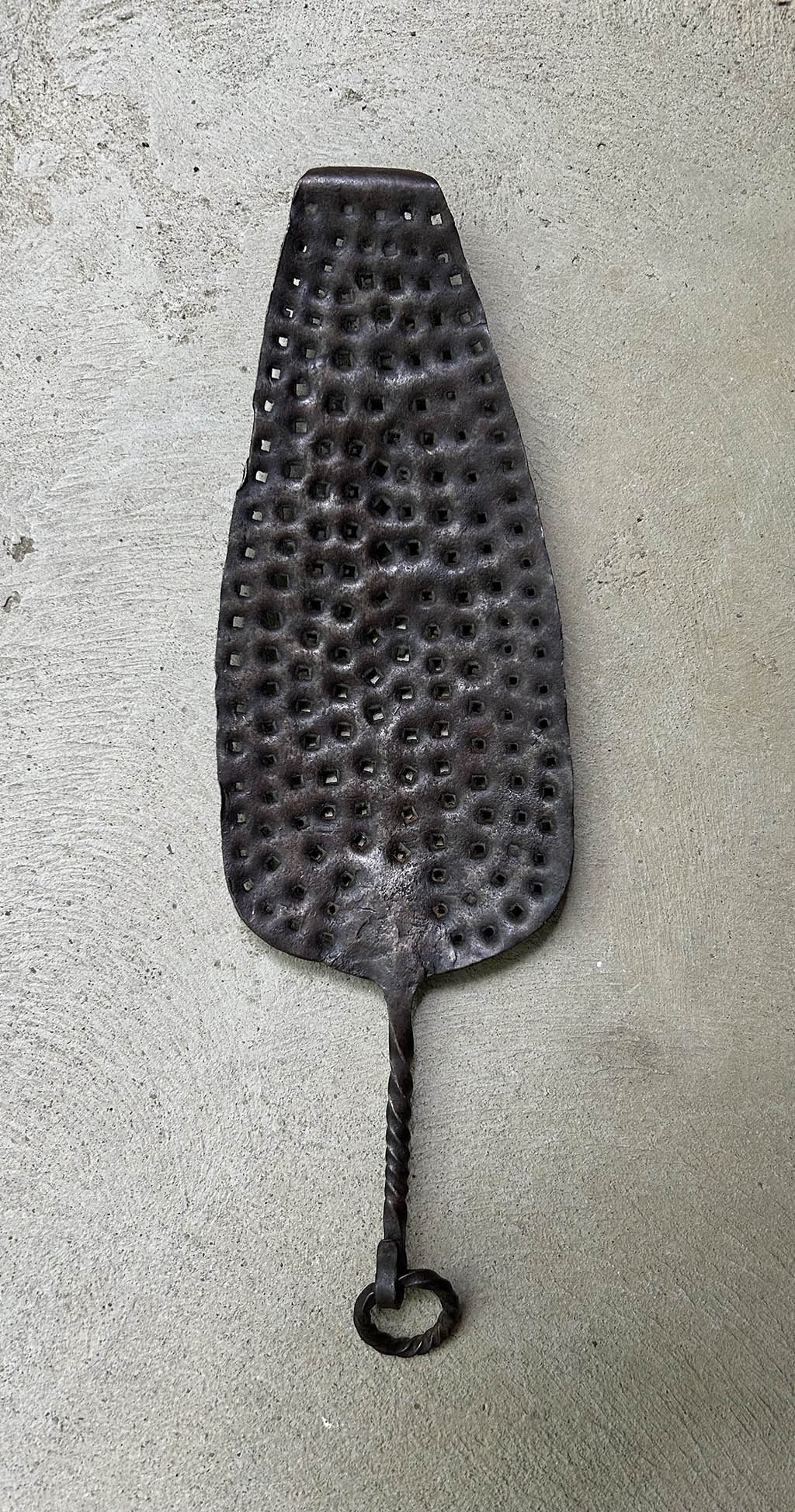
Fish were cooked on fish broilers crafted by the local blacksmith. These broilers were flat pieces of wrought iron about 10 inches in length, hammered into a shape roughly resembling the profile of a fish. Into this piece of iron were punched scores of holes.
To use the broiler, the fish was laid on it, and it was placed on an iron trivet over a bed of hot coals. The holes in the iron allowed for a better transmission of heat to cook the fish, although the heated iron was instrumental in the broiling process as well. Most fish broilers also incorporated a handle that terminated in a loop so that it could be hung up by the hearth following use.
The next few chapters will contain observations and memories of hunting certain animals by one of the Ohio country’s most literate pioneers.




Since before the “meat industry” existed promoting eating some form of ‘meat’ daily, for breakfast, lunch & dinner, families mostly ate ‘meat’ once a week for Sunday dinner.
I would have to disagree with the “meat industry” comment. Maybe for urbanites, but doubtful for the country dwellers. We grew up on a farm (as did our grandparents who raised us), and dined on a variety of foods – breads, fruits, veggies, eggs, and meats – almost all home raised and prepared. We had meats most every meal – mainly because it fit the need and was available!