



ENON VALLEY, Pa. — What do you do when a pair of longtime neighbors get away with murder? And what’s stopping them from doing it again?
This is not the premise of a new Netflix investigative series. It’s what Chelsey Shingler says happened to a day-old Limousin bull calf in her pasture at Maple Lane Farm, which she inherited from her grandfather about six years ago. She heard stories over the years about calf calamity and other unusual circumstances, but nothing like this.
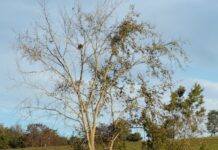
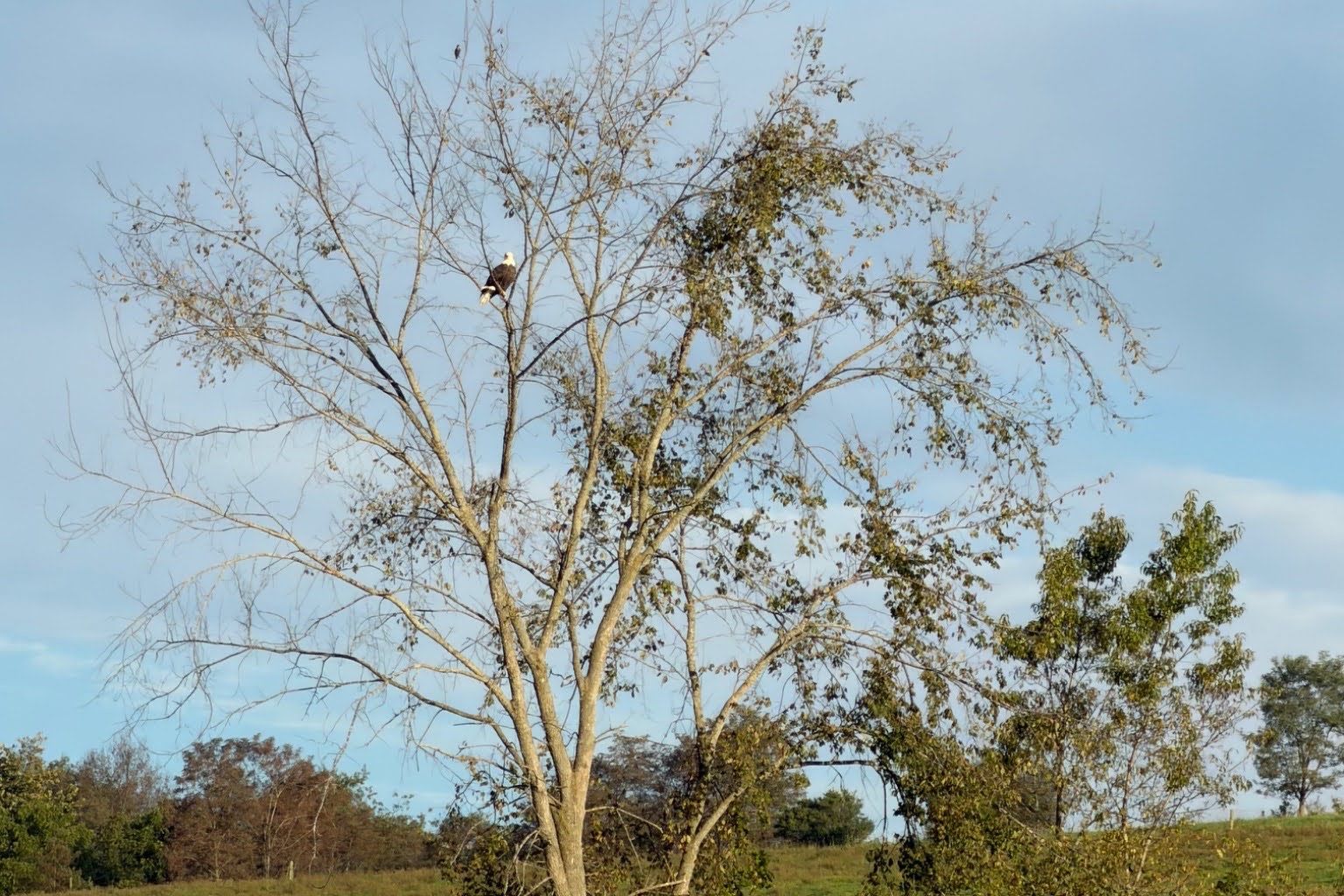
One morning in late September, Shingler found the calf dead in cold blood; part of its back and one eye had been eviscerated. The suspected perpetrators hadn’t gone far: Two bald eagles that had lived on the property for years were there at the scene of the crime. One flew to a tree as she approached the body, where the other was perched.
“It’s not like we didn’t know they were here,” she said. “We enjoy watching them. They’re beautiful.”
They silently watched back.
Bald eagles may have Hollywood good looks with their piercing eyes, svelte bodies and alabaster-colored plumage on their heads, but they also sport large, sharp talons capable of dispatching large prey. Their beaks can tear apart the bodies of larger mammals that they sometimes scavenge upon.
Michael Sherman, a livestock educator with Penn State Extension, said eagle attacks on calves are rare, though possible, and that weaker calves or those with an underlying health issue may be more vulnerable.
Eagles usually don’t depend on prey they must kill themselves. They’re foragers that favor landfills and dumps over a meal they have to work hard to get. According to the Pennsylvania Game Commission, eagles are especially satisfied with dead fish, birds and mammals, including large ones such as deer and livestock, and may rely on carrion when other food is harder to come by. Sherman cited a recent case in another county in which a day-old calf was killed, but officials couldn’t determine whether an eagle or a black vulture was responsible.
“A bad feeling”
Shingler said she usually brings cows closer to the house when they’re about to calve, but she had missed this one. The calf was born in the pasture the night before and seemed healthy.
“It was up. It was nursing,” she said.
Late the next morning, as she and her family were leaving for her son’s football game, Shingler noticed an eagle perched on something close to the ground on the hill.
“It kind of caught my eye,” she said. “I just had a bad feeling.”
She drove up to check and found the calf dead.
“I wish I would have went over a couple hours earlier, because I might have been able to save it at that point,” she said.
She buried it right away, hoping the birds would not come to see the pasture as a hunting ground. But when she returned the following day to put out hay for her other livestock, she saw one of the eagles roosting in the same tree.
The loss is steep. Shingler said the bull calf might have been worth as much as $8,000 by the following fall.
“That’s a big hit on farmers right now, you know, to lose a calf, even a just-born calf.”
Are they untouchable?
An initial online search suggested that government reimbursement could require video evidence of the crime as it happened, but she had not recorded or photographed anything before burying the calf.
“In a situation like that, you just need to get on with your day,” she said.
Shingler assumed little could be done about the eagles because they are protected. In the meantime, she moved the rest of the herd closer to the house. She said she was reluctant to let the youngest members back into the pasture, even though she had never before imagined the eagles could kill a lively calf.
“I have five new, couple-week-old babies in the lot already,” she said. “Now I’m scared to put them up. Like I’m scared to let them out up there.”
When she returned to the area in a tractor, she said, the birds were resolute.
“I went pretty close to them in the tractor,” she said. “They did not move. They did not care that I was there.”
Bald eagles are no longer listed as endangered or threatened in Pennsylvania, but they remain protected under the Pennsylvania Game and Wildlife Code as well as federal law.
However, protection does not necessarily leave farmers without recourse. Sherman told Farm and Dairy that producers may be eligible for help through the USDA’s Livestock Indemnity Program (LIP) when a protected species kills livestock. Eligibility and compensation would be determined through the program.
To support a claim, Sherman advised producers to contact the Pennsylvania Game Commission and the Farm Service Agency, and to document the incident promptly. A carcass examination may help identify the predator behind an attack.
“If you would actually look at the carcass of the calf to see, you know, was it punctured inside or something, that would give them some insight with it.”
Shingler has good reason for blaming the eagles for her calf’s death, but if she wasn’t so sure, officials could also look into whether black vultures might be responsible. Sherman said they can be hard to distinguish from young eagles.
Black vultures are stocky birds with squared-off tails and bare, gray-to-black heads which can look so small against their bodies that, from a distance, the birds appear almost headless. Their range has expanded, and they’re now commonly found in southeastern Pennsylvania. If black vultures are suspected of killing livestock, Sherman said, producers can contact USDA’s Animal and Plant Health Inspection Service (APHIS), which may be able to help.
Even the most inventive slasher-film directors might hesitate to depict the depravity of black vultures on screen.
“In the south, they have problems when cows are having their calves. These black vultures, the cow will be laid out having a calf, and they’re killing the calf while it’s on its way out, essentially.”
He also urged farmers not to wait.
“As soon as it happens, get the word out there because if there are programs, all programs have deadlines.”
Sherman, who raises beef cattle himself, said learning about the danger has made him more watchful during calving season on his own farm. He cautioned farmers against taking matters into their own hands.
“That’s why I’d always recommend reaching out to the game commission to make them aware, because they can kind of monitor the situation as well,” he said.
The calf’s death hasn’t completely erased Shingler’s affection for the eagles.
“You don’t want to do anything. [They’ve] been there for so many years, and you’re so excited because you get to see the eagles, the bald eagles, and not a lot of people can say that,” she said. “You never know.”




