

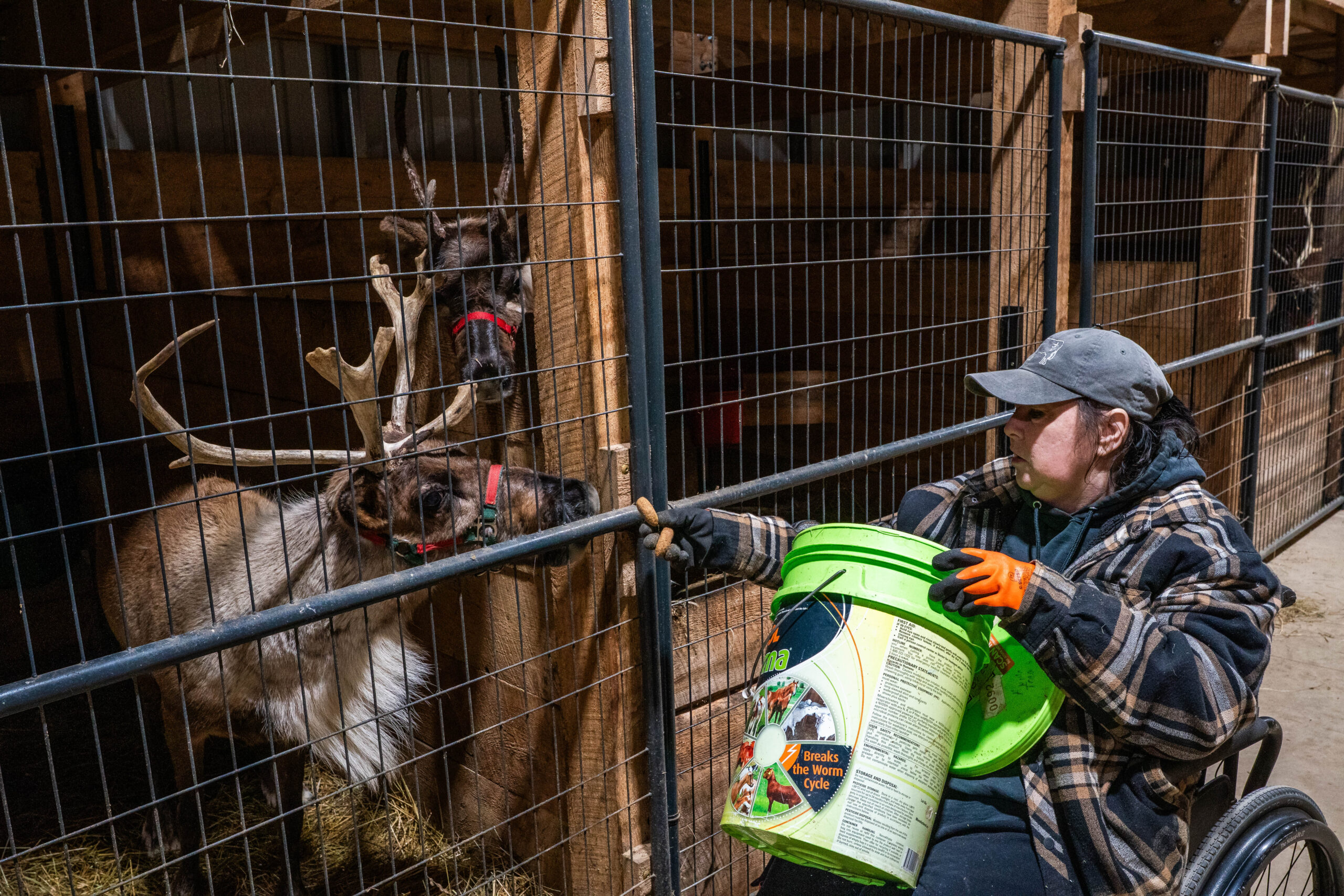
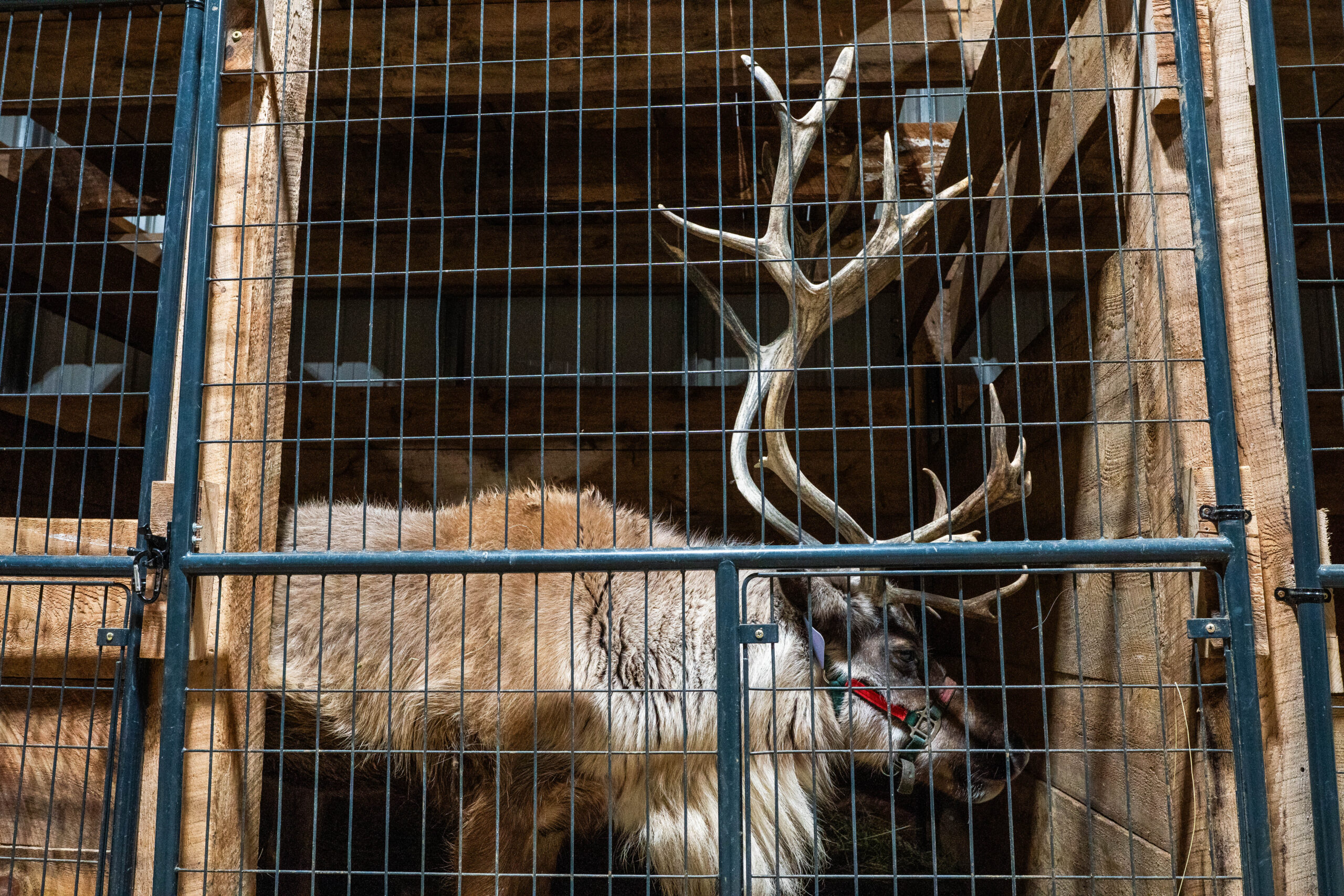
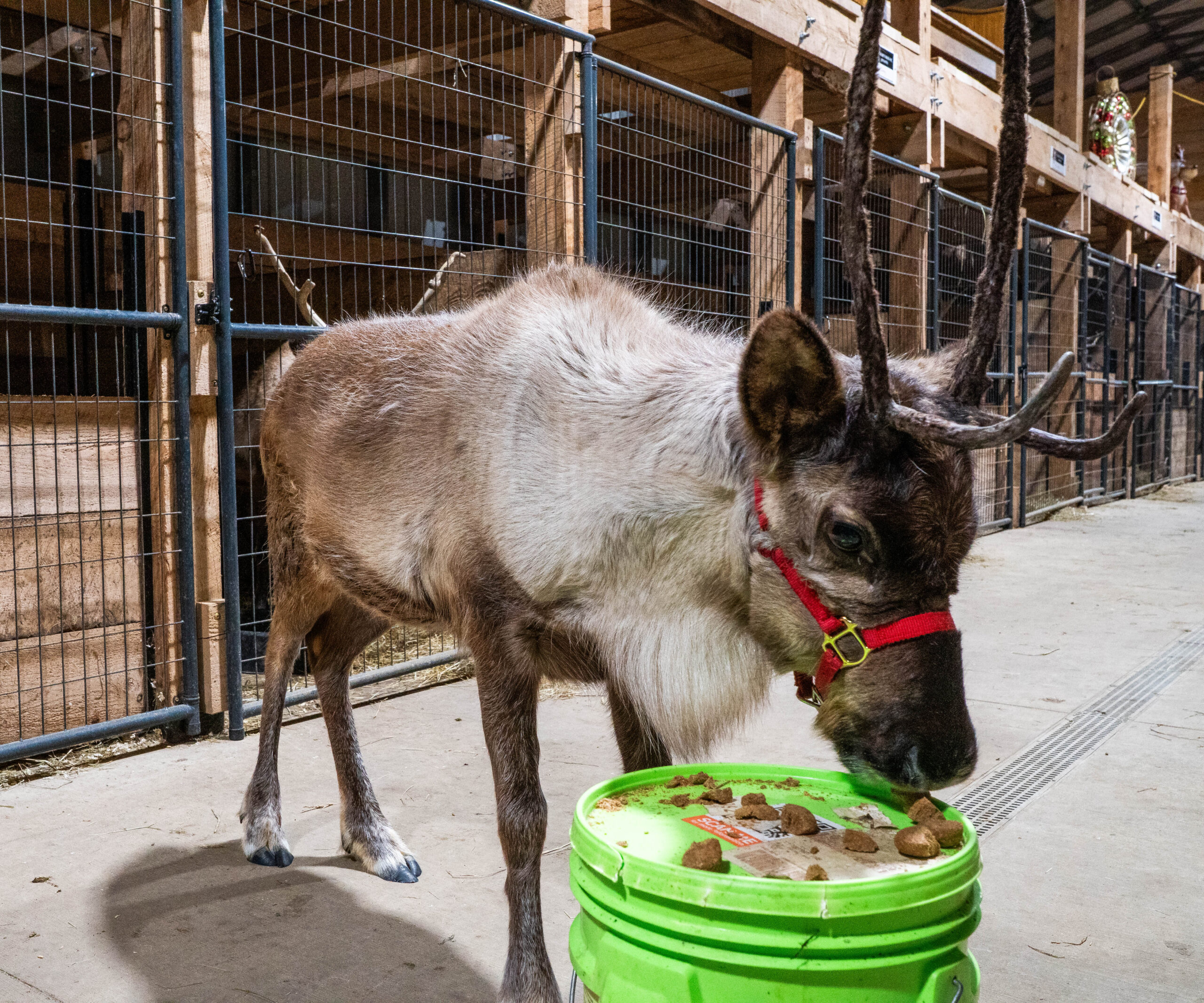
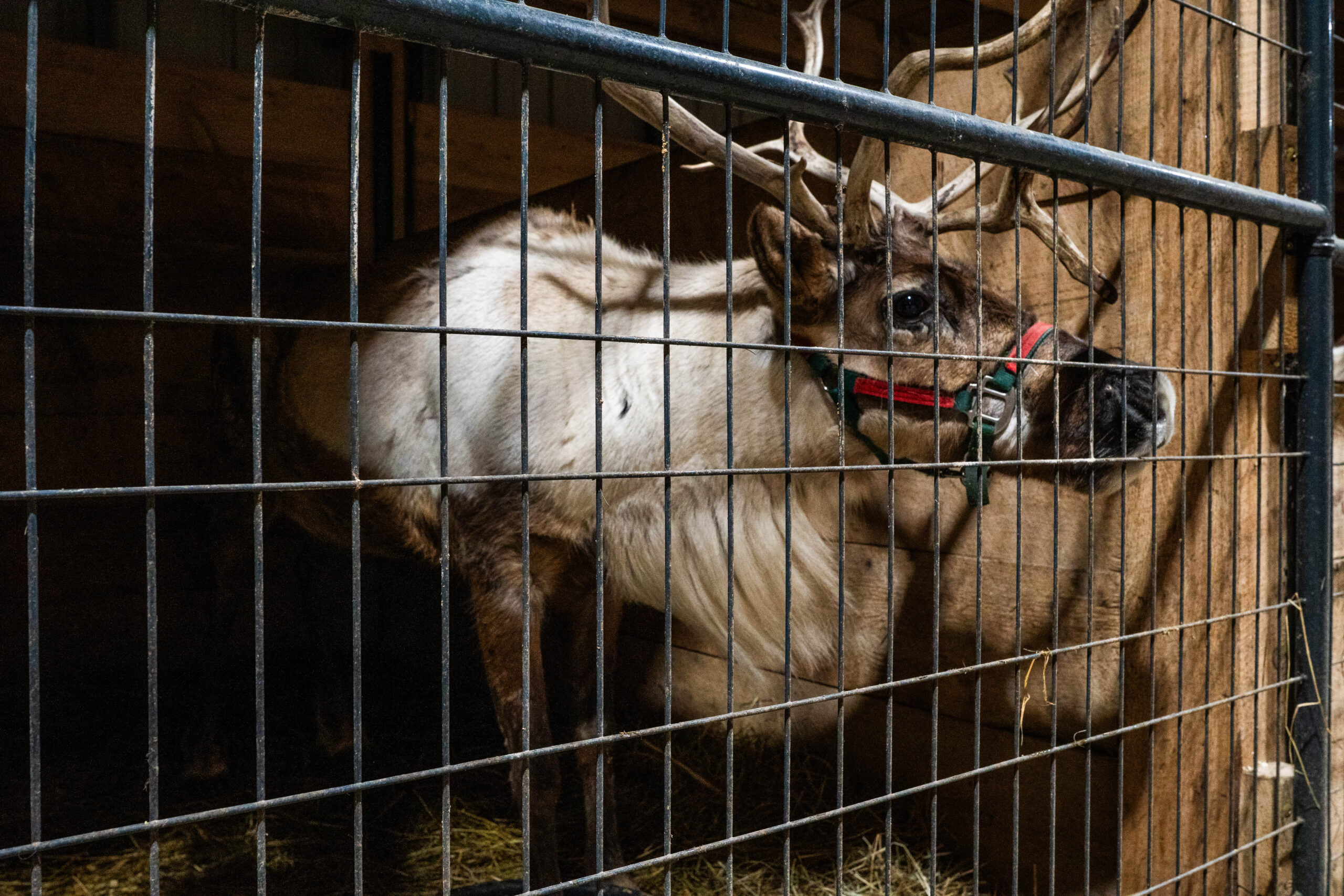
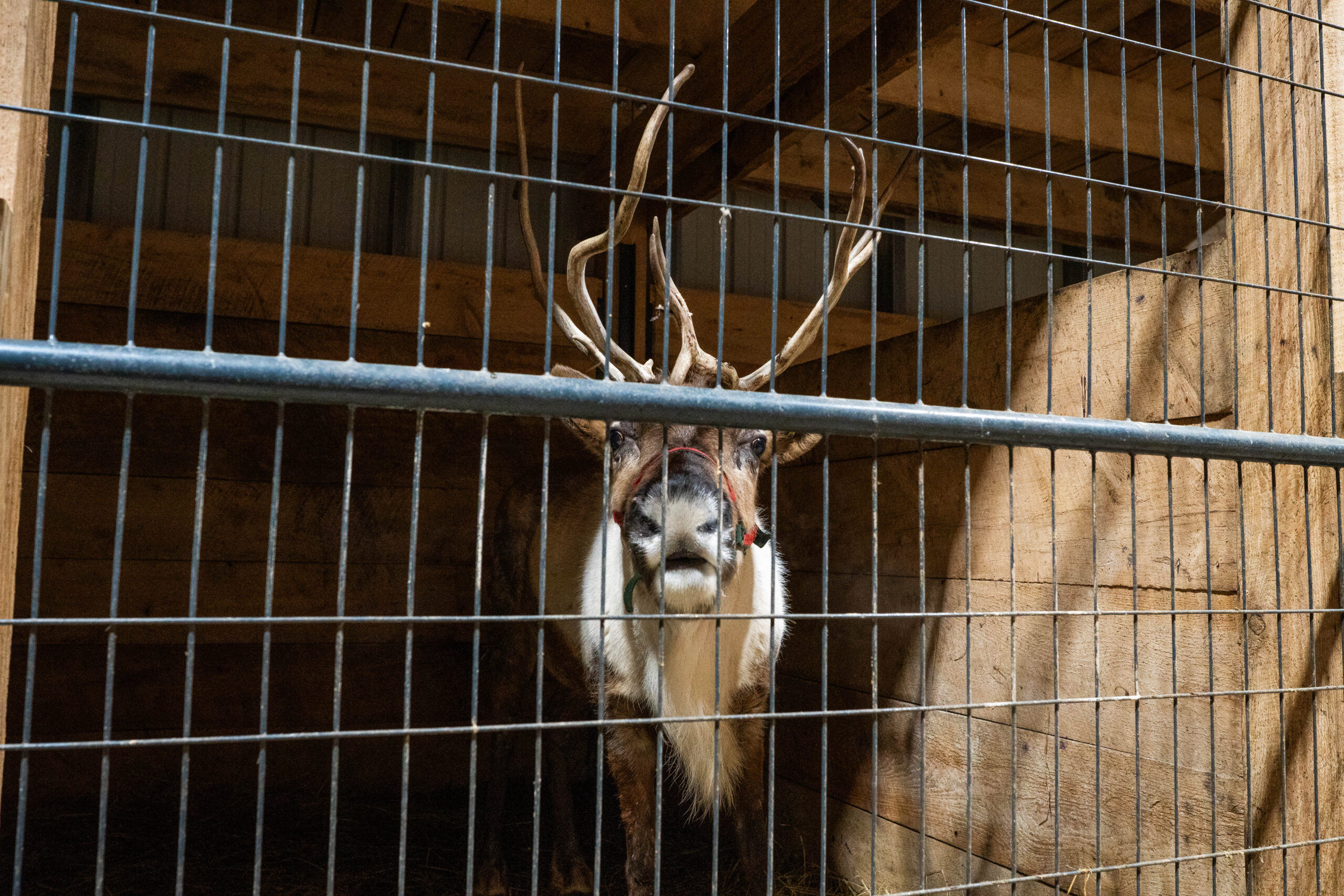
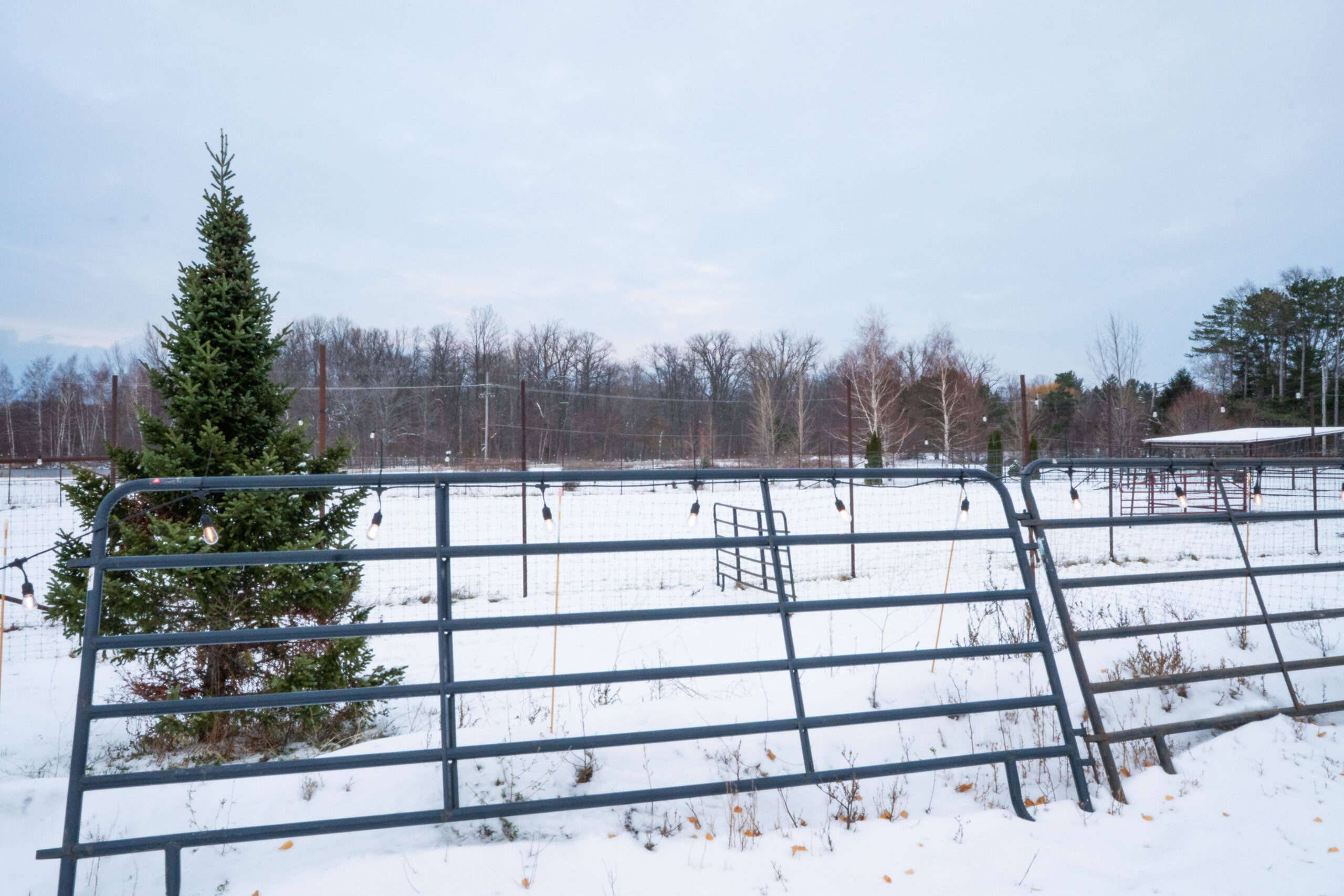
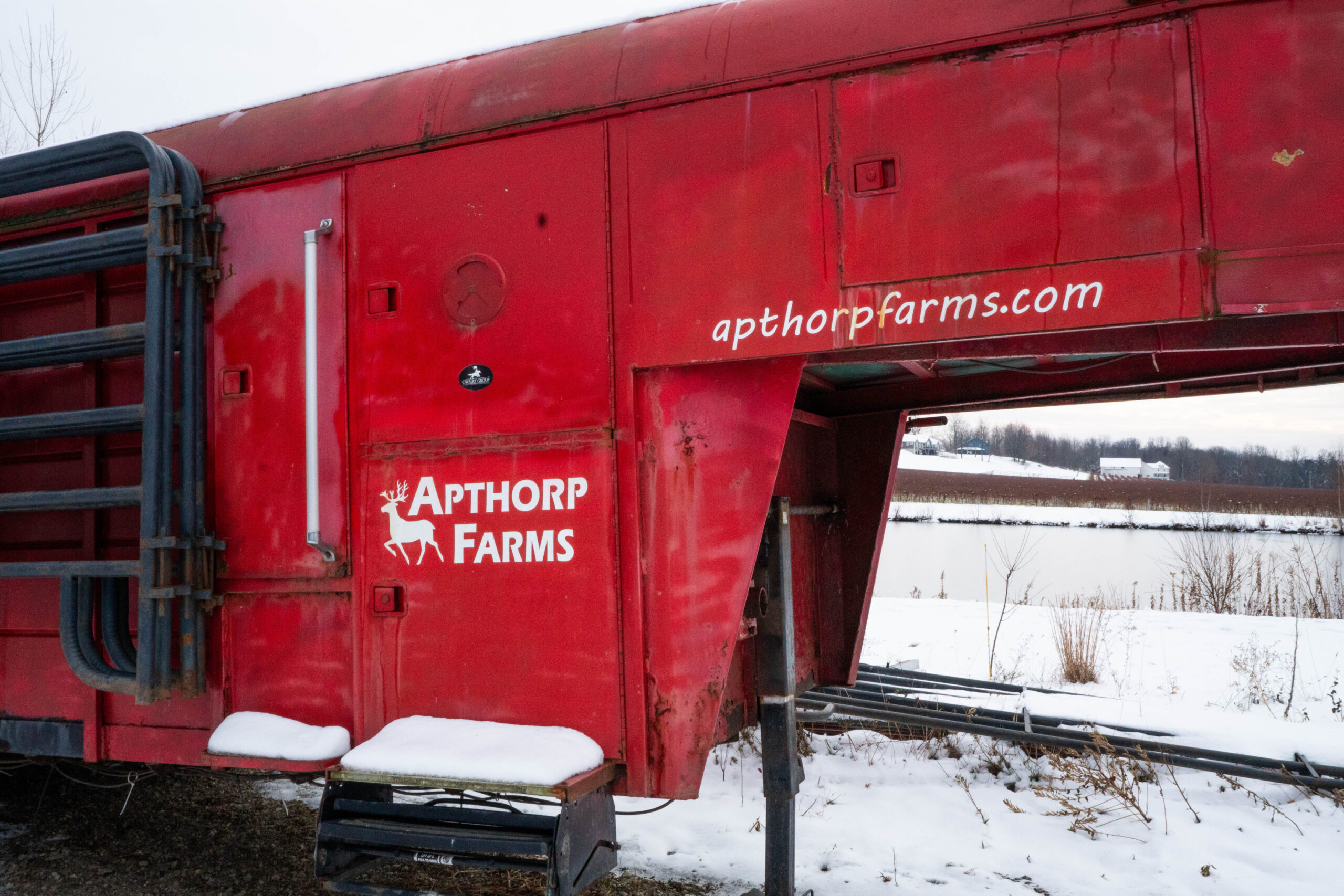
NORTH EAST, Pa. — Snow and ice cover the driveway at Apthorp Farms that leads to a big red barn. Inside, the click-clack of hooves rings out from pens of hay before huge antlers emerge from the shadows.
Here in North East, Pennsylvania, one could easily mistake the snow-covered farm and reindeer for the North Pole.
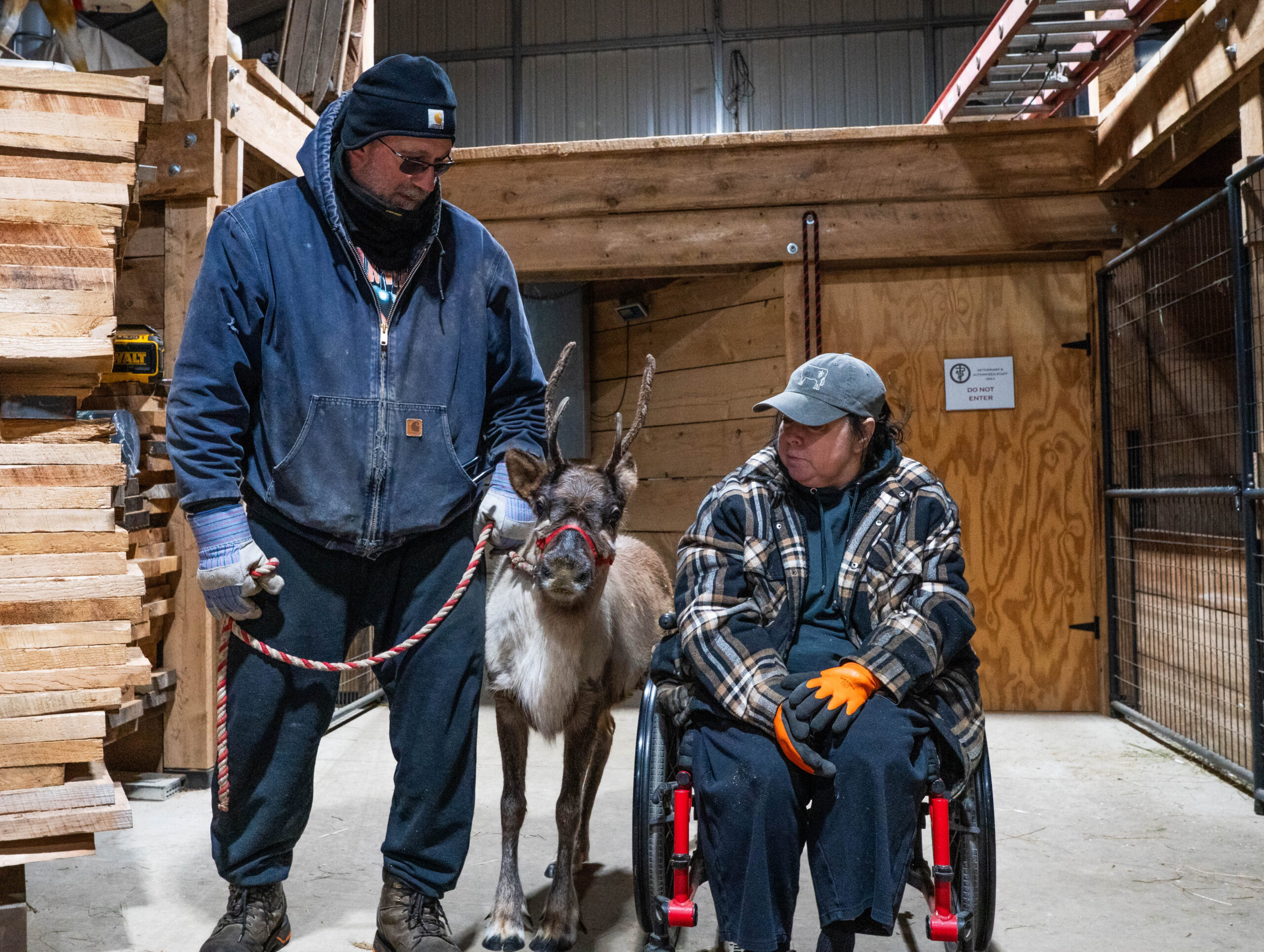
Deb and Scott Apthorp had raised reindeer for decades before they decided to open their farm to the public. Over the years, they have also had to overcome many challenges, which led them to become the only handicap-accessible reindeer farm in the state.
Today, with seven reindeer by their side, the farm is welcoming visitors for Christmas. The goal: creating a space to escape from the outside world, where Santa Claus could appear with his reindeer at any minute.
A love for reindeer
Deb didn’t grow up on a farm, but she did grow up with a love for animals: “I wanted (reindeer) since I was a kid. I was that kid that was afraid of Santa, but loved animals,” she said.
Deb and her husband Scott moved to their roughly 10-acre farm, near the shores of Lake Erie, in 2001. The couple started raising chickens in 2004.
But “one chicken grew into many chickens,” Deb said. “And into many birds,” Scott said, finishing Deb’s sentence. The Apthorps built a 20-by-10-foot chicken coop with water, heat and electricity.
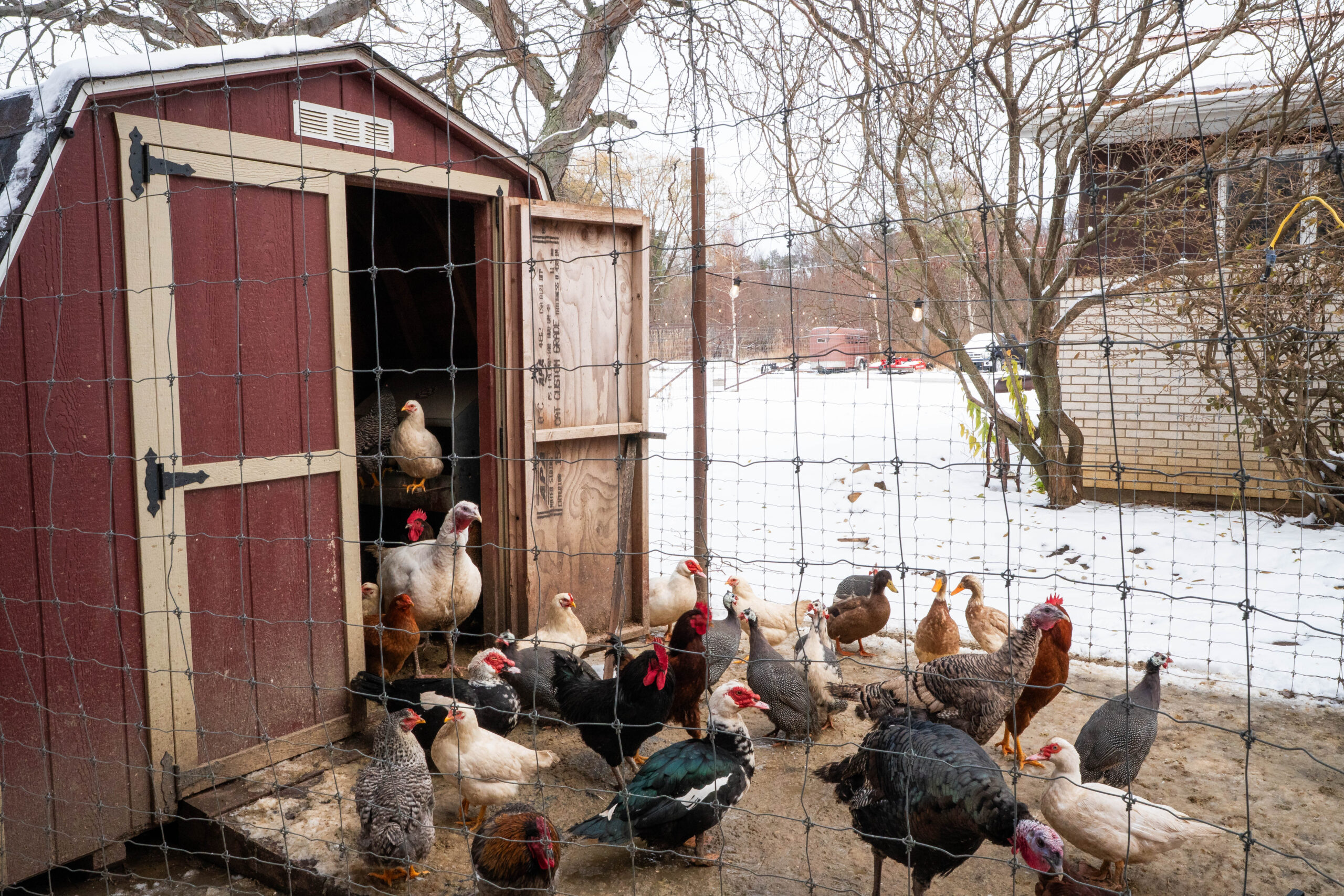
From there, they acquired more birds, including ducks and turkeys. While raising the birds, the Apthorps were working toward Deb’s dream: owning reindeer. This included applying for a Cervidae Livestock Operations License and prepping the farm.
It wasn’t until 2012 that the Apthorps acquired their first reindeer: Donner and Blitzen from New York.
Around the same time, they started building more space for the reindeer on the farm. They built a shed, a west and east pasture with high-tensile deer fence and a shade shelter.
That’s also when the Apthorps started traveling to businesses with the reindeer for Christmas events. This has included the Pittsburgh Pirates’ and Steelers’ “Christmas in July” events and events for human and animal charities.
But in 2012, a storm was brewing in Pennsylvania that would force Deb and Scott to invest in more safety measures: chronic wasting disease.
CWD
CWD was first found in Pennsylvania in 2012 in Adams County. According to Deb and Scott, this is when they received heightened restrictions on their reindeer farm.
The Pennsylvania Department of Agriculture required information on the setup of the farm, and later, fencing that was at least 8 feet high to prevent the spread of the disease.
When “CWD reared its ugly head, then we had to be double fenced,” said Deb. How visitors could interact with the reindeer also changed: “It’s a lot more than what it used to be; it used to be, for a lack of a better word, more fun, where you just share a reindeer, be right next to it and walk it right through a crowd,” Scott said.
Nowadays, guests can still pet a reindeer, but only through cattle panels. If they go inside the fence with the deer, they must wear special boots, says Deb.
Because the Apthorps have a certified reindeer herd, they also have to send their dead reindeer brains to Harrisburg to be tested for CWD.
“I don’t think it’s for the wrong reason,” she said. The biggest problem for the Apthorps was that reindeer, and all animals in the deer family, were treated as white-tailed deer.
According to Deb, the state initially wanted certified deer herds to submit two heads of deer a year to be checked for CWD; this would’ve killed the Apthorps’ small reindeer farm, Deb said, adding she lobbied against this requirement.
Most recently, they’ve had to modify their operations to prevent the spread of epizootic hemorrhagic disease, a disease transmitted by infected midges that damages deer’s blood vessels and causes internal hemorrhaging.
However, Deb notes that the reindeer aren’t likely to get the disease, as they like cold temperatures. In the summer, they prefer the barn’s shade and fan instead of the pastures where midges are likely to get them.
As the climate warms, Deb believes vector-borne diseases are only going to get worse.
“Once the temperatures change anywhere on the planet, the vectors that can survive spread like wildfire,” she said.
Pushing through
The Apthorps have faced other challenges over the years, including managing the health of their reindeer herd and navigating Deb’s own health challenges.
In 2017, both Donner and Blitzen died. Donner died from an ulcer at Ohio State University, where he was receiving treatment. Blitzen died that same year from Babesia, a tick-borne disease caused by a parasite that infects red blood cells.
“It was just devastating,” Deb said. “That was the time that you were either going to quit and throw in the towel, or you were going to dig your heels in and figure out what you needed to do, and that’s what we chose to do.”
That’s when the Apthorps bought guinea fowl to join the other birds they raise on the farm. Deb and Scott use the guinea fowl as pest control. Around this time, their herd was also growing, with their first baby reindeer, Prancer, born in spring 2017.
But, in 2021, the Apthorps would endure another obstacle: Deb losing her leg to type 1 diabetes.
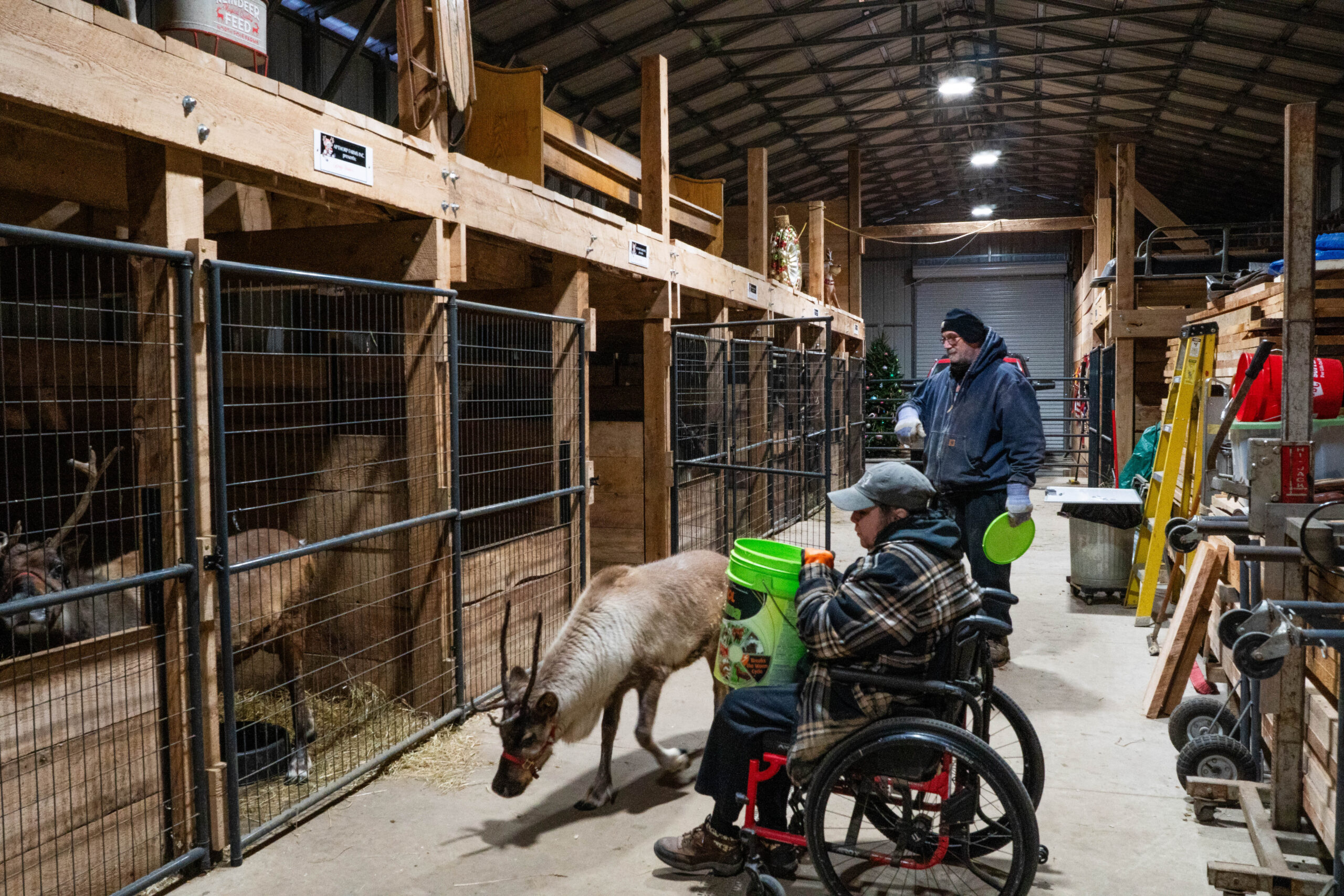
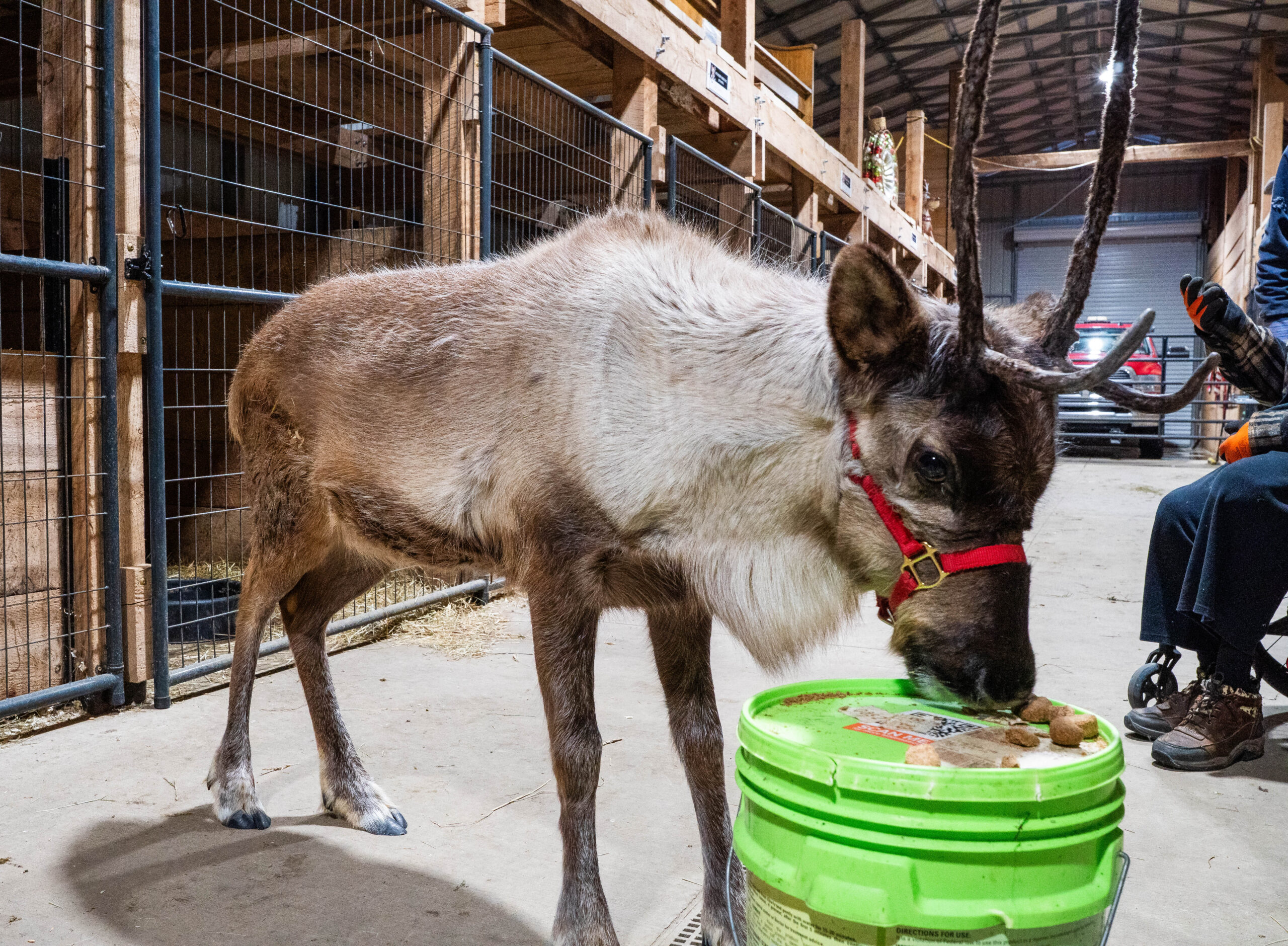
“That’s been very difficult, but I can do the work in a wheelchair,” Deb said. “I still have my rickety old wheelchair the hospital gave me when I left, and I can shovel manure in the barn; I can help spread it and I take care of a lot of the scheduling.”
Although it’s been tough, Deb doesn’t let that stop her. The farm keeps her going.
“If you take it away, what do I have left? I sit in a wheelchair and wait for somebody to feel bad for me, yeah, that’s not going to cut it,” Deb said. “I got two dogs up at the house to take care of. We’ve got seven reindeer down here. We’re hoping three of our girls were bred. We’re hoping we’re going to have three babies in the spring.”
Today
When COVID hit in 2020, the Apthorps had to adapt their business to continue to support the farm. They started hosting virtual events with schools, where storybook readings would occur and kids could see Santa with reindeer.
This sparked interest from other schools, too, which led them to host in-person farm tours in 2021.
“That really pushed us into better exposure. So, what we thought was going to be something bad really turned out to be something good,” Deb said.
In addition to school tours, they host special events for senior citizens and veterans in December, visits with Santa and events throughout the year, including mom and baby tours in April.
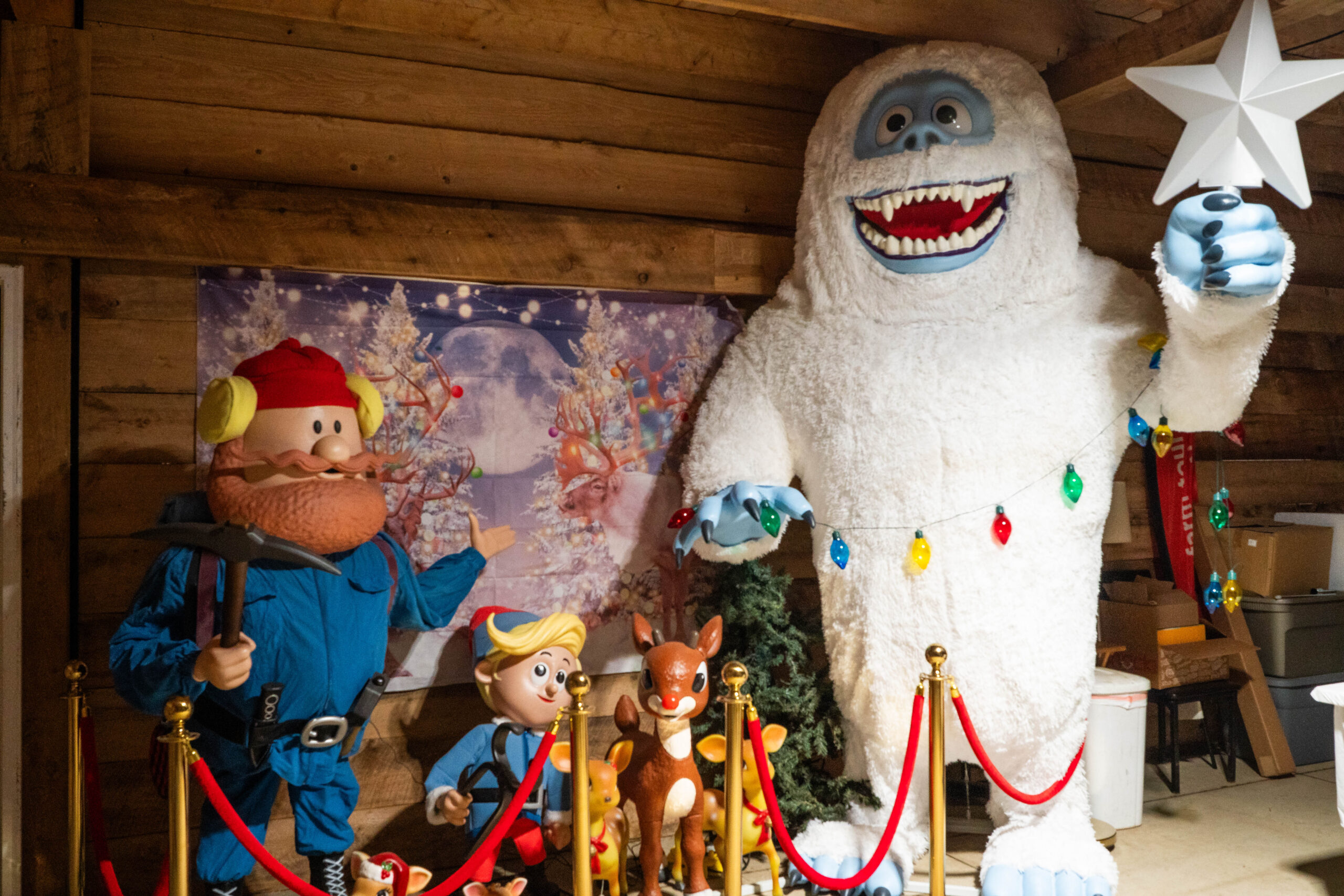
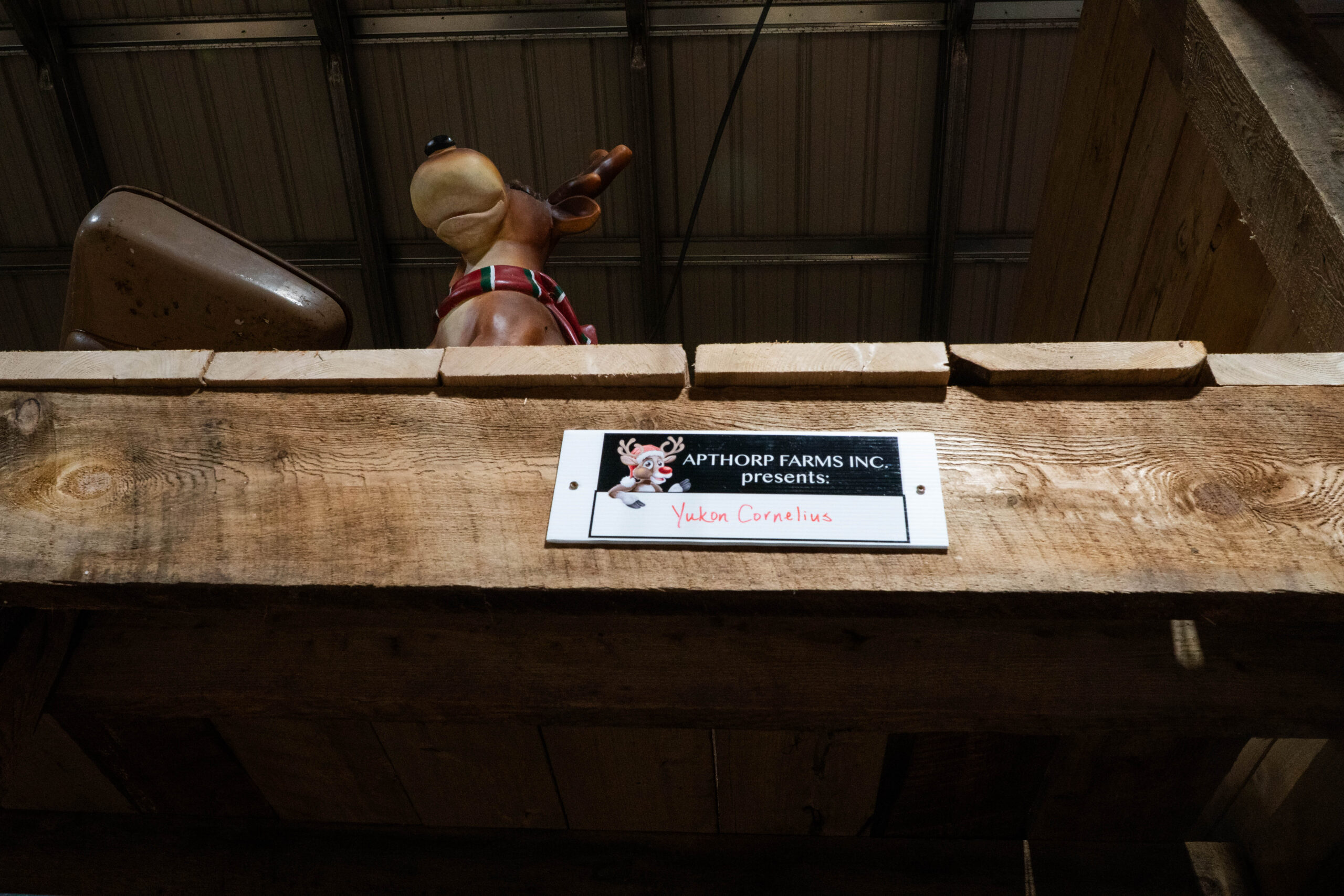
Their most popular draw is December group tours (public and private), where visitors get to see the reindeer. Each reindeer (and animal on the farm) is given a name, says Deb, like Yukon Cornelius and Comet from Rudolph the Red-Nosed Reindeer.
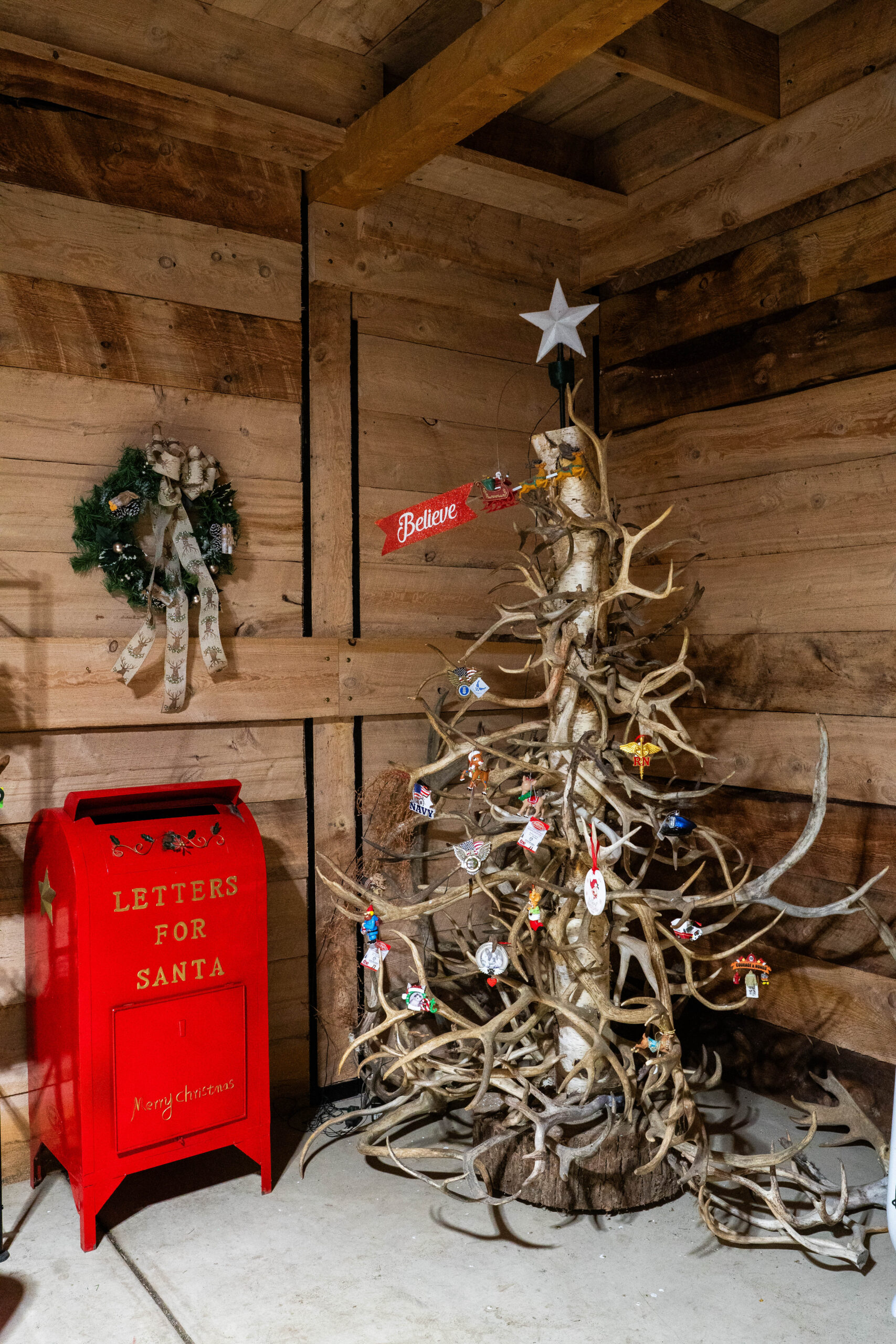
Over the years, the Apthorps have raised 22 reindeer; Deb and Scott made a Christmas tree out of all their past and present reindeer antlers that sits in their newly built gift shop and barn. Each year, they add new antlers to the tree that the reindeer shed.
Now that the farm is open for business, the Apthorps prefer the on-site visits and are looking to wind down on traveling.
The couple has also adapted the farm to accommodate Deb’s new condition, including building ramps. Today, the farm is handicap accessible, so everyone can delight in the Christmas spirit.
“I think I kind of paved the way on purpose, because I didn’t want to give up everything. But I am the first and, to my knowledge, the only handicap-accessible reindeer farm,” Deb said. “We have a lot of kids coming now from the school district, so we’re having (neurodivergent) kids and handicapped kids, so they can come out and enjoy it.”
Upcoming tour schedule
Dec. 15-18: reindeer tours, 2-8 p.m.
Dec. 20: Santa visits and tours, 5-7 p.m.
Dec. 21: reindeer tours, 2-8 p.m.
Dec. 22-23: reindeer tours, 2-8 p.m.; Santa visits from 5-7 p.m.
Dec. 24: Santa visits with reindeer, noon to 2 p.m.
For more information, visit https://apthorpfarms.com/.
(Liz Partsch can be reached at epartsch@farmanddairy.com or 330-337-3419.)




