





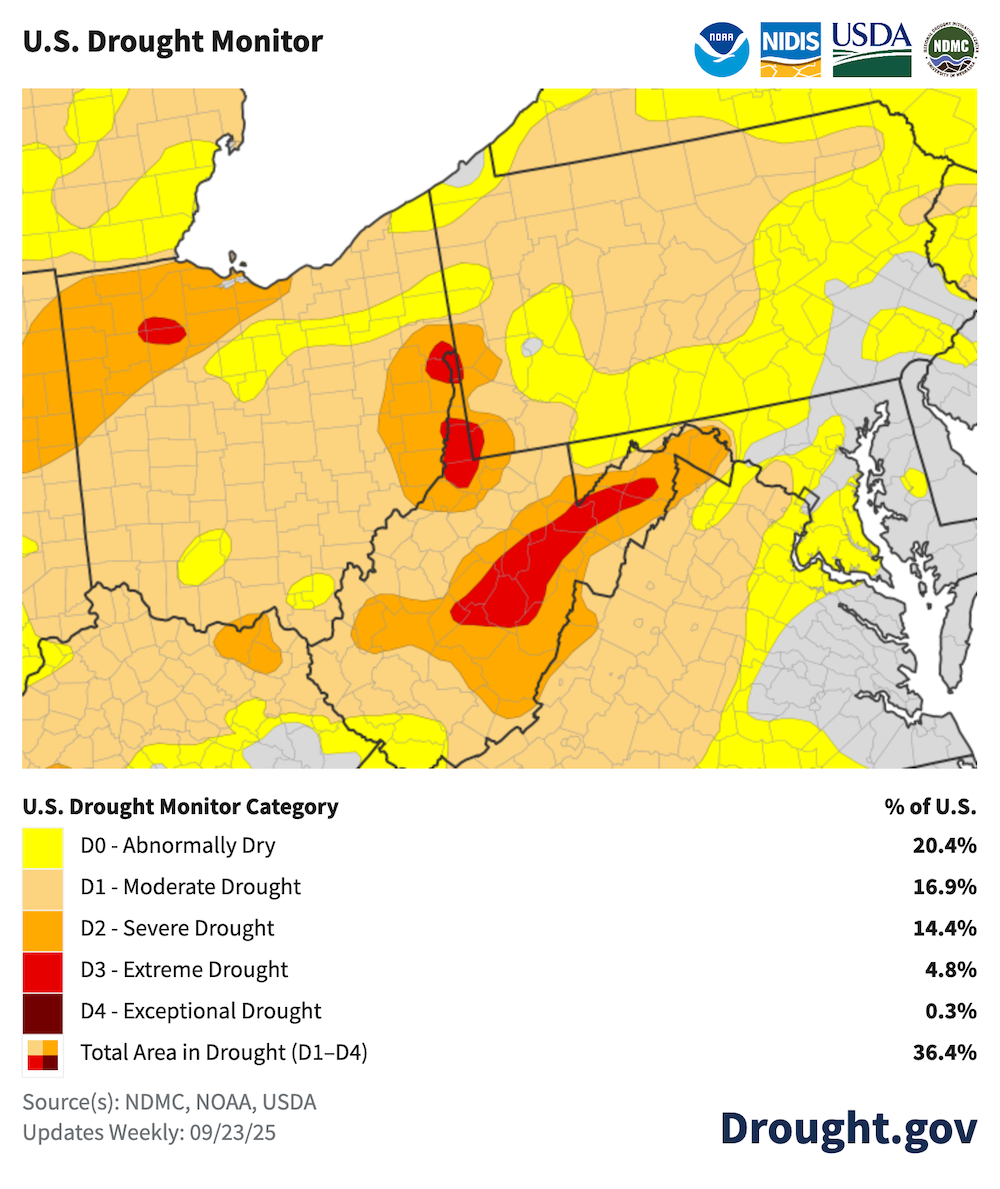
SALEM, Ohio — Drought is back in Ohio, West Virginia and Pennsylvania, although a few days of rainfall have brought some relief.
Nearly 90% of Ohio is in drought, with parts of eastern Ohio and northwestern Ohio in severe (D3) and extreme (D4) drought, according to the latest U.S. Drought Monitor Report, released Sept. 25.
Nearly 95% of West Virginia is considered to be in drought, with counties in the northern panhandle and across a large swath of the central part of the state in extreme (D3) drought.
More than half of Pennsylvania is in drought, with counties in the southwestern part of the state being particularly hard hit. Most of Beaver County and parts of Allegheny, Washington and Greene counties are in severe (D2) drought with some pockets of extreme (D3) drought.
The tri-state area faced a historic drought in 2024. Southeast Ohio was particularly hard hit, prompting the state to allocate $10 million in emergency funding to help farmers recover from the natural disaster.
It was beginning to look like history was repeating itself. August 2025 was the driest August on record in Ohio since records began being kept in 1895. September wasn’t looking much better, but then a low-pressure system brought rain and cooler temperatures throughout the week, starting Sept. 21.
Farmers across the region have been feeling the impacts of the drought, with poor pasture conditions, deteriorating crop conditions and increased fire risk.
The West Virginia Department of Agriculture issued guidance to its farmers on Sept. 18, urging them to take steps to prevent long-term damage to pastures by confining cattle if feeding hay and reducing grazing pressure while dry conditions persist.
The WVDA said funding is available for temporary fencing through its conservation district offices. Farmers should reach out to their local district office to learn more about relief programs.
Farmers should be prepared for field, combine or forage fires during harvest by ensuring that all field equipment and trucks are equipped with charged fire extinguishers and training all workers on emergency protocols in case a fire breaks out.
Ohio State University Extension’s Agricultural Safety and Health Team also recommends having a daily maintenance plan during harvest to prevent fires. This includes cleaning up spills; blowing off chaff, leaves and other plant material; checking electrical connections, and lubrication of bearings and chains.
The Ohio Department of Natural Resources Division of Forestry and Ohio State Fire Marshal urged residents to take precautions when doing any outdoor burning. State law limits outdoor burning in unincorporated areas during October and November between 6 a.m. and 6 p.m., but the dry conditions statewide can pose an elevated wildfire risk.
Residents can take measures to prevent accidental wildfires, including avoiding burning trash and debris, keeping grass trimmed, not discarding cigarettes and other smoking materials outside, postponing fireworks and avoiding open cooking fires or campfires.




