
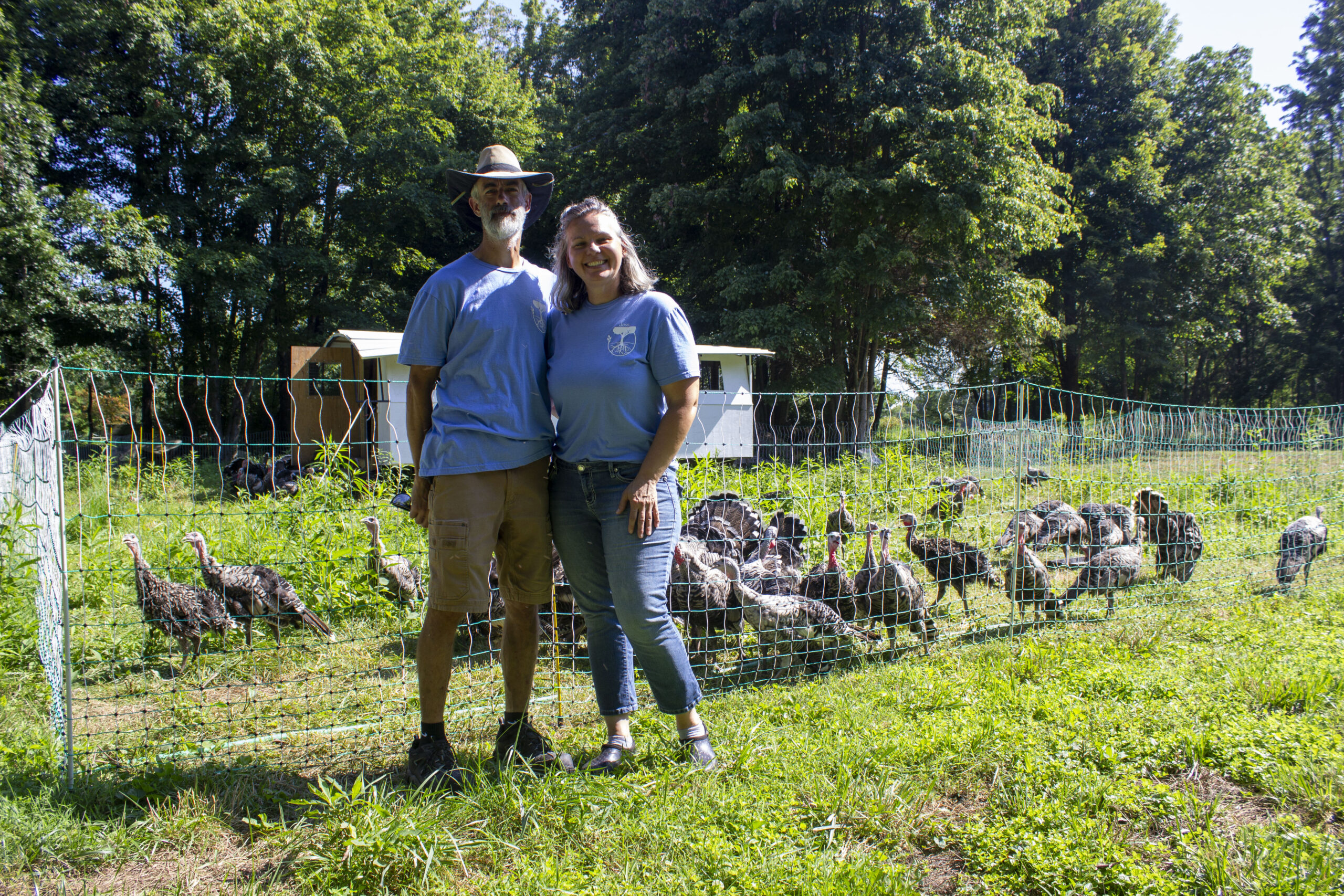
MORROW, Ohio — When Jess and Jon Gray bought their first 10 acres, it wasn’t for Instagram. It was for their family.
“We just jumped headfirst. Like, we’re going to do it and try,” Jess said. “Our girls at the time were middle schoolers and they wanted to do it, too. When we all said yes, we just dove headfirst and started learning since then.”
That leap of faith led the family to the front porch of a 200-year-old farmhouse, once the heart of a sprawling 400-acre working farm carved out into smaller parcels over the years. For the family, it was the realization of a long-held dream.
“We had always felt like we were going to have land,” Jess said, imagining a place where they could practice sustainable, regenerative farming and cultivate lasting food sources for both their community and future generations.
Their work in church and ministry had taken them across four states, beginning in Texas, before they finally found home in Warren County. Since expanding their property to 16 acres total, nothing has ever come easy at Deep Roots Heritage Farm, but the Grays will tell you it’s been worth it.
“More of the good things.”
When the Grays arrived in 2017, much of their property was overrun with invasive honeysuckle. Since then, they’ve been patiently clearing it away and gradually restoring the character of the land back to its natural state, with some determination and a lot of trial and error.
“A year ago, this was all honeysuckle and just old scrub trees that were dying,” Jess said. “Next year, we’ll be able to see more of the good things popping up versus choking out the bad.”
What began as a cleanup project soon turned into something much bigger. Now, 800 native orchard trees they’ve planted are slowly maturing throughout the land.
As part of their native orchard project, the Grays also planted 150 persimmon trees in a dedicated grove. That’s opened a new market opportunity: persimmons are in demand for winemaking, where they add a base fruit flavor to sweeter wines. After just two years, the young trees are thriving, with some already pushing out of the tops of their protective tubes.
“In 18 months, we went from fully overgrown honeysuckle trees to what is beginning to become native, wild pasture,” Jon said. “And it really didn’t take that long, which is mind-boggling when you consider what it looked like a year ago.”
Trial and error.
Honeysuckle wasn’t the only challenge the Grays learned to overcome through trial and error.
Their first agricultural venture came at the recommendation of the local ag office, which suggested growing heritage red raspberries as a promising cash crop.
But the experiment never took off.
“We haven’t made a dime off heritage red raspberries,” Jon said.
These days, the raspberries are more of a side project than a part of the business. While they never generated income, the Grays still enjoy the fruit, tucking it away in their freezer rather than selling it. And they have become a lighthearted reminder of their early days in farming.
From that humbling start, the Grays shifted their focus to eggs. Over the past year, they doubled their laying flock and secured a partnership with a local vendor to sell most of their farm-fresh eggs, an opportunity that came only after being ghosted by an earlier wholesale buyer.
Rather than giving up, Jon and Jess looked for new opportunities. That’s when Blooms and Berries Farm Market and Garden Center in Loveland, Ohio, stepped in, taking a chance on them and adding the Grays’ eggs to their lineup. The risk paid off.
“This past year, they asked us to increase again and so we did. They sell out every week. We give them 50 dozen eggs every week and enjoy that process. Fold it into the day of chores every Sunday,” Jess said.
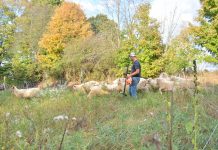
Their livestock venture — with sheep and goats to improve the pasture and soil, and an experiment with turkeys — has unfolded in much the same way.
The idea for the birds started when their oldest daughter asked if she could raise some, and the family gave it a try.
They began with commercial broad-breasted turkeys, the Norman Rockwell kind that adorn most Thanksgiving tables. But it didn’t take long before they realized those birds weren’t a good fit for their farm.
“Big, fat and lazy,” Jon said.
After that first season, the Grays knew they wanted something different. They began looking into heritage breeds that better suited their outdoor, pasture-based philosophy.
“So we started investigating and decided at the end of that year, we are not doing broad breasted again, and we want to find a more natural heritage breed,” Jess said.
The next year, the family brought in several heritage varieties, letting their daughters help choose. One quickly rose to the top of the finalists.
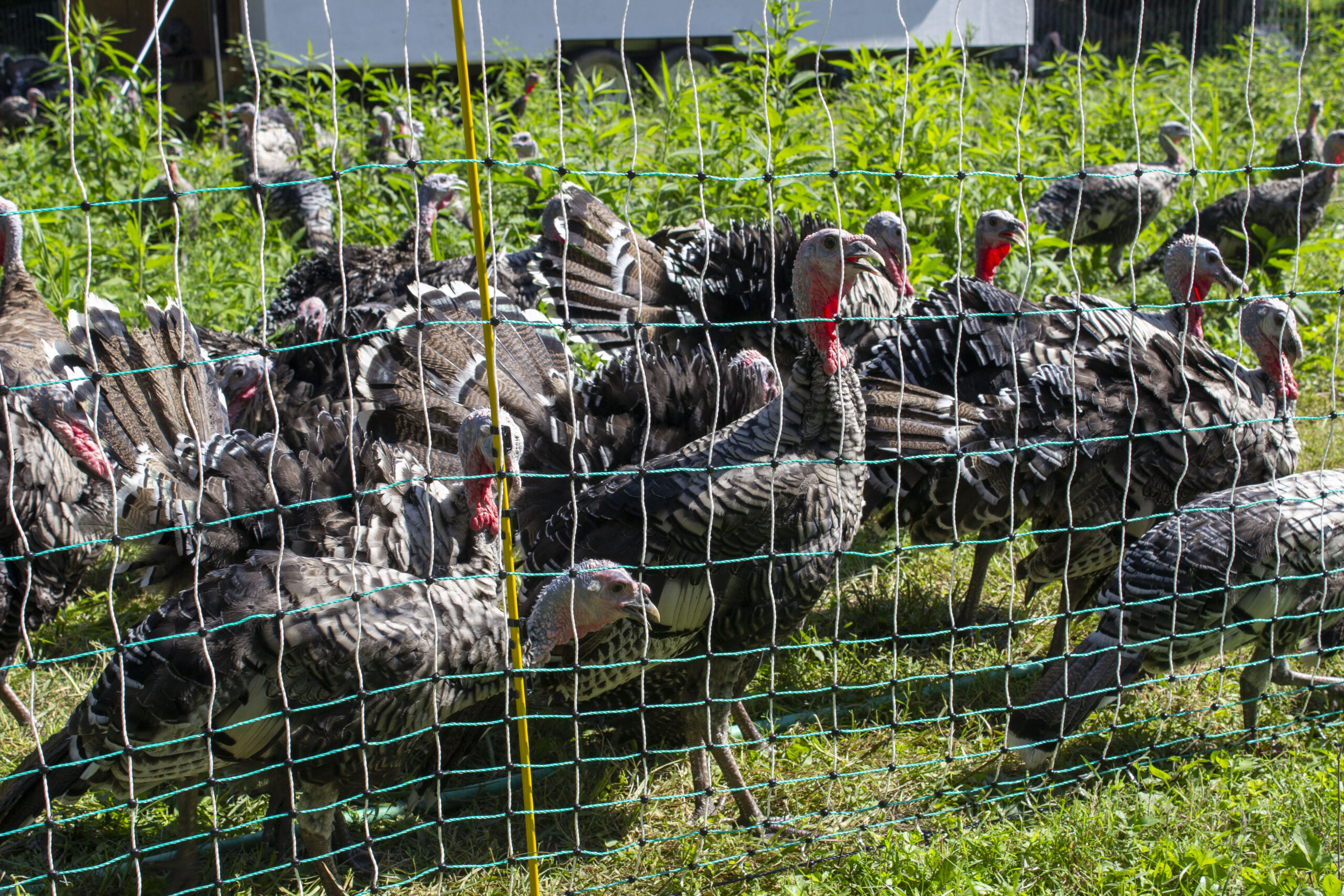
“That’s when we decided we really like the Narragansett,” Jess said. “They’re really sociable. They’re sweet, somewhat smart.”
That preference also aligned with the goals of a $2000 microgrant from the Livestock Conservancy, an organization which supports sustainable practices, including natural grazing, by protecting endangered heritage breeds of livestock. Narragansett turkeys are considered an endangered turkey variety, listed as a heritage breed to “Watch” on the conservancy’s Conservation Priority List, an annual report on agricultural breeds in danger of extinction.
The Grays applied, outlining their plans to grow their flock and improve their system of rotating birds through pasture.
Today, about seven acres are set aside for the turkeys. There are about 140 of them, bustling around and chattering like children in a schoolyard. Late in the season, that activity hits a peak.
“Oh, God. Their hormones a month before processing go nuts,” Jon said. The family processes the birds at 28 to 30 weeks, usually the Friday before Thanksgiving, so customers can pick up their turkeys fresh the very next day.
On average, the birds dress out at about 16 pounds, though some have grown much larger, as big as 28 to 30 pounds; certain other breeds they’ve raised have topped even that.
Beyond their size, the turkeys also play an important role in land management. Every few days, the Grays move fencing and a mobile coop to new sections of pasture, letting the birds graze and forage while giving the land time to recover.
At night, the flock is safely secured to protect them from predators. But the nearby subdivisions may have pushed more wildlife like raccoons and hawks into the area, keeping the threat they pose higher. Still, amid these challenges, the turkeys continue to bring the family plenty of unexpected delights. While showing a Farm and Dairy reporter around the property, Jon discovered an old arrow broadhead the birds had scratched out of the dirt.
“The birds are little archaeologists,” he said. “They dig up stuff like you wouldn’t believe.”
“This is really cool.”
On their farm, the Grays have stepped into many roles; the next one will see them becoming teachers. They view their farm as a living classroom, where learning comes through hands-on experience.
“We want to do education. And in that, we actually want people to walk away from our farm with one thing they can do, whether it be a small plot of land or they choose to do something different because they have seen the whole working process,” Jess said.
They’ve already welcomed local school groups for projects like tree planting and mulching, letting students get their hands in the soil while also using tools like plant-identification apps to connect technology with nature. The family is currently working toward nonprofit status, which would allow them to expand school partnerships and community service programs even further.
“There’s always something to do on the land for schools to partner. And then (students) walk away knowing like, ‘oh, this isn’t take-a-selfie-by-sunflowers.’ This is actually, no, you’re going to get hot, sweaty, dirty and be okay with it and understand at the end of the day that you did something, moving something forward,” Jess said.
Looking ahead, the Grays plan to create practical resources for other farmers — everything from simple calculation sheets to plug-and-play templates — and grow their monthly volunteer program, blending education with meaningful community engagement.
Jess recently completed a bee stewardship certification, which deepened their understanding of pollinators and native plants. The experience taught them how to plant and manage forage more effectively, even if it means leaving parts of the farm to go a little wild in support of pollinator activity.
“That’s intentional,” she said, noting that those areas encourage more pollinators and give them space to learn, adapt and manage the land thoughtfully.
That “messy” look, the couple believes, is what resilience really looks like.
Jon said it’s rewarding to compare the detailed plans on paper with what’s happening on the land, like spotting young locust trees beginning to sprout up.
“And you’re beginning to see, ‘oh, that’s a nitrogen fixer. That’s actually doing its job right now in order to provide for the other plants.’ So you’re seeing it in the stage of, ‘wow. This is super messy,’ and yet you look at it close-up, and you’re like, ‘oh, actually, this is really cool,” he said.