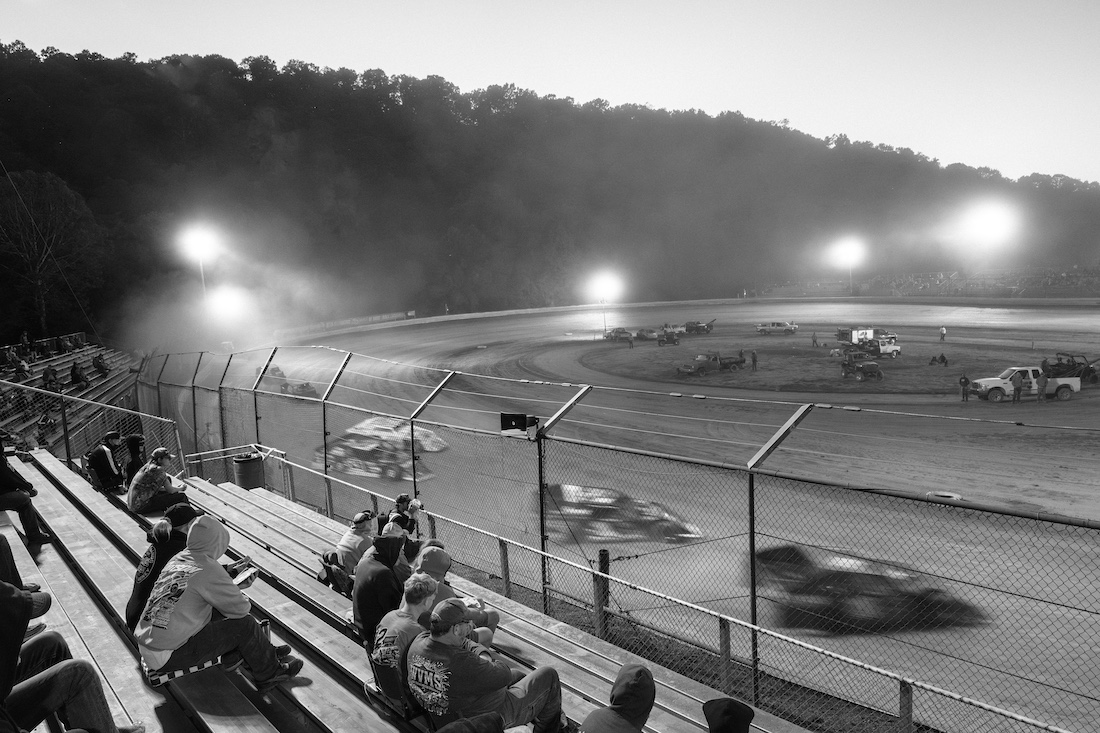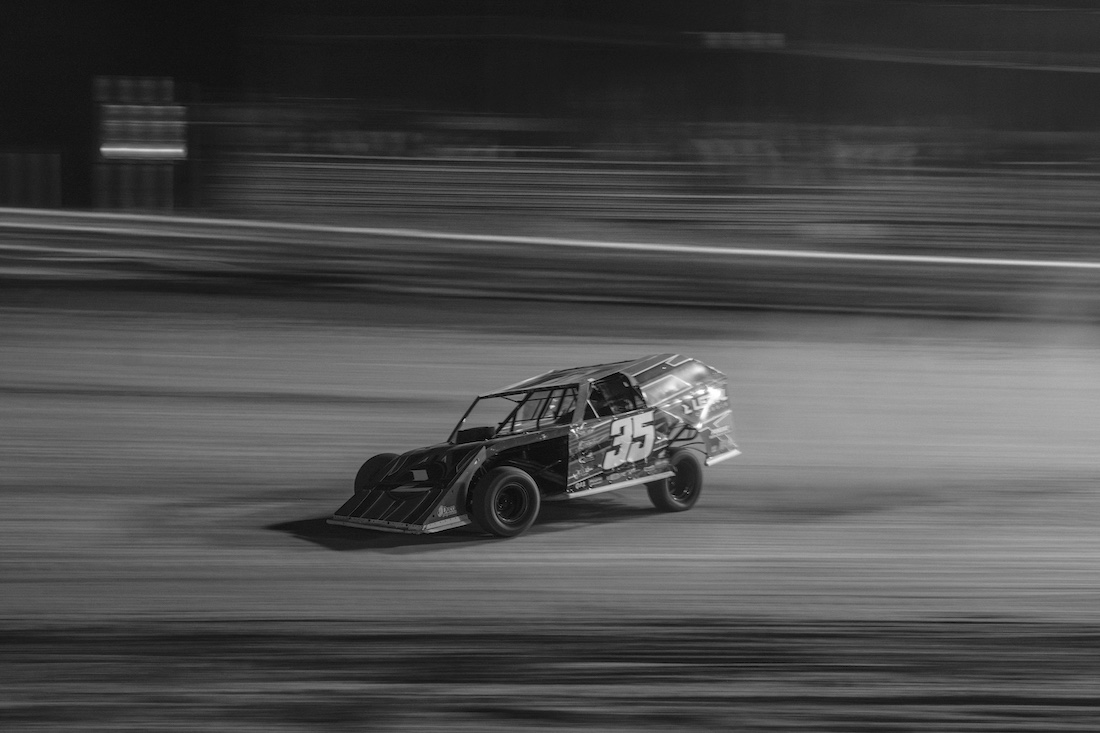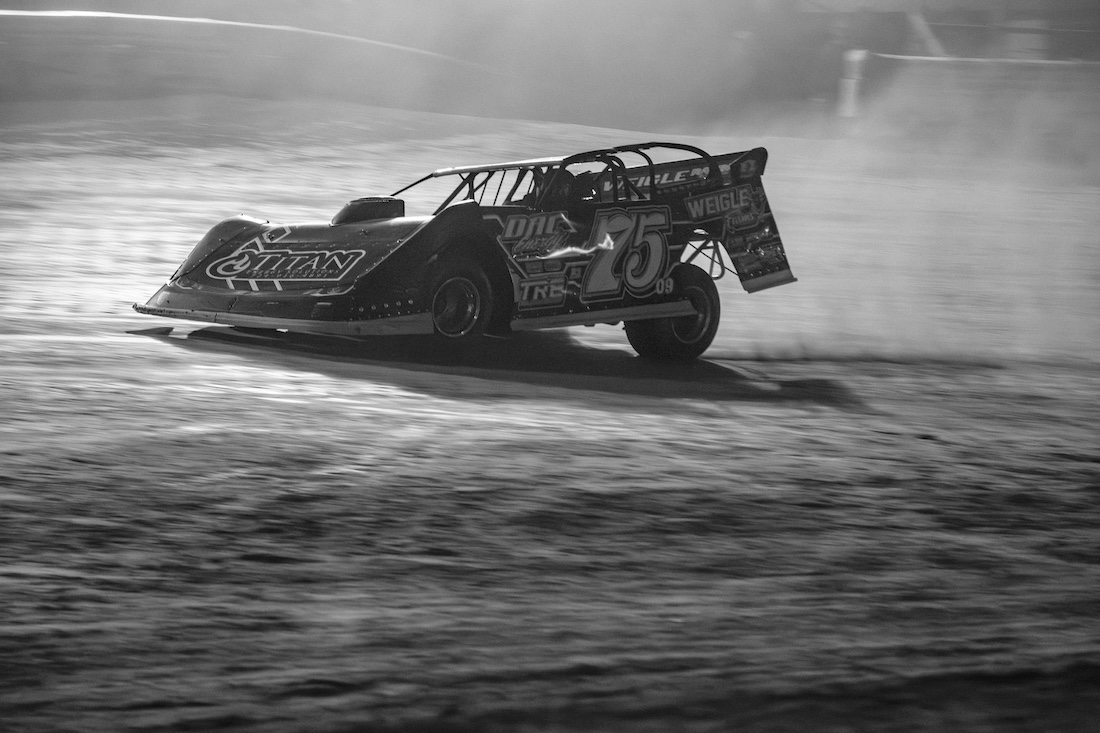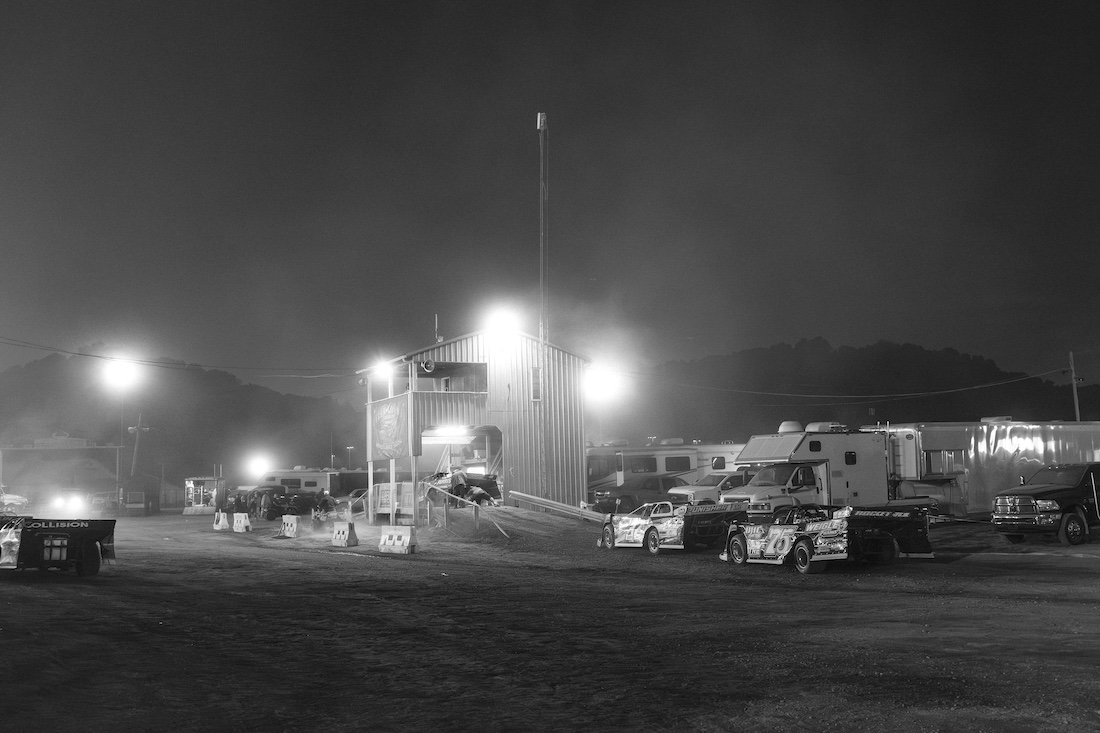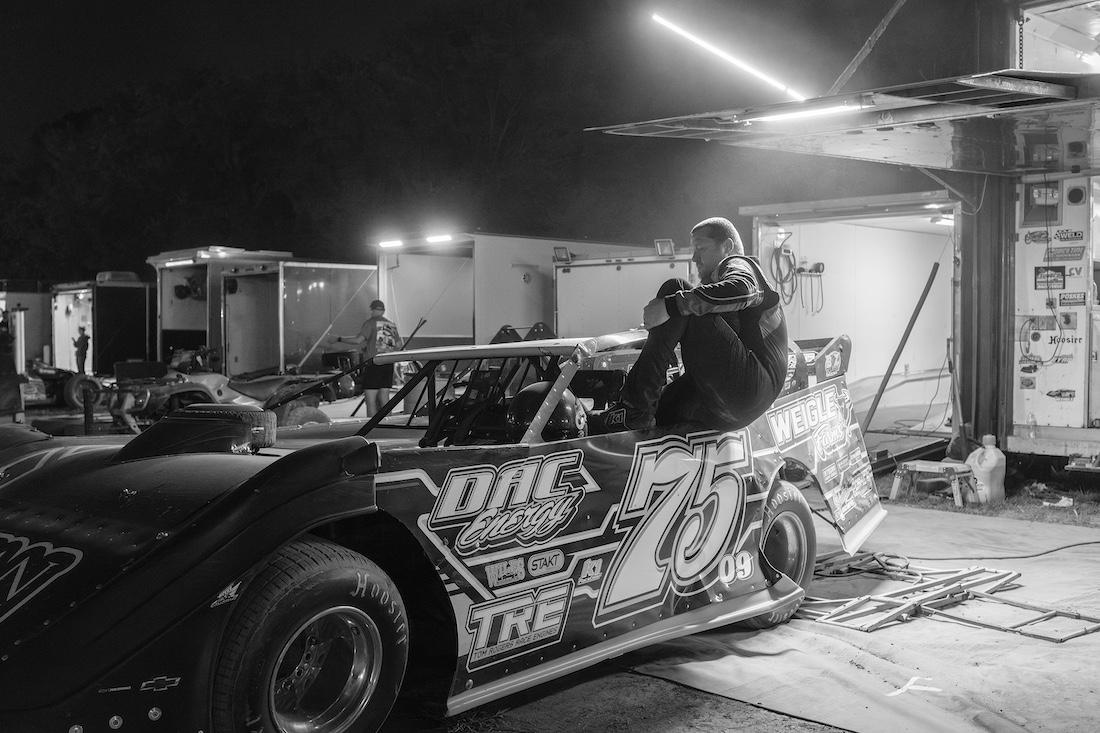
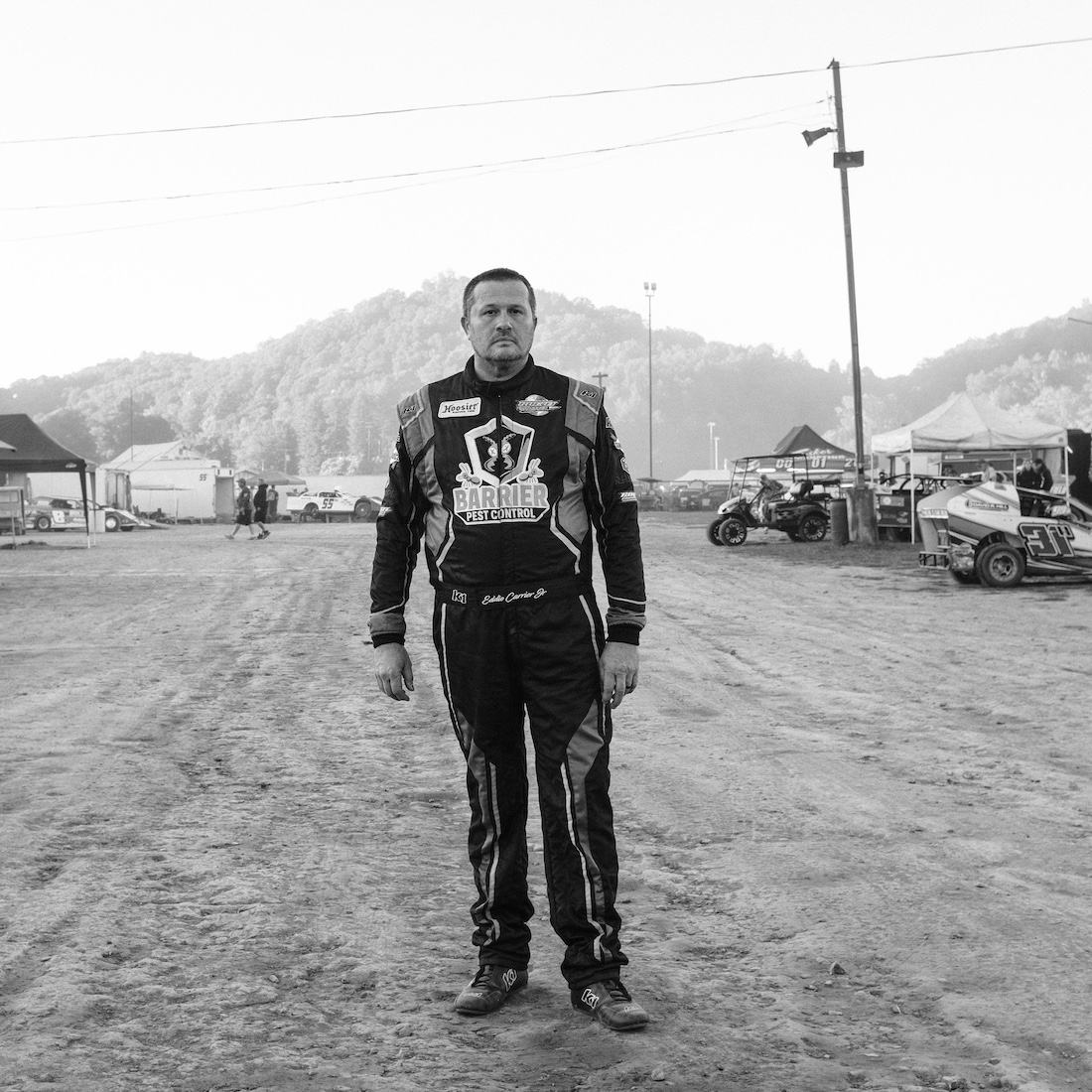
The Racing Report is a five-part photo essay shot at short tracks in Ohio, West Virginia and Pennsylvania that will run in Farm and Dairy through the summer. Each month we will feature a different driver from around the region. For the fifth and final installment, photojournalist Matthew Chasney went to Tyler County Speedway, in West Virginia, over Labor Day weekend to follow veteran late model racer Eddie Carrier, Jr.
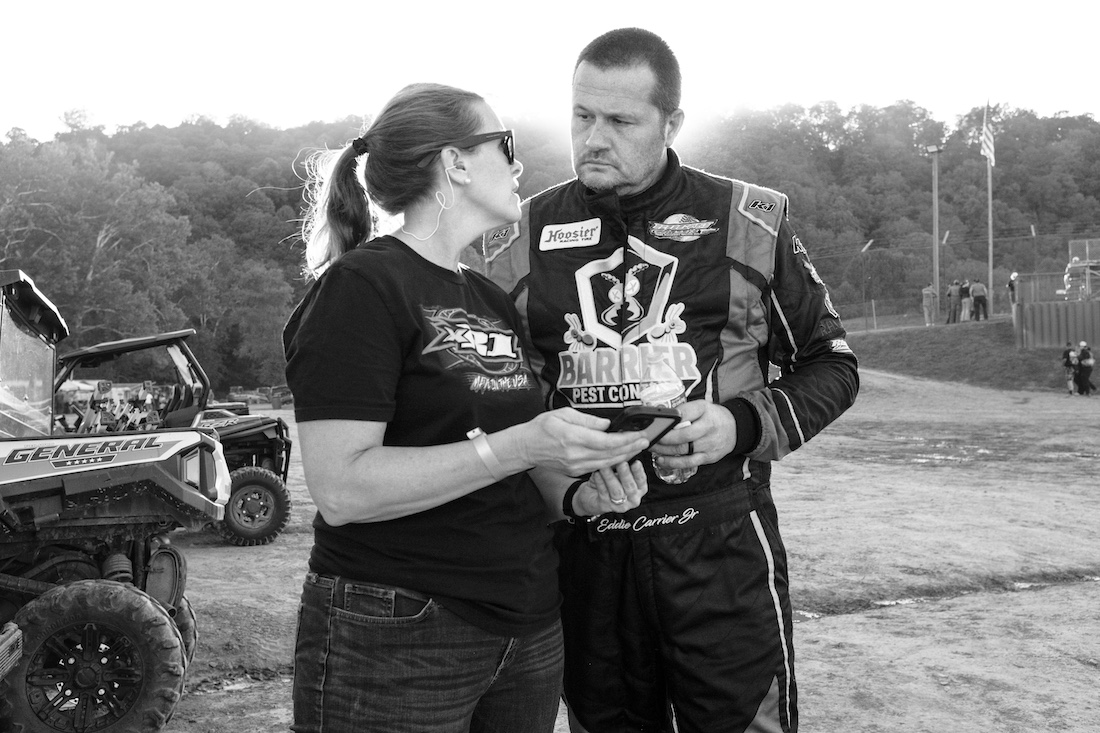
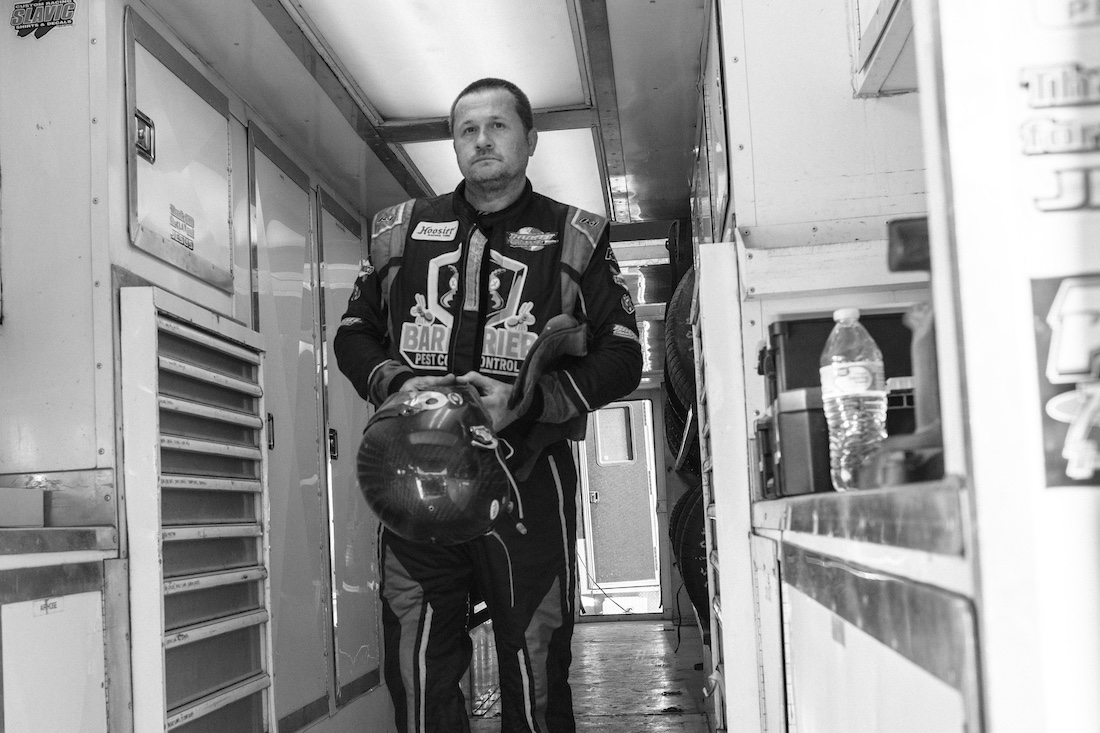
MIDDLEBOURNE, W.Va. — Eddie Carrier Jr. feels like a throwback to another era. He’s steady, soft-spoken and proudly working class. He’s affable and inviting off the track, but a killer when he straps into his car. The West Virginia late model racer is a 36-year veteran of the sport with over 400 wins to his name. On top of that, he’s the 2006 World of Outlaws Rookie of the Year. Three and a half decades in, and he’s still winning races.
“I want to win just about as bad as anybody”, he says.
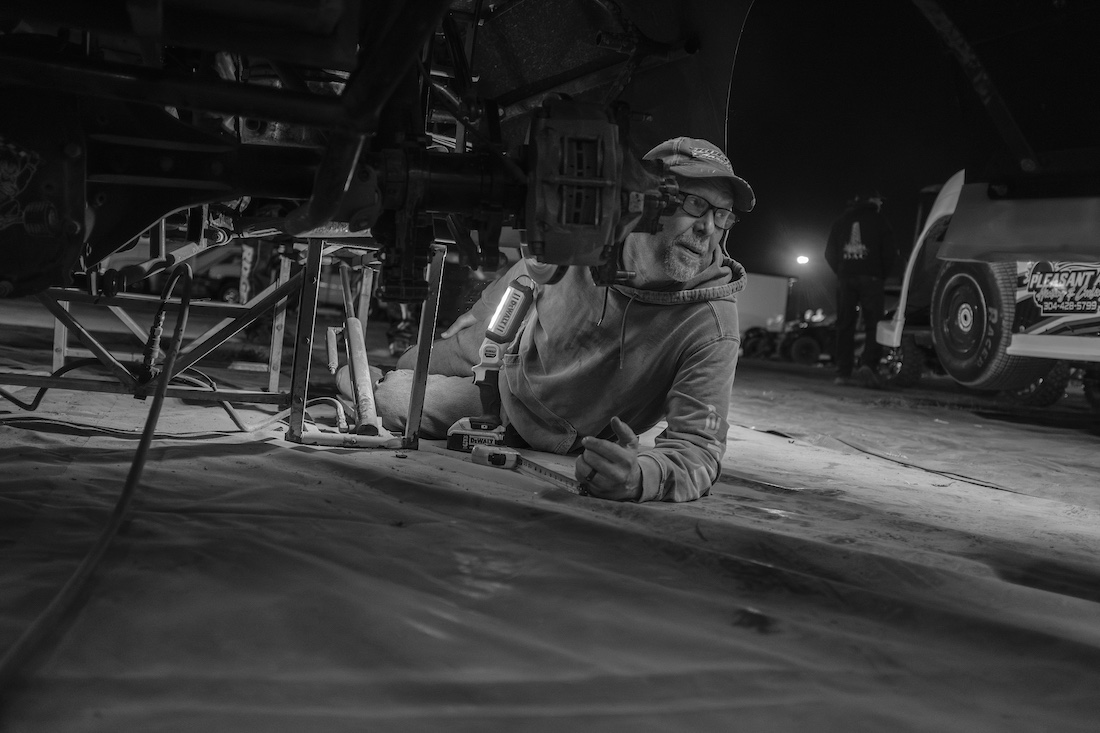
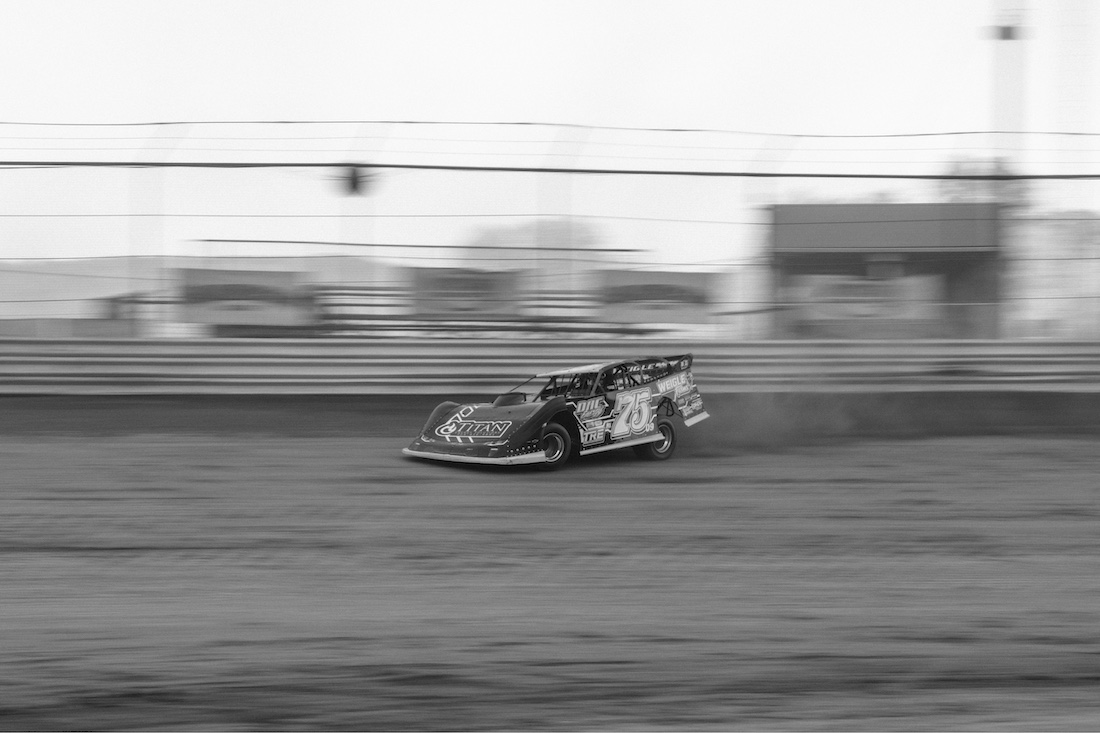
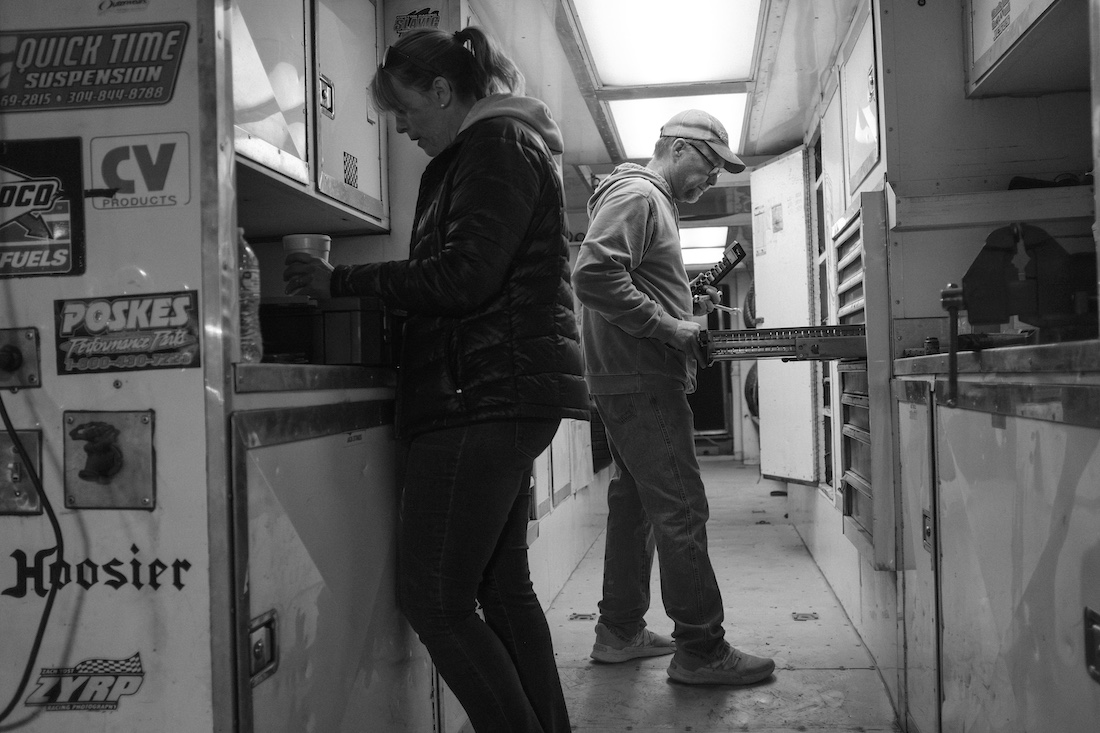
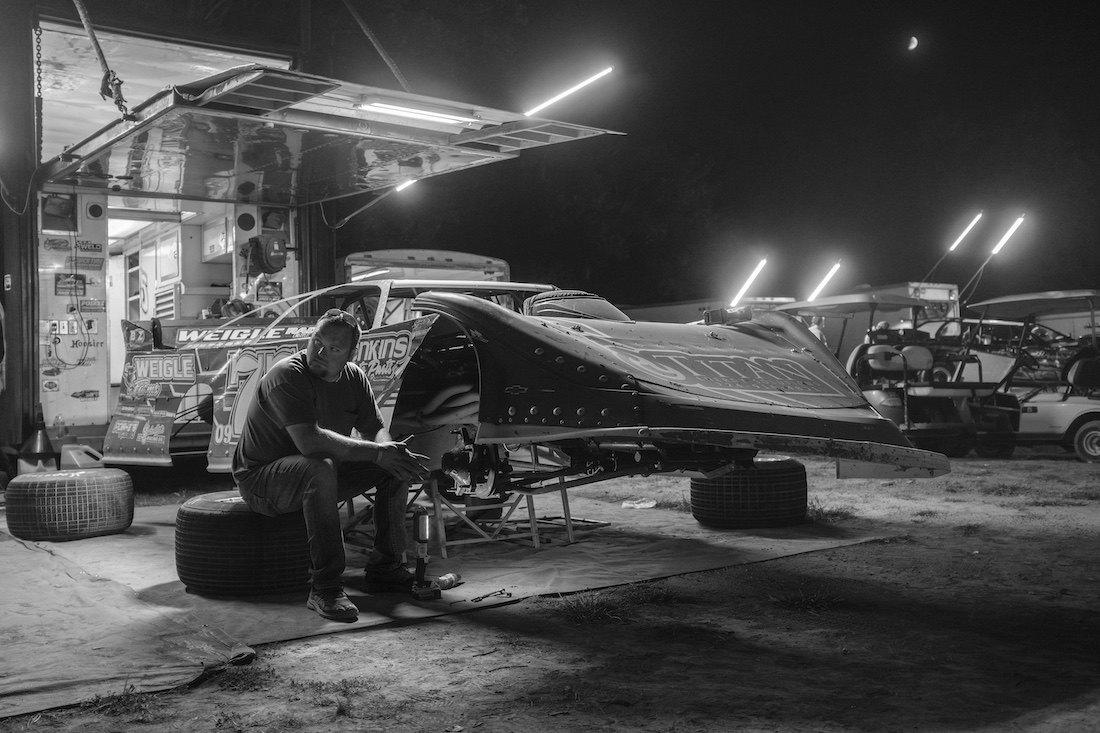
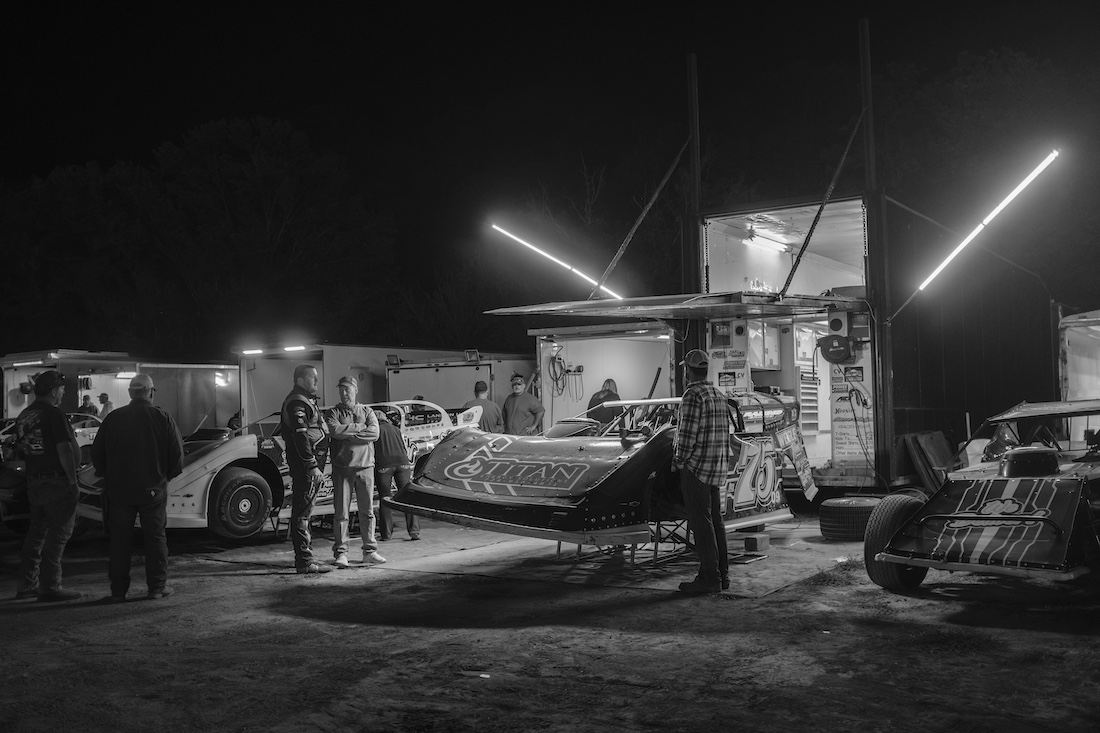
The sun dips down behind one of the mountains that circle Tyler County Speedway while Carrier and his car owner and longtime friend and competitor, Steve Weigle, make adjustments to the car before hot laps. The team put a new motor in the car that produces about 100 horsepower more than the previous one did. More power is a good thing, but on the dry, slick surface of this steeply banked, quarter-mile bullring, it’s been tricky to turn that raw power into speed. In order to improve handling in the corners, they adjust the suspension and limit the engine’s power.
The Salt Rock Express, as Carrier is known, knows as much about the mechanics of a race car as he does about racing one. He learned how to work on race cars from his dad, Eddie Carrier Sr. His father told him, “Before you drive one, you have to learn how to build it yourself”. This mantra taught him how to take care of his cars. After all, you’re not likely to tear up equipment if you’re the one who has to repair it during the week.
Hardworking and dedicated to his craft, the elder Carrier worked as a school bus driver by day and he tinkered with his race car by night at their home in Burgin, Kentucky. Carrier watched his father build race cars out of junkyard parts. If he couldn’t find a part, he’d make it himself. Things are different now. The days of the backyard engineers like his dad are no longer the norm.
“It’s hard for a working man to own his race car and race now,” laments Carrier.
Carrier is fortunate to have been driving for Weigle, who has been a regular in late model racing in the region for decades. The pair has already notched one win in their first year racing together.
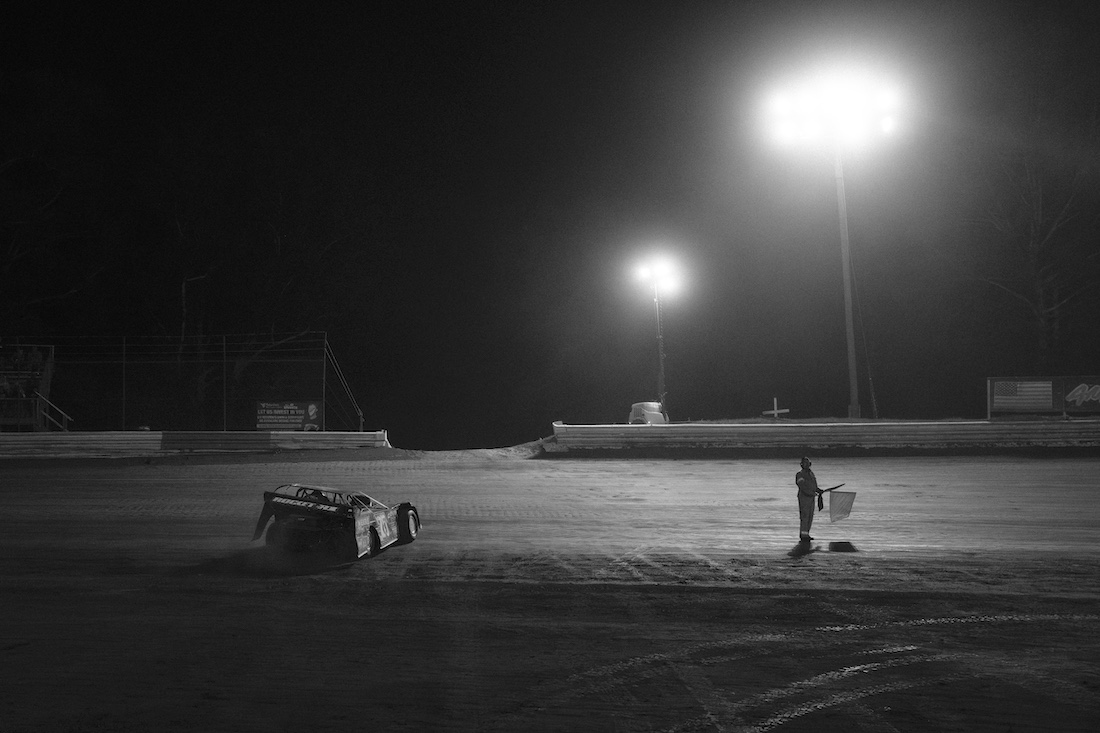
But, this would not be the day for another. Late in the feature race, Carrier makes a hard right turn into the infield and calls it quits. The car was still struggling with handling. Once he slipped to the back of the field, he knew the rest of the race would be all risk for no reward. Rather than stay out and risk damaging equipment for no prize money, he made the strategic decision to quit so they could live to fight for a win the next day.
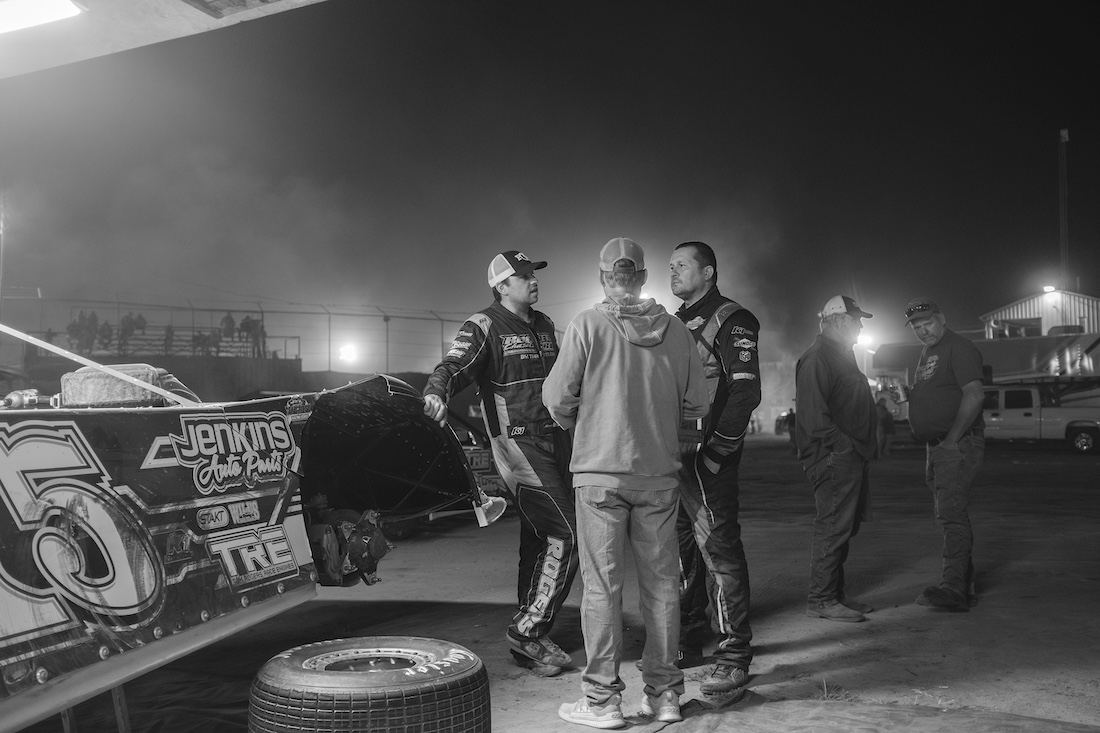
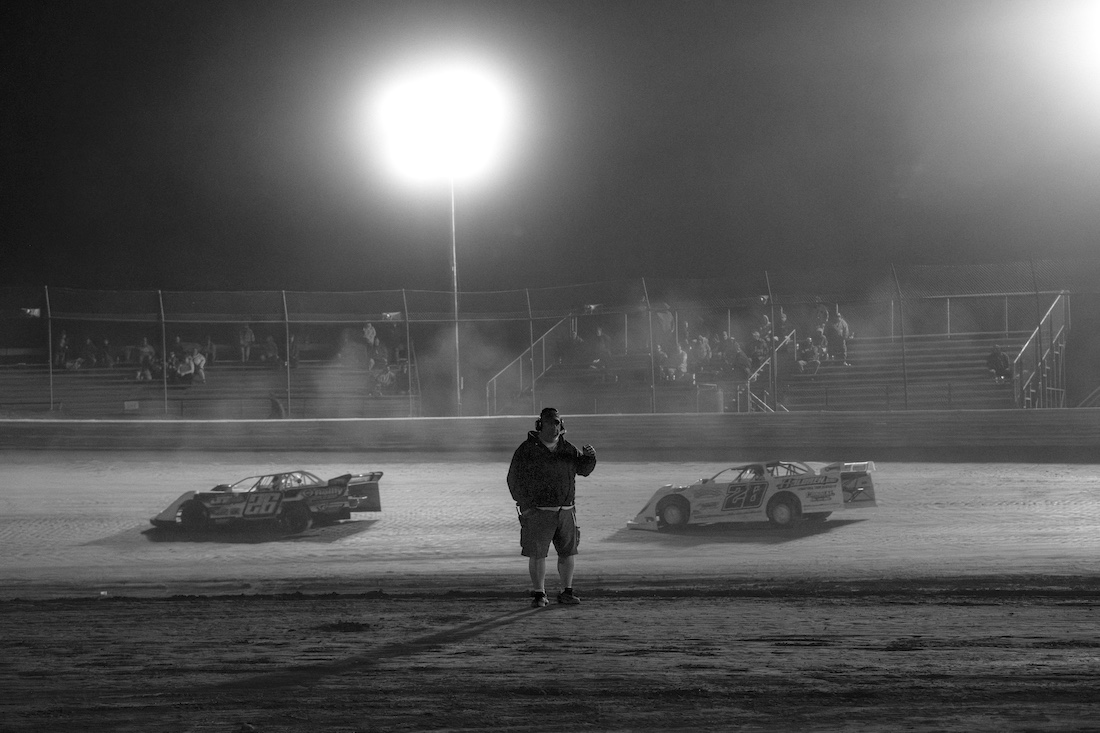
For the final day of the race weekend, he’ll go up against late model greats like Hudson O’Neal, Drake Troutman, and fellow Mountaineer Tyler Carpenter. Going toe-to-toe with the best isn’t a fight that he shrinks away from. Carrier relishes tough competitors because it makes him better. This was a lesson that he learned in his early days of running with the World of Outlaws: “You get humbled real quick,” he says of racing against drivers like Jonathan Davenport and the late Scott Bloomquist.
Carrier is well aware that he’s on the tail end of his career. He’s not sure when the time will come for him to hang up his helmet, but he knows that it will be when he can no longer win.
“The day I feel I’m no longer competitive, I’m out,” he says. “And it’s sooner than later.”
Soon, but for a competitor like Carrier, not yet.
Click on the photos in the gallery to enlarge