





A friend of mine recounted an experience he had while hiking through a serene forest one late-summer afternoon. He recalled hearing something falling from above.
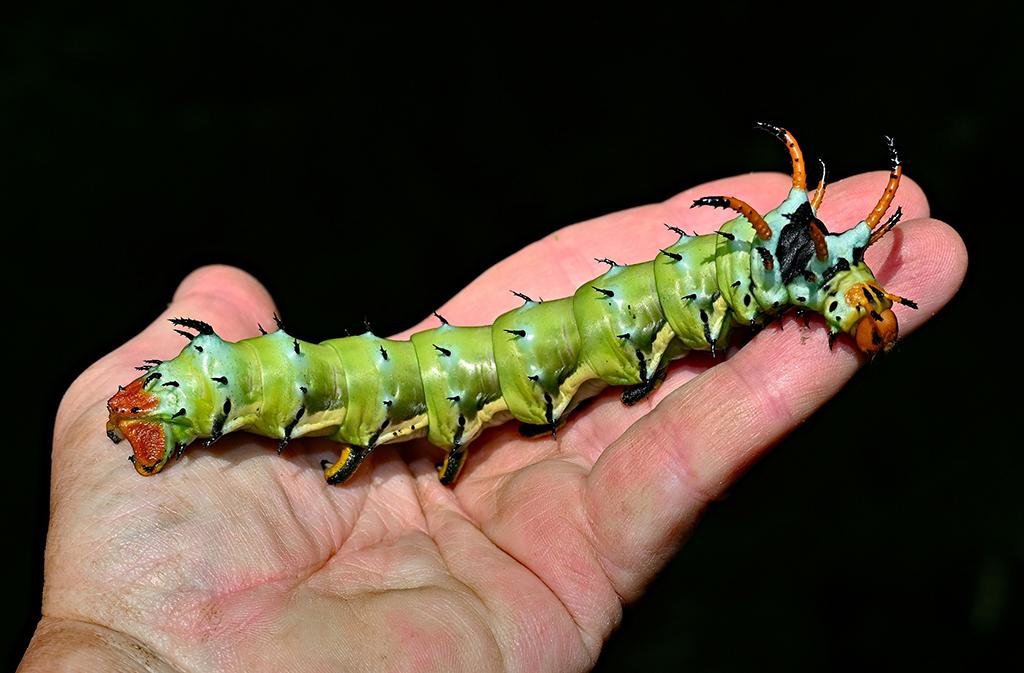
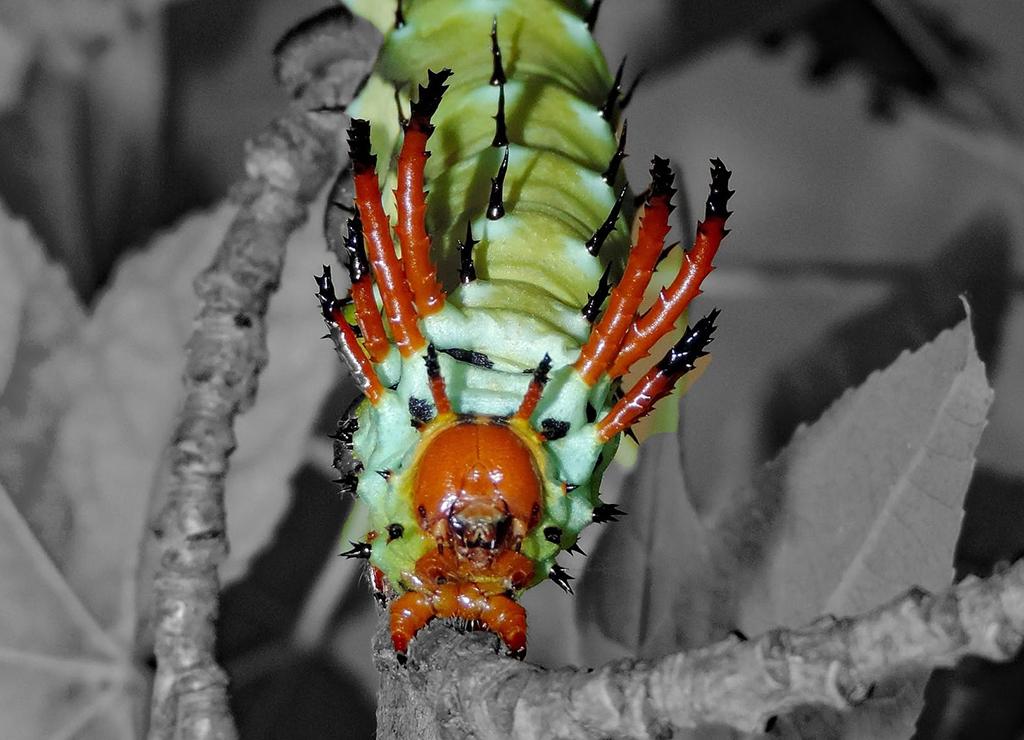
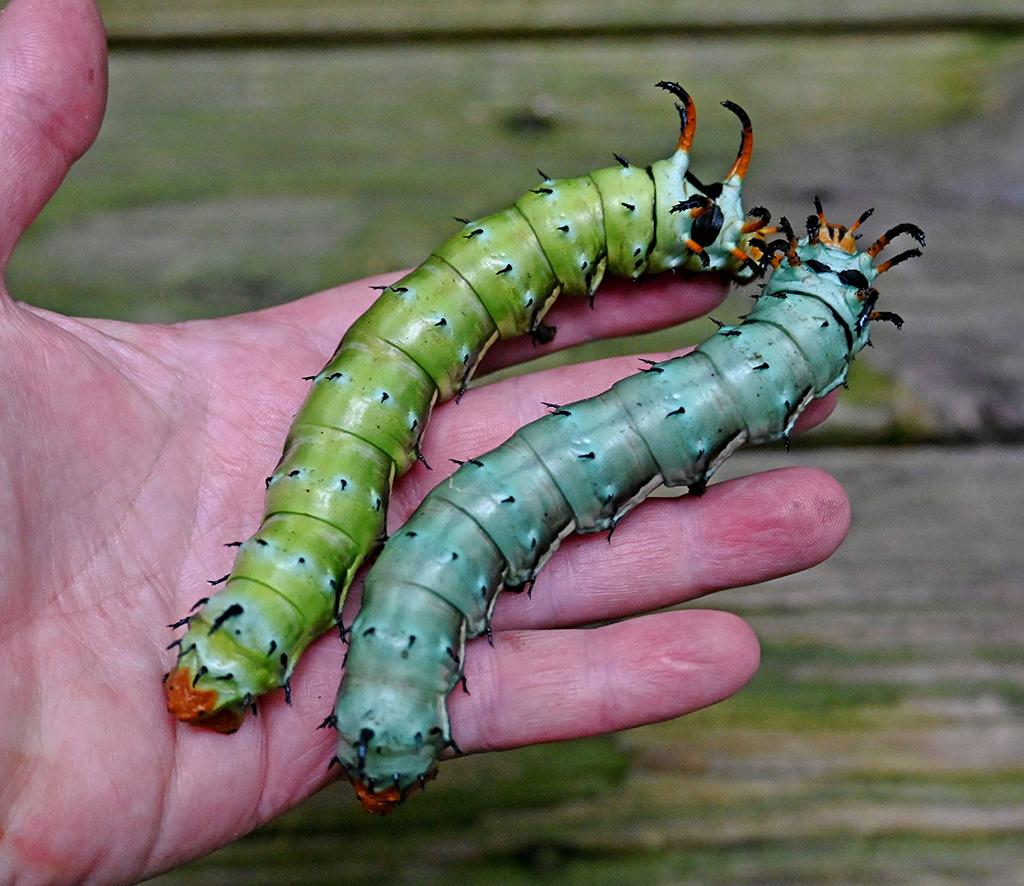
The sound of leaves ripping rang out as an unknown object fell from the canopy, ending with a loud “thud” as it hit the duff below, mere feet from where he stood. Looking down, he saw the largest, “craziest” caterpillar he had ever laid eyes on. As big as a hot dog, the creature was a gaudy turquoise blue covered with small black spikes and inch-long red horns tipped in black. At first, it lay where it landed, stunned from its harsh impact with the ground. But eventually it recovered and began looking around, then crawled off at an amazing pace across the forest floor. And just like that, it was gone.
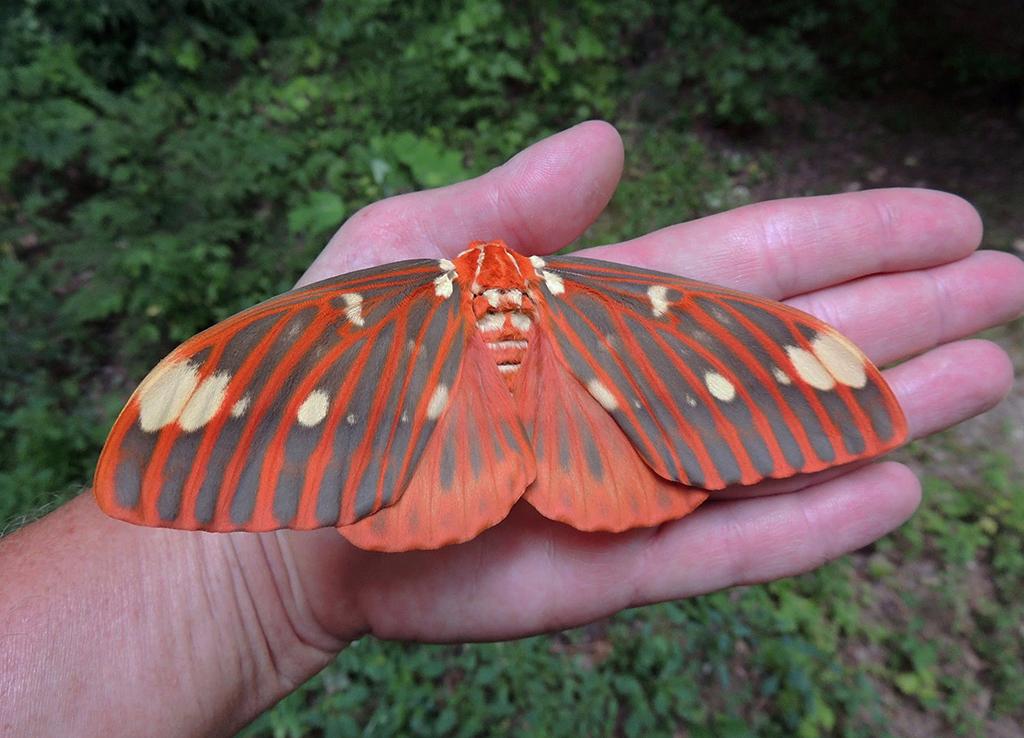
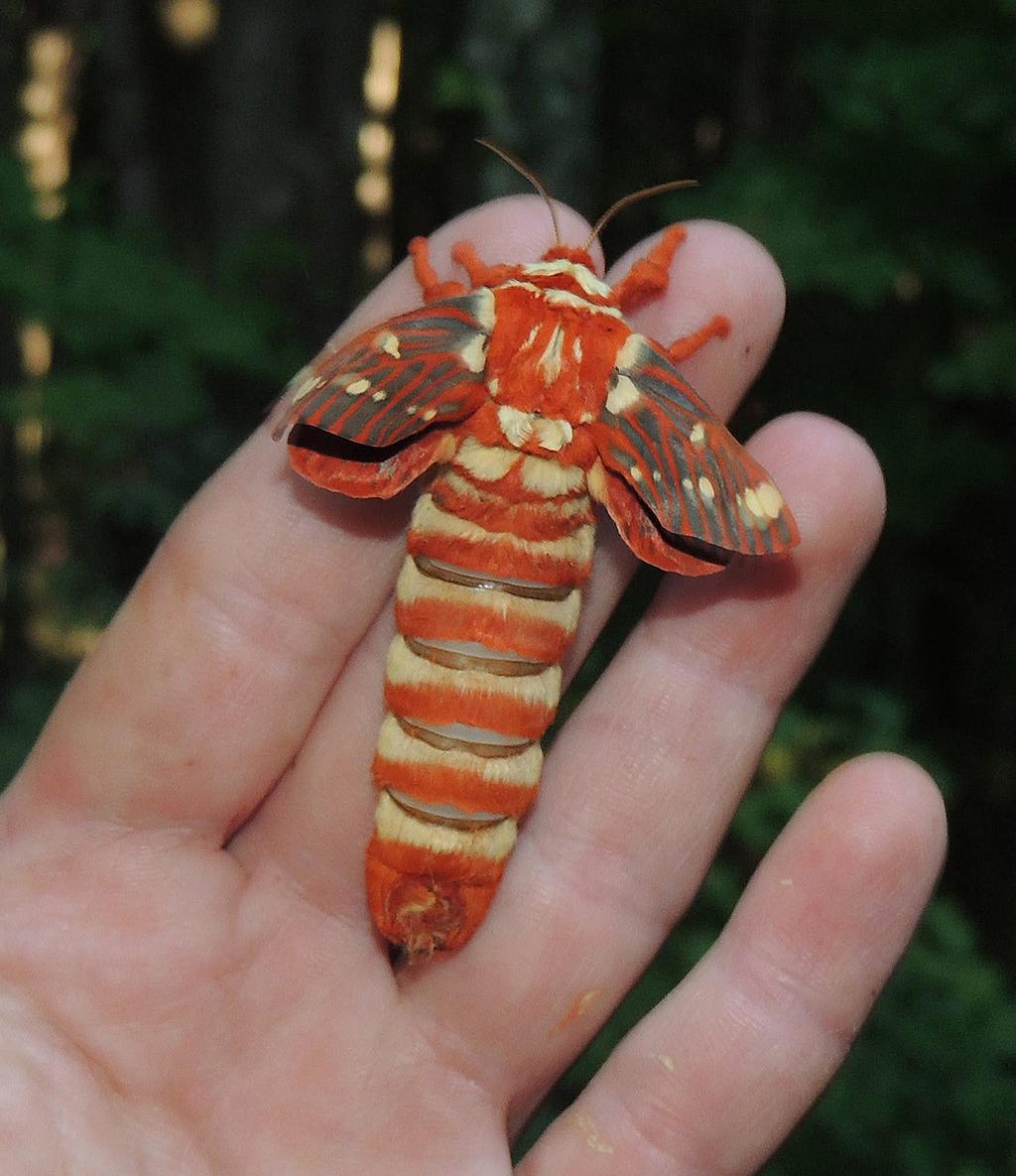
Few people realize that there is such a behemoth caterpillar walking among us. Well, not really among us, but above us, high in the treetops. This caterpillar, known as a hickory horned devil, metamorphoses into a beautiful royal walnut moth (Citheronia regalis), not surprisingly, the largest lepidopteran species by mass in North America. Seemingly rare due to uncommon sightings, this species is a regular, a native to our forests.
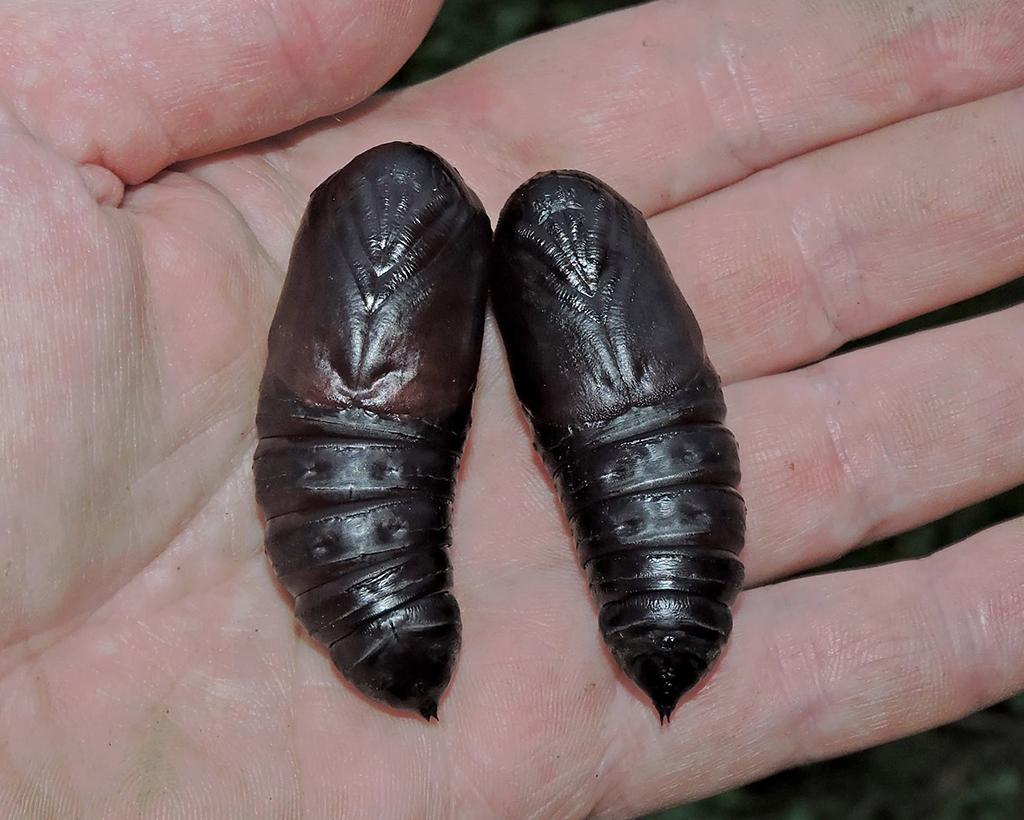
Around the first of July, as darkness begins to fall, the hickory horned devil, which has been underground in the form of a 3 inches long brown pupa since late summer of the following year, breaks out of its pupal shell and claws its way up through the soil to the surface. Once free of its subterranean abode, its first mission is to search for a secure site on which to rest and inflate its tiny, crumpled wings.
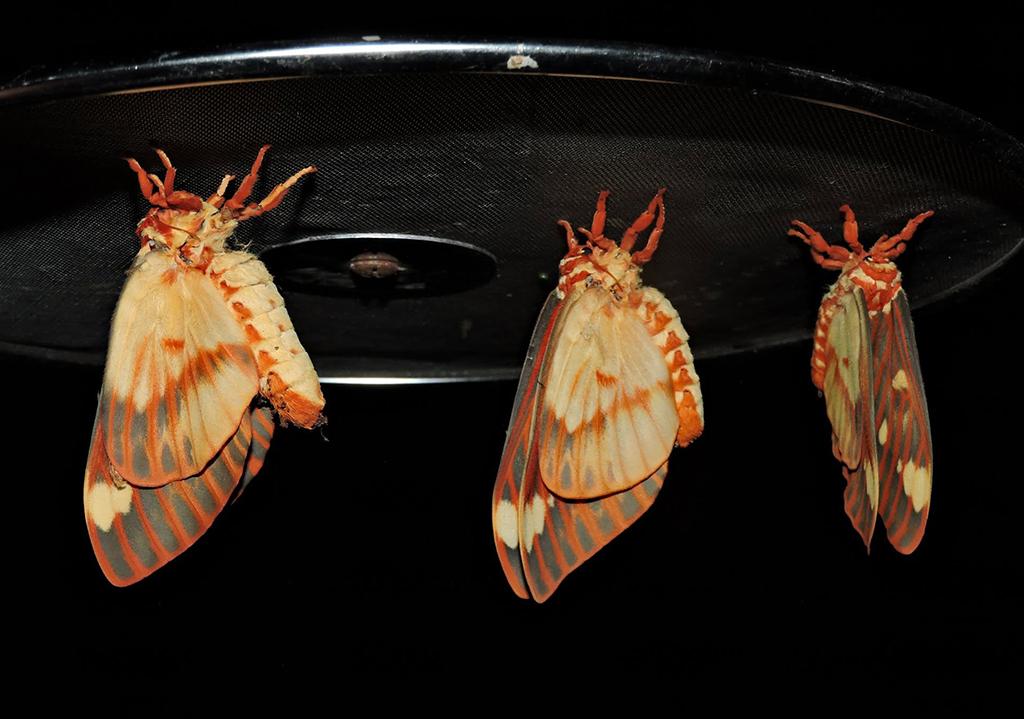
Over the course of about 30 minutes, the creature, now an adult moth, pumps fluid from its giant abdomen into its wings, which grow and expand up to 6 inches across. From above, they are slate grey with thick orange venation and a variety of yellow spots giving a dappled effect. A view from below offers an even more dramatic display of these same colors. Under the shroud of darkness, the moth sits quietly for another 5 to 6 hours, ensuring that its wings are dry and strong before continuing with its final journey.
If this new moth is a male, it will take to the air and fly off into the night. If it is a female, it will sit tight and begin “calling” for a mate. A small organ will descend from the tip of its abdomen. This specialized gland will begin to release pheromones, invisible particles of scent unique only to the species emitting them. Out into the night air, this plume of chemical compounds drifts for miles until a male of the same species detects it with his specialized feathery antenna.
A male will follow this trail, often over 5 miles, back to the advertising female, where he may encounter other males that have also arrived at her location. Only one lucky suitor will pair with her, locking their abdomens together with a pair of his wicked claspers, and there they will remain as such until the following evening, around 20 hours later. As night falls, the male releases the female, flying off in search of another mate. With an abdomen filled with hundreds of fertile eggs, she takes off into the forest to search for the specific host plants that will provide the food needed for her caterpillars’ success.
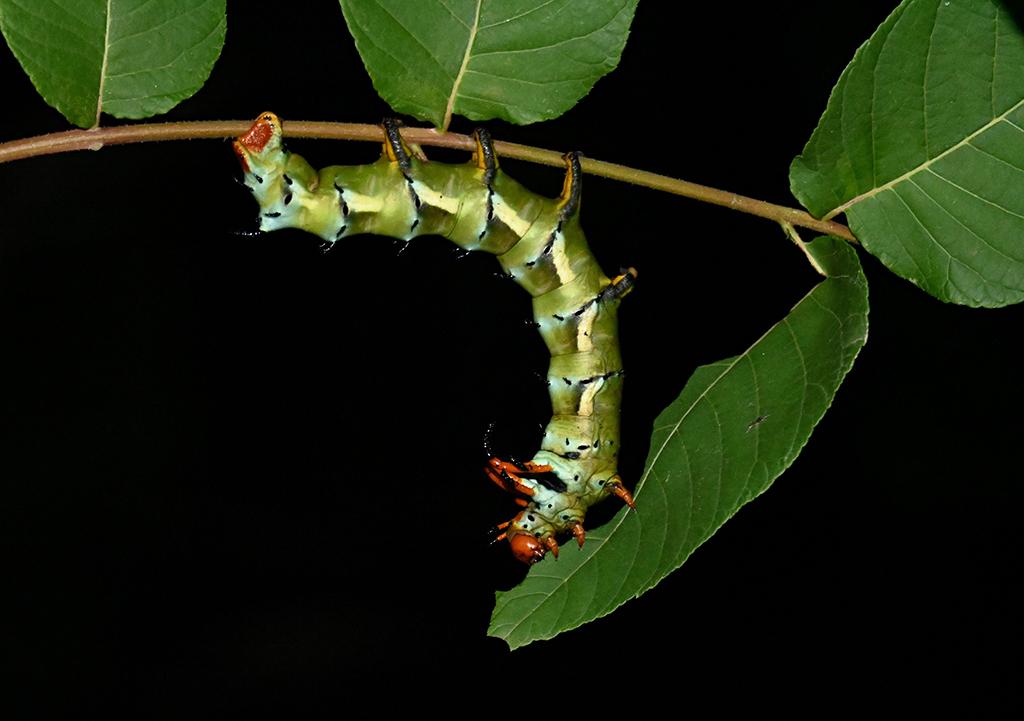
With the name hickory horned devil and royal walnut moth, it is safe to assume the hickory and walnut are much preferred, but additional tree species including sycamore, basswood, sweetgum and persimmon, among others, are also favored. The female moth flits through the treetops, attaching a cream-colored egg or two here or there upon the life-giving leaves. The process of emptying her huge abdomen takes several arduous nights, and she must be careful to avoid predators such as screech owls, which find her species a satisfying treat.
Sadly, like most adult moths, the royal walnut moth has no mouthparts, no way to feed. She has approximately eight days of life remaining in this final stage of metamorphosis, in which to deposit her eggs before quietly perishing among the trees. I often lament as to why this final stage, the most magnificent of all, is but the shortest in the moth’s lengthy life cycle.
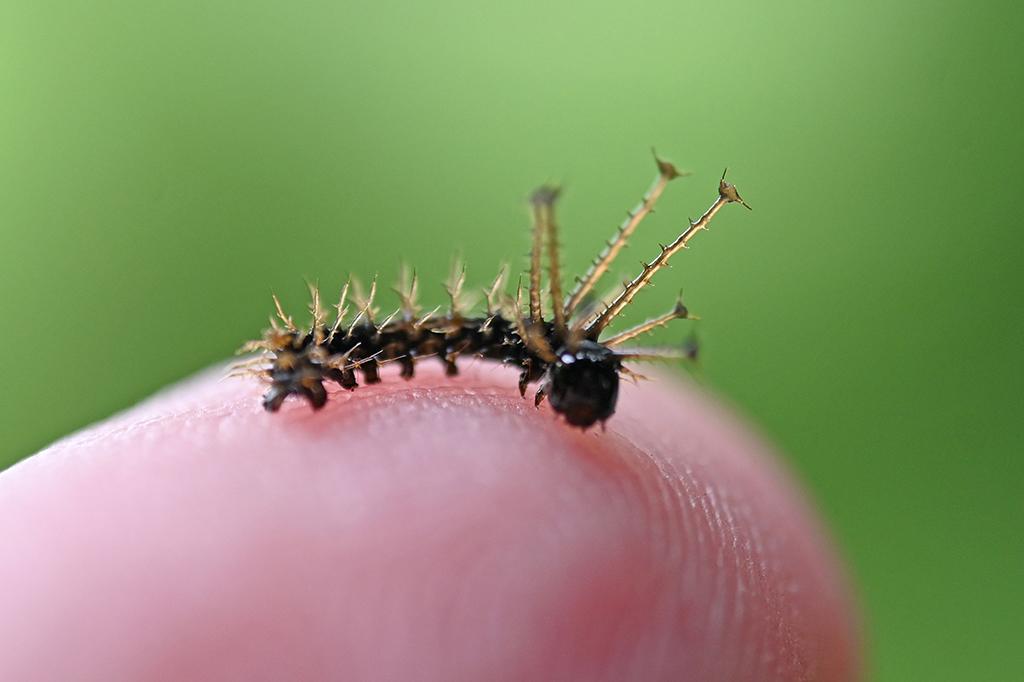
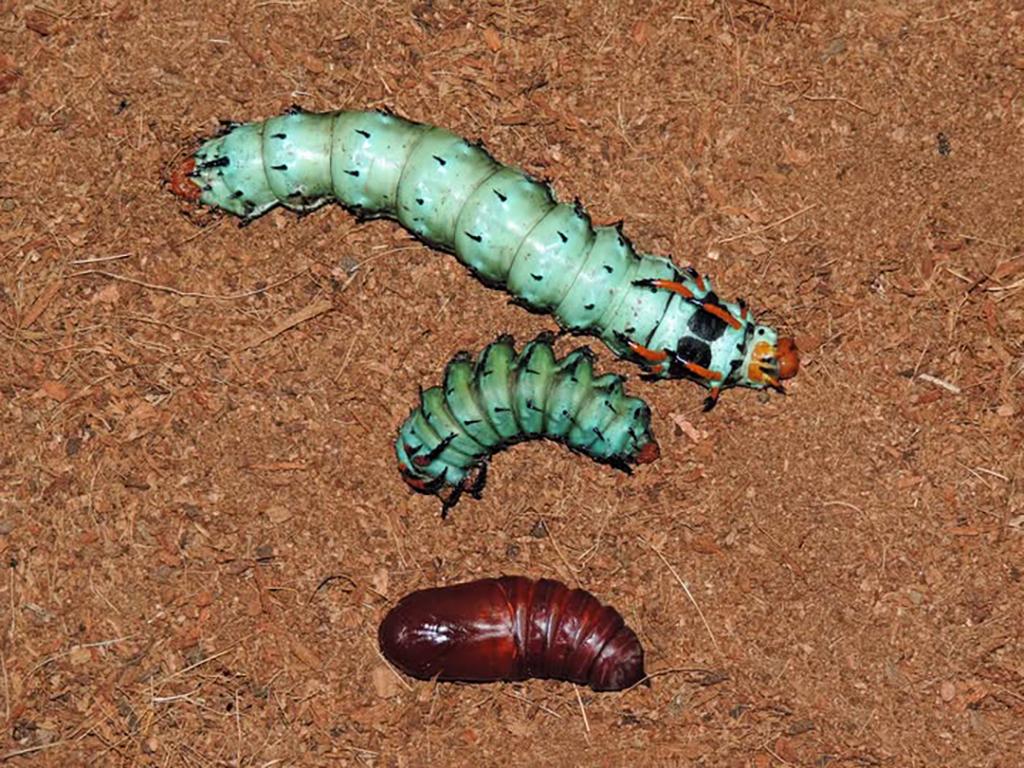
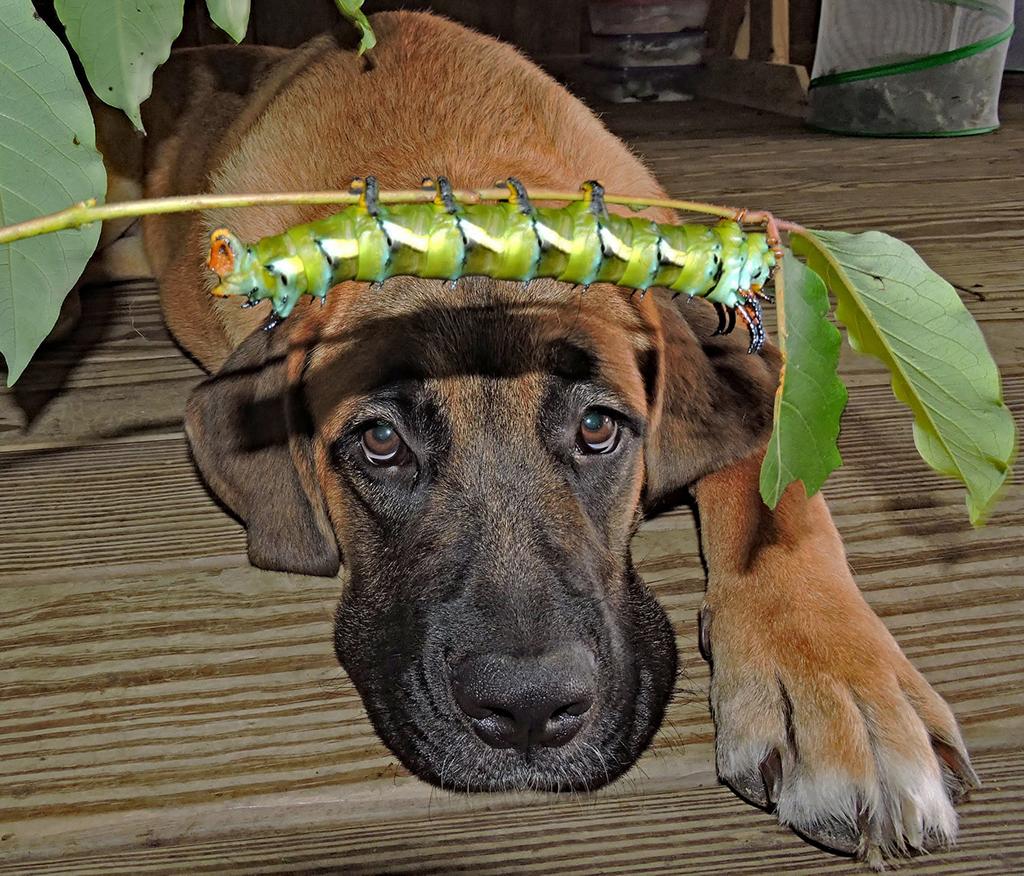
Twelve days after their attachment to a leaf, the eggs divulge their contents as tiny hickory horned devils chew their way out, their tiny set of horns inflating within minutes. Yet, at this stage, this is about all they have in common with the mature caterpillar. Two-toned brown in color, they spend their first days curled in a “U” shape on top of the leaf, imitating a bird dropping. As caterpillars grow, their skin doesn’t grow with them, so they must take it off. Each period between sheds is known as an instar. Hickory horned devils shed their skin a total of five times, completely changing their appearance during each instar as their size increases. They are eating machines, spending all day and night consuming their food plant until they look like they could burst, their mammoth size reaching up to 7 inches in length! This period from egg to mature caterpillar can take up to a whopping 6 weeks.
Finally, when they can’t consume another bite, they begin a transformation. Eating ceases, and they sit very still on their branch. Their bright green color turns a brilliant turquoise blue as their bodies prepare for pupation. Without warning, they release their hold and tumble earthward — the quickest way to the forest floor. This is the very same free-fall that my friend had the rare opportunity to witness while on a hike years ago.
A caterpillar on the ground, no matter how large, is a prime target for predators. Once the hickory horned devil recovers from its fall, it wastes no time. As it moves along at incredible speed, it constantly checks the consistency of the soil until it finds a spot where it can easily dig.
Down it goes, 6 inches under and out of sight. It uses its muscles to form a space around it, creating a sturdy chamber. Here the next stage of metamorphosis occurs. After another 4 to 5 days, the caterpillar undergoes incredible changes, shrinking in size and shedding its skin one last time, revealing a shiny, brown pupae. This will be the lengthiest part of the insect’s life cycle, for it will remain underground this way for up to 11 months before emerging as an adult moth the following year. Depending upon environmental conditions, some pupae remain in their chambers for two years before emerging.
I have been rearing moths for most of my life. Throughout my childhood, I never once came across a royal walnut moth. In fact, I didn’t even know that they existed in northeast Ohio. Then one year, a friend in southern Ohio gave me some eggs. I spent the summer rearing the massive caterpillars, and when a female moth emerged the following summer, I set her out in a cage on my porch, just to see if she would attract any males. Imagine my surprise when several individuals showed up and one of them paired with her right through the wire mesh. Needless to say, I have been rearing this species ever since. Lots of them!
Despite its formidable appearance, the hickory horned devil is completely harmless, lacking any venom or stinging parts. Those amazing horns (which feel like plastic) are simply used to ward off predators. When threatened, the caterpillar thrashes its head back and forth in an effort to intimidate its attacker, and small birds should pay attention lest they lose an eye!
So how is it that such a giant insect can go undetected? Moths are nocturnal, becoming active only under the cover of darkness, but many are attracted to lights. Check porch lights or places such as gas stations or rest areas for these moths that have come to rest below the powerful beams during July and August. Sadly, the light pollution created by such illumination is one of the largest contributors to the decline of all moth species, drawing them in and keeping males from seeking out mates and females from laying eggs. Moths (and all insect species) are declining worldwide due to light pollution, air pollution, pesticides, loss of habitat, etc.
Having reared many species of moths year after year, I have become brutally aware of these declines right in my own backyard; declines that lead me to experience sleepless nights. Yet I am thankful that the hickory horned devils continue to persist, at least for now, as the gentle giants of our deciduous forests.





Wow just about sums it up.As large as a hot dog,too.
Thank you for the photos,and an enlightening article.
Great read! Thank you, Tami.We need to be more in touch with Nature. We all play parts in the story of LIFE.
We have got to teach the youngsters what a beautiful world we live in. Your story here helps!