




COLUMBUS — Ohio State University researchers, in partnership with the U.S. Department of Agriculture Natural Resources Conservation Service, are conducting a statewide effort to revisit and re-sample historic National Cooperative Soil Survey (NCSS) soil characterization sites across Ohio.
To support this project, the research team is asking farmers and landowners in northwestern Ohio to complete a short online survey indicating whether their property contains one of these legacy sampling points and specifying their willingness to be contacted by a member of the OSU team.
The NCSS sampling locations, originally sampled decades ago, provide an important baseline for understanding how Ohio’s soils have changed over time. Resampling these locations will help scientists track changes in dynamic soil properties and broader landscape trends that affect agriculture, conservation and land management.
“Many of these original sampling points fall on privately owned agricultural land,” said Scott Demyan, project lead and Ohio State associate professor of soil and environmental mineralogy. “We’re hoping to reconnect with landowners and ask for their voluntary participation. Even allowing access to a single sampling point can significantly improve our understanding of long-term soil changes across the state, especially for on-farm management.”
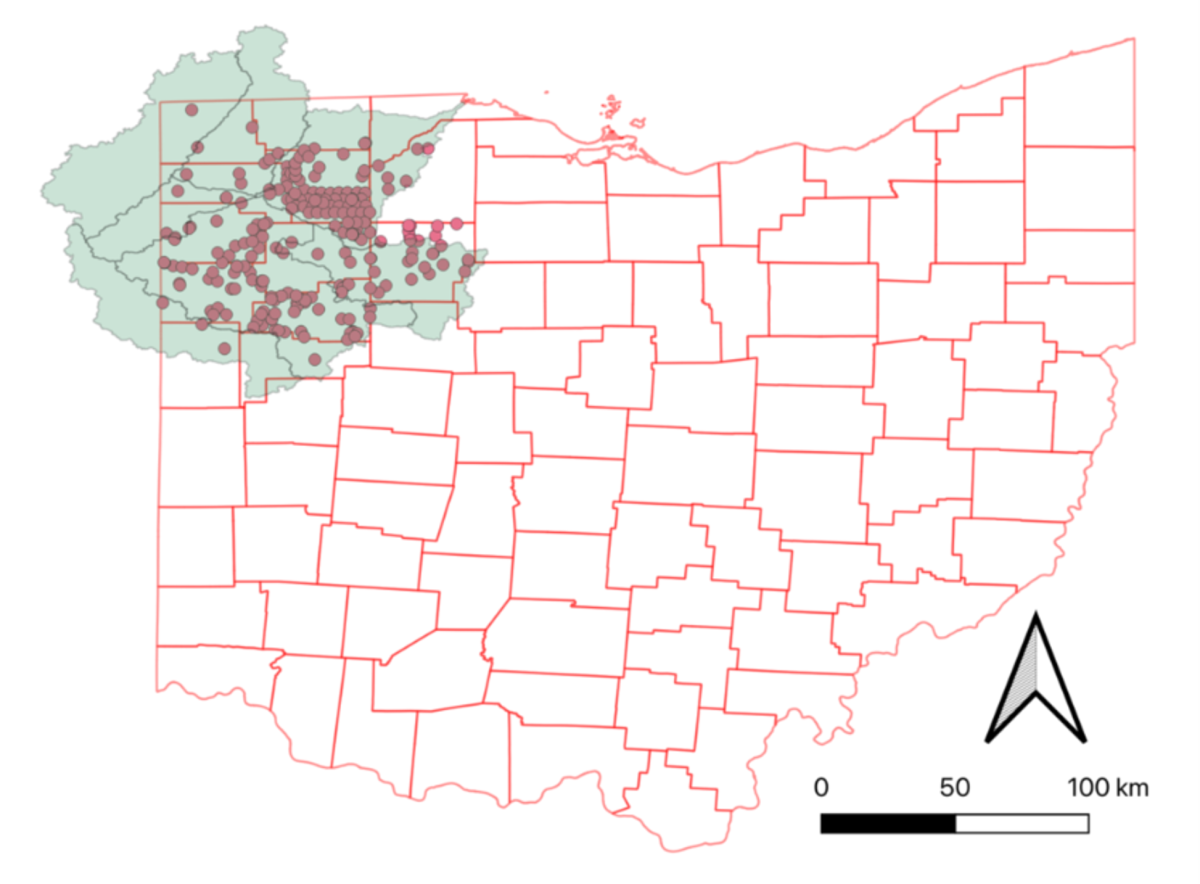
From the early 1950s through the 1980s, soil survey staff from the National Cooperative Soil Survey sampled and described more than 200 soils (Figure 1). This included sampling campaigns within Allen, Auglaize, Defiance, Fulton, Hancock, Henry, Mercer, Paulding, Putnam, Van Wert, Williams and Wood counties.
Sixty-three distinct soil series were sampled during the endeavor, the majority of which were sampled under agricultural land use. These soils were sampled again from 1996-1998 as part of the Lake Erie Agricultural Systems for Environmental Quality (LEASEQ) project.
By resampling these soils a third time, researchers hope to measure how soil organic carbon, soil fertility and soil health changes over approximately 70 years and how they are influenced by management decisions and other soil properties, e.g., soil texture.
Farmers and landowners who may have had NCSS sampling points on their property are encouraged to complete the survey, which contains a map of all possible sampling locations and gathers basic information which will help the research team determine eligibility and follow-up needs.
Participation does not commit anyone to allowing sampling. It simply indicates interest. For more information, visit senr.osu.edu/research/sentinel-sites-soil-change. To fill out the survey, visit osu.az1.qualtrics.com/jfe/form/SV_6X4OUBiKmSEhylM
For more information about the project, contact Demyan at Demyan.4@osu.edu or 614-688-3349.