



After a year of lugging water in buckets from a nearby creek, the residents of the barnhouse decided that with the coming of spring, it was time to get water to their humble residence in a more convenient fashion — with piping.
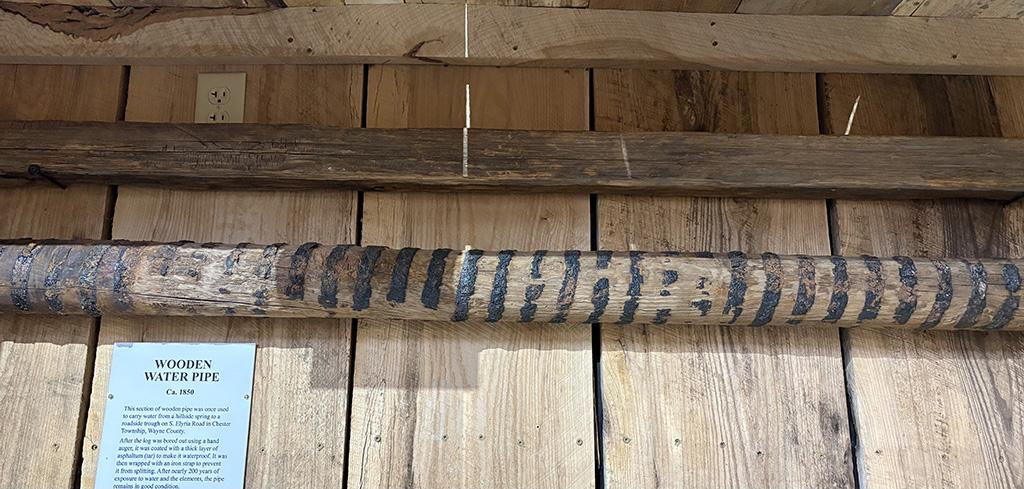
The transport of water from a nearby source to a residence could be facilitated by wooden pipes made from trees that grew on the surrounding land.
Creating wooden water pipes was a laborious proposition requiring specialized tools that most setters didn’t have ready access to. This was a job for a professional crew.
Such crews typically consisted of three members: the master driller and two laborers who performed most of the backbreaking labor involved in the endeavor.
The preferred wood for making water pipe was cypress or cedar, but since the Ohio Country didn’t abound with those species, timber that grew in the nearby woods had to do.
The first step in crafting pipe was to select good, straight lengths of timber, as free of knots as possible. The most common lengths of wooden pipe were 6, 8 and 12 feet.
The log to be bored had to be lifted onto sawbucks using block and tackle. Then small saplings were bent over the top and anchored to the ground to keep it from shifting during the boring process.
The initial pilot hole was made with a two-inch auger, the shaft of which was several feet in length. The handle was a multi-spoked circular arrangement — similar to that of a ship’s wheel — which required a great deal of effort to revolve. In addition, the bit had to be constantly withdrawn from the log to remove the accumulating wood chips.
Boring had to be done from both ends, so the trajectory had to be precise in order that the two channels met exactly in the middle. To facilitate this, the master driller used a wooden leveling gauge with numerous fine adjustments that supported the shaft of the auger.
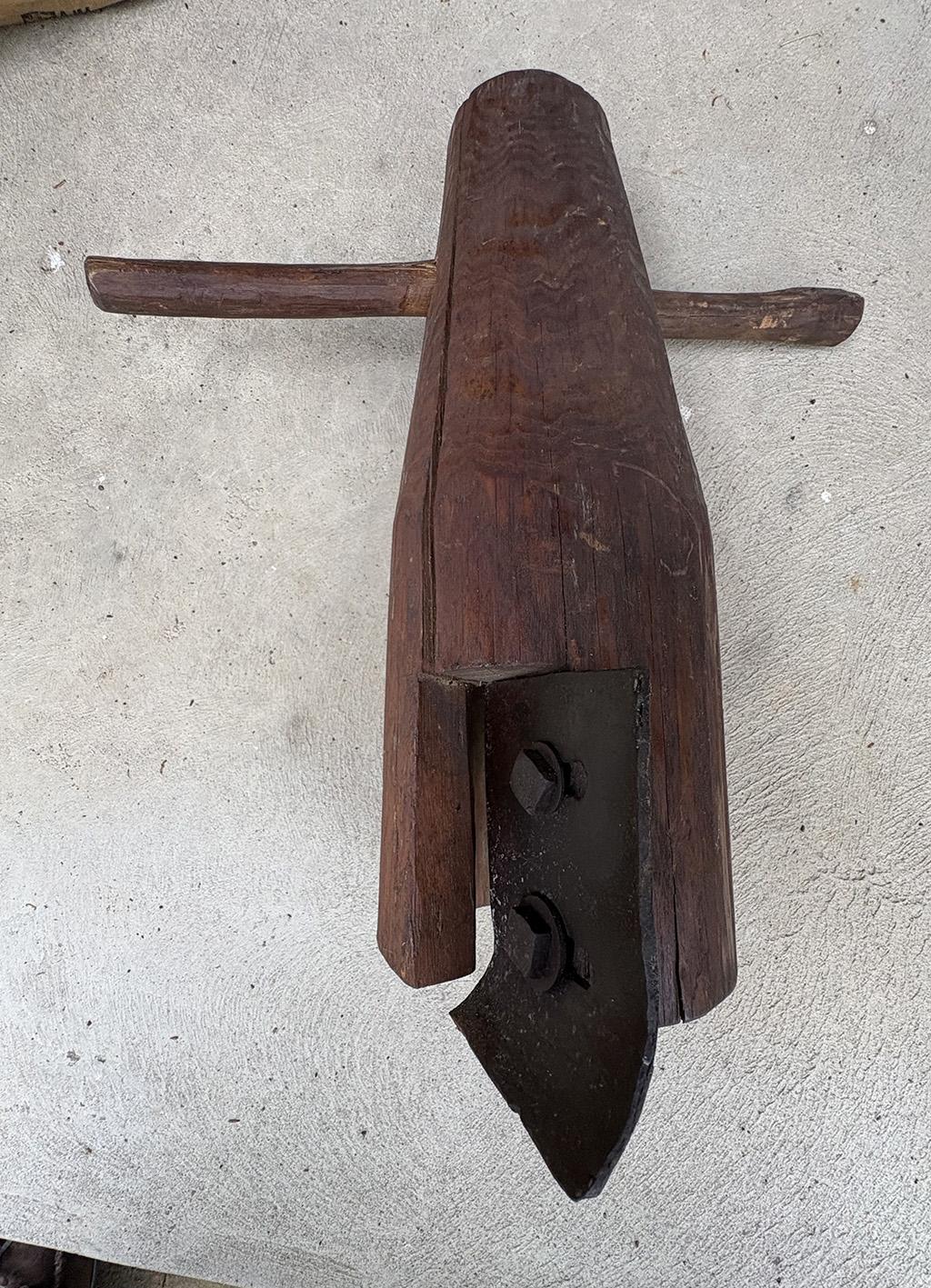
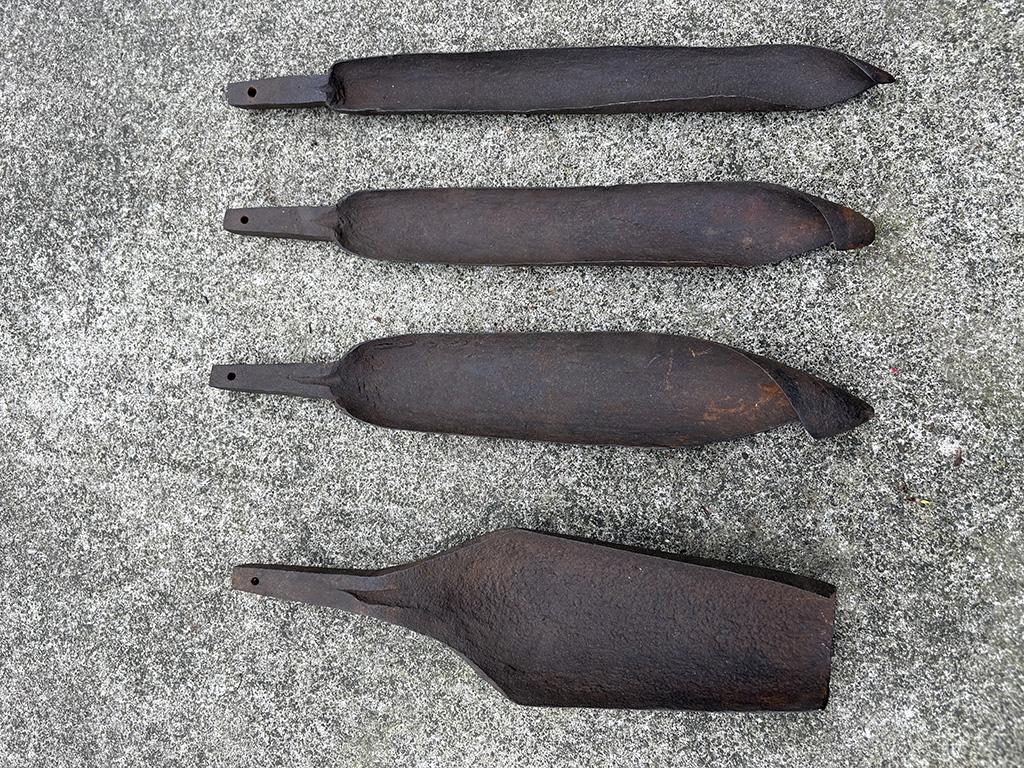
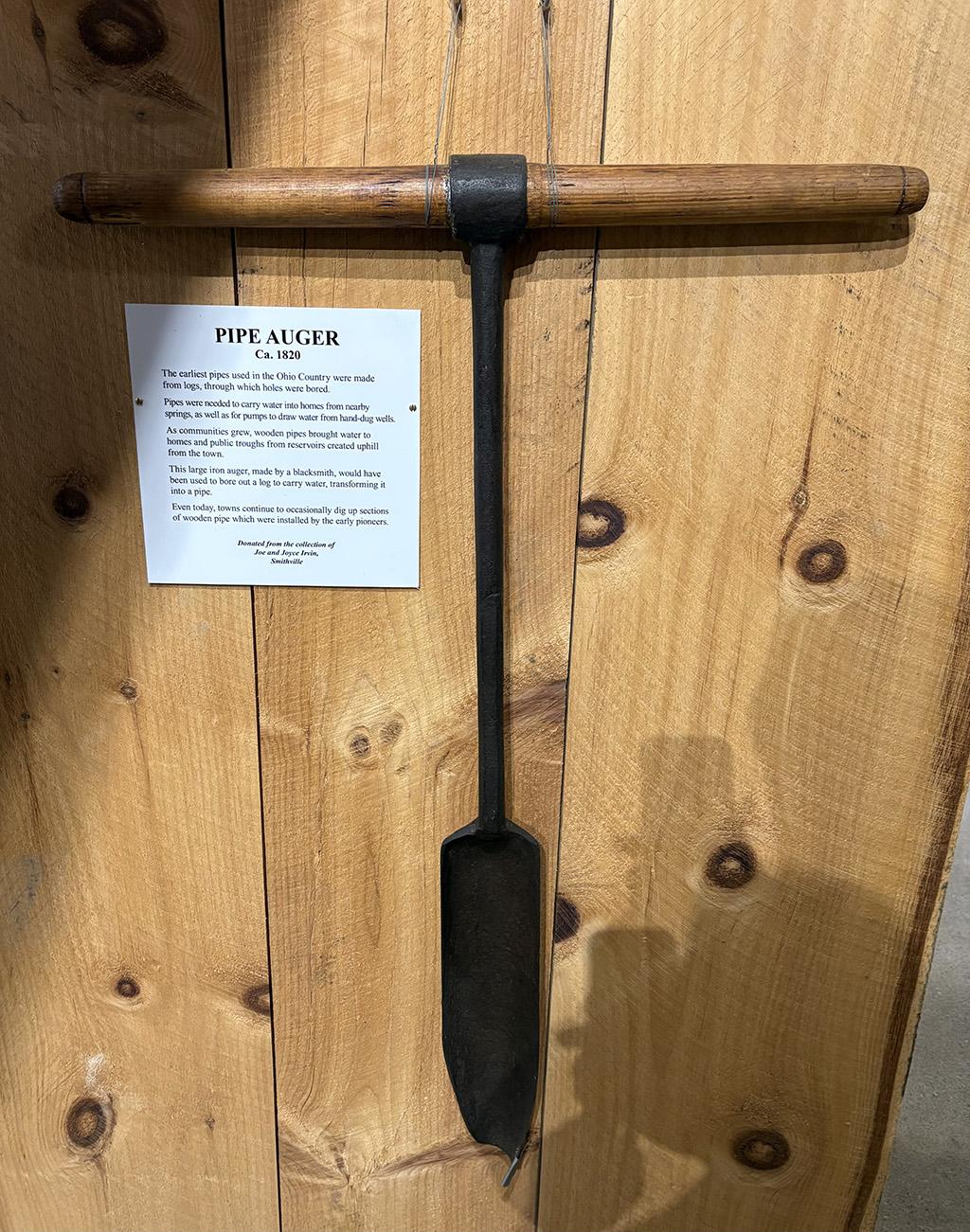
After the drill had created a hole that ran the length of the log, it was time to employ the reamers. The reamers were heavy blacksmith-forged iron bits made to expand the diameter of the newly created hole. Reaming out the water channel was much harder work than drilling the pilot hole, and the reamers had to be constantly withdrawn and emptied of shavings. Often, ropes had to be attached to the reamers to allow one worker to help pull the blade through the log while the second man pushed. Reamers were made in graduated sizes, with each making an ever-larger hole, so multiple passes were required.
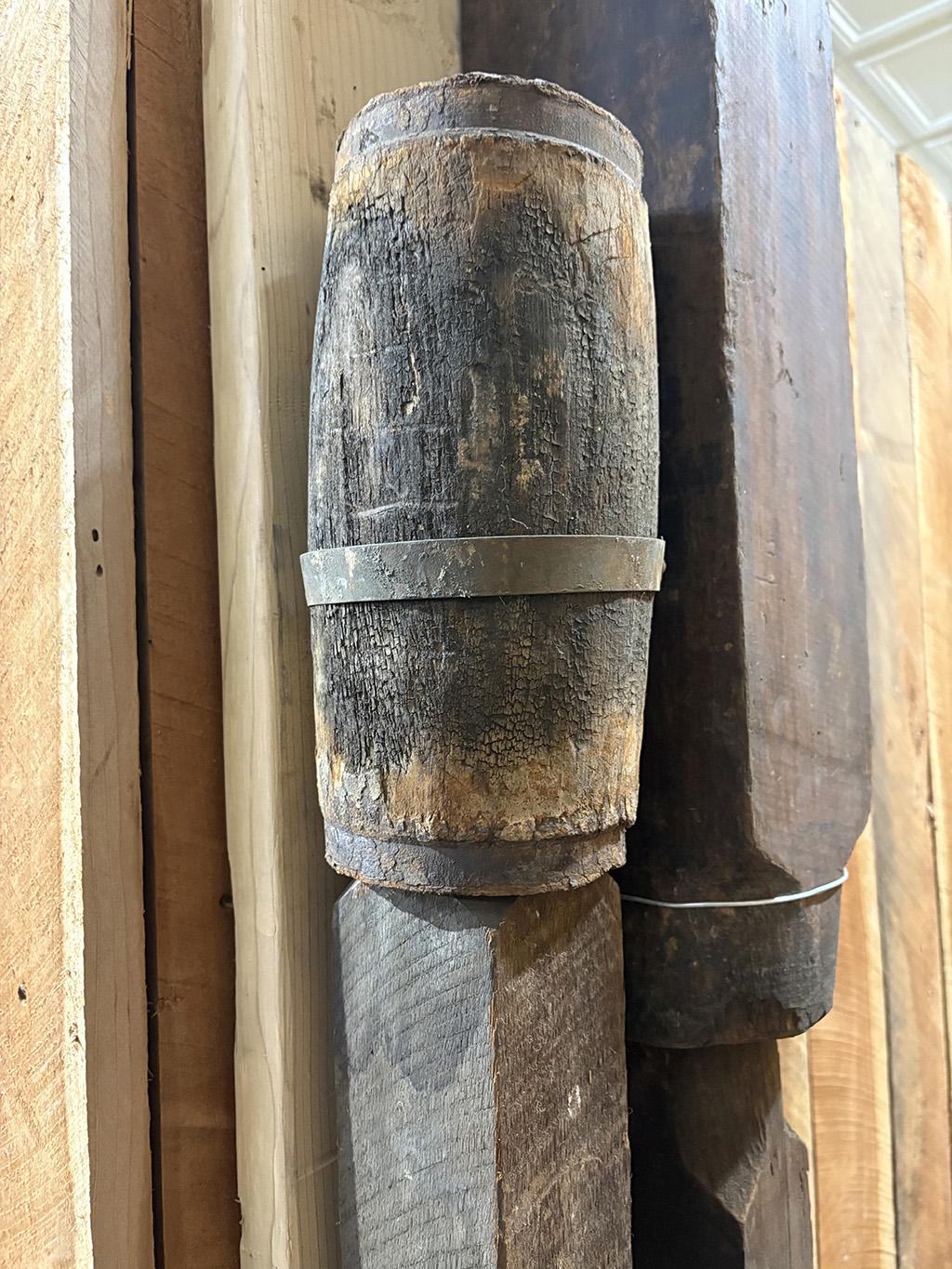
When several lengths of pipe had been bored, it was necessary to join them together to make a continuous run. This was done by tapering the ends of the pipes using a large tapering plane — think of a very large pencil sharpener. The tapered ends were then fitted into wooden collars to create a permanent joint. These collars were bound with wrought iron straps so they would not split when swelled by the water.
As a final step, the wooden water pipes were tightly wrapped the entire length with metal banding so that they would not split, then given a heavy coat of pitch or tar to prevent groundwater from penetrating and rotting them.
Such pipes usually flowed water from springs, dammed reservoirs or other sources located uphill from those they served and worked only by gravity. They could not withstand the force of a pressurized system.
Stocks for water pumps were bored in the same manner, although these were decoratively turned on a lathe or shaved down to make them lighter and more attractive.
Even today it is not uncommon, when towns are making street or sewer repairs, for crews to come across lengths of abandoned wooden water pipe, remarkably still in good condition after hundreds of years. Often preserved in local historical societies, these once mundane pieces of common infrastructure stand as testament to the craftsmanship and ingenuity of the pioneers.
As for those residents of the early barnhouse, well they were beyond thrilled to have water flowing from a nearby spring right to their doorstep rather than having to lug it a substantial distance.