



NAPOLEON, Ohio — “Pigweed is pretty hard to control with chemicals, but my ability to control it is second to none,” said Jim Jacobs, a soybean producer in Henry County, Ohio.
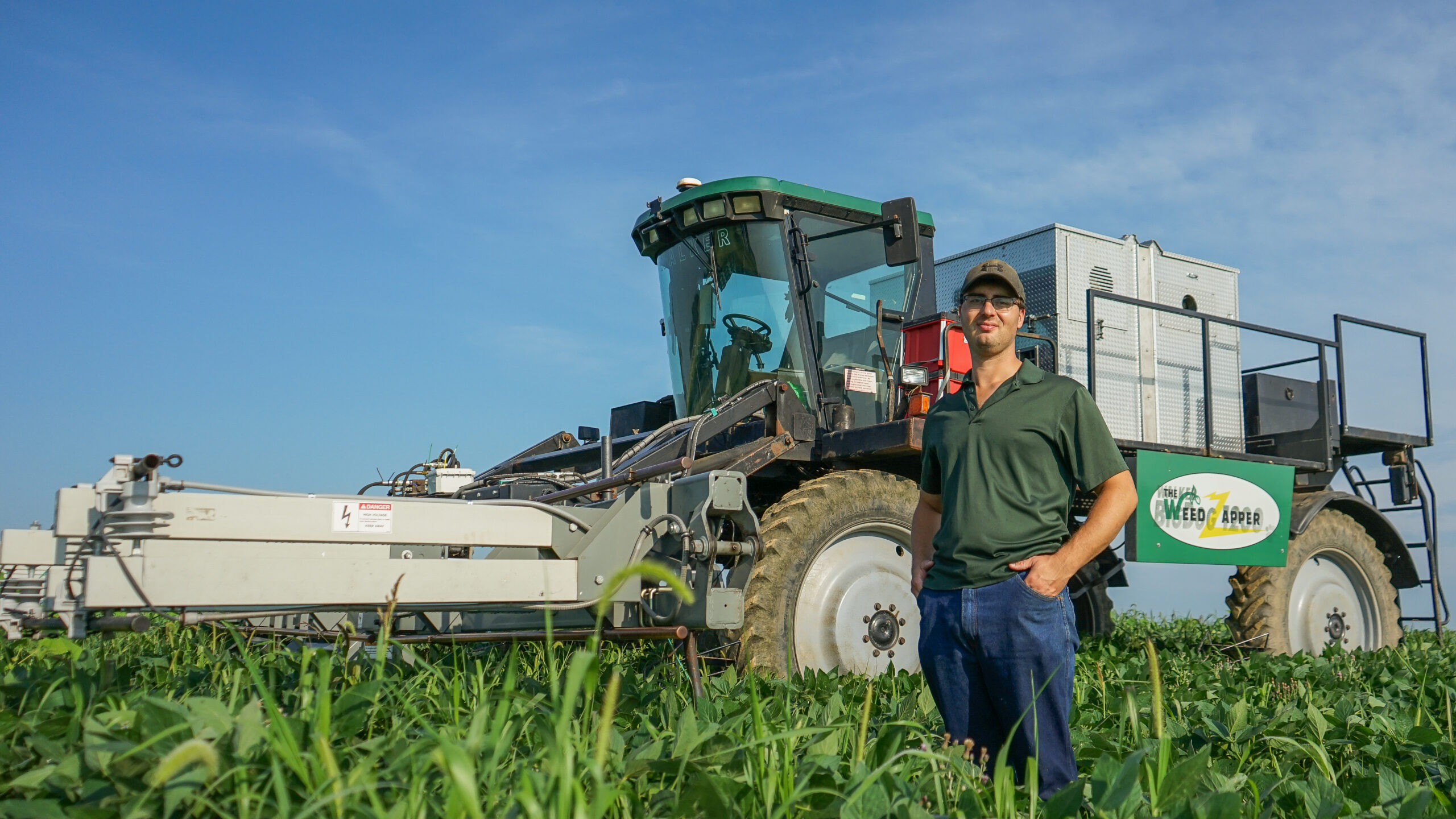
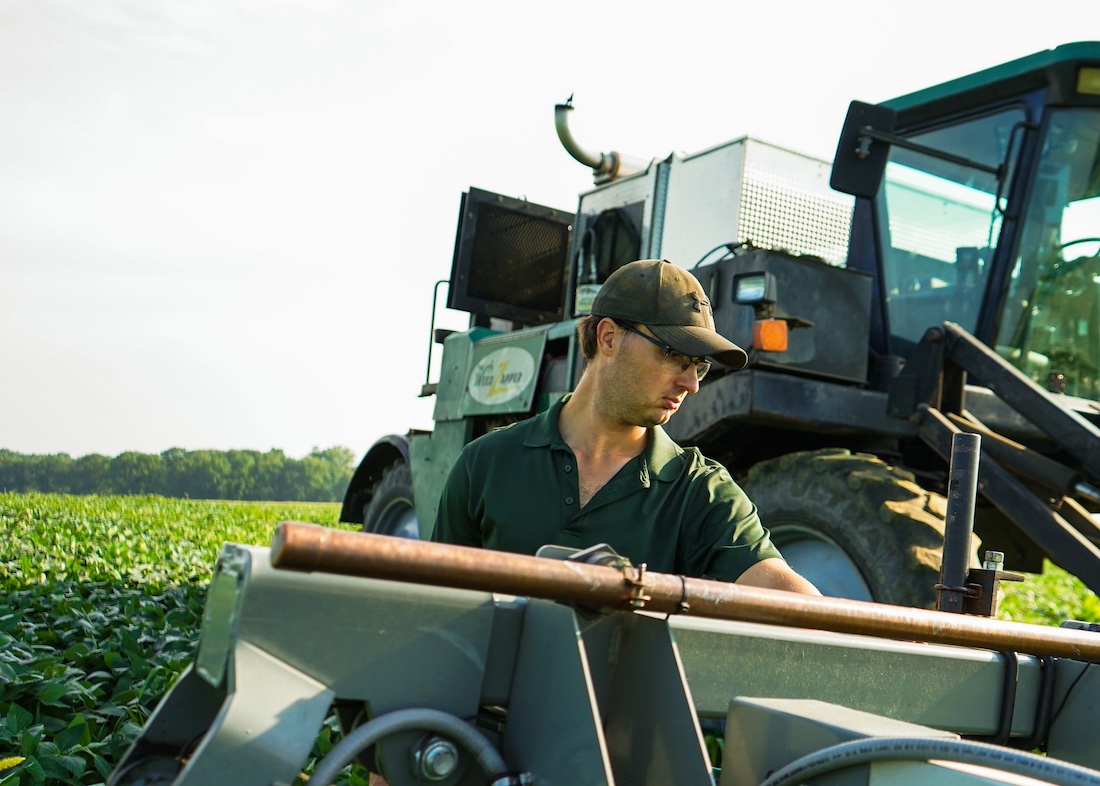
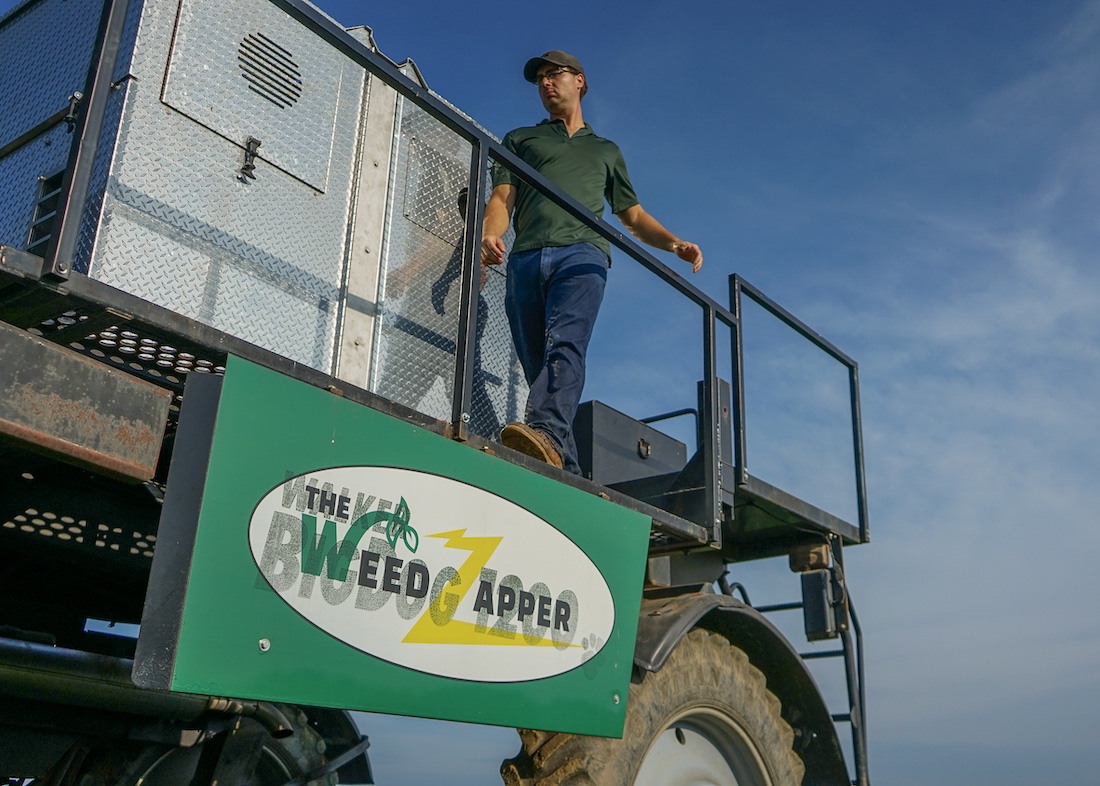
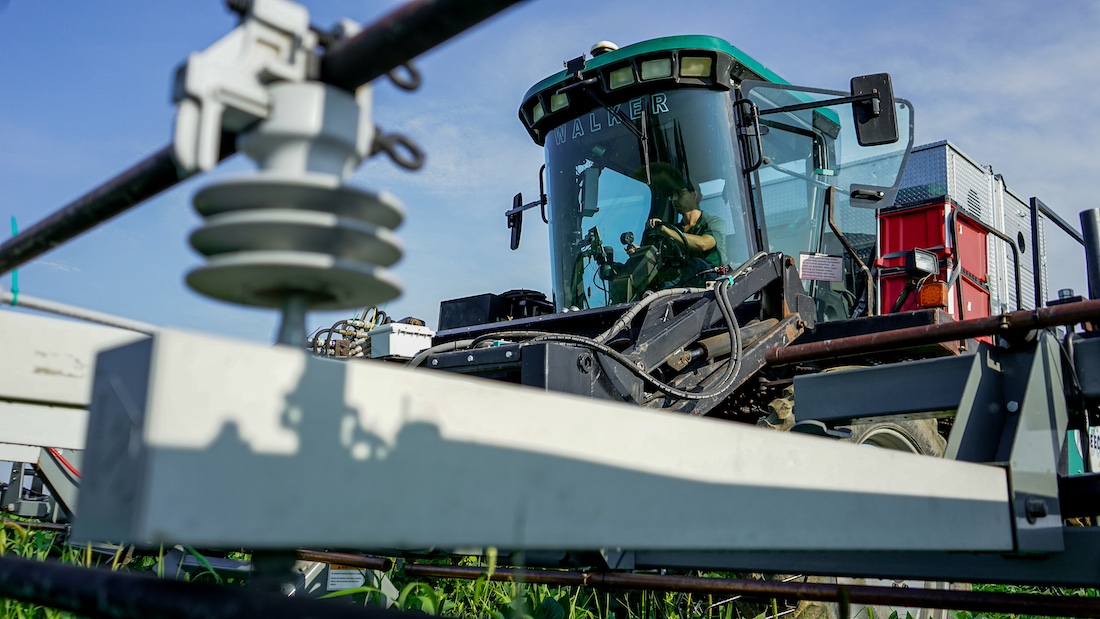
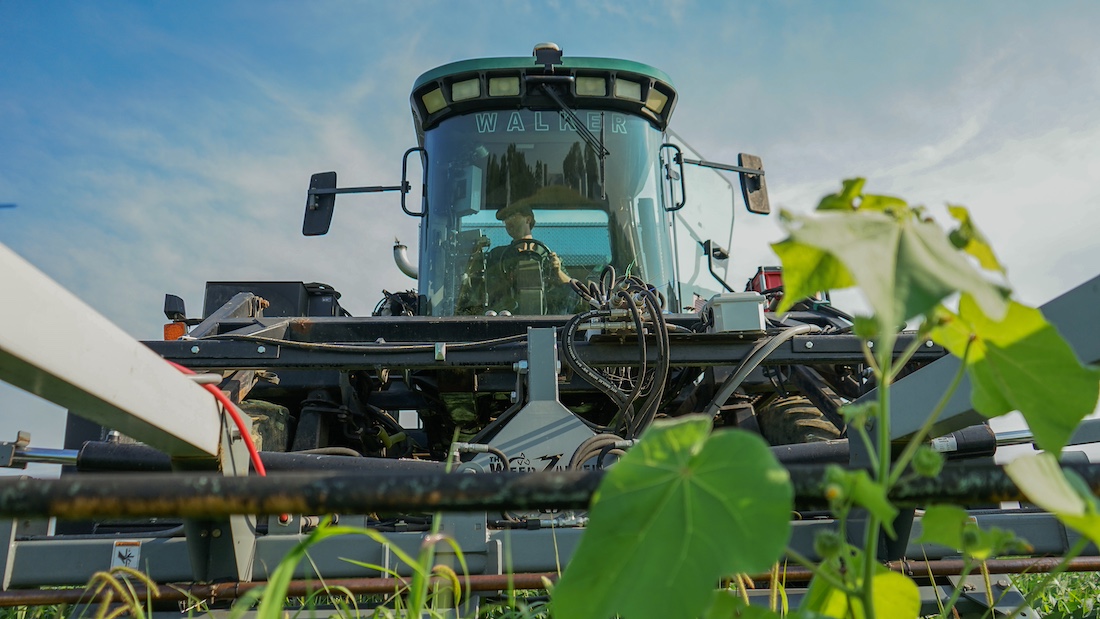
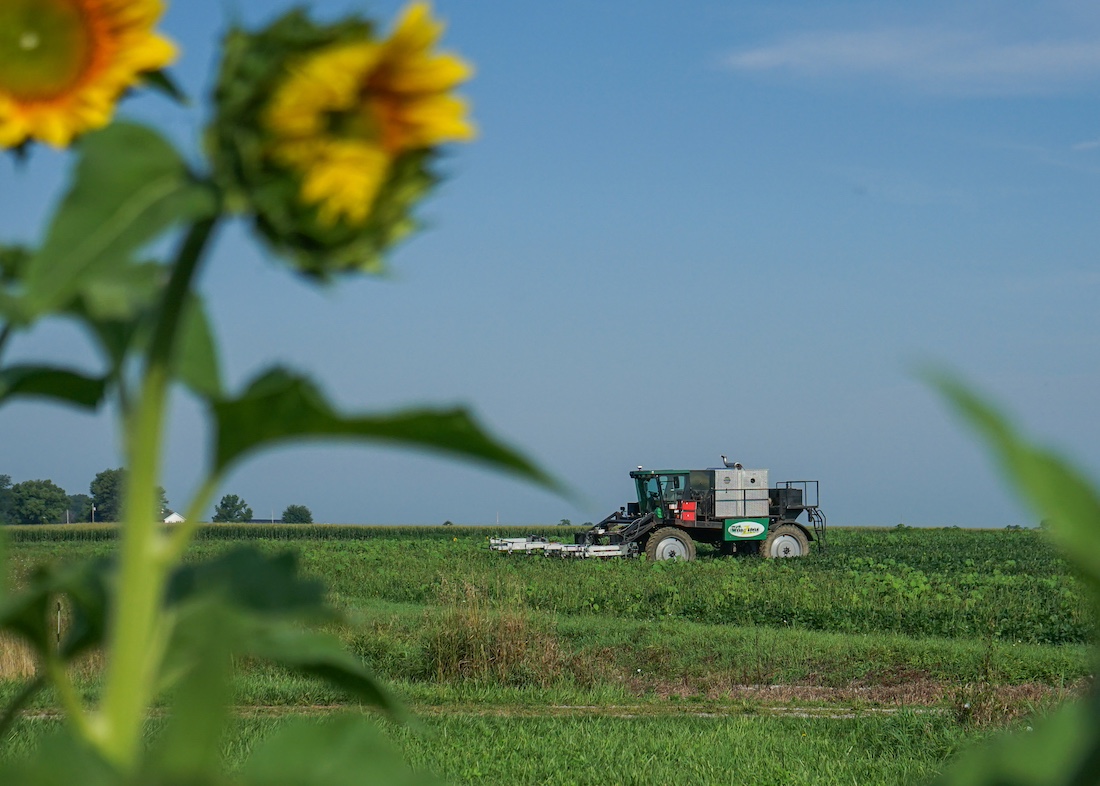
The 40-foot spray boom on Thistledown Farms’ looks similar to others in the area. The machine runs when the dew is off in the morning and before it gets dark. At three miles per hour, it covers 12 acres of weed control an hour. Driving this equipment is like playing a video game that you are not good at yet, if you are used to simple farm machines, Jacobs explained. A toggle switch constantly adjusts the height of the bar while maintaining speed.
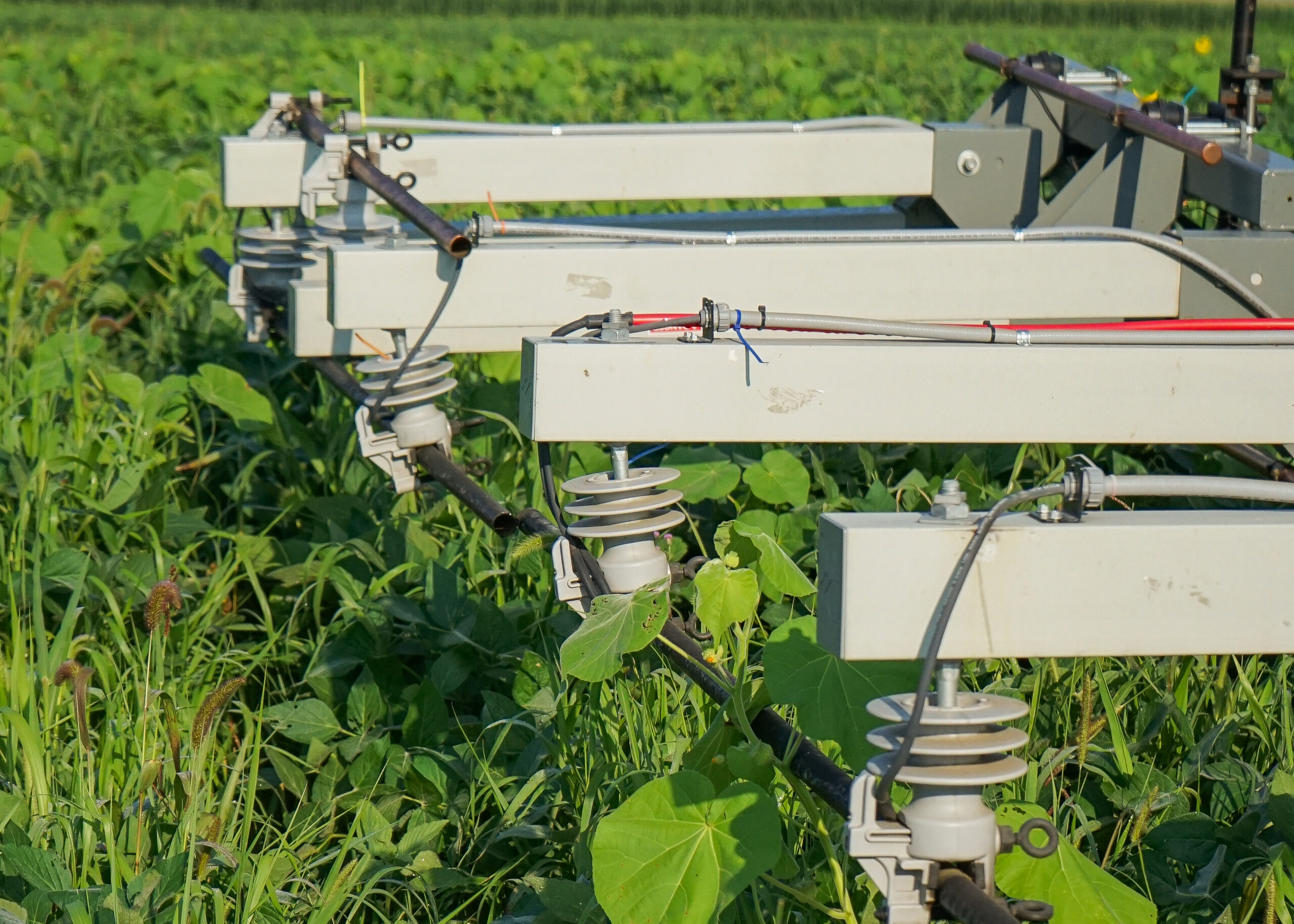
“Annihilated,” “knocked down” and “zapped” are just a few of the words Jacobs uses to describe his weed control system. Instead of being loaded with gallons of herbicide, this wide boom carries a bar charged with 25,000 volts of electricity.
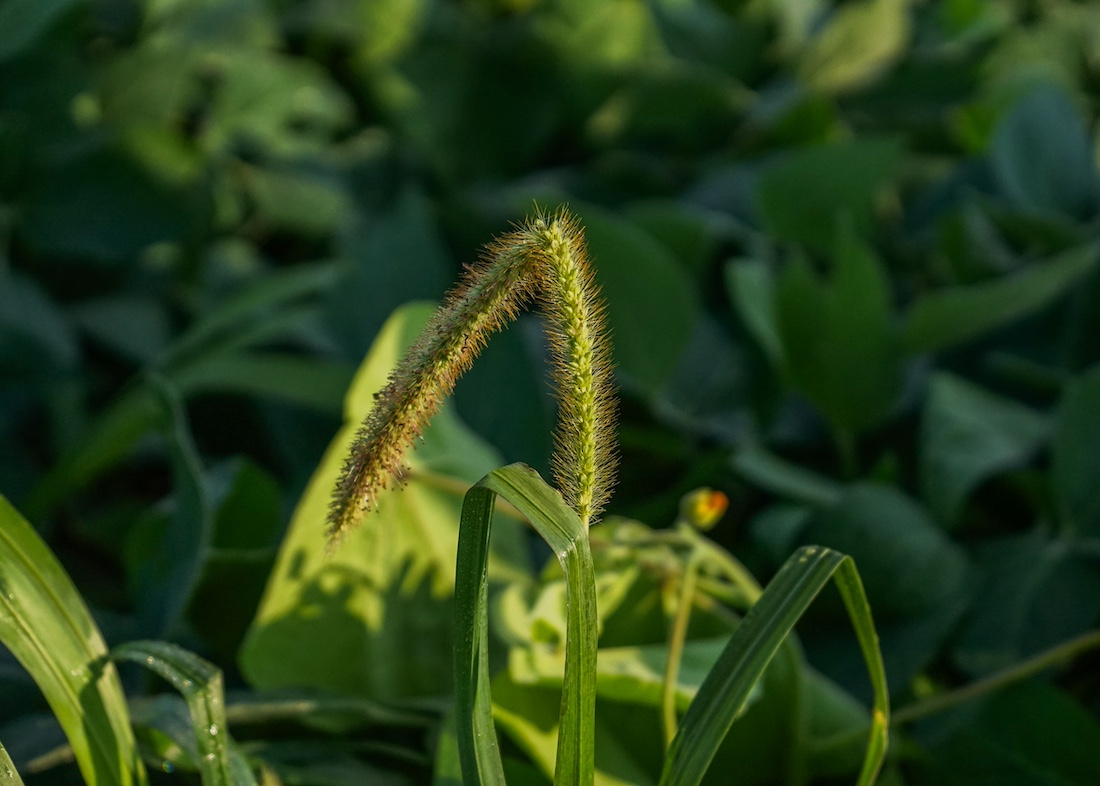
One of Thistledown Farms’ many weed control tools is their sprayer chassis-mounted weed electrocution system. Effective on weeds like ragweed, velvetleaf, waterhemp and foxtail, it requires weeds to grow above their soybean canopy before the zapper can make contact. The late-season weed management uses a positively charged bar that strikes weeds with high moisture content, causing them to disintegrate within a week.
Long before they annihilated leafy intruders, they farmed conventionally on longtime family land, starting in 2006. Jim’s father, John, drove trucks during the day and farmed in the evening. Jim worked alongside his father, taking on many farm responsibilities during high school and college. “When conventionally farming on 300 acres, you can still drive trucks and or have a day job and balance it right,” Jim said.
But after years of watching his father haul organic feed ingredients in a hopper trailer across the country and hearing stories of organic growers, the father-son pair decided it was their turn to grow an organic crop. With a certification in hand, they harvested organic soft red winter wheat in 2018. They have not looked back 350 acres later, now producing organic corn, soybeans, wheat and sunflowers.
Knocking down weeds
It is not the biggest farm in the area, but they are not alone in organic cultivation. Three other farms in Henry County and many more in nearby Fulton County also grow crops organically.
Jacobs said there is no sense of competition among them. “Organic grain moves much farther than conventional grain. My conventional neighbors take their crops to the elevator four miles away. My sunflowers go to Green Bay, Wisconsin.”
Statewide, 726 organic cropland producers farm 84,502 certified acres, ranking sixth in the nation in organic soybean acreage, according to the last United States Department of Agriculture’s Organic Survey conducted in 2021.
Organic production requires crop rotation, natural fertility practices and USDA certification. It prohibits most synthetic fertilizers, biosolids and chemical weed suppression. Instead, mechanisms like weed electrification are part of their organic weed control toolbox.
When Thistledown Farms first began organic production, Jacobs relied on custom operators to handle weed zapping. “Tractors would be coming from 200 miles away. By the time they got here, the weeds were further along than I wanted,” he recalled. After two seasons, it made more sense to buy an old sprayer unit in Iowa and retrofit it with technology from Old School Manufacturing, the distributor of the Weed Zapper.
Based in Sedalia, Missouri, Old School Manufacturing counted Thistledown Farms among its first customers in 2020. Their self-contained model, now called the Terminator Series, packs twin engines delivering up to 750 horsepower. Instead of requiring a massive tractor, the unit is often built on a used sprayer chassis. A 400-horsepower engine powers a belt-driven generator that feeds a direct-drive system.
“It wasn’t easy to manage at first,” Jacobs admitted. “It took about three years before we really started working the kinks out, with help from a diesel shop here in northwest Ohio.”
Today, the company reports more than 800 Weed Zappers sold worldwide to organic growers. For Jacobs, the design offered flexibility: He could source an older sprayer chassis instead of buying a 400-horsepower tractor he did not own at the time. The company also offers the Annihilator Series, an attachment model. In that design, an engine cart is towed behind a tractor, while the boom mounts in front.
The goal, Jacobs said, “is for weeds not to exist, of course.” But when other methods fail due to weather or timing, the zapper comes into play. Early blind cultivation, or row tilling after planting, among other cultivation methods, comes first before electrocution (what he calls, “Option E”) is used. Ohio State University says ecological weed management methods include tillage, flaming, minimizing ground without plant cover, increasing seeding rate, decreasing row spacing and reducing the weed seedbank.
For electrification to be effective in soybeans, weeds must grow above the canopy. Zapping begins when soybeans are as small as 12 inches, and as tall as 24-30 inches. The front bar runs above the soybeans to hit weeds, while the rear bar runs lower, charged negatively to avoid harming the crop. It is effective on in-row, between-row and late-season weed pressure.
Once zapped, “it takes maybe a week or two before the plant completely dries down and disintegrates. But it happens quickly — those soybeans have sunlight again.”
Electrification plays with science and weather conditions. Less rain means fewer weeds, but also less moisture to carry the electric current, he explained. When plants hold less moisture during drought periods, electrocution becomes less effective.
Farming differently in a chemical world
“There is a kind of quietness you hear at the coffee shop among conventional farmers,” Jacobs said. Competition often revolves around acreage, planting dates or yields. “(For) us organic guys … there is a lot of empathy and camaraderie.”
That may be due to the 36-month transition process required before grain can be marketed as organic, a challenge that builds community. Or it may be the confidence that organic grain markets historically pay 1.8 to 2.2 times more than the conventional price, according to Jacobs’ experience.
Purdue University tracks similar values. Organic feed-grade soybeans received on average 2.08 times the price of conventional soybeans and food-grade soybean received 2.34 times more than conventionally grown.
When he began, it was not easy to find information about the mounted sprayer. There was a big pocket of organic growers in the Plain City and Marysville, Ohio area, which often served as inspiration. He remembers replaying the same video to see how someone fixed something.
Today, he serves as the farmer voice for organic weed control methods in statewide webinars and at field days, hosted at his own farm this past summer. Jacobs also finds community among his fellow farmers and organic certifiers’ organizations like the Ohio Ecological Food and Farming Association.
Four custom applicators now operate within 50 miles of his farm, including himself. His advice to new growers: “Don’t feel like you need to buy one in year one.” Initial costs for a Weed Zapper chassis can reach $90,000.
“My bill is larger than the economic return of other farmers,” he admits. Producing more zappers will not single-handedly move the entire country to organic farming, he said. But these are methods of farming he supports, end markets he serves and a way of life that works for his ideals.





This article was a delight to read and ponder over.Organic farmer,Jim Jacobs,
in thinking “outside the box”.
His dedication to organic farming shows
there are alternatives
to conventional methods of weed control and elimination.
I liked how he mentioned the working together concept organic farmers have,
versus the competitive nature of traditional farmers. www
I could relate to watching a YouTube video over and over to gain
the finer points of farming,or gardening,in my instance.
Though the startup cost of organic farming can turn some away,
may this encouraging article be an inspiration for all farmers.
Thank you for such an encouraging article,
well written,with plenty of photos.