

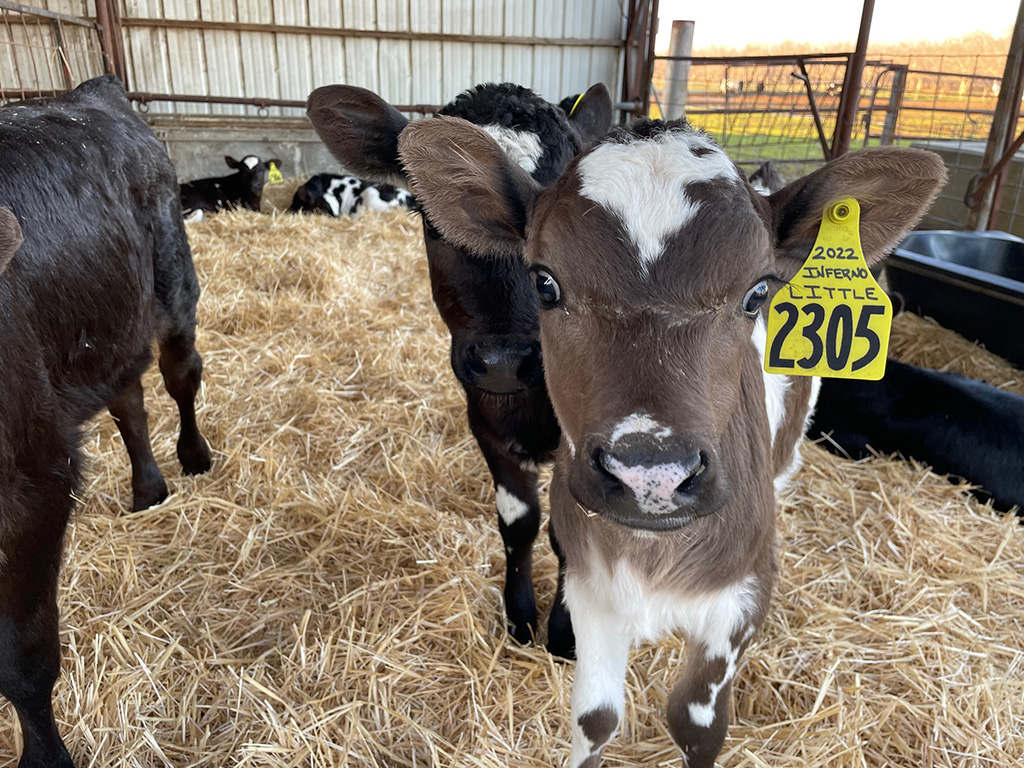
This week, we sell calves, and I don’t think it will ever stop feeling strange that a whole year of labor comes down to one day.
Stranger yet, that one day depends on the whims of everything from politics to global markets to weather, and there’s no way to predict what will happen until it happens.
I’ve compared ranching to high-stakes gambling before, but honestly, I don’t know any gamblers who put in as much work to place a bet as a rancher does to take his or her calves to the sale barn, so the analogy isn’t all that great.
For most of my childhood, my father worked in sales; money was a constant worry, and hustle was a big part of the job.
Even when it was going well, we all knew that things could change quickly. That prepared me better than you might think for a life in the arts. Anxiety is a permanent companion when you operate without the safety net of a salaried position.
Little did I know that ranching would include all the same worries and challenges, except, unbelievably, you have even less control. I get to negotiate my performance fees or my freelancing gigs with potential clients, but when the calves march through the sale ring, other than setting a lower limit, we have absolutely no say in determining how much they are worth. The bids are placed and then, boom, a whole year’s profit is recorded in a matter of seconds.
Perhaps that’s why the concept of money has always felt odd to me. My son seems to have inherited this trait. On a recent list of “dislikes” for a school project, he wrote: Mosquitoes, homework and inflation.
“Seriously, why does inflation even exist?” He will randomly ask from time to time.
“This will be one of the years everyone talks about,” my husband told the kids this weekend. “2025, the year there was so much rain and no wind, and the cattle prices were high.”
What he didn’t say, but we both know, is that they will talk about it because it won’t happen again anytime soon. Meteorologically and economically, this is the exception, not the rule. In other words, don’t get used to this, kids.
The gift of all this uncertainty, and one reason people stick with ranching — even though, honestly, it is a very hard way to earn not that much money — is that true wealth doesn’t have a price tag.
The things that hold real value are never things, but relationships, beautiful moments, the satisfaction of a job well done, the deep knowing that we love and are loved in return. At least, this is what most people profess, even though our economy is built on the exact opposite principles.
A musician friend of mine used to say, “I earn enough money touring to keep doing it, but not enough to stop.” I was thinking about all this in regard to the community garden and the sheep shed cafe, two undertakings that require a lot of time.
But, as they are explicitly “not-for-profit” endeavors, they don’t earn me a single dollar, because literally nothing in my life has made me feel wealthier than growing and preparing food to give away to the kids in our community. (Adults, too, but for some reason, especially the kids.)
It is my greatest hope that we will continue to earn enough money from other endeavors to allow me to keep devoting this much time to doing something for free. And that is an odd juxtaposition.
I don’t really have a satisfying conclusion for this column. I could borrow a cliche like “Do what you love and you’ll never work a day in your life,” but I am actually pointing toward something much harder to explain or pin down.
Money is one way to determine value, but it’s not the only or even best way. Humans invented money, economies and even the dreaded inflation — they are not natural laws. That means we could change them if we collectively decided to do so.
And I wonder, what would it look like if we did?