


The walleye is undisputedly the most popular game fish in Ohio. It’s so important to resident and non-resident anglers, to the professionals running fishing charters on Lake Erie, to the economies of Toledo, Perrysburg, Maumee, Fremont, Port Clinton and to the entire north coast of the state that Ohio has named it the “state fish,” partnered beside other important state critters and plants.
Let’s see, there’s the cardinal, which was the first to be adopted in 1933. That was followed by the state tree, which is, of course, the buckeye. The ladybug landed on the list in 1975 as the state insect, while the large-flowered trillium’s inclusion bloomed in 1986. In 1988, the whitetail out-grazed other mammal competitors for a spot, while the black racer snake slithered on in 1995 to represent the rest of its kind.
Another tree landed on the list of state symbols in 2009. It wasn’t for its leaves or wood, but for its fruit. That one’s the pawpaw. The bullfrog jumped on soon after as the state’s top frog in 2010, but it didn’t make the spot for the most famous amphibian. That spotlight fell onto the spotted salamander — also in 2010.
Then there are also a couple of dead animals on the list, in the form of fossils. These are the posthumously inducted invertebrate fossil Isotelus in 1985, and the state fossil fish Dunkleosteus terrelli, which carries the nickname “The Dunk” in 2019.
That brings us to the famous, angler-loved, economy-boosting yellow walleye, pickerel, yellow pickerel, pikeperch, doré, walleyed pike, yellow pike and Jack salmon. To paraphrase our old friend Bill Shakespeare, “A walleye by any other name would taste as sweet.”
So, the well-deserved place for Ohio’s state fish landed upon the popular wa-wa-wa-wait a minute! What do you mean that the legislature elected the deceased Dunk for the list, and no living fish has been appointed? Sounds sort of like Chicago politics to me; no offense meant to the Windy City.
Oh well, I’m sure they’re working on other important stuff. Maybe a few more of those reps should attend the governor’s Lake Erie Fish Ohio Day to get a feel for the value of the walleye fishery. I suppose it will eventually happen, though I’ve never heard a single walleye complain about the slight.
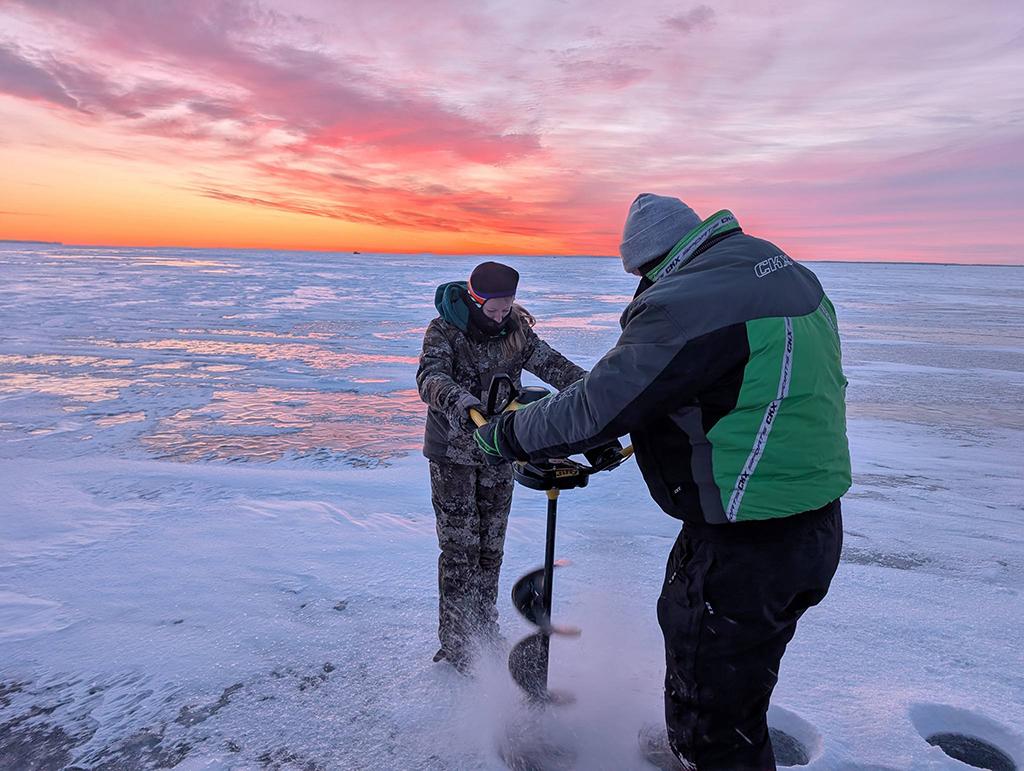
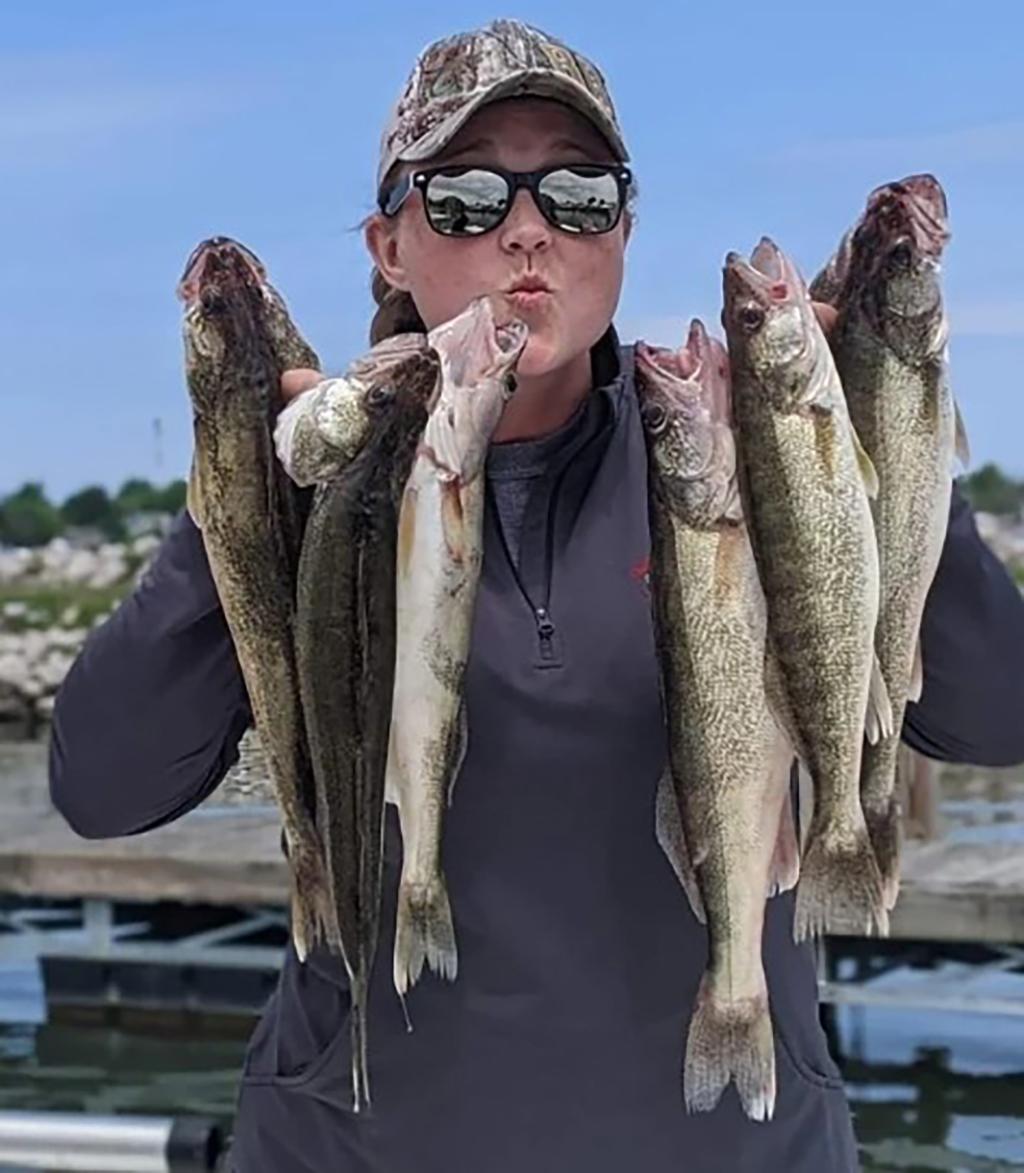
Regardless of its stature on any list, walleye haven’t ever been off the fisherman’s radar at all, especially over the last year. Avid anglers kept their boats working the big lake until nature brought us some real ice-making weather. For the first time in several years, solid ice had people poking holes and dangling baits for some winter walleye action and more than a few came home with a cooler full of fresh fish.
Walleye runs
Now, with moderating temperatures and spring peaking over the fence, it’s time to think about walleye runs! The runs occur because walleye are free spawners, which means that they don’t build a nest or guard the young. They deposit their eggs in the riffle areas of tributary streams, as well as over gravel or larger rocks on reef areas of Lake Erie.
Two of the most famous walleye runs in the Midwest happen in Ohio. They occur in the Maumee River in Lucas and Wood Counties and in the Sandusky River in Sandusky County and. Since the old Ballville dam removal, the fish may be extending their swim into northern Seneca County. The migration of thousands of fish up these two rivers begins in mid-March and can last into the first week of May, turning the cities of Perrysburg, Maumee and Fremont into important angler destination points.
Weather during these early and mid-spring days can be a hit-or-miss proposition, but if you’re a native Buckeye, you know that. The run has seen 70-degree fishing days in mid-March and snow covering the river’s banks in April. These changes can play havoc with some anglers’ will to fight the elements, but the fish, well, they’re already wet.
What to know
Walleye respond to changing water temperatures and levels. The trick is not to judge the fishing by the rain, snow or the chill in the air, but by keeping a close eye on the river’s temperature. Ideally, that should hit the mid 40-degree mark, but anything from 40 to 50 degrees serves both fish and fishermen well. The river’s level needs to come up high enough so that the fish can feel the flow (which translates into a “pull”) and, coupled with proper water temperature, the fish move in — a lot of fish.
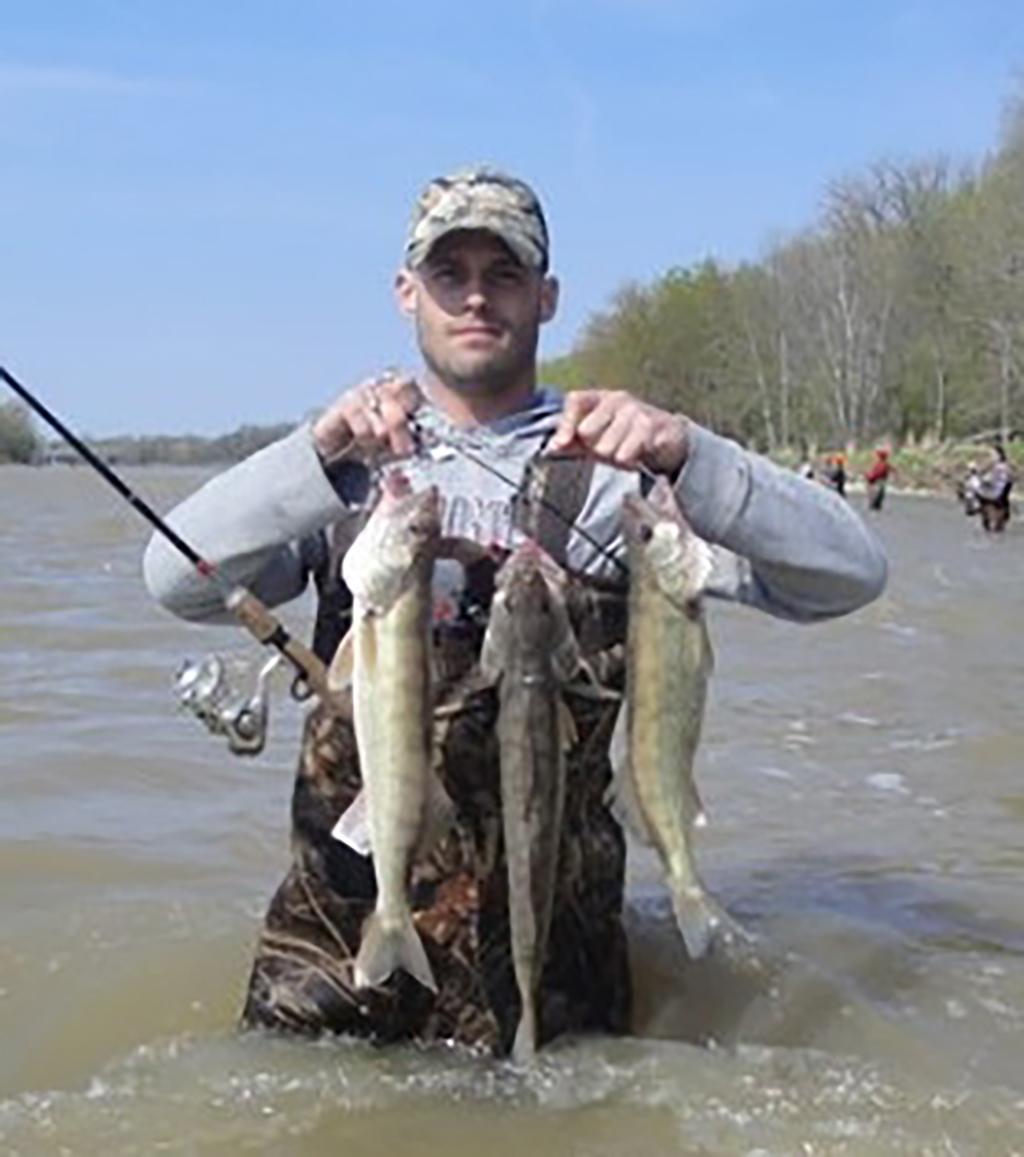
The most popular angling method on either river is by wading, using a good spin-fishing rod and reel. For years, the preferred lure was the lead-head jig. Research indicates it’s better to avoid using lead in aquatic environments due to its absorption into the ecosystem and for the possible ingestion by waterfowl. There are non-toxic substitutes available, and it’s encouraged you consider their use.
While those jig heads with their plastic twister tails have been productive, the most popular and the most effective of the fishing lures available has evolved to be the Carolina rig. It’s simply a floating jig head with a weight tied 18 to 24 inches in front of it. The weight takes the jig down to the bottom but allows it to trail freely above it. Plastic twister tails tip the jig with the favorite colors being fluorescent red, orange, yellow, and chartreuse. The weight used depends on the amount of flow. The general recommendation is to use a 3/8-ounce weight when the water is low and a 3/4 ounce when it’s high.
The Toledo and Wood County Metro Parks provide plenty of public access along the Maumee River. Fishing and parking are available at Buttonwood, Orleans and Side Cut Parks. Lacking a lot of rain, anglers will wade to Bluegrass Island. On the Sandusky River, concentrate angling around Fremont’s Miles-Newton Bridge. The removal of the Ballville Dam allows walleye to continue their migration upstream to their historic spawning areas. Anglers gaining access might find some new fishing hot spots.
Wading can be treacherous during high water, making even shallower walks tricky. Use a good wader belt and cinch it snugly. If you fall without the belt, water will fill your waders and make regaining your feet a serious struggle … and don’t wear those waders in a boat, regardless of how tempting. Another good wading option is a flotation device.
Regulations
If you decide to make a run to the run, you also need to be aware of some special regulations. First of all, you’re going to need a fishing license.
Your next cautions to consider are the following:
• Fishing is only permitted between sunrise and sunset.
• One single hook per line with a point to shank width not exceeding a half inch. Treble hooks are prohibited.
• Walleye daily limit is six and there’s a 15-inch minimum size limit.
Obeying the rules is important to preserving the resource for future generations. While there is a daily limit of six fish per day for each angler, rest assured that the ever-present wildlife officers wandering the area have no limits on tickets for those ignoring the laws.
It’s time to get your gear out, check your reels and lines and head out to the water. If you make it to one of the famous walleye runs, good for you! If not, there are plenty of other lakes, ponds and rivers waiting for your visit. Your fishing license is a real bargain, good for a full year from the day of purchase.
The walleye, the fish of all seasons, may not be the official state fish, but he sure acts like it!
“There’s a fine line between fishing and just standing on the shore like an idiot.”
— Steven Wright