



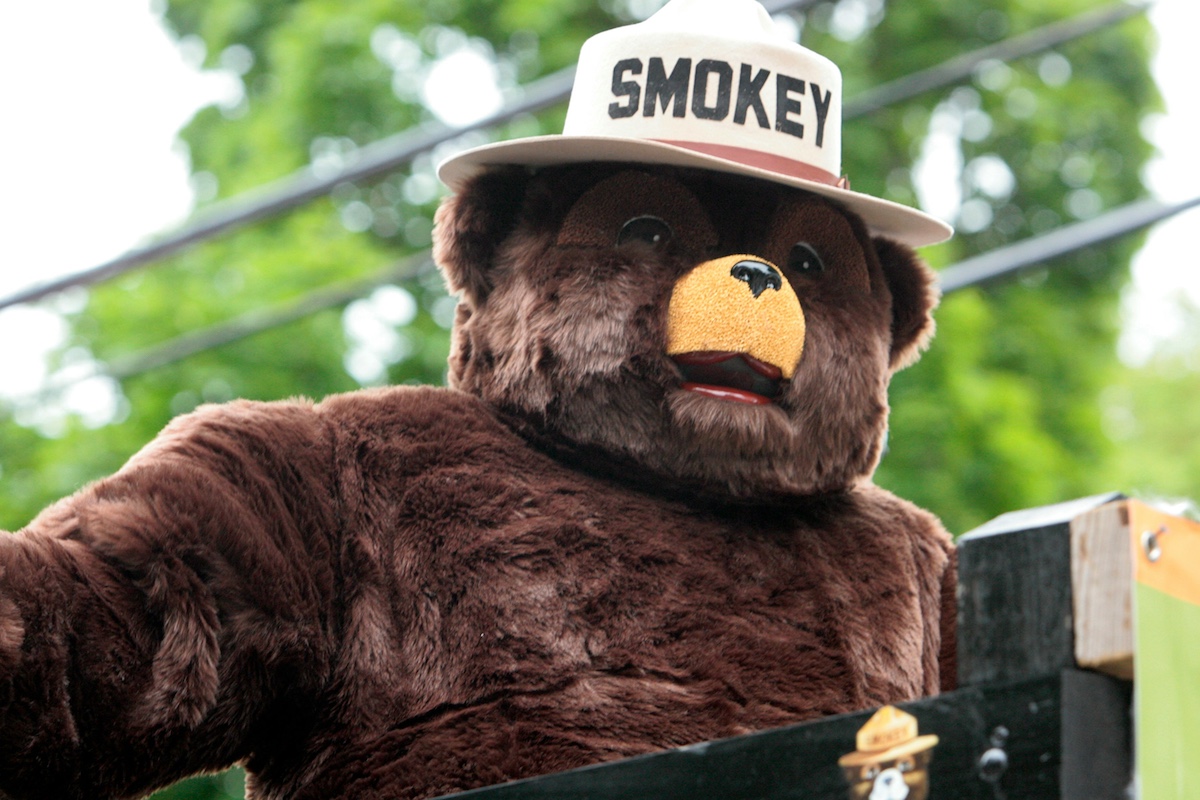
Some may be shocked to learn that I have a one-sided beef with a fictional character. Most are even more shocked to learn that, as a Forestry and Wildlife Technician, my one-sided conflict is with none other than the beloved Smokey Bear.
I know what you’re thinking: “Isn’t your job literally about forest health, wildlife, and all things nature? Why would you not like an entity that protects forests, animals and people?” It’s not that I don’t like Smokey Bear. I think he’s a great guy. But I do think he can afford to take a little time off. He has done his job well; some might argue a little too well.
“Only YOU can prevent forest fires” has a nice ring to it, if not a slightly intimidating one. And while it is true that most wildfires are caused by people, that slogan leaves out a much bigger part of the story. Sometimes, only YOU can prevent forest fires by causing forest fires.
Now, before anyone takes that statement out of context, I am NOT telling you to go into the woods, light a fire, and say, “Well, someone from Harrison Soil and Water told me to burn down these woods.” I would most definitely get fired, and I quite like my job.
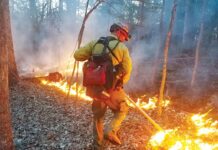
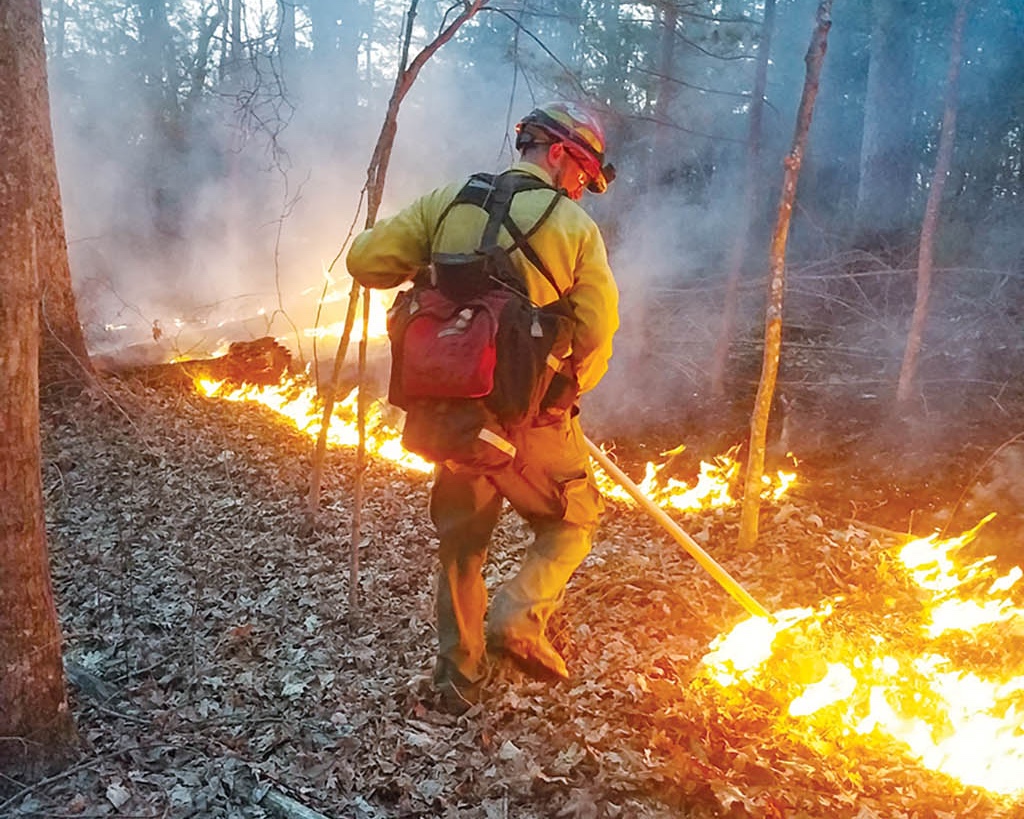
Prescribed fire
What I am talking about is prescribed fire. For thousands of years, fire has played an important role in shaping our landscapes. Native Americans used fire for a variety of purposes, including cultural burning, land management, improving habitat and hunting. Fire wasn’t simply something to be feared and eliminated; it was a natural and intentional tool to use for their benefit.
Here in Ohio, our historically oak- and hickory-dominated forests were shaped in part by these repetitive fire disturbances. Many of the species we associate with our mature forests are adapted to periodic fire and disturbance. So, what happens when a catchy slogan and a cuddly bear come together to create widespread fire suppression? Well… We’re starting to see the consequences.
When fire is removed from the landscape for long periods of time, organic matter and leaf litter can build up on the forest floor. Instead of occasional, lower-intensity fires, that accumulated material can become instant kindling for hotter and potentially more destructive wildfires. The effects of fire suppression go beyond wildfire risk. The ecology of our forest floors is also changing, particularly when it comes to what trees can regenerate.
Oaks and hickories may dominate the canopy, but look underneath. Their seedlings and saplings can be surprisingly difficult to find. Why? One major factor is light. Mature forests can develop a thick canopy that limits the amount of sunlight reaching the forest floor. Oaks and hickories are relatively intolerant to shade compared with species such as red maple and American beech.
This combination of low light due to canopy cover and maple and beeches tolerance to shade allows them to dominate the understory, further shading out our oaks and hickories. Over time, this can mean that the forest we have today probably won’t be the forest we have in the future. If we don’t manage for oak and hickory regeneration now, we could eventually see forests with far fewer of these vital species.
Why does that matter?
Oaks and hickories are imperative to forest health. They provide food for a huge variety of wildlife, from white-tailed deer and wild turkeys to squirrels, songbirds and countless other species. Their leaves, branches, cavities, bark and fallen wood also provide habitat throughout the forest ecosystem. They are important to us, too. Oaks are valuable timber species used for everything from flooring and furniture to barrels. And yes, that includes bourbon barrels.
So, long story short: If we lose our oaks, you can kiss your hunting and bourbon goodbye. OK, maybe that is a slight exaggeration. But you get the point.
This is where prescribed fire can become an important forest management tool. Unlike many of our shade-tolerant competitors, oak and hickory have adaptations that allow them to better withstand periodic low-intensity fire. Prescribed fire can reduce competing vegetation and accumulated leaves while creating conditions that give oak seedlings and saplings a better chance to survive and grow.
Burning with care
Prescribed fire isn’t the magic solution, though. Good forest management often requires a combination of tools. Following a forest management plan, creating appropriate canopy openings, controlling competing and invasive vegetation, and using prescribed fire where appropriate can all help create the conditions young oaks and hickories need.
The goal isn’t to burn every forest or eliminate every maple and beech. The goal is to maintain a healthy, diverse forest that contains a variety of tree species, age classes, and habitat types. The oak tree growing in your woods right now may have the potential to still be standing 90 years from now. But only if we give the next generation of oaks a chance to get there.
So maybe my beef with Smokey Bear isn’t really with Smokey after all. His message was incredibly successful at teaching generations of Americans to prevent unwanted wildfires. And that’s important. But perhaps it’s time to add another message to the conversation: Maybe fire isn’t always the enemy. When used carefully, intentionally, and under the right conditions, fire can be an incredibly valuable conservation tool.




