


It was a gloomy, gray day in May, 1897 when young Charlie and Harry reunited with their mother and three little brothers at Loudonville’s train depot. His mother, a widow at 38 with five young sons, was returning to her Ohio childhood home and farm from Pittsburgh.
Along with Laura and her three little boys, this train also carried the caskets of the oldest child, Addie, lifted from her grave in Pittsburgh’s Homewood Cemetery, and their father, William, removed from a vault.
Laura had no intention of ever again leaving her Ohio home, and could not bear for her beloved to remain in a cemetery so far away.
My great-grandpa Charlie recalled vividly this day, the bodies laid to rest in the tiny McKay cemetery. This was near Laura’s childhood farm, which her husband William had purchased when money was flowing. Charlie, who would turn 13 in July, was the oldest man in the household.
“I felt the weight of it,” he told my father. “I was no longer a kid.”
For the rest of his life, Charlie would visit the McKay cemetery. I recall being there with him and my father while they worked on resetting and securing the heavy monuments.
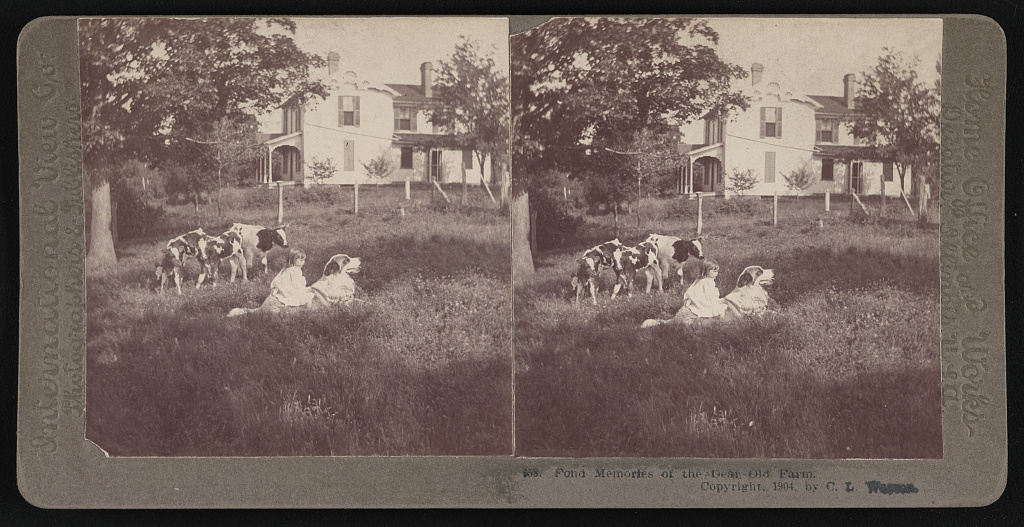
Laura and her sons moved into the lovely old Stouffer home where she had grown up. With no safety net, this tiny but strong woman was determined to find a way to provide for her five boys.
The struggle was nearly suffocating, since the boys had been carefree children never involved in farm work. Summers spent in the orchard cabin on this farm had been long days of fun, but did not prepare them for hitching large work horses to plow and plant.
There was no time to waste. It was May, and Laura, with great optimism, insisted Charlie could work the ground with the hand plow pulled by two large horses she purchased from her brother.
Charlie said his only experience with horses had been to be pulled around town by them as he sat in a cart like a prince. Suddenly, he had to learn how deep to set a plow, and then figure how to plant corn in straight rows with horses that counted on him knowing a thing or two.
That fall the boys attended McKay School. Frank was 6, Harry 11. Charlie did not attend school that year, and years later told his granddaughter he had suddenly ‘quit-u-ated’ out of necessity. His days were filled with hard work.
It only took one year for Laura to realize this was much more than she and Charlie could handle. Imagine her sadness as she sold her childhood home, which her husband had bought for her. With the money she made in selling the farm, Laura bought a 7-acre plot in Spring Valley, located on a hill west of McKay.
Laura, Charlie and Harry were able to work this smaller farm, focusing on a truck patch with plenty of produce to sell. They had a cow, chickens and livestock for meat, a pair of horses for heavy work and transportation. Things were looking up. Finally, there was laughter in their home again, and Charlie made sure it remained.
In the fall of 1898, Harry and Frank attended Spring Valley school. The two littlest boys, age 5 and 2, followed their mother and Charlie as they did their daily chores. “I loved those little tykes,” Charlie told my father. Charlie’s love of horses and children was born when he was still just a child himself.
Next week: A determined mother stares down death