I have been around dairy cows all of my life, growing up on a dairy farm in Kentucky where I was taken in an infant carrier to the barn during milking time. We moved when I was in the first grade to a new location, and the cows came with us.
We had a commercial herd of about 45 Holstein cows, and my grandparents were 5 minutes up the road with their own registered herd of Holstein cows. I grew up working on both of these farms, unaware my entire life would focus on dairy cows.
History
Prior to the formation of the Department of Dairy Science in 1946, dairy cattle programs were included in the Animal Science Department at Ohio State University. When I arrived at Ohio State in 1986 to join the faculty in the Department of Dairy Science, the Waterman Dairy Farm located on Lane Avenue included all of the five major breeds. Throughout its history, it has been used for teaching, dairy judging events and research.
Around 1988, cows were sold whereby only the Holstein and Jersey breeds were retained. In 1994, the separate departments of animal science, dairy science and poultry science merged into the Department of Animal Sciences.
Because of the limited number of acres available for forage production, there was a need to have only one breed that aligned with only one size of freestall. Since the Jersey cows perform well for their breed, the decision was made in 2010 to only have the Jersey breed present.
The university worked with the American Jersey Cattle Association, located in Reynoldsburg, Ohio, and Ohio dairy farmers to build the herd up to 100 Jersey cows. At this time, the college had three dairy farms: the one in Columbus, the Krauss Dairy Farm on the Wooster campus, and the dairy farm at the Agricultural Technical Institute. In 2021, the cows at the ATI herd were sold, and the farm transitioned to be the heifer-raising site for the Waterman and Krauss herds.
MALC
When planning for the Multispecies Animal Learning Complex (MALC) began, the idea was to keep the major dairy barns and install a robotic milking system. After an architectural review, the decision was made to tear down all of the buildings used by the unit. Thus, there was a herd reduction sale in August 2023, and the remainder of the Jersey cows were moved to the Krauss Dairy on the Wooster campus.
The groundbreaking ceremony for the MALC and the new dairy occurred Jan. 30, 2024 — the same day the demolition crew began tearing down the old dairy barns. During the many months following, countless hours were spent planning the details of the MALC and new dairy unit.
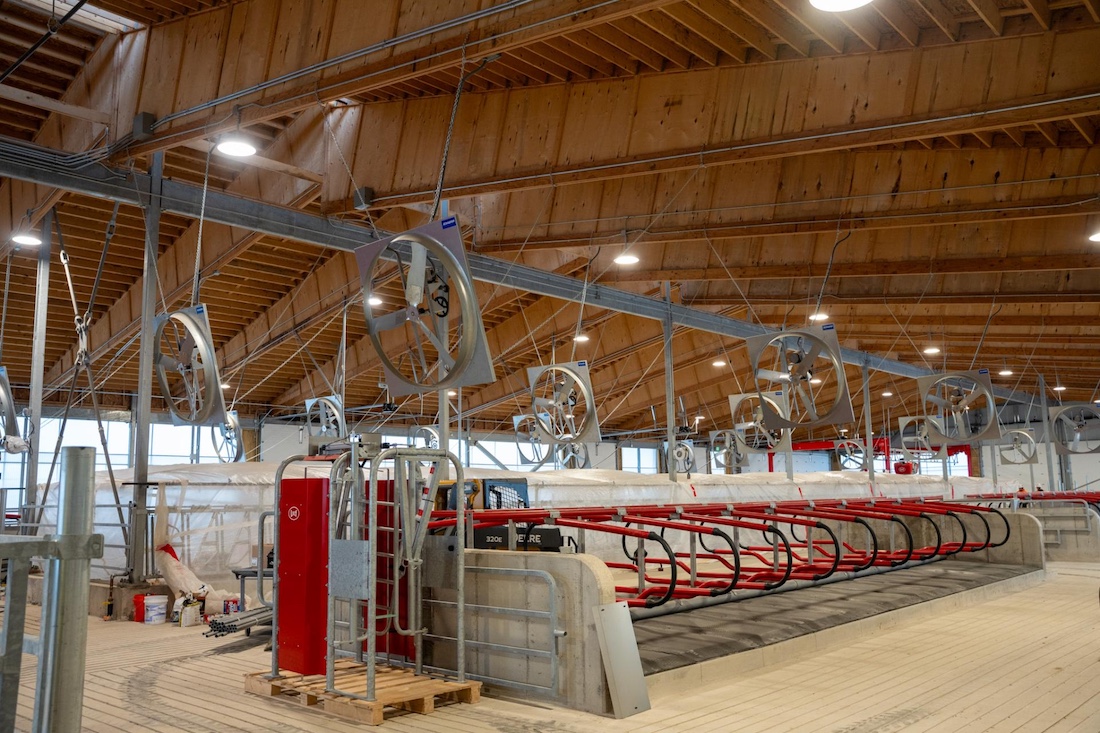
The ribbon cutting for the MALC and new dairy farm was Jan. 29 with about 275 people attending. The new dairy will be able to support 60 lactating cows, being milked by two Lely robotic milking systems, and about 15 dry cows. Two systems are being installed to facilitate the training of students, possibly in agricultural engineering, on how to service such systems as the workforce skills needed are growing.
The new facility will only have Jersey cows, with the cows relocated to Wooster coming back to their Columbus home. The facility also will have a Lely Vector feeding system for automated feeding of the lactating and dry cows and two Lely Discovery units for vacuuming up the manure in the freestall area.
The calves will be raised on site until about 6 months of age, and then they will be relocated to the ATI dairy unit where they will reside until about two months prior to calving. The new dairy facility also has a dedicated space to future processing of milk into value-added products.
At the new dairy, cows will still have the ability to be on pasture near Lane Avenue for their comfort and to remind the community that animal agriculture is very important and it’s within their community. We must continue to advance the sustainability of our food production systems and showcase the technology being used to care for animals and produce our food.
Additional information about bringing the cows home is available at: waterman.osu.edu/places-and-spaces/dairy.
Final facts
The dairy industry is important to Ohio, and Ohio State is committed to “sustaining life” within the dairy sector. This includes the education of undergraduate and graduate students, conducting fundamental and transformative research and educating youth and the public across the lifespan.
The following are some Ohio dairy/cow facts:
• Ohio is ranked 12th in milk production in the U.S.
• Ohio is ranked first in the production of Swiss cheese.
• Dairy typically ranks third or fourth in agricultural receipts for the state.
• Ohio has about 252,000 dairy cows in just under 1,400 herds.
• At the present time, there are about 278 automatic milking systems installed among 79 herds in Ohio. This number continues to grow.
• Fun fact: Several years ago, a business in the Columbus airport sold “Cowlumbus” shirts, which I thought was really cool. The mayor at the time did not want Columbus to be known as a Cowtown and requested the business to stop selling the shirts.