

The world has never lacked for critics and doubters. There will always be those who stand on the sidelines and laugh at the dreamers. Yet history shows us that the dreamers, the innovators, the ones who chart their own course, those are the people who change the world.
The journey of conservation is not always an easy one. Aldo Leopold wrote, “One of the penalties of an ecological education is that one lives alone in a world of wounds.”
Leopold understood that it is sometimes a lonely calling to recognize and do what is needed to heal the land. But maybe he also understood that courage and vision could achieve it.
At the district, we meet landowners who prove time after time that conservation is not something done by people far away, but by those in our own communities. They refuse to listen to the critics and instead embark on a journey to make the land sing again. When looking at how to improve your own property, find your passion and chart your own course in conservation, even when others might be looking at you sideways.
A dream and a plan
There was once a man who left the city to follow a childhood dream — to own a farm. He envisioned a place where the land worked with him, not against him. He laid out a plan for rotational grazing, building soil health and protecting the land from overuse. He sought to lower costs by relying less on having to purchase hay and fertilizer and more on the livestock to do the work of fertilizing and feeding. Some people chuckled and asked, “What does he know about farming?”
Today, that same farm stands as a model of conservation — a testament to vision and perseverance. The land is no longer hidden under a tangled mess of invasive species. His livestock are strong and pastures and soils healthier, his operation more resilient. Some of the people who once laughed at the idea of it now come to pasture walks to learn from him.
Gamble into triumph. There is also the story of the lifelong farmer who took over a large, established farm that had already seen decades of use. He dared to imagine something different. When he began to convert over 50 acres of low-quality woodland into pasture to expand his grazing system, people shook their heads. They said it was costly, unwise, and a little bit mad. But he worked the land with patience and purpose. Today, those pasture acres are thriving.
Through careful planning and a conservation mindset, he transformed what others saw as a gamble into a triumph. They once shook their heads, but now they raise their eyebrows as if to say, “That actually worked.”
What could be
Then there was the work of the businessman who had a dream of moving somewhere with more land and bought a neglected property overtaken by invasive species. He could have left it as it was, but instead, he envisioned what it could be. He cast aside his suit and worked hand in hand with conservation partners to nurture a better timber stand, with the goal of creating a thriving, sustainable forest.
Progress was slow, but step by step, chaos is being turned into order. Today, that property is an emerging tree farm — a living example of what forest management can achieve when guided by vision and determination. Once again, the doubters were proven wrong.
Junkyard transformation
And who could forget the couple who bought what most would consider hopeless? A junkyard. Thousands of tires and tons of rusted metal strewn through fields long abandoned and overgrown with brush and weeds. People said they must be out of their minds. They rolled up their sleeves and began the long, backbreaking work of transformation. Tire by tire, scrap by scrap, they reclaimed the land, changing it into a place that is regarded today as one of the prettiest farms in the county. The critics are silent now, their doubt replaced by admiration for what can be accomplished with determination, vision, and just plain grit.
Seeing the potential
Or the couple who met in college and together dreamed of life on a farm? Years later, they moved from the wind-swept plains of the west to a hillside property declared “not suitable for agriculture.” “They can’t farm that land,” some said of the newcomers. But the couple saw potential where others saw only obstacles. They studied the terrain, learned the land and treated each challenge as a lesson.
Through careful practice and stewardship, they shaped a working farm. They introduced livestock and saw that the simple power of introducing animals to the land could begin the regeneration of a place. People from across the nation now visit to learn how they turned a sow’s ear into a silk purse.
Pollinator habitat
All of these successes are followed still by the tale of the woman with the tidy yard who wanted to do something for butterflies, birds and the small pollinators that sustain us all. She decided to upend her manicured front lawn with the neatly trimmed boxwoods and transform it into a garden filled with native plants — milkweed, coneflowers, bluestem, beebalm — a tapestry of color and life.
There were skeptics. “You are ruining your yard. It will look messy. It will become a patch of weeds.” Now the yard is alive with the buzzing of bees, the airy flights of butterflies, and the soft hum of nature at work. The doubters come by to take pictures and sometimes invite her to talk at garden clubs.
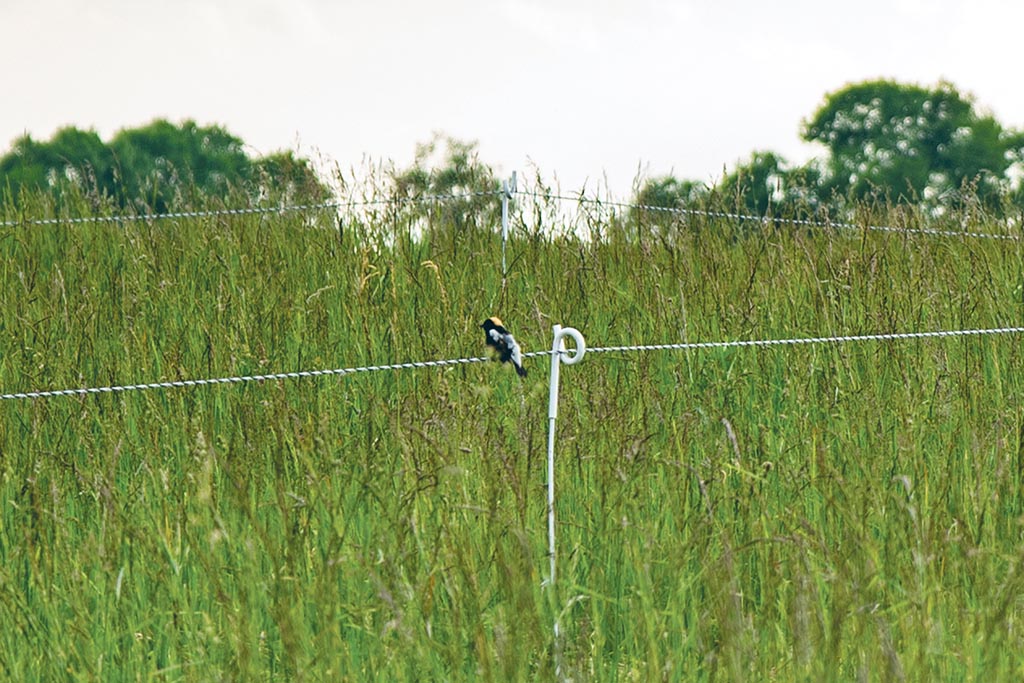
Saving the songbird. Last but not least of the hundreds more stories to be told is the farmer who discovered while taking soil tests that his hay fields were home to a small, grassland-nesting songbird listed in Ohio as a species of concern due to declining numbers — the bobolink.
He learned that by delaying his first hay cutting in some of his fields until July, he could protect the nests, give the fledglings time to grow and ensure that their population would thrive.
They asked, “Who would give up a cutting of hay to save a bird?!”
But he didn’t listen to them and in mid-June shared that the fields were alive — filled with the fluttering of wings and the bubbly, rambling melodies of the bobolink’s song. He proved that when you work with nature and not against it, you don’t lose — you gain something far greater. Now others want to learn about the bobolinks.
District success
At the district, we have also met our share of laughter. When the idea was first raised to acquire a piece of state-owned land that was idle, neglected and forgotten and turn it into a place for conservation and education, the critics were vocal. “It’s a waste of time,” they said. “It will never work in this county.”
The district still charted its course with conviction.
In just a few short months, that property has welcomed more than 20,000 visitors locally and from across America. It is inspiring people and changing how they and their children see the natural resources that surround us. The laughter was replaced with surprise and curiosity.
What do all of these stories have in common? They are the true stories of the conservationists in our own backyards. They remind us that the world will always have doubters and armchair critics will always be at the ready. Yet those who leave the greatest mark are those who chart their own course, believe in their vision and persevere.
As you chart your own course in conservation, know this: The conservation districts and their partners will always be here to help you navigate through the wilderness.
The truth is, Aldo Leopold was right about many things, but he was wrong about one. Conservation is not a lonely journey. You are surrounded by people who share your vision, your hope, your determination. Those of us with a passion for conservation are a community bound by the belief that good stewardship today builds a better tomorrow.
So, be tenacious. Dream big. Let them laugh. Because when the laughter fades, when the critics fall silent, it is you — the dreamers, the doers, the conservationists — who will stand proud.
When you chart your own course in conservation, you build a legacy. You create something enduring. May we all continue to chart bold new courses in conservation together.