

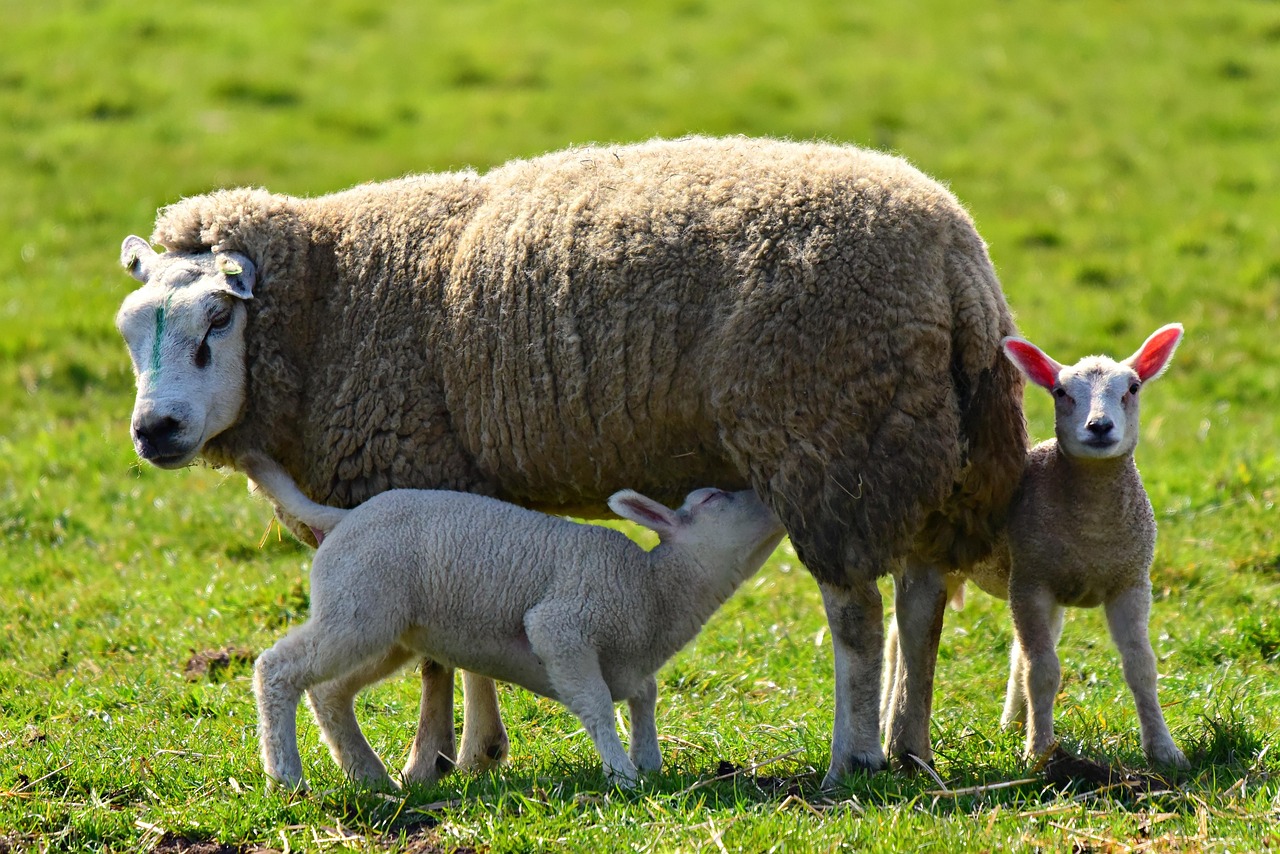
This week, Millie, one of the ewes we’d bred to be a fall lamber, had a set of twins. She is a bit shy and often hangs back when some of the other more social ewes crowd around to greet me.
I’d been walking around the pasture every morning and evening to check Millie and the other pregnant ewe, Godiva, but hadn’t seen anything noteworthy. All the ewes have far thicker wool in the fall than in the spring when we usually lamb, which makes it harder to see a pregnancy’s progression. Godiva was noticeably larger than Millie, so I assumed she would go first. In fact, Godiva was so much bigger, I was beginning to wonder if Mille was even bred.
Yesterday, in the darkness of late dusk, however, I spotted Millie standing back from the flock and knew right away something was … off. A thorough search revealed two dark brown babies snuggled in the shadows of an old feeder where she’d hidden them. That clever girl did such a good job, I would never have known they were there if I hadn’t been actively looking.
Today, my husband and I were moving and sorting sheep to separate the three male lambs who hadn’t been castrated. We went out to gather them from the big pasture, and then it was my job to guide everyone through two smaller “alleys” into a corral. From there, we sorted off the ones we needed to, before moving them into another, smaller pasture.
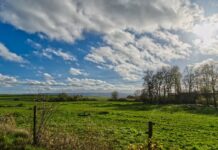
It was a beautiful evening, the late August heat already giving way to a cool autumn night. The sun was painting the sky gold and mauve beneath the strokes of periwinkle clouds. The stout golden grass swayed gently.
The man of the ranch was not thrilled about the job, but stoic as ever, he went about his part of the chore in calm silence, only raising his voice briefly if he needed to turn the flock towards or away from a gate or fence. I did the same, though sometimes I stopped to offer a head scratch or do a quick wellness check.
Sorting livestock is not always such a peaceful affair. The way the corrals were set up, and the fact that we only had to sort off a few, made a difference. But it was also that after all these years of shepherding, I actually know what I am doing, so not much conversation was necessary. And because the two humans were calm and mostly quiet, the sheep were mostly calm and quiet, too.
It hasn’t always been like this. When I first started trying to help with ranch work, it was a constant frustration when I would ask for directions about how to do a job, and my husband really couldn’t give me any. So much of what he knew he’d learned from a lifetime of doing, and there wasn’t any way to explain it to his greenhorn wife — much to my consternation.
Walking in the pooling light of the late summer evening, talking in hushed tones as I ushered my sheep this way and that, I suddenly realize I’ve done enough “doing“ to know things I can’t explain now, too, and that’s a funny feeling for a writer! The best way I can describe it is as a “deep knowing,” which sounds both cryptic and maybe a little overly precious. But how can I explain looking at a ewe who is doing absolutely nothing out of the ordinary and rightly surmising she is hiding babies nearby?
I tell people that I am a newcomer to ranching, and I always will be. It often feels like a profession one has to be born into to really understand. But a shift has occurred, and I am so grateful because I know I am able to be a better caregiver now to these animals I love.
Also, it’s been nice for my marriage, because if you are going to make a cowboy help with your sheep, it’s good if you aren’t also trying to make him talk about it.