




Down over the hill, buried in briars and poison ivy, sat a box shape with a long wooden bar protruding from it, signaling to the man its location. He was on a mission to find it and figured all hope was lost when his brother said he had cast it over the hill into the old farm dump.
Yet, as the man prepared the landscape around his historic house, in preparation of his wedding, he recalled a memory from his childhood, knew the tool he needed and went on a search looking for it.
Seeing a glimpse of it in the thicket made his heart leap and chest tighten with excitement. He dove into the brambles, grabbed a hold of it and began a tug-of-war with ol’ Mother Nature who was trying to reclaim it. He pulled and pulled, and the multiflora rose tore at his skin.
As the vine’s grip began to loosen, and the rose began to give, he could see the old workhorse was on its side. He dove into the briars and reaching down, dug his fingers into the ground and was able to get a grip of the side buried in the eroded soils of the hill. Leveraging every inch of his height and every ounce of his weight, he lifted and lifted until everything gave and he went flying forward and landed on top of it. With great excitement, he noticed it was free and pulled it up the hill and into the field.
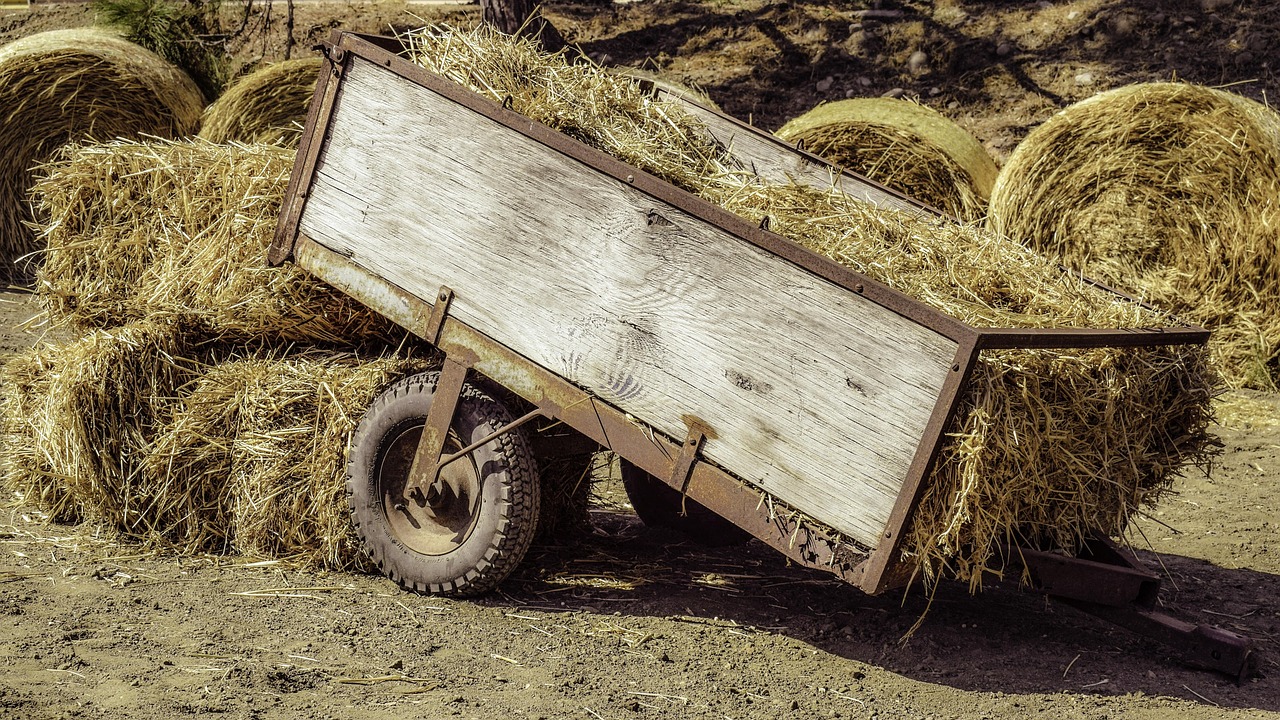
Emerging from the brush, as if he had won the lottery, his prize came to rest. His fiancé had been watching the whole saga take place. Her eyes scanned the scene and saw him standing in the tall summer grass of the field — pants covered in mud and a grime of unknown origin, shirt ripped, arms bloody and leaves and woody debris stuck in his hair. Next to him sat a small wooden wagon with a bowed axle and held together by a small chain. She rolled her eyes, undoubtedly questioned her life choices and turned and walked towards the truck parked next to the barn.
The man was undeterred and began slowly pulling the wagon towards the truck when his 2-and-a-half-year-old nephew bumbled up to him and asked for a ride. The man smiled, put him in the bed of the little wagon and hauled him forward.
History
In 1953, Wilbur Blakely stood behind his new house on the edge of Toronto, Ohio, and scanned the expansive lawn. It was the first home he and his wife Iva had ever owned. The 50-year-old Mr. Blakely wanted to have a garden, but after years of working as a laborer at the sewer tile factory in town, he had vowed his years of pushing a wheelbarrow were over when he made foreman — and he was not going to go against his word. Therefore, rummaging around, he gathered the necessary materials and began to assemble a small wooded wagon to pull behind his small lawn tractor.
Starting with a pair of old wheels and some pipe, he formed an axle and created a frame using some old angle iron. Oak 1-by-12s formed the deck of the wagon, plywood was cut for the sides and braced by 2-by-4s and a long wooden tong protruded 5 feet out and a ball hitch was added. The final touch was a board lowered in place to the rear that would slide in and out and be used as a tailgate.
Mr. Blakely used this wagon for nearly 25 years, but as the years passed, the little wagon’s main function transitioned from working in the garden to hauling grandkids around. As father time caught up with Mr. Blakely, he decided he no longer had a use for the little wagon and gave it to his neighbor.
The neighbor parked the wagon behind his little red garage in the backyard and would use it behind his pride-and-joy, a red Allis Chalmers tractor, that could move the world and cut grass.
In 1983, the neighbor’s son built a house on a 2.2-acre lot outside of Carrollton where he would raise his family. One day, as the son was working in his yard, he heard the rumble of the Detroit “ticking six” motor of his father’s panel van that he had recently bought “for a good deal off a band of gypsy hippies.” As the son walked out into the driveway to see his parents climbing out of the van, his father told him he had a gift for him that would help him out. Wedged inside the synthetic-fur lined walls of the van was the little wagon.
As the years passed, the son worked tirelessly on his home with the little wagon in constant use, and the son now went by Dad. When Dad was building a brick sidewalk around his house, he excavated the sidewalk’s route by hand shoveling the dirt into the little wagon and hauling it off. The wagon was used to transport the gravel and sand and then to haul the brick around the house. Throughout it all, the little wagon hung in there, although its favorite payload was two little boys and their Scottish terrier, Crockett, who all loved to go for rides.
When landscaping occurred at the house, the wagon was there. When leaves needed raked and hauled away, the wagon was there. Soon, the neighbors took note and the wagon was used by the whole neighborhood to haul piles of bulk mulch that they collectively purchased.
It was beloved by the neighbors because the length of the wagon tongue meant that when you undid the latch the weight of the wagon would cause the wagon to fly up and self-dump — no shoveling but be careful of that tongue flying up at Mach speed. The wagon got universally used so much that it actually became a unit of measure during these mulch days, with every one keeping track of how much they owed by wagonloads … Bob got two wagons worth, while Jim’s truck is three wagonloads big.
It was during these heydays that the little wagon began to show its age. While loading mulch on the wagon, Dad overloaded it and, when the boys and Crockett climbed aboard the walls of the wagon, it splayed out. Unable to be without a wagon, Dad took Crockett’s only chain leash that he chewed the handle off and added it to the back to help hold the wagon together. Soon after, Dad tried to move a large rock that was excavated. The weight of the rock caused the axle to bow, yet the wagon held firm and got the job done, even if it did come away with a permanent scar of the move.
Dad eventually bought a new cart for behind the tractor and sent the little wagon off to the farm. The little wagon was stored in the barn of his father-in-law and forgotten for years. After the father-in-law passed away, the family had an auction to clean out the years of accumulation. Among the auction items was the little wagon unbeknownst to the family.
One of the last lots to hit the block, most of the auction attendees had left, and as Dad’s youngest son walked up to see what was selling he saw the little wagon and was flooded with memories. The son, now a man, was the sole bidder of the wagon acquiring it for a dollar, and he pushed it back into the barn and forgot about it.
It was in the barn that his brother found it and used it, but forgot about the viciousness of the tongue when unhooked. When the brother unhooked the wagon, the tongue came up and tried to cut him down like William Munny. In a fit of rage, the brother cast the wagon over the hill.
When the man pulled the wagon out of the brambles and hauled it home, he was amazed. There in the back was Crockett’s leash still holding firm. The axle still bowed with two tires that have never gone flat and were in good shape. Some of the boards were rotten from its time in the shadowy damp abyss, but the man relined the interior of the wagon with new wood and it was as good as it was in 1953.
The little wagon hauled the mulch used for landscape in preparation for the wedding. The man still uses it to haul dirt, leaves and compost for the gardens. When the man’s Dad visited, he was overjoyed to see the little wagon. While the little wagon still is a workhorse, the most important thing it hauls is memories.