



Discover why ongoing producer education, winter extension programs, and daily recordkeeping are vital to keeping livestock operations profitable. With fall in full swing, temperatures dropping, pasture growth winding down and transitions being made in contemporary groups, feed rations, and our daily routines as we prepare ourselves and our livestock for winter, it seems like a great time to break out a rendition of this article that you may have seen bits and pieces of in several publications over the years.
If you are reading this article, you are taking at least one simple, five-minute step this week, and hopefully every week, to read and learn something that will benefit your livestock operation. If you are not reading this article, well, you may not know what you don’t know.
But every progressive ruminant producer should be reading this on a weekly basis, just as you should be paying attention to every single source of information you can get your hands on, or your eyes on, that pertains to your specific operation. In addition to this column, that could be the Ohio Beef Cattle newsletter, Ohio small ruminant team newsletters, industry blogs, monthly magazines, etc.
In today’s world of extremely expensive inputs leading to higher-than-ever costs of production, no matter what you are producing, it is vital that, to remain sustainable and ultimately profitable, we continually educate ourselves. This could be as simple as reading an article or two each week, or maybe you read blogs or other web material daily.
But it can also mean lots of other options from which we can learn. During the winter, there are a multitude of classroom, lab and on-farm programs offered by Ohio State University Extension, commodity groups and agricultural cooperatives or service organizations. Not all of these are going to focus on grazing or forages, or your main topic of interest, but finding the time to get to any programs will usually pay off in some way to make you better at what you do on the farm.
The learning does not only occur in the classroom, extension office, vo-ag shop at the local high school for an evening program or the local sale barn. We also need to remember that the farm is our classroom that we go to daily. Hopefully we are paying attention there on a daily basis, keeping good records of what we do and measuring the results of major decisions.
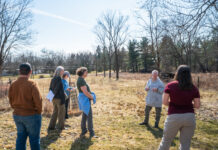
But we can truly educate ourselves a little more if we get outside of that daily routine or classroom once in a while. That can mean attending local pasture walks, getting your Beef Quality Assurance certificate renewed, going to an OSU Extension beef school, watching a webinar, attending a breed association annual conference, attending an Ohio Cattlemen’s Association calving clinic or Beef 509 short course, the Shepherd’s Symposium, a trade show or any other similar conference, meeting, or even webinar that pertains to our operation.
Going to a class or conference to educate yourself further on how to raise your particular crop or species of livestock can certainly pay big dividends down the road, but only if we also treat our daily routine as a classroom, measuring what we can, applying what information we have gathered, testing ourselves and our stock, and analyzing the results.
To do this well, we should be looking for some ways to learn outside of that on the farm classroom. That just might teach us how we can better manage that classroom and our pocketbook when we get back home.
Or better yet, how to make the home farm a classroom for our kids, herdsmen, hired hand, partner or anyone else involved in our operations. Then they can learn on the job or on the farm with mom or dad about the livestock, the forages and some of the other things that really matter in life.
A quick Google search or paying attention to your extension and commodity group newsletters is all it takes to find out where and when some of these opportunities will be available in your area over the next four to five months. Start making plans now to attend at least one program this winter and start researching what and where you can be reading and studying on your own to find out what you didn’t know that you didn’t know about your operation.
And just remember, classes are important, feeding the stock is definitely important, but constantly educating yourself as a producer is important-er!
(Allen Gahler is an Ohio State University Extension ag and natural resources extension educator in Sandusky County.)