

For the past few decades, Extension educators, soil and water conservation districts and the natural resource conservation service staff have been working to teach farmers about the benefits of rotational grazing.
Some farmers take it and run with it. Others are apprehensive and always seem to have an excuse for why they are sticking with continuous grazing. Common excuses are the time they think it will take to rotate livestock from one field to another. For others, it’s the initial investment of fence and water infrastructure. Many farmers would rather make more hay because it has become nearly labor free.
For the farmers who have never wanted to adopt rotational grazing because of the time or infrastructure investment, there is a new solution for them.
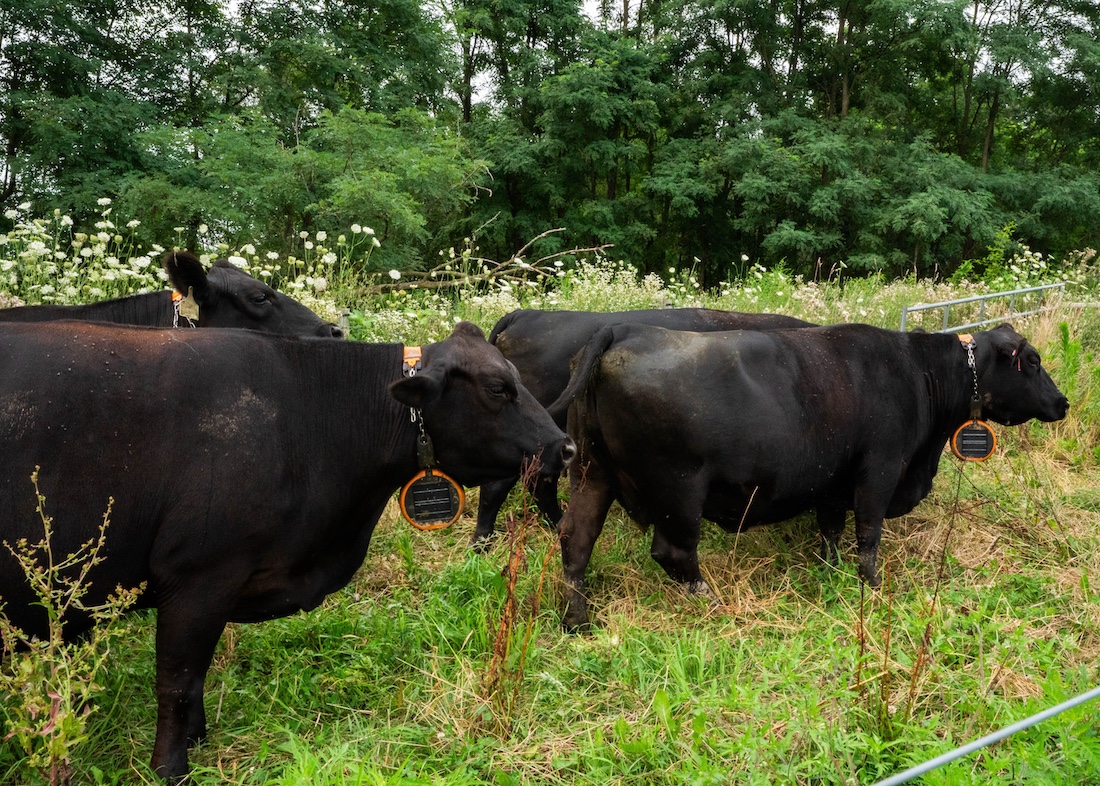
Virtual grazing is a relatively new technology that allows farmers to keep livestock where they want them without any fence. The cattle wear a solar-powered GPS collar around their neck that uses audio cues to let cattle know where boundaries are before they get a shock. The boundaries are drawn by the producer on their smartphone. It is still necessary to have a perimeter fence.
To make the most of the technology, producers should have water set up in as many areas of the farm as feasible. Running pipeline with quick connects and portable tanks would keep the grazing system more flexible than permanent tanks.
The major benefit of this technology to the producer is the time savings. A producer who works full-time and has a family doesn’t always have time to build temporary fences and move livestock as often as they would like. With virtual fence collars, they can draw the next fence boundary on their phone while they are eating their lunch at work. They could even rotate the livestock while they are on vacation.
On the conservation side of it, lines can be easily drawn to keep livestock out of woodlands and streams without building fences. The stock density of the livestock is going to go up, which increases the grazing efficiency on the pastures. The pastures are grazed evenly, reducing or eliminating the need to bush hog. The higher stock density puts more grazing pressure on the weeds that are in the fields. You’ll be able to graze hay fields and crop fields that have never been grazed before due to the lack of fence.
The grazing season is going to be extended, requiring less hay to get through the winter. Soil health is going to be improved, and over time, less fertilizer is going to be needed to keep the fields productive.
In Monroe County, and probably most areas throughout the country, a lot of grazing land is leased. There are several farmers who run cattle on neighboring property where the owners either stopped farming the land themselves, inherited the land from family but do not farm it, or live away from here and only bought the farm for hunting purposes. Most of the land has perimeter fence, and that is all. Most rental farms are not set up to rotationally graze. Infrastructure could be installed to rotationally graze these rented pastures and make them more productive, but there is always risk of losing the lease.
If a farmer were able to use virtual fencing on the leased land, they could potentially double the grazing efficiency and increase their livestock numbers, all without having to cover more ground. If they lose the lease, they don’t lose their investment in division fence or have to take the fence back out. Many landowners would appreciate the positive impacts to the land due to the improved grazing management.





Shock collars on cattle?