



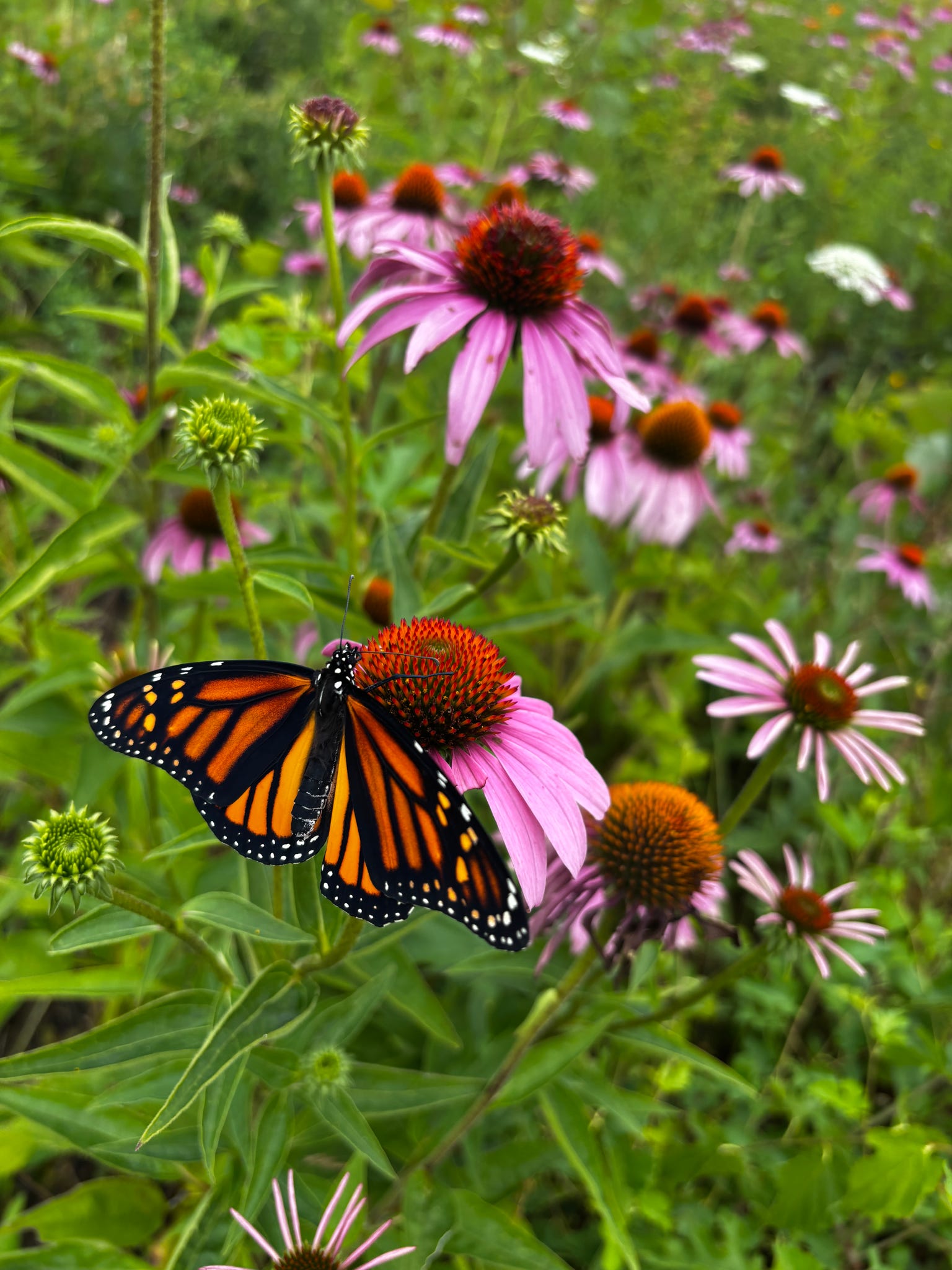
Every year, the tiny orange-and-black monarch butterfly embarks on a journey spanning thousands of miles — a migration so epic it rivals that of any bird. But today, monarch butterflies are disappearing at an alarming rate, threatening to erase one of nature’s greatest spectacles.
The monarch butterfly is native to North America, specifically the United States, Canada and Mexico. Each spring, from March through June, monarchs begin their journey north from the southern U.S. and Mexico. No single butterfly can make the full 3,000-mile trip — it takes multiple generations to complete the migration back to the northern U.S. and Canada.
Unfortunately, populations have plummeted. According to the U.S. Fish and Wildlife Service, monarch numbers have declined by 80% to 90% over the past 20 years. In the 1990s, monarchs covered around 44 acres of overwintering forests in Mexico; by 2020, that figure had shrunk to just 2 acres.
So, what’s behind the decline?
Habitat loss. Widespread use of herbicides and development has destroyed much of the milkweed monarchs depend on.
Climate change. Shifts in weather patterns disrupt migration and breeding cycles.
Deforestation. In Mexico, critical overwintering forests are being cut down.
Global pressures. Around the world, habitat loss has greatly contributed to shrinking populations, according to World Wildlife Fund Mexico.
Helping monarchs
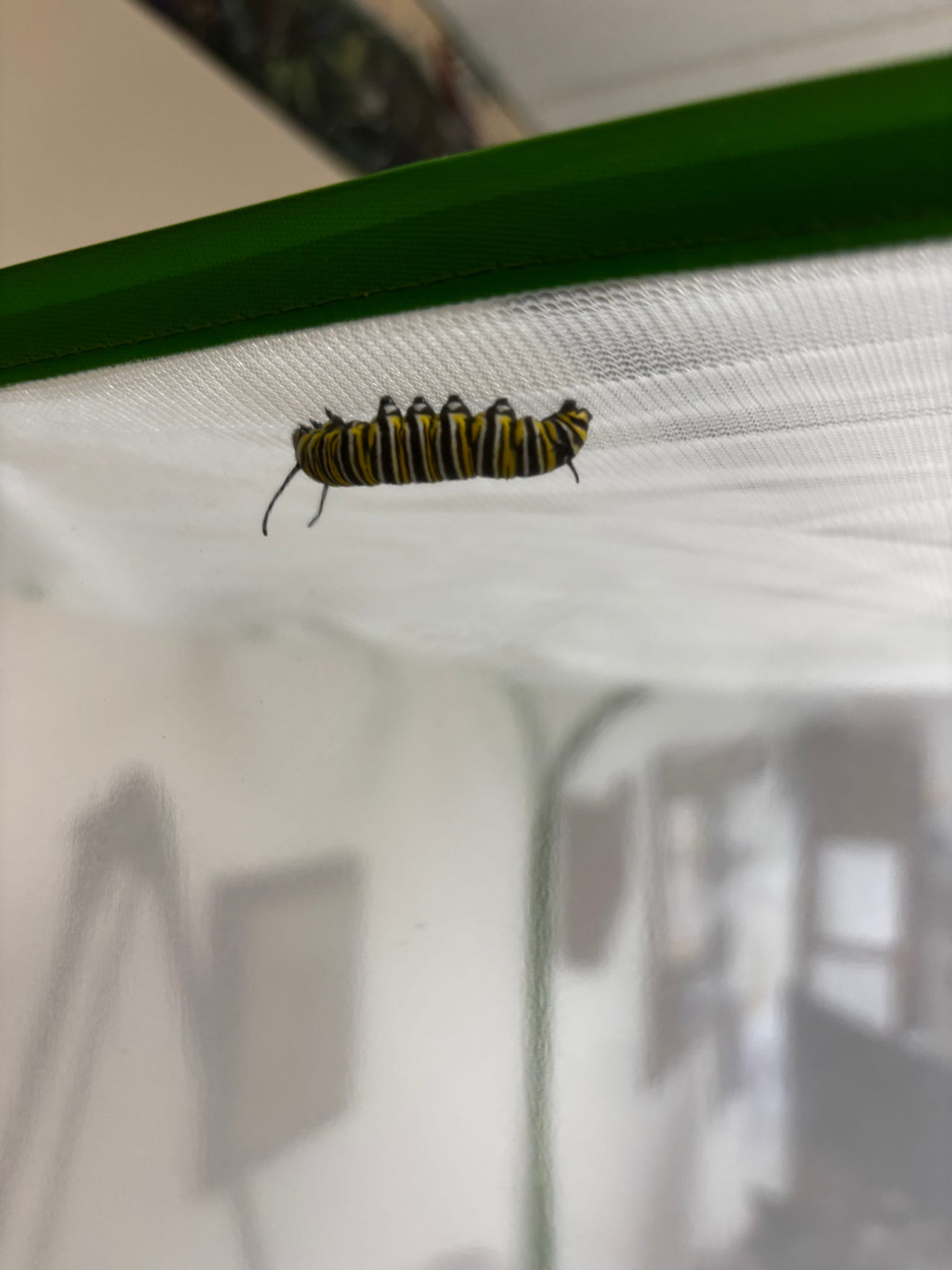
This summer, our office took a deeper interest in monarchs and pollinators. In the spring, we searched for eggs laid on the undersides of milkweed leaves. A female monarch can lay up to 500 eggs in her lifetime. The eggs are off-white and just about one millimeter long. After three to five days, tiny caterpillars hatch, eating their eggshells before moving on to the leaves.
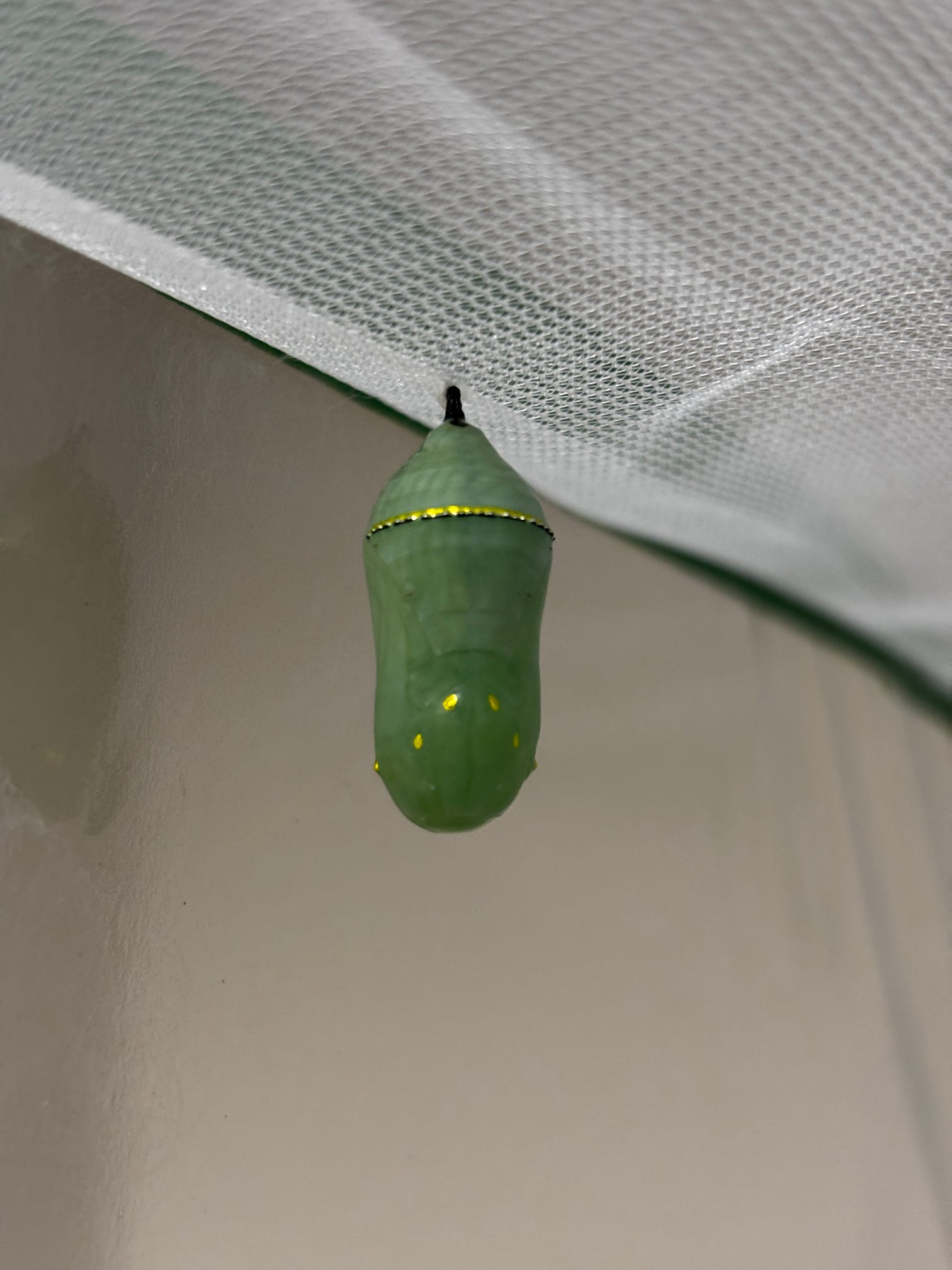
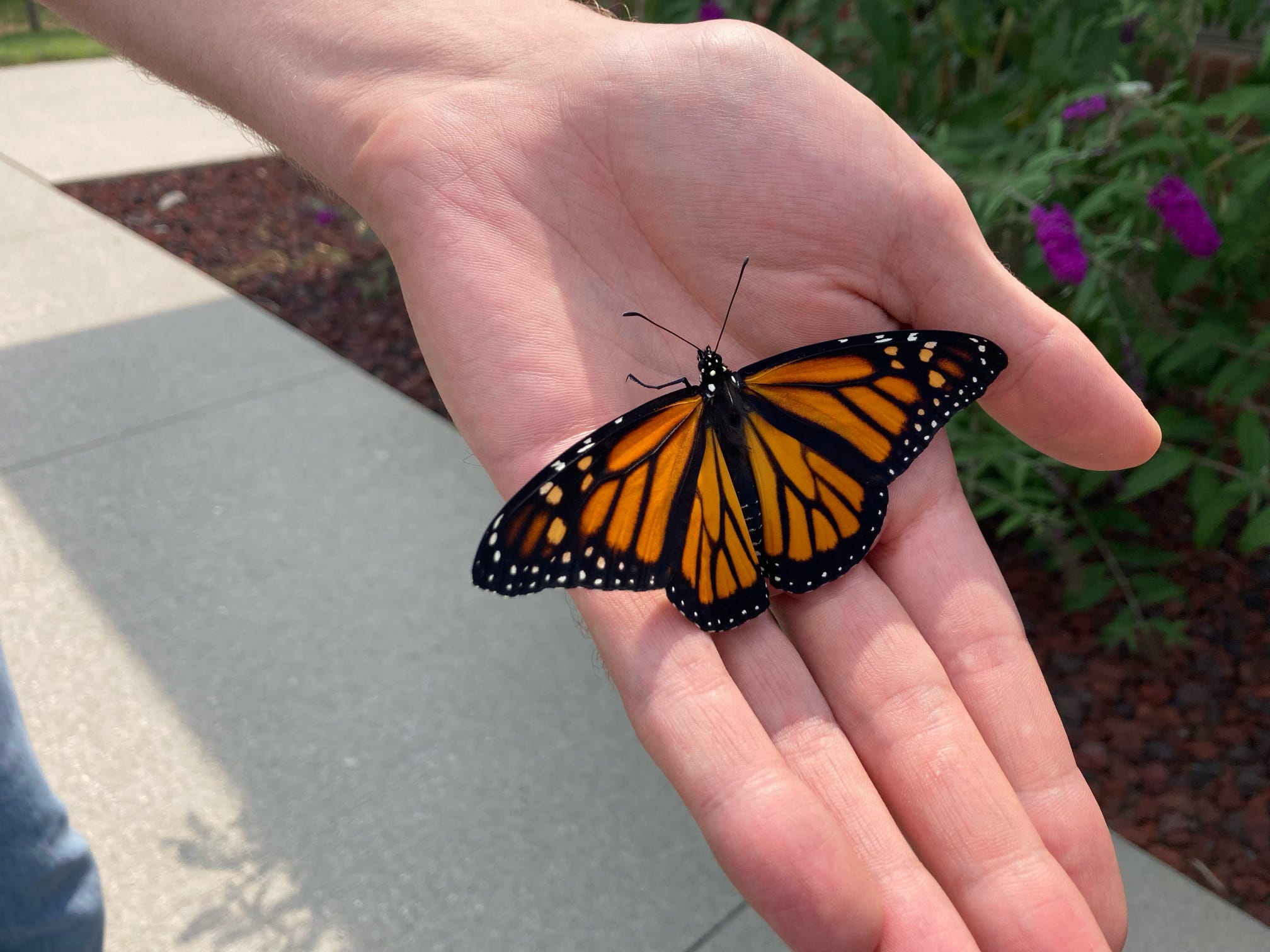
The caterpillar (larva) stage lasts about 10 to 14 days. During this time, the monarch eats continuously, molting through five growth stages before forming a green chrysalis. Inside the chrysalis, a remarkable transformation takes place. Over the next 10 to 14 days, the chrysalis darkens, and eventually, the adult butterfly emerges. At first, its wings are crumpled, but within hours, the butterfly pumps fluid into them until they reach full size. Summer monarchs live for two to four weeks, while the late-season “super generation” survives up to eight months to complete the migration south.
So what can you do to help? Consider trying the following:
• Plant native milkweed — it is essential for caterpillars.
• Grow nectar plants to feed adult butterflies.
• Cut back on pesticides and herbicides that harm both milkweed and pollinators.
• Educate others about the importance of monarchs.
• Collect milkweed pods and donate them to your local soil and water conservation district, which can use them to establish pollinator habitats.
The monarch’s story is a reminder of how fragile, yet how important, our ecosystems are. Protecting these butterflies means protecting biodiversity, pollination and the health of our environment.