

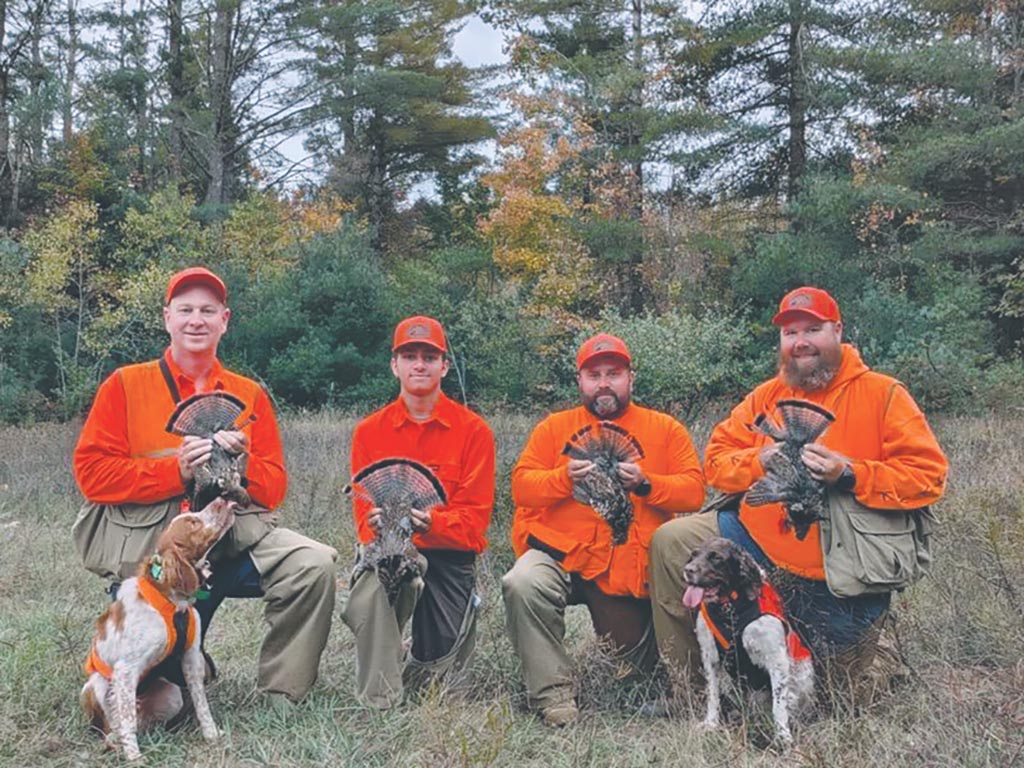
While talking to some friends about their recent grouse and woodcock hunting trips to Michigan, I asked them about the choices they’d made for upland dogs and shotguns, and if they yearned for some “perfect” combination they’d yet to take to the coverts?
Was it pointers or flushers? Setters or retrievers? Break-action or repeater? 12 gauge or 20?
I really enjoy these conversations and their impassioned accounts of what had led them to their decisions. Most felt their choices were solid. As the oldest in the group, I smiled as I listened to the storied explanations. That’s when I asked if their opinions were flexible.
Each stopped and thought a moment.
“Someday, I’d like to try a 28 gauge,” said one. Another’s hand fell to the old springer beside him as he quietly confessed, “I love my boy — but I’ve always thought about an English setter.”
The others in the group nodded as they contemplated their options and tossed out a wish or two. One of the hunters then added, “You know, I’ve been wanting a good double-barrel — maybe a Browning BSS with that straight English style stock. I’m actually trying to squirrel away a little cash, just in case.”
Finally, they looked at me.
“Well, you started this. So, what’s your perfect combination for upland hunting?”
I tossed out several personal preferences, but I really didn’t explain my choices.
“Seems like you have a lot of favorites,” they grinned. That comment was left hanging as we went our separate ways that afternoon, but the remark stuck in my head. Maybe they deserve a bit of an explanation.
When I was 16 or so, a high school friend would carry a well-worn Fox Sterlingworth. He hated that antiquated old-timer, and once we were in the field, he’d trade me for my more modern Winchester pump.
One crisp, frost-heavy November day, my little beagles, Gretchen and Chipper, were really on their game. A wild flushing covey of quail put that old Fox to the test. To my own surprise, I doubled: two shots — two birds. Later, during the approaching twilight, a single pheasant fell to the 16-gauge Fox.
For me, it felt like I’d become part of that double’s history. Nothing will ever replace that combination.
A couple of short years later, those same hounds and I were walking the field margins of a neighboring farm. My high-school buddy had left for the Marines and his dad regained possession of that Sterlingworth. I’d managed to save enough farm-work cash to buy a brand-new Ithaca-SKB 20-gauge double to replace it.
On this particular hunt, my mind was more occupied with the worry of the next morning’s surgery on my poorly healed, broken ankle, a result of a high school football game. As the dogs nosed through the brush and fresh dusting of snow, Gretchen suddenly rushed off. In a frantic dash, she sprinted 30 yards into a corn stubble field. Looking like an unhinged torpedo, her short legs churned through the snow while leaving a clouded mist in her wake. Two pheasants burst from their invisible hides and catapulted into the air, one giving a rooster’s cackle as it turned to follow the wind.
At the report, a burst of feathers was left to float on the breeze as the pheasant fell. Chipper, sprinting into the excitement, picked up the bird and proudly marched it back to me as Gretchen tried following the departing hen. Nothing will ever replace that combination.
Years went by and at the suggestion of a well-seasoned gunner, I purchased a gently used Browning Superlight. Shadow, my springer-pointer mix, was poking about in the greenbrier and deadfalls at Highlandtown Wildlife Area. His tail was frantically wiggling away his anxiety as he hurried from left to right and back again. He suddenly froze in mid-rush, then made a pounce and a leap in an attempt to catch a now airborne ruffed grouse.
At the gun’s bark, the bird toppled. Shadow wriggled his way through some grapevines to find the downed bird. On his way back with the bird gripped gently in his mouth, he made an unexpected sprint to my left and slightly behind me. Another grouse took flight and a reflexive snap-shot brought it down. Shadow struggled to pick up the second bird without releasing the first. It wasn’t working for him, so I lent a hand. Nothing will ever replace that combination.
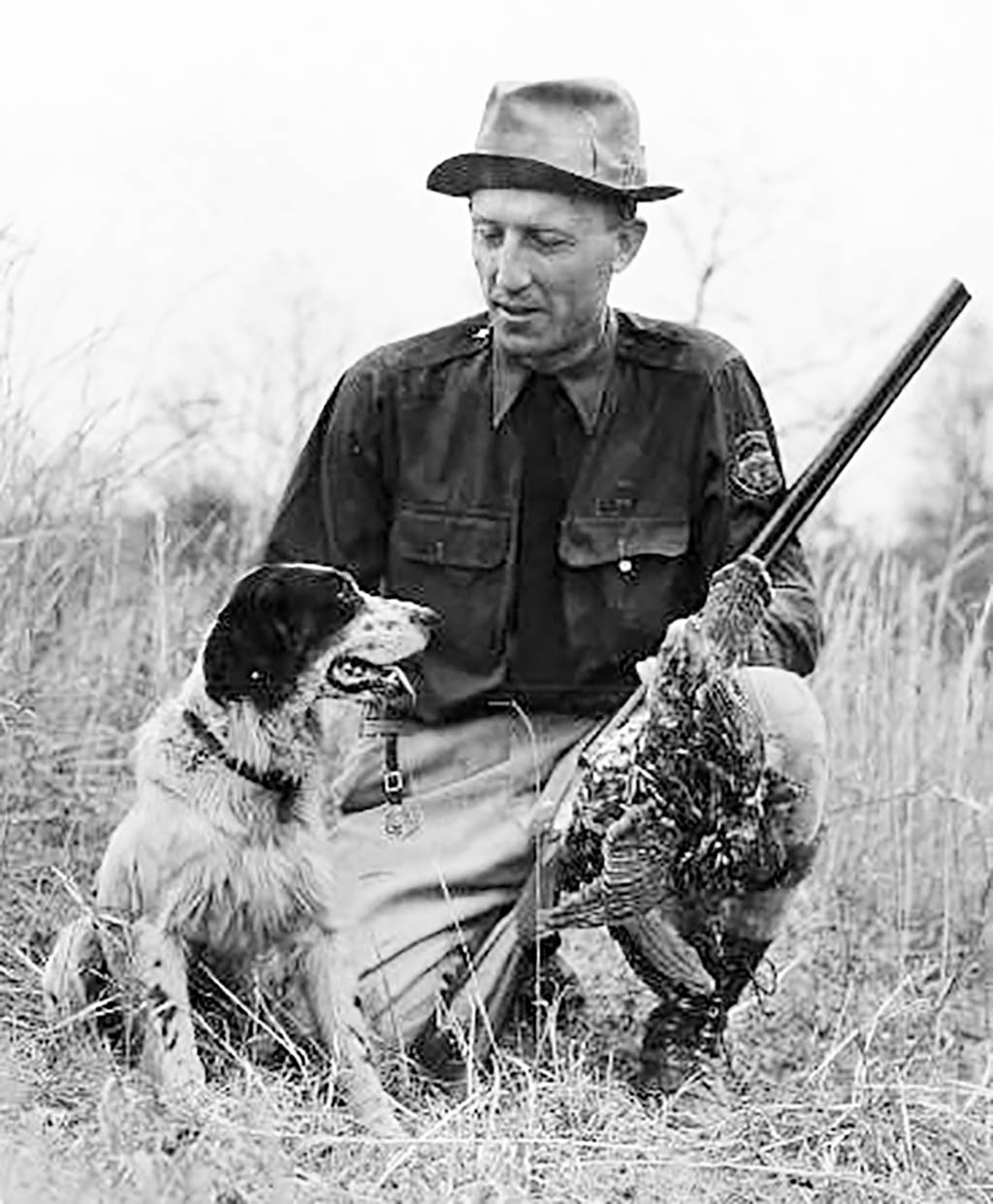
While I was in high school, I chanced upon a magazine column about Gordon setters. Included was a photo of one of those Scottish pointers walking along an autumn lane, his hunter carrying a svelte 28-gauge double Parker — a holy grail of shotgun collectors. That picture remained painted in my mind and became something of a dream, an unreachable goal.
Fast-forward to another autumn day, 25 years later. Gus the Gordon and I were hunting woodcock at Killdeer Plains Wildlife Area. The frequency of finding the little birds is always a combination of witchery and luck, but I was keeping my fingers crossed. True to that old photo, I was carrying a gracefully light Parker 28 double, something made possible by Winchester’s reintroduction of the upland legend. I was hoping Gus might find his first woodcock in the damp falling leaves, and that the gun would find its first bird.
Though his black coat and wooded shadows made him nearly invisible, a brass bell dangling from his collar jingled with his movements. Suddenly, the telltale tinkling stopped. I knew where he’d been but wasn’t sure of his current location. I was concerned he’d gone out of hearing range when I spotted him just 50 feet away. His tail high, he was ever-so-carefully inching forward.
I quietly moved toward him and gently told him, “Whoa,” stretching the word into a pleading, three-second request. One more step and a woodcock burst into vertical flight, dodging around trees.
The leaves, ignoring autumn’s commands, were still heavy in the understory. I punched the lightweight shotgun in the direction of the bird and fired, knowing that there was no way that shot would touch a feather. Gus rushed forward to examine the area and suddenly froze again. I walked up, ready for another flush. To my surprise, there lay the woodcock with the dog’s nose just inches away.
It’s funny how that old magazine photo has transformed into a memory of my own. Nothing will ever replace that combination.
Then there’s Briar, my little English cocker, full of a stubborn personality attached to an endlessly gyrating tail. Having returned to carrying a 16 double, we were visiting the Elkhorn Hunt Club for her first venture in the field. She coursed ahead in her run-run-hop fashion, her Dumbo-inspired ears flapping with each leap. Her first flush was out of range and I coaxed her to shorten her patterns. The wafting scents were overwhelming that twitching black nose.
That’s when it happened. The gaudy flurry of a pheasant escaping her frenzied rush put the bird firmly within range. A hurried first shot missed but my finger quickly found the second trigger and the bird dropped. Briar rushed over and began to bring it back. She stopped, dropped it, then repeated the effort only to stop again. I encouraged her with “good girl” and “bring me the bird.” Through patience and a little sweet-talking, she made the retrieve.
The rest of the day, she walked with a chest-out strut, daring any pheasant to show itself. Nothing will ever replace that combination.
Today, there’s Briar’s protégé, Bramble — another English cocker, but unlike her big-sister’s jet-black coat, she looks like a chocolate Sunday with marshmallow on her chest. She and I are still looking for that perfect blend that’s right for us.
In the end, I guess the best combination is what helps to write a memorable chapter in your own history. For me, its dogs and doubles but of no particular pedigree, gauge or manufacture. I know that without them, somehow, life wouldn’t be complete.
“When your life flashes before your eyes at the end, make sure it’s a good movie you’re watching.”
— Stewart Stafford