


In June 2026, we realized that a Portage youth organization had reached a 10-year anniversary of participating in natural resource conservation. This realization came with a jolting understanding that a decade-long commitment to conservation is remarkably uncommon.
As thrilled as we are to continue our collaboration with this group, we are equally troubled by our inability to motivate other groups to actively participate in ongoing natural resource conservation.
Celebrating accomplishment
To acknowledge their dedication, the Portage County Shepherds 4-H (PCS) group was presented with a conservation award at the 2026 Portage County Randolph Fair. Since 2016, PCS have conducted an annual litter cleanup at Mogadore Reservoir. In the early years, 4-H members hauled away heavy, illegally dumped debris, such as tires, auto bumpers and grills, etc. However, as the group systematically cleared the main dumping sites, those large items have become increasingly rare.
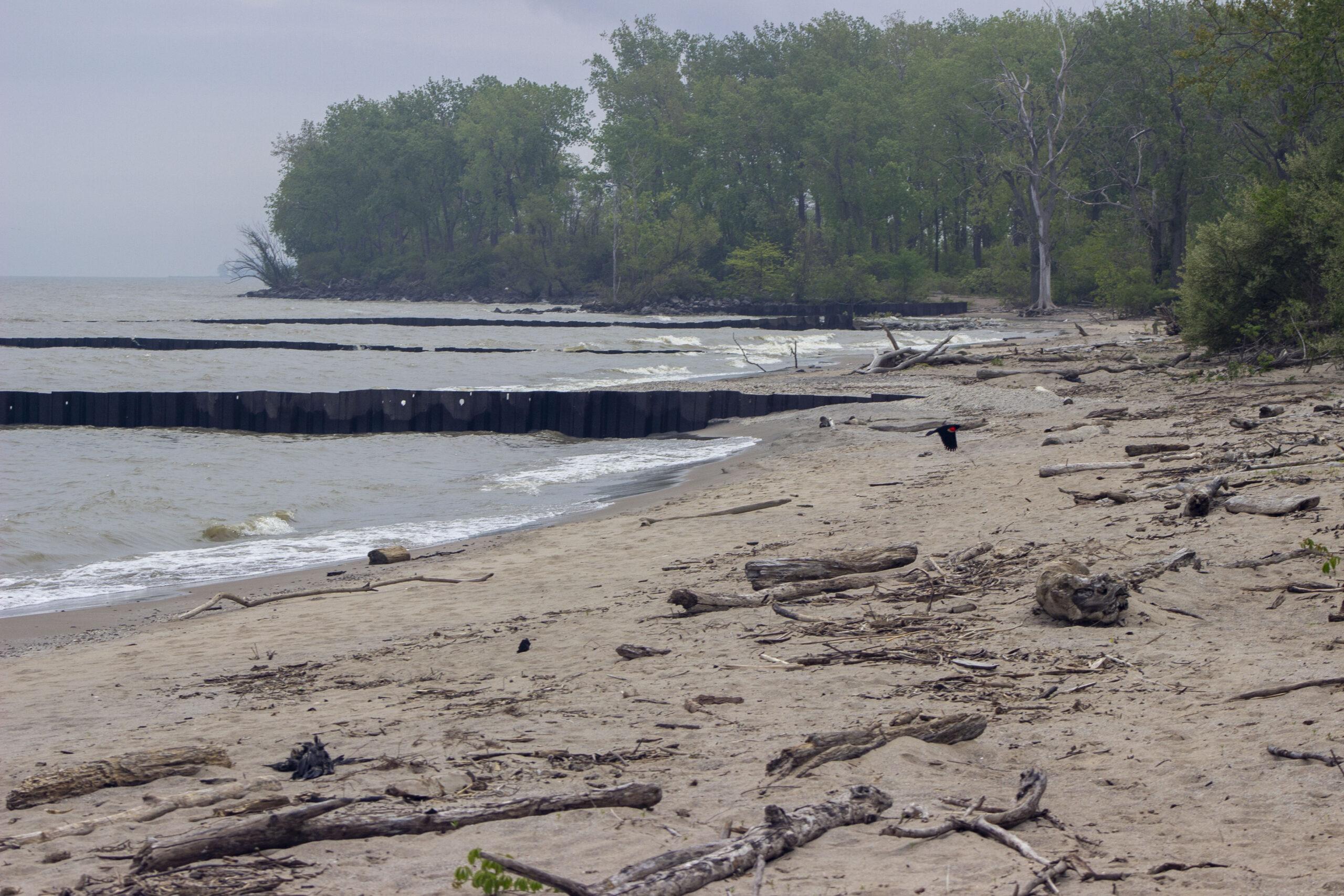
Unfortunately, even though illegal dumping has slowed, what continues to blight the recreational area is the litter left behind from folks fishing, running, kayaking, hiking, etc. Common discarded items include bait containers, lures, tangled fishing line, fast food wrappers, bags and single-use beverage containers and straws.
What are we really teaching our youth volunteers? For a few years after the major debris was cleared, we worried about the take-home lesson for our 4-H youth and parent volunteers. By asking them to annually clear litter from the same shorelines, ditches, and trails, did we inadvertently foster a sense of futility? When their ongoing efforts lacked the dramatic, visible impact of those initial cleanups, would youth volunteers decide it wasn’t worth the effort if public behavior didn’t change? Or worse, would they learn by observation that littering in public use lands is an accepted part of outdoor recreation?
Outdoor enthusiasts like hunters, anglers and birders are often our best conservation partners. Prioritizing habitat and water quality are top concerns for many recreational landowners. Conversely, many public recreation sites are degrading due to visitors who lack a sense of stewardship — an issue 4-H volunteers witness firsthand.
What accounts for our different behavior?
What accounts for the difference in how land is treated by different users? Do we only care for land we own? Property ownership alone fails to explain it, as many farmers and woodland owners routinely forgo conservation practices. Likewise, many visitors to public use lands diligently follow ”leave no trace” principles while others ignore LNT principles, trail boundaries, pet restrictions and burn bans.
Is our reckless behavior driven by an indifference to natural cycles or a fundamental ignorance of them? Or, more disturbingly, have we grown so detached from nature that we forgot it keeps us alive? Seeking research-backed answers, I focused my search on visitor behavior in public lands and on conservation agriculture.
Disregard for rules on public lands
Two sites offered pertinent research-based information: the Leave No Trace Center for Outdoor Ethics and the National Parks Conservation Association. Research indicates that including educational messaging about environmental impacts effectively improves visitor behavior. For example, instead of using standard “Do Not Litter” signs, posting educational signs that explain the environmental harm of trash provides enough motivation for many visitors to haul it out themselves. Clear examples noting that staying on trails protects fragile plants and approaching wildlife threatens both human and animal safety have been effective in reducing off-trail impacts and wildlife encounters.
Conservation agriculture
Researchers have been studying farmer behavior since the Dust Bowl era of the 1930s. Farmers are a diverse group of people with a wide array of beliefs, motivations, values, etc. To find answers, a meta-analysis by Iowa State University evaluated decades of research to uncover what motivates agricultural conservation.
Key findings indicate that farmers are more likely to adopt conservation practices if they see themselves as stewards, have successfully adopted a prior conservation practice or farm near others that have successfully implemented conservation practices.
To validate these findings in the field, I interviewed an early adopter of no-till farming whose land has been under continuous no-till management for over 50 years. When asked what motivated the change, he credits Bill Haddad, aka “No-Till Bill,” for his early conversion to the practice. While working as a sales representative for Chevron and Valent, Haddad earned the trust of early adopters by actively helping them troubleshoot challenges as they arose.
In an interview in No-Till Farmer, Haddad emphasized the importance of reliable support, stating, “Farmers want to deal with an individual who will stand behind his or her suggestions and recommendations.” He noted that without reliable answers, growers in the 1970s and 1980s would easily revert to conventional methods due to the “unknown fears” of the then-brand-new no-till system.
Farming carries high risks and low profit margins, yet its practices impact soil and water systems more than most other land uses. While long-term conservation practices reduce risk and improve sustainability, adoption remains low. According to the U.S. Department of Agriculture, only 27.5% of U.S. cropland uses strict no-till, and just 5% uses cover crops. However, a 30-year study by Michigan State University confirms that long-term no-till practices significantly improve soil health, crop yields, and profitability when compared to conventional tillage.
To minimize farmer risk for new conservation practices, we need to be more like “No-Till Bill.” Resource professionals need to provide effective education to farmers, including the technical field support they need to help manage production challenges as they develop.
We also need to collaborate with conservation farmers to organize “field day” events where farmers considering conservation practices can learn and engage. If we do not create opportunities for farmers to learn from their collective experience, we run the risk of “preserving ignorance” for a future generation that will ultimately pay the price for our disregard.