




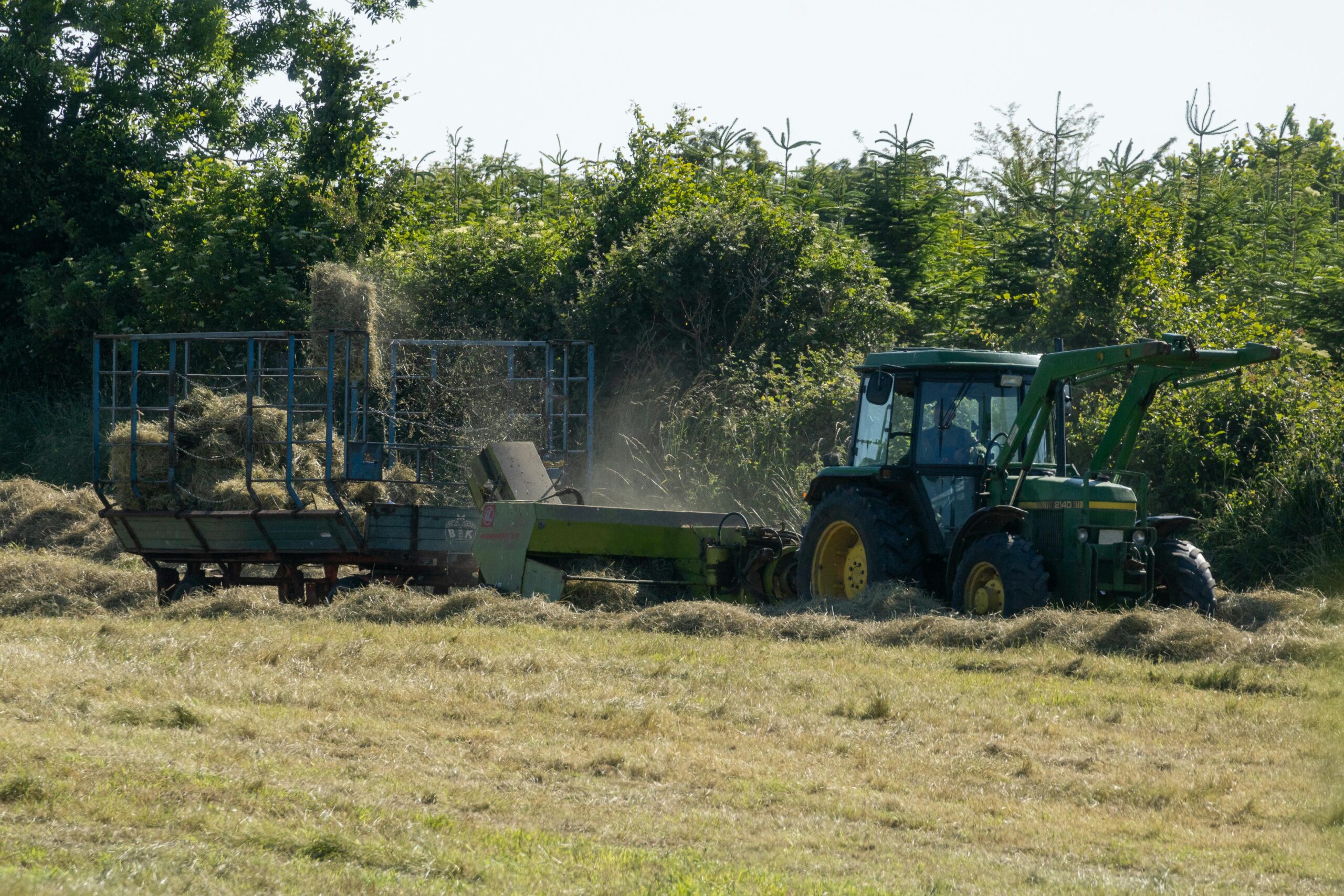
SALEM, Ohio — As the combines, tractors and lawnmowers all enter hibernation in the barn at the end of harvest season, farmers and landowners alike face the ever-important task of making sure their tools of the trade are ready for next year.
Post-harvest maintenance may not feel as urgent as getting crops out of the field, but skipping it can turn small issues into costly breakdowns when spring comes around.
Daniel Stansbury, service manager for Ohio-based farm equipment dealership AgRevolution, said that timing is everything.
“We have tried to get a season ahead of every machine inspection, and I encourage growers to do the same thing,” he said. That means not waiting until next year, but giving equipment a careful look as soon as it comes out of the field.
From his perspective, one of the smartest steps is to perform inspections right away.
“Go on and do the inspection on your combine as soon as you get it washed off and cleaned up from harvest,” Stansbury said.
That includes checking belts, bearings, chains and sprockets. By making a list of what needs attention and ordering parts early, farmers can avoid the scramble for repairs in the busy planting season. For those who prefer a professional eye, Stansbury noted that programs like AGCO’s PM360, a year-round preventative maintenance program, allow technicians to inspect equipment at a reduced flat rate.
“Our technicians can actually come out, do the inspections, provide the customer with a description of machine problems, what it needs to get ready for the next season, provide a repair cost quote, parts and labor if they want us to help,” he explained.
Simple oversights, however, can be surprisingly costly. Stansbury said one of the most common mistakes is failing to properly clean machines before storing them.
“The biggest thing that I see guys do is, they finish up the harvest season and they don’t blow off their combine or clean their combine very well,” he said. Leftover grain and crop residue become an invitation for mice, which can chew through wires and cause electrical problems.
Another overlooked step is checking for leaks before the final wash.
“Go around the machine before it’s washed off, blown off for the year, and look for any hydraulic leaks or gearbox leaks or seeps,” Stansbury advised. Even small leaks can turn into major failures if ignored. “None of the time are they going to fix themselves,” he said. Repairing seals in the offseason can prevent a $5,000 gearbox replacement down the road.
Hay equipment
That same message rings true beyond combines and row-crop equipment.
At D&J Sales and Service in Cadiz, Ohio, General Manager Jon Jones said hay equipment often suffers the same neglect.
“We recommend a post-season maintenance program to go through that piece of equipment and fix anything that we find wrong before next season,” Jones said.
That includes “checking chain tension, checking bearings, (picking) up teeth that are missing from a baler, belts, changing the lacing pins in your belts,” he explained. Manufacturers like Vermeer even offer full checklists to guide the process.
Jones said customers who keep up with end-of-season work are grateful when spring rolls around.
“The biggest thing that we hear from that is guys like that because when they pull it out next spring it’s ready to go,” he said.
By contrast, “the guys that don’t, you know, those are the guys that call us, ‘911, we got 20 acres of hay down, my God, my baler’s broken.’ I’m like, ‘Well, did you bring that in last fall?’”
Beyond convenience, the timing also affects cost.
“It’s cheaper to do in the offseason than it is in the middle of hay season,” Jones said. As his mom used to remind him, “An ounce of prevention is worth a pound of cure.”
Cold weather, too, can cause headaches if equipment isn’t prepared.
“Number one, if you’ve got a fire extinguisher and a water or fire extinguisher in your baler, you need to make sure you empty that so it doesn’t freeze and bust. And number two, any electronic components, monitors, things like that that usually traditionally ride in the cab of the tractor, those probably need to be taken off and taken into the house,” Jones said.
He also noted a debated but useful practice: slacking the tension on round bale belts during winter storage. Some manufacturers recommend it, others don’t, but it can help extend belt life.
When it comes to scheduling, Jones urged farmers not to wait until the busy season to call.
“We recommend doing it in the fall. Do it as soon as you’re done, that way if you have a problem, you don’t forget about it,” he said. Otherwise, small issues can get buried and resurface only when hay is already cut and waiting to be baled.
Above all, Jones said, one rule stands out: don’t ignore known problems.
“If they have problems that they know about, get them taken care of before season gets here. Don’t park them in the barn and say, ‘We’ll get to that next spring.’ Don’t wait till you’re ready to use it to address a problem,” he said.
Lawn and garden
The same principles apply on a smaller scale, too, according to Mike Ambrosia, who runs M.D. Ambrosia Distributors in Pulaski, Pennsylvania, a lawn and garden equipment shop. Homeowners storing lawn mowers and snowblowers for the winter often make the same mistakes farmers do with their larger machines. When it’s time to store them for the winter, he said, draining out the gas and adding a fuel treatment like Seafoam, which helps keep moisture from causing the tank to rust, is always good practice.
Fuel quality, he added, is a major issue these days. While stabilizer can help, he recommends draining the tank entirely if possible.
Skipping simple upkeep can cost a lot in the long run. Basic checks can be done at home.
“Just check your spark plugs. See if the spark plug’s good. Make sure your air filter’s clean, because your air filter’s the life of the engine. And plus, the oil,” Ambrosia said.
Routine maintenance also keeps machines running for decades.
“Change the oil regularly, check it, and don’t run low on oil, and try to put good gasoline in it. Wash it once in a while,” he said.
For him, the lesson is simple: whether it’s a combine, a baler or a push mower, taking a little time at the end of the season can prevent big repair bills down the road. Ambrosia’s own mower proves his point.
“I have my original mower, 55 years old. You take care of them, just like anything else.”